
Last updated: May 16, 2026
In this article
- The Reassuring Headline
- What Exactly Is a Boysenberry?
- Family Resemblance — Other Rubus Plants
- What Veterinary and Poison-Control Sources Say
- The Bramble Thorn Reality Check
- Designing the Patch with Pets in Mind
- Symptoms After Ingestion
- First Aid for Common Bramble Injuries
- When to Call for Help
- How Boysenberry Compares to Sibling Plants
- Setting Up for a Future Dog or Cat
- Frequently Asked Questions
The Reassuring Headline
If your dog has discovered the boysenberry trellis or your cat is sniffing a new bramble cane, you can ease up. Boysenberry plants are safe for pets in the toxicological sense — they sit in the genus Rubus, the same group that includes blackberries and raspberries, and the entire genus is not listed by the ASPCA Animal Poison Control Center as toxic to dogs, cats, or horses. The leaves, stems, flowers, and ripe fruit are not known to contain compounds that poison companion animals. Boysenberries are big, juicy, dark-purple summer treats; the plant they grow on is mechanically thorny but chemically gentle.
The caveat is the bramble thorn. Boysenberry inherits its thorns from its blackberry parent, and a curious dog who shoves face-first into a thicket can come out with paw-pad punctures, scratched gums, or — worst case — a corneal abrasion. The plant chemistry will not hurt your pet. The mechanical engineering of the canes might. The rest of this guide explains what to expect, how to manage exposure, and when to escalate to a vet.
What Exactly Is a Boysenberry?
Boysenberry is a complex hybrid in the Rubus genus, traditionally described as a cross between European raspberry (Rubus idaeus), loganberry (itself a raspberry-blackberry hybrid), and a wild Pacific blackberry (Rubus ursinus). Sometimes the formal name is given as Rubus ursinus × idaeus, sometimes simply Rubus ‘Boysenberry’. The plant was developed in the 1920s by Rudolph Boysen and popularized by Walter Knott of Knott’s Berry Farm fame.
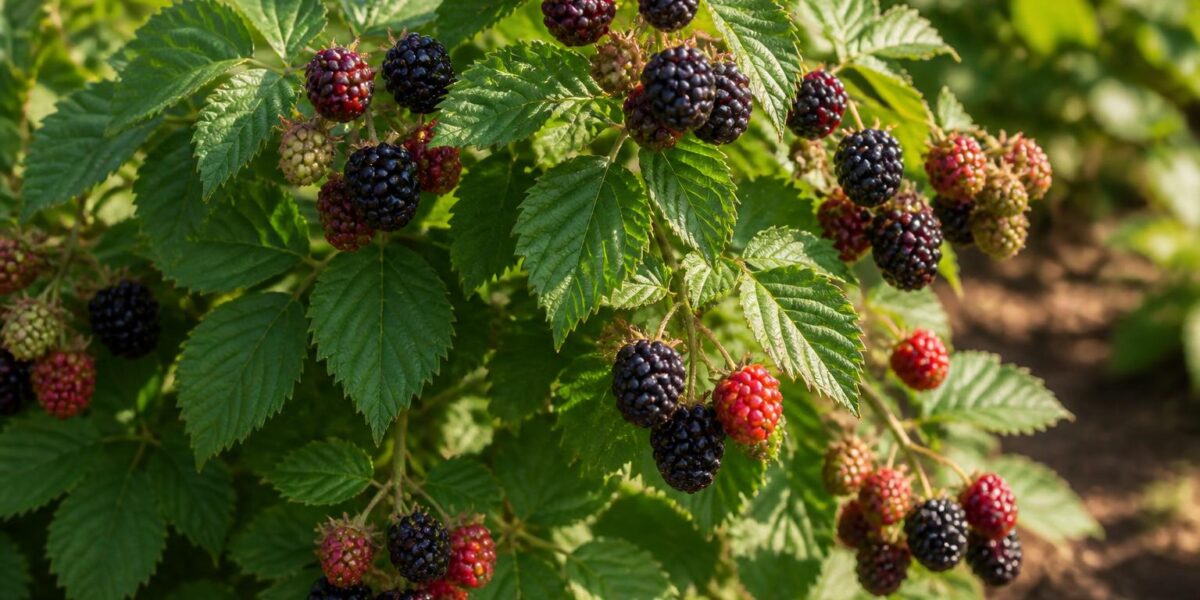
The fruit looks like a giant blackberry — long, jet-purple at full ripeness, with a tart-sweet flavor. The plant is a trailing bramble cane (more like blackberry than raspberry in growth habit), needs trellising, and produces big crops on second-year canes. The famously thorny original variety has been joined by thornless boysenberry cultivars, which are dramatically friendlier to bare-pawed pets.
Family Resemblance — Other Rubus Plants
Because boysenberry shares a genus and toxicology profile with the other brambles, the safety advice in this article applies almost interchangeably to:
- Raspberry plants — Rubus idaeus, smaller thorns
- Blackberry plants — Rubus fruticosus aggregate, hooked thorns
- Loganberry, tayberry, marionberry, dewberry — all Rubus, all non-toxic
The genus is uniformly non-toxic. The only relevant variation is thorn density, cane growth habit, and fruit timing.
What Veterinary and Poison-Control Sources Say
Boysenberry, like every other Rubus species, does not appear on the ASPCA’s toxic-plant database for dogs, cats, or horses. Pet Poison Helpline does not flag the genus. There is no published clinical literature describing boysenberry-leaf or boysenberry-fruit poisoning in companion animals because the relevant compounds are simply not there.
The fruit itself is widely treated as a safe-in-moderation snack for dogs — large amounts can cause GI upset because of the sugar and fiber, but small amounts are unremarkable. Cats may sniff and lick juice but rarely eat berries with enthusiasm. The plant chemistry has no known mechanism for toxicity in the species we care about here.
The Bramble Thorn Reality Check
Boysenberry canes are armored. The thorns are smaller than rose thorns but more numerous, and they curve slightly backward, which means they catch and hold rather than poke and release. The injuries you tend to see in pet households are:
- Paw-pad punctures. A dog runs through the row, a thorn embeds, the dog licks, the entry point seals over, and a few days later you have a swollen toe with infection trying to express itself.
- Corneal abrasions. The dog noses into a cane at face level, a thorn scrapes the eye, and the squinting and tearing follow. This is an emergency-level reason to see your vet promptly.
- Mouth and gum injuries. Pets that try to eat the cane (rare but it happens) can split a lip or scrape gums. Bleeding is alarming but usually self-resolving — confirm no thorn fragment is left.
- Ear-tip tears. Floppy-eared dogs hit the thorns at perfect ear height. Thin skin, lots of blood, quick healing.
None of this is unique to boysenberry — every bramble carries the same hazard set. Awareness and a tidy trellis go a long way.
Designing the Patch with Pets in Mind
You can absolutely keep a productive boysenberry trellis in a yard with dogs and cats. Smart choices:
- Choose thornless cultivars where you can — thornless boysenberry exists and tastes nearly identical
- Trellis on a 30-inch / 60-inch two-wire system to lift canes above pet face level
- Mulch heavily so dropped fruit does not sit on the ground long enough to mold (moldy fruit is a separate, real concern with tremorgenic mycotoxins)
- Prune spent floricanes after harvest and remove the cuttings — fewer thorny canes on the ground means fewer paw thorns
- Consider a low garden fence around the row if your dog likes to investigate the base of every plant
Pair with other reliable choices from our pet-safe garden plants guide for a safer overall yard.
Symptoms After Ingestion
Most boysenberry exposures produce nothing visible. When mild signs do appear, they are:
- One or two soft stools, possibly dark from anthocyanin pigment (this is dye, not blood)
- A single episode of vomiting if a large volume of plant material was eaten
- Reduced appetite for the next meal
- Mild drooling if a thorn nicked a gum
Signs that warrant a vet call: persistent vomiting beyond a few hours, true blood in stool or vomit (red or coffee-ground), profound lethargy, abdominal pain, or any eye issue — squinting, watering, holding the eye closed, light sensitivity. Eye injuries are urgent.
First Aid for Common Bramble Injuries
For a paw thorn you can see and grasp cleanly with tweezers, pull straight out, soak the paw for 10 minutes in warm water with a pinch of salt, and watch for swelling for the next two days. If the thorn breaks off below the surface, embeds deeply, or your pet will not let you handle the foot, that is a vet visit — they have better tools and pain control.
For mouth or gum scrapes, rinse with cool water if your pet tolerates it and offer something soft to eat. Persistent bleeding, drooling that lasts more than an hour, or any sign of a foreign body still lodged → call the vet.
For any suspected eye injury — squinting, light avoidance, tearing, holding the eye shut — do not wait. Corneal injuries that look minor can ulcerate quickly. Same-day vet visit.
When to Call for Help
Boysenberry exposure rarely needs a poison call on plant-toxicity grounds. The reasons to call are mechanical injury or unexpectedly severe GI signs. Three good resources:
- Your own veterinarian — start here during clinic hours; they know your pet
- ASPCA Animal Poison Control Center: (888) 426-4435 — 24/7, fee may apply
- Pet Poison Helpline: (855) 764-7661 — 24/7, fee applies
- Local emergency veterinary clinic — for after-hours mechanical injuries, especially eye trauma
Do not induce vomiting at home. With a non-toxic plant, vomiting induction has no benefit and adds aspiration risk.
How Boysenberry Compares to Sibling Plants
If you grow a mixed berry patch, the safety picture across boysenberry and its neighbors is consistent. Safe with bramble thorns: raspberry, blackberry, and boysenberry itself. Safe without thorns: blueberry and cranberry. Also safe: strawberry.
The notable contrast is elderberry — Sambucus, not Rubus — which is genuinely toxic in raw plant material because of cyanogenic glycosides. If your hedge mixes berry types, take a moment to confirm which is which. Boysenberry is bramble cane with hooked thorns; elderberry is a small woody shrub with no thorns and pinnate compound leaves.
Plant-side fruit-tree neighbors that are also safe: mulberry trees, apple trees, pear trees, and persimmon trees.
Setting Up for a Future Dog or Cat
If you are reading this in advance of bringing home a pet, the homework matters. A thornless boysenberry trellis, fenced base, and tidy mulch is the version of the patch that works best for households with curious noses. When you are ready, browse adopt dogs or adopt cats and let your next family member meet the garden as friends, not adversaries.
Frequently Asked Questions
Are boysenberry leaves toxic to dogs?
No. Boysenberry leaves are not on any major poison-control list and are not known to contain toxic compounds. A few chewed leaves are unremarkable. Large volumes can cause mild GI upset from plant fiber but are not poisoning.
Can my cat eat boysenberries off the vine?
It can, but most cats are not interested. As obligate carnivores they get nothing nutritionally meaningful from berries. A licked or chewed berry is harmless. A pile of fruit eaten in one go could produce a day of soft stool.
How is boysenberry different from blackberry in terms of pet safety?
It is not, really. Boysenberry is a Rubus hybrid with blackberry as one parent. Same non-toxic status, same bramble-thorn caveat, same management advice. The fruit is bigger and sweeter, but the leaves and canes behave the same in pet households.
What if my dog ate a thorny cane piece?
Watch for drooling, pawing at the mouth, refusal to eat, or any obvious cuts on the gums or tongue. Most pets pass small fragments without trouble. A larger cane piece swallowed whole is a foreign-body concern — call your vet for guidance, especially in small breeds.
Are thornless boysenberry varieties just as safe?
Yes — and easier on your household. Thornless cultivars have the same non-toxic chemistry but remove the mechanical hazard. They are the obvious choice for a pet-friendly garden if you can find them at your local nursery.


