
Last updated: May 16, 2026
In this article
- Are Butterwort Plants Safe for Pets? The Quick Answer
- Meet the Pinguicula Genus
- Why Butterworts Are Non-Toxic
- What the Sticky Surface Actually Feels Like
- Could a Pet Get Stuck to a Butterwort?
- If Your Pet Eats a Butterwort
- Smart Placement for a Butterwort Household
- Cat Enrichment That Outcompetes a Butterwort
- Other Carnivorous Plants in the Same Risk Tier
- Vet Routing and Final Reassurance
- Frequently Asked Questions
Are Butterwort Plants Safe for Pets? The Quick Answer
Yes, butterwort plants are safe for pets. The ASPCA does not list Pinguicula species as toxic to cats, dogs, or horses, and the small carnivorous rosettes do not contain any of the alkaloids, glycosides, or oxalate crystals that cause classic plant poisonings. A pet that licks, mouths, or even chews a butterwort leaf will not be chemically harmed. The leaves carry a sticky secretion that traps small insects, and a curious tongue or paw will get a brief sticky surprise, but mammalian tissues are far too large for the trap to do anything beyond mild stickiness.
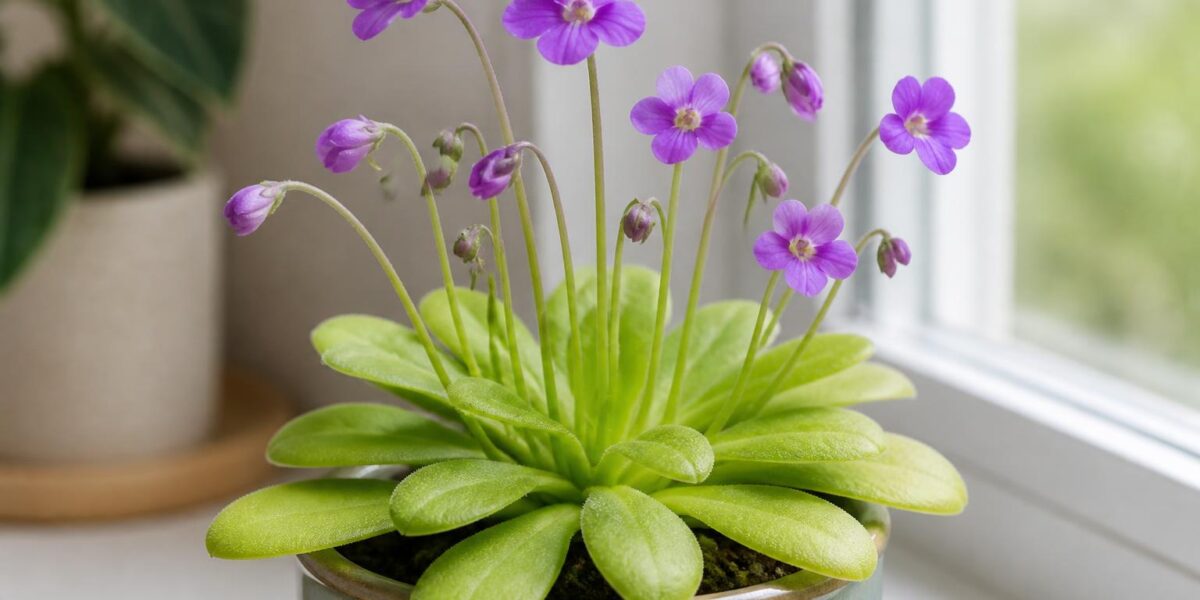
If you have not encountered a butterwort before, they look much more like ordinary houseplants than the dramatic Venus flytrap or the architectural pitcher plants. Most species form a flat low rosette of pale green or yellow-green leaves shaped like soft lettuce, sometimes with a cheerful purple or pink flower rising above the rosette in spring. The “carnivorous” part is invisible at a glance, since the sticky surface is on the upper side of each leaf and looks like a faint sheen rather than the obvious dewdrops of a sundew. This guide walks through what butterworts are, what to expect when a pet investigates one, and how to keep an interested cat or dog from accidentally damaging the plant in the process.
Meet the Pinguicula Genus
Pinguicula is a genus of about 100 species spread across temperate and tropical regions of the Americas, Europe, and northern Asia. Wild species live in nutrient-poor habitats, including limestone outcrops, mossy bogs, and damp cliff faces. Like other carnivorous plants, they evolved an insect-catching strategy to supplement the meager nitrogen available from their growing substrate. The cultivated species most often sold for windowsill bog gardens are the Mexican butterworts, including Pinguicula moranensis and Pinguicula gigantea, which thrive in warm conditions and are forgiving to grow.
The flat lettuce-like leaves carry two kinds of microscopic glands. Stalked glands secrete the sticky droplets that trap small insects on contact, while sessile glands release digestive enzymes that break down trapped prey over a few days. The leaf does not move or fold around its catch the way a sundew leaf slowly curls; instead, the prey simply sticks where it landed and is digested in place. After a few days the leaf surface clears and the cycle resumes.
Why Butterworts Are Non-Toxic
The chemistry of a butterwort leaf is dominated by the mucilage, which is a polysaccharide gel comparable to plant gums in seed pods or cooked okra, plus a tiny amount of digestive enzymes that target insect cuticles. There are no recognized toxic compounds in any common cultivated Pinguicula species at levels that matter for mammalian poisoning. The mucilage is too dilute and the volumes too small to do anything to a pet’s tongue, paw, or stomach.
Veterinary toxicology and the carnivorous-plant nursery industry treat butterworts as safe novelty plants. They are routinely sold to households with cats and dogs without warnings. They join the green-light carnivorous lineup alongside Venus flytraps, sundews, and pitcher plants, although butterworts have the smallest “weird factor” of the four since the leaves look entirely conventional.
What the Sticky Surface Actually Feels Like
If a pet’s nose or tongue touches a butterwort leaf, the immediate sensation is a brief stickiness, similar to the residue from a faint dab of glue or honey. The mucilage is not painful, not warm or cold, not sharp, and not chemically irritating. A cat who licks the leaf will pull back, lick the residue off her tongue, and move on. A dog will do something similar, often working her mouth for a moment to clear the gluey feeling.
The mucilage is water-soluble, so saliva and a quick lick or two clear it without trouble. There is no need to rinse or wipe unless the pet has a particularly long tangle of leaf material on the mouth or paw, in which case a damp cloth handles it easily. There is no chemical absorption to worry about and no after-effect once the gel is wiped or licked off.
Could a Pet Get Stuck to a Butterwort?
Briefly, in the same sense a finger gets briefly stuck to a piece of tape, but not in any meaningful trapping sense. The mucilage on a butterwort leaf is sized to hold a fungus gnat or a small fly, not a five-pound cat or a fifty-pound dog. A pet that licks a leaf will feel a moment of resistance and pull free, often pulling several leaves loose in the process. The plant takes the bigger hit; the pet is unharmed.
Butterwort leaves do regenerate, but slowly, with the rosette rebuilding over weeks rather than days. A single curious cat session can shred a young rosette to bare central crown, after which the plant takes a month or two of careful watering to rebound. The fix is placement rather than worrying about your pet’s wellbeing, and we will get to placement shortly.
If Your Pet Eats a Butterwort
An accidental swallow of one or two leaves is essentially a non-event for cats and dogs. The plant is non-toxic, the volumes are tiny, and the mucilage digests like ordinary plant fiber. Watch for one or two episodes of vomiting or a soft stool over the following twelve hours, the same generic plant-matter response a dog might have after grazing on lawn clippings. No targeted treatment is needed for a small ingestion.
If your pet consumes a much larger amount, perhaps an entire established rosette in a pot, the substrate itself becomes the bigger concern. Sphagnum moss, peat, perlite, and the often-used limestone-grit mix can cause a foreign-body irritation if eaten in volume. Persistent vomiting, ongoing diarrhea, lethargy, refusal to eat, or any abdominal distress warrants a call to your veterinarian, the ASPCA Animal Poison Control Center at 888-426-4435, or the Pet Poison Helpline at 855-764-7661. The poison-control lines are staffed twenty-four hours a day and can confirm the non-toxic plant listing while screening for substrate or concurrent issues.
Smart Placement for a Butterwort Household
Butterworts are flexible about light compared with their carnivorous cousins. They tolerate bright indirect light to dappled sun, which means they thrive on a wider range of windowsills than a Venus flytrap or pitcher plant. They want soft water (distilled or rainwater, never tap), a permanently damp substrate, and good air circulation. None of those conditions force you into a low or pet-accessible position.
A few practical setups. A wall-mounted shelf above couch height delivers good light without inviting paws. A closed glass terrarium keeps humidity high and pets out. A bright north or east-facing windowsill behind a closed door, like a sunny bathroom or guest-room window, works well in homes where the main living space is cat territory. For dog households, simply elevating the plant onto a counter or desk is usually enough.
Cat Enrichment That Outcompetes a Butterwort
The flat soft leaves of a butterwort are tempting to cats with active hunting instincts, particularly because the leaves move slightly when batted and the central crown invites a swat-and-retreat investigation. A pet that has discovered the rosette as a toy will revisit until the plant is destroyed, so redirection is the lasting fix. Provide a feathered wand toy you actively play with twice a day, a food puzzle ball that delivers kibble in exchange for batting, and a window perch for outdoor birdwatching.
Our cat-safe houseplants guide covers a broader set of indoor greenery that can absorb grazing energy. The adopt-a-cat hub includes plant audit and enrichment checklists for the first weeks home. The adopt-a-dog hub covers similar ground for dog households.
Other Carnivorous Plants in the Same Risk Tier
If butterworts end up too fussy about water for your household routine, the other commonly cultivated carnivorous categories share the same non-toxic profile. Venus flytraps have hinged moving traps that are dramatic but small. Sundews are small sticky-tipped rosettes with very tiny digestive volumes. Pitcher plants, both Nepenthes and Sarracenia, are taller and more architectural, although their pitcher fluid carries a separate supervision note covered in that article.
All four categories want bright light, soft water, and damp substrate, so a single sunny windowsill bog garden can host several at once. Haworthia, pilea, and fishbone cactus are non-carnivorous companion plants on the same non-toxic safety tier if you want a varied shelf.
Vet Routing and Final Reassurance
Living with butterworts and pets is overwhelmingly a non-event from a poisoning perspective. The plant is non-toxic, the mucilage is too small-scale to cause any chemical harm, and most accidents end with a slightly damaged rosette and a pet licking her own tongue. Keep your own veterinarian’s number, the ASPCA Animal Poison Control Center at 888-426-4435, and the Pet Poison Helpline at 855-764-7661 saved in your phone for general pet emergencies, since butterworts are not where the worry should sit.
If you are looking for a non-toxic plant lineup beyond carnivorous species, our pet-safe garden plants guide extends the list outdoors and our cat-safe houseplants guide rounds out the indoor side. Butterworts can be the quiet, conventional-looking, secretly carnivorous plant in a pet-friendly home with very little fuss.
Frequently Asked Questions
Will my cat’s tongue stick to a butterwort leaf?
Briefly, yes, in the same way a finger sticks briefly to a piece of tape. The mucilage is sized to hold fungus gnats, not mammalian tongues, so a cat who licks a leaf gets a brief sticky sensation, pulls away, and licks the gel off her own tongue without difficulty.
Are butterwort flowers safe to chew?
Yes. The whole plant is non-toxic, including the small purple or pink flowers that rise above the rosette in spring. The flowers are also delicate and easily damaged, so the plant takes the bigger hit if a pet investigates one.
Will my butterwort survive a curious cat?
Probably with damage. Butterwort leaves regenerate slowly, and even one investigative session can shred a young rosette. The fix is placement out of reach. Plants typically rebound over weeks if left undisturbed afterward.
What if my dog eats the soil too?
Sphagnum moss, peat, and limestone grit are not toxic but can irritate the gut in volume. Watch for persistent vomiting, ongoing diarrhea, or lethargy and call a vet or poison-control line if anything seems off. A small soil sample is rarely an issue.
How do I tell a butterwort apart from a regular houseplant?
Most butterwort rosettes look like soft pale-green lettuce in miniature, often with a faint sheen on the leaf surface that catches the light. Up close you can see tiny insects stuck to the leaf or a slight stickiness when you touch the surface. The flowers are tall single blooms in purple, pink, or yellow.


