
Last updated: June 2, 2026
In this article
- Quick Answer: Chokeberry (Aronia) Is Safe for Cats and Dogs
- The Chokeberry vs. Chokecherry Difference
- How to Tell Them Apart in the Yard
- What Is Aronia Chokeberry?
- ASPCA Position and Toxicity Profile
- How Pets Typically Interact with Aronia
- Symptoms to Watch For
- If Your Pet Eats Confirmed Aronia Plant Parts or Fruit
- Garden Management of an Aronia Planting
- Pet-Safe Aronia Bed Setup
- When to Call the Vet
- Frequently Asked Questions
Quick Answer: Chokeberry (Aronia) Is Safe for Cats and Dogs
If you grow chokeberry as a backyard ornamental edible or you saw the dark berries in your garden and looked the name up nervously, here is the reassurance: chokeberry (Aronia melanocarpa, Aronia arbutifolia, Aronia × prunifolia) is not listed as toxic to cats or dogs by the ASPCA Animal Poison Control Center. The leaves, woody stems, blossoms, and ripe berries are all considered non-toxic. A pet that grazed near the bush or ate a few fallen berries has not been poisoned.
Critical naming clarification: chokeberry (Aronia) is NOT the same plant as chokecherry (Prunus virginiana), and the difference matters enormously. Chokecherry is in the Prunus genus alongside cherry, plum, peach, and almond, and like its cousins it contains cyanogenic glycosides that are TOXIC to dogs and cats. Aronia chokeberry is in the Rosaceae family but in a separate genus and does not contain cyanogenic glycosides. The names are nearly identical and the confusion is real. Both plants produce dark, astringent berries; the same word “choke-” attaches to both because both fruits are mouth-puckeringly tannic. But their pet-safety profiles are opposite.
The Chokeberry vs. Chokecherry Difference
This deserves the second section, not the last. The naming overlap has caused real pet-safety confusion, and a clear understanding here is the most useful thing this article can deliver.
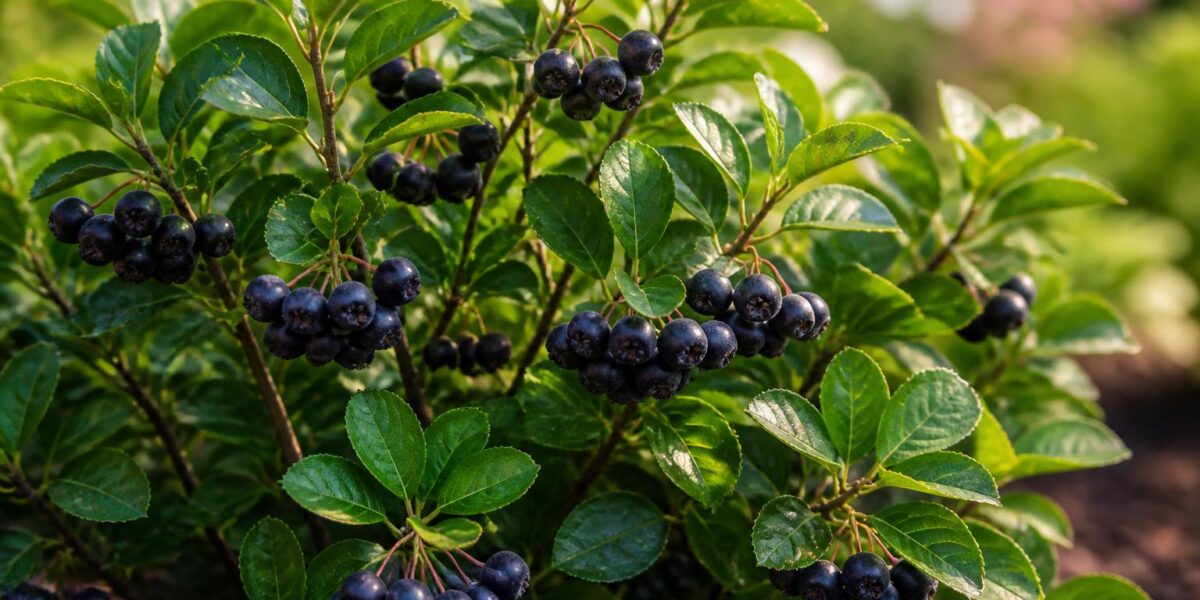
Chokeberry (Aronia) — SAFE per ASPCA. Native North American shrub, three to eight feet tall, multi-stemmed, deciduous. Leaves are simple, oval, finely toothed; small white five-petaled flowers in clusters; berries are pea-sized to small-marble-sized, hanging in loose clusters, ripening through dark purple to nearly black (Aronia melanocarpa) or red (Aronia arbutifolia). The fruit is highly astringent fresh but is widely used in juice, jam, and food coloring. The plant has no thorns.
Chokecherry (Prunus virginiana) — TOXIC to dogs, cats, and horses. Native North American small tree or large shrub, six to twenty feet tall. Leaves are oval, finely toothed, and have a distinctive small gland at the base of the leaf blade (a Prunus genus feature). Flowers are racemes (long pendant clusters), not flat-topped. Berries are pea-sized, dark red to nearly black, hanging in long pendant clusters. The plant contains cyanogenic glycosides (amygdalin, prunasin) in the leaves, twigs, bark, and pits that release hydrogen cyanide on chewing or fermentation. Wilted leaves are particularly toxic.
For an article-side reference on the Prunus toxicity story, see our cherry-related articles: are cherry trees toxic to cats, are cherry trees toxic to dogs, are cherry leaves toxic to cats, and are cherry leaves toxic to dogs. The same chemistry applies to chokecherry.
How to Tell Them Apart in the Yard
If you have a “choke-something” plant in the yard and you do not know which it is, the fastest field-level differences:
- Plant size — Aronia chokeberry is a multi-stemmed shrub, typically four to eight feet at maturity. Chokecherry grows into a small tree, often ten to twenty feet, with a single dominant stem.
- Flower form — Aronia has flat-topped flower clusters (corymbs); chokecherry has long pendulous flower racemes.
- Fruit form — Aronia berries hang in loose clusters with stems coming off a central point; chokecherry berries hang in long pendant clusters along a single axis.
- Pit — Aronia berries contain several tiny seeds embedded in the flesh (apple-like, since Aronia is in the apple subfamily); chokecherry berries contain a single hard pit (drupe, like cherry).
- Leaf base — chokecherry leaves usually show a small gland at the petiole-blade junction (Prunus feature); Aronia leaves do not.
- Bark — chokecherry has the distinctive dark Prunus bark with horizontal lenticels; Aronia bark is grayer and lacks that feature.
The pit-versus-multi-seed distinction is the single most reliable difference once fruit is present. If you cut a fresh berry in half and find a single hard pit, you have a Prunus (chokecherry, cherry, plum) — assume toxicity. If you find several small soft seeds embedded in fleshy pulp, you have an Aronia or other rose-family pome relative — assume the safe profile.
What Is Aronia Chokeberry?
Aronia is a small genus (two to three accepted species) of deciduous shrubs in the family Rosaceae, subfamily Maloideae (the apple-pear-hawthorn group). The species are:
- Aronia melanocarpa (black chokeberry) — most common in cultivation; deep purple-black fruit; high anthocyanin content; widely grown for juice, supplements, and ornamental use.
- Aronia arbutifolia (red chokeberry) — taller, narrower habit; red fruit; brilliant fall foliage.
- Aronia × prunifolia (purple chokeberry) — natural hybrid; intermediate features.
The plant tolerates a wide range of soils, full sun to partial shade, and most temperate climates (USDA zone 3 to 8). It is increasingly popular as a “superfood” garden shrub because the fruit has very high antioxidant content. The astringent fresh fruit becomes palatable after frost or after processing.
ASPCA Position and Toxicity Profile
The ASPCA does not list any Aronia species on its toxic plants list for dogs, cats, or horses. The plant is in the Rosaceae family but in the apple-pear subfamily (Maloideae), not the cherry-plum subfamily (Prunoideae) where the cyanogenic glycoside concern lives. There are no Solanaceae alkaloids, oxalates of concern, or cardiac glycosides.
The leaves contain tannins (which is why the fresh fruit is astringent) but at levels well below toxicological concern for companion animals. The fruit is widely consumed by humans and is used commercially in juice and supplement form without recognized animal toxicity reports.
How Pets Typically Interact with Aronia
Most pets ignore Aronia bushes. The fruit is highly astringent fresh, which makes it less attractive to dogs than sweeter berries like raspberry or mulberry. Cats are largely uninterested. Birds are the primary fruit-eaters of Aronia in most yards.
Common interactions:
- Dogs sniffing or briefly tasting fallen berries and walking away (the astringency discourages most).
- Cats using the shrub as a shaded nap location.
- Birds eating fruit and dropping fragments that pets occasionally find.
- Pets walking through fallen fruit without eating any.
Because the fruit is less palatable than sweeter berries, the dog-eats-too-much-fruit scenario is rarer with Aronia than with raspberry or mulberry. When it does happen, the GI upset is the same: loose stool, possibly a brief vomit, recovery within 24 hours.
Symptoms to Watch For
True poisoning is not expected from Aronia exposure. The signs to watch for after a chokeberry-related event:
- Loose stool, possibly with dark pigment, after a known fruit binge.
- One or two episodes of vomiting after a heavy graze.
- Mild lethargy or reduced appetite for half a day.
- Persistent symptoms beyond 24 hours — call the vet.
The signs that DO warrant immediate action are the chokecherry signs, in the case where you misidentified the plant: drooling, pawing at the mouth, vomiting, weakness, dilated pupils, rapid breathing, gum color changes (bright cherry red or blue/gray), collapse, seizures. If your pet shows any of these after eating fruit from a “choke-” plant you have not positively identified, treat as a potential cyanogenic-glycoside emergency and call ASPCA APCC at 888-426-4435 or your nearest emergency clinic immediately.
If Your Pet Eats Confirmed Aronia Plant Parts or Fruit
For a small chew of leaves or a graze of fallen Aronia berries (positively identified), observation is enough. Watch for any GI symptoms over the next 12 to 24 hours.
For a large fruit binge, withhold the next meal, offer fresh water, and observe. Most dogs return to normal within a day. Call your veterinarian if vomiting persists, the dog seems uncomfortable, or you notice lethargy lasting more than a day.
For ingestion from an unidentified “choke-” plant, do not assume Aronia. Treat as potentially Prunus virginiana (chokecherry) and call your veterinarian or the ASPCA APCC at 888-426-4435 immediately. Cyanogenic-glycoside emergencies move quickly; early decontamination matters.
Garden Management of an Aronia Planting
Aronia is a low-maintenance shrub. It does not require frequent pruning, does not sucker aggressively (though it can spread slowly via root sprouts in some conditions), has no thorns, and produces relatively short, brittle pruning waste. The plant is generally well-behaved in mixed shrub borders.
From a pet-safety angle, the main consideration is identification. If you inherited the plant from a previous owner and are not sure what it is, confirm with a local extension service, a knowledgeable nursery, or a plant ID app before assuming the safety profile. The ten minutes of identification work is the highest-value pet-safety investment you can make for a “choke-” plant.
Pet-Safe Aronia Bed Setup
A few practical choices:
- Confirm botanical identity before assuming safety — Aronia, not chokecherry.
- Plant in a defined bed with mulch (wood chips or shredded bark).
- Pick up fallen fruit if your dog is a heavy grazer — though Aronia astringency typically self-limits.
- Bag pruning debris promptly.
- If you have both Aronia and a Prunus species in the yard, label the Aronia clearly (a small wooden marker is enough) so future owners or pet sitters know which is which.
When to Call the Vet
For confirmed Aronia exposure with no symptoms, watchful waiting is appropriate. Contact your regular veterinarian if persistent vomiting or diarrhea develops, or if you see lethargy lasting more than a day. After hours, the ASPCA Animal Poison Control Center is at 888-426-4435 and the Pet Poison Helpline is at 855-764-7661 — both 24/7 with a consultation fee.
For unidentified-plant exposure or any sign of cyanogenic-glycoside poisoning (drooling, vomiting, weakness, gum color change, collapse, seizures), do not wait. Call your veterinarian, ASPCA APCC, or the nearest emergency clinic immediately. Cyanide is one of the faster-acting poisons; minutes matter.
Frequently Asked Questions
If chokeberry and chokecherry are different, why are the names so similar?
The “choke” in both names refers to the astringent, mouth-puckering quality of the fresh fruit. Both plants produce dark astringent berries that taste rough and tannic to humans. The botanical relationship is distant — Aronia and Prunus are both in the Rosaceae family but in different subfamilies. The naming overlap is a quirk of common-name English with no botanical logic behind it.
Are Aronia berries safe for dogs to eat?
Yes per ASPCA. Fresh Aronia berries are safe but highly astringent, so most dogs do not eat them in quantity. Processed Aronia products (juice, jam, supplements) typically contain added sugar and may have other ingredients; check labels before sharing.
What if my dog ate berries from a tree I think is chokecherry?
Treat that as a potential cyanogenic-glycoside emergency. Call your vet, the ASPCA APCC at 888-426-4435, or the nearest emergency clinic immediately, even if your dog is asymptomatic. Symptoms can develop quickly and decontamination is most effective early. Bring a sample of leaves and fruit to the visit if possible.
Is red chokeberry (Aronia arbutifolia) as safe as black chokeberry?
Yes. All Aronia species share the same non-toxic profile. The red and black chokeberries are botanically very close.
How can I tell at a distance if a tree is chokecherry or chokeberry?
Plant size is the easiest distance check. If it is a small tree (single trunk, ten feet or more), it is much more likely to be chokecherry (Prunus). If it is a multi-stemmed shrub (several stems from the base, four to eight feet tall), it is much more likely to be Aronia chokeberry. For a definitive identification, look at flower form (flat-topped vs. pendulous), pit-vs-multiple-seeds in the fruit, and leaf-base glands. When in doubt, treat as Prunus and keep pets away until you confirm.


