
Last updated: May 16, 2026
In this article
- Are Chokecherries Toxic to Cats? The Direct Answer
- Why Chokecherry Releases Cyanide
- Wilted Leaves Are the Worst-Case Form
- Chokecherry vs. Cultivated Cherry vs. Cherry Laurel — A Quick Look-Alike Map
- Symptoms of Chokecherry Poisoning in Cats
- What Parts of the Plant Are Most Dangerous?
- What to Do if Your Cat Eats Chokecherry
- Why Cats Are Particularly Vulnerable
- Chokecherry in the Yard — Practical Risk Reduction
- Other Cyanogenic Plants to Know About
- When to Call the Vet — Threshold Lower Than You Might Think
- Frequently Asked Questions
Are Chokecherries Toxic to Cats? The Direct Answer
Yes, chokecherries are toxic to cats. The plant in question is Prunus virginiana, also known as wild cherry, choke cherry, bitter-berry, or Virginia bird cherry. It is a small tree or large shrub native to much of North America — pasture edges, fence lines, ravines, abandoned lots, and woodland clearings from the Rockies through the Midwest, the Southeast, and parts of Canada. Its leaves, stems, twigs, bark, and the seeds inside the small dark fruits all contain cyanogenic glycosides (mainly prunasin and amygdalin), which release hydrogen cyanide when chewed, crushed, or wilting. Severity is moderate, and onset is fast.
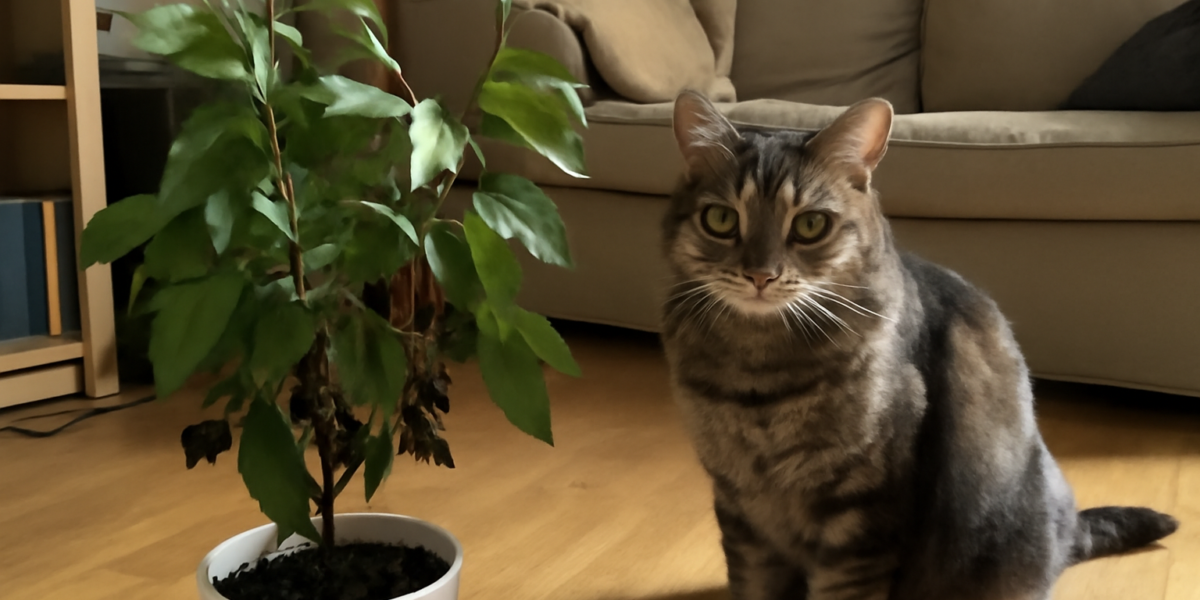
The chokecherry toxic cats warning is worth flagging clearly because cats often encounter chokecherry indirectly — a wilted clipping in a vase, a branch dropped after a storm, leaves drifting onto a porch where the cat patrols, or a kitten exploring a hedgerow during outdoor time. Cats are smaller than most dogs, which means a given amount of plant matter delivers a relatively bigger toxic dose per kilogram. If your cat has chewed chokecherry leaves, eaten a fruit, or crunched through a seed, treat it as a potential cyanide exposure and call your veterinarian or one of the helplines we list further down — even before symptoms develop.
Why Chokecherry Releases Cyanide
The toxic principle in Prunus virginiana is the same family of compounds present in cherry laurel, peach pits, apricot kernels, almond shells, and blackthorn — cyanogenic glycosides. These molecules bind a sugar to a cyanide-bearing group. As long as the leaf or seed sits intact, the molecule is stable. The instant the plant tissue is bruised, chewed, or starts to wilt, plant enzymes (beta-glucosidases) split the sugar away and release hydrogen cyanide gas. Crushed chokecherry leaves smell faintly of bitter almond — that smell is HCN.
Cyanide is a metabolic poison. It binds to cytochrome c oxidase deep in the cell’s mitochondria and stops the cell from using oxygen, even when oxygen is plentiful in the bloodstream. Affected cats can have bright cherry-red gums (because the blood is fully oxygenated and not unloading at the tissues) and yet be severely oxygen-starved at the same time — distressed breathing, weakness, collapse. The clinical picture develops fast.
Cats are not large grazers like cattle, so the classic livestock-style chokecherry poisoning is not their pattern. The cat pattern is exploratory chewing — a kitten mouthing fallen leaves on the lawn, a curious adult tasting a wilted clipping, an indoor-outdoor cat patrolling a fence line and biting a tender shoot. The doses are usually smaller than livestock cases, but a small cat absorbing even a modest dose can show clinical signs.
Wilted Leaves Are the Worst-Case Form
This is the single most important practical fact about chokecherry. Fresh leaves on a healthy tree are toxic, but wilted leaves are dramatically worse. When a leaf wilts (after a frost, a storm, branch breakage, a hedge trim, or simply being picked and left for hours), the cell walls break down and the previously separated glycoside and the activating enzyme come into contact. The result is a leaf that releases cyanide much more readily on chewing.
For cats specifically, the indoor and porch versions of this scenario matter. A wilted bunch of leaves brought inside as a fall decoration, a freshly cut branch in a vase with water (which speeds wilting and dosage), or a pile of clippings left by the back door after yard work — all create higher-risk exposures than a fresh tree-attached leaf would.
Practical implication: any time chokecherry plant matter is broken, cut, or wilting, get it out of the cat’s environment fast. Bag clippings the same day, do not bring chokecherry indoors as decoration, and pick up storm-broken branches before the cat finds them on a porch patrol.
Chokecherry vs. Cultivated Cherry vs. Cherry Laurel — A Quick Look-Alike Map
All three are Prunus and all three are cyanogenic, but the situations and exposures differ:
Chokecherry (Prunus virginiana) — the plant this article is about. Wild small tree or shrub, white flower racemes, small dark red-to-black bitter fruit, native to North America. Common in pastures and yard edges.
Cultivated cherry (Prunus avium, sour cherry P. cerasus) — orchard tree, sweet or sour fruit, much larger drupes than chokecherry. Pits and wilted leaves are the main hazards. See cherry leaves toxicity in cats.
Cherry laurel (Prunus laurocerasus) — Mediterranean and UK ornamental hedge, glossy evergreen. Different growth form, same chemistry. See cherry laurel toxicity in cats.
Other cyanogenic Prunus include peach (peach pits in cats), almond (almond trees in cats), and the cherry pits master article (cherry pits in dogs — same chemistry applies to cats). The sibling article in this batch on blackthorn (Prunus spinosa) covers the European hedgerow cousin with the same chemistry.
Symptoms of Chokecherry Poisoning in Cats
Onset is fast. Mild to moderate cyanide exposures often produce signs within 15 to 60 minutes; severe exposures can begin even sooner.
Early signs include sudden anxiety or restlessness, dilated pupils, drooling, vomiting, panting or rapid breathing, and bright cherry-red gums (a paradoxical sign — oxygen is in the blood but the tissues cannot use it). The cat may pace, breathe heavily despite no obvious airway obstruction, and look generally distressed. Cats often hide signs of discomfort, which can make subtle early changes easy to miss.
Worsening signs include weakness, ataxia (stumbling, drunk-walking), tremors, depression, collapse, seizures, and respiratory failure. Severe poisoning can be fatal within an hour without aggressive veterinary treatment that includes cyanide antidotes (sodium thiosulfate, hydroxocobalamin), oxygen support, and IV fluids.
You may also see GI signs from the leaf bulk itself — drooling, retching, foamy vomit. Those are common with any plant ingestion and are not specific to cyanide. The combination of GI signs plus altered breathing or altered consciousness is what raises the cyanide-specific concern and should send you straight to the clinic.
What Parts of the Plant Are Most Dangerous?
All green parts of chokecherry — leaves, stems, twigs, bark — contain cyanogenic glycosides. The seeds inside the small dark fruits are the most concentrated source per gram. Fruit pulp contains less, but a cat that swallows whole drupes also swallows the seeds, and crunching on a seed coat releases the worst of the chemistry.
Wilted leaves, as covered above, release cyanide more readily than fresh — which makes hedge clippings, broken branches after a storm, and any chokecherry brought indoors as decoration all higher-risk forms.
Bark and twigs carry cyanogenic glycosides too. A cat chewing a fallen branch (less common than dogs, but happens with kittens) is exposed. New spring growth — tender shoots and unfolding leaves — is particularly concentrated. Owners in areas with native chokecherry and cats with outdoor access should walk fence lines in spring and identify any volunteer growth that needs removal.
What to Do if Your Cat Eats Chokecherry
Treat any meaningful chokecherry ingestion as a possible emergency. Do not wait to see if symptoms appear. Steps:
1. Remove your cat from the plant. Take any visible plant material out of their mouth if you can do so safely without provoking a bite, and make a quick estimate of how much was eaten — a chewed leaf, several leaves, a berry, a chewed twig.
2. Call your veterinarian, the nearest 24-hour emergency vet, the ASPCA Animal Poison Control Center at 888-426-4435 (consultation fee applies), or the Pet Poison Helpline at 855-764-7661 (fee applies). Ideally call before the drive so the clinic is ready when you arrive.
3. Do not induce vomiting at home. Hydrogen peroxide can cause severe esophagitis in cats, salt water can produce sodium toxicity, and finger-down-the-throat can cause aspiration pneumonia. Decontamination decisions belong to the veterinary team — they can dose appropriate emetics safely, and they may need to skip emetics entirely if cyanide signs are already developing. Cats also tolerate fewer emetic agents safely than dogs do.
4. Photograph the plant and bring a leaf, a piece of twig, and a fruit (if available) to the clinic. Identification matters because the treatment for cyanogenic plants differs from grayanotoxin plants like rhododendron and azalea.
Treatment in clinic typically includes IV fluids, oxygen, monitoring, and in cyanide cases, specific antidotes. Activated charcoal may be given to reduce further absorption — it does not bind cyanide ion itself, but it binds the parent glycoside, which slows the rate at which cyanide is generated. Supportive care for several hours is usually needed.
Why Cats Are Particularly Vulnerable
Cats are smaller than most dogs, which means a given mass of plant material lands a relatively bigger toxic dose per kilogram. They are also obligate carnivores with a different liver enzyme profile from omnivorous dogs, which affects how some toxins are processed. With cyanide specifically, the bigger issue is body size — a curious 4 kg cat that crunches a single chokecherry seed is taking a bigger hit per kilogram than a 30 kg Labrador eating the same seed.
Cats are also more selective tasters than dogs and tend to eat smaller amounts of plant material in general. That can be protective — many chokecherry exposures in cats end up sub-toxic because the cat tasted, disliked, and dropped the leaf. But it is not reliable protection. Kittens explore by mouth, indoor-outdoor cats roam through hedges, and cats hunting bugs in shrubbery may inadvertently chew leaves while pouncing.
If you have a cat with kidney disease, liver disease, or any condition affecting metabolic reserve, your safety threshold should be lower — call sooner, not later. Cats with chronic kidney disease handle systemic insults less well than healthy adults.
Chokecherry in the Yard — Practical Risk Reduction
If you have chokecherry on your property, you have options. Removal is straightforward in young trees but harder once mature; consult an arborist if you want to keep some shade while removing chokecherry specifically. If you choose to keep it and your cat has outdoor access, manage actively: walk the cat-accessed parts of the yard after every storm, pick up fallen branches and clean up wilted leaves, and dispose of clippings the same day.
Avoid composting chokecherry leaves in an open pile the cat can access. Bag and bin them. Burning is also not recommended — the smoke contains cyanide and is hazardous to people and pets nearby.
For yard plantings going forward, choose cat-safer alternatives. Cat-safe flowers and our pet-safe garden plants guide cover reliable non-toxic options. Avoid swapping chokecherry for other cyanogenic Prunus like cherry laurel, blackthorn, or peach. Avoid yew (toxic), oleander (severely toxic), and rhododendron family plants (grayanotoxins) as substitutes — they trade one toxicity for another.
Other Cyanogenic Plants to Know About
Chokecherry is one of a family of cyanogenic plants that share similar chemistry. Knowing the neighbours helps you walk a property and spot all the hazards rather than just one. The cultivated stone-fruit trees (cherry, peach, plum, apricot, almond) all carry cyanogenic chemistry in pits and wilted leaves — see the related cat articles linked through our toxic-plant section. Cherry laurel is the ornamental hedge equivalent. Blackthorn (sloe) is the European hedgerow cousin. Flowering quince is a milder Rosaceae relative with smaller cyanogenic concern. Hawthorn, by contrast, is much milder — see hawthorn berries toxicity in pets.
For a fuller cat-safe planting list, our cat-safe flowers guide covers reliable non-toxic options for both indoor displays and outdoor borders.
When to Call the Vet — Threshold Lower Than You Might Think
For chokecherry, the safer rule is: any chewed leaf, any seed contact, any fruit ingestion, any unexplained drooling or breathing change after garden access — call. The treatment for cyanogenic toxicity works best when started early, and the early signs (drooling, anxiety, cherry-red gums, fast breathing) can be subtle in a cat that hides discomfort.
Bring identifying material — a leaf, a piece of twig, a fruit if you can — to the clinic. If the plant matter is wilted (a clipping pile, a storm-broken branch, a faded vase arrangement), take a wilted sample. The vet team will weigh dose estimates, time elapsed, and current symptoms to decide on decontamination, antidote, and supportive care.
If you are considering bringing a new cat home and your property has wild chokecherry, ask us about plant-safety considerations during the adoption process — we are happy to flag the plants in your environment and discuss management. Browse adoptable cats through our network if you are starting that journey.
Frequently Asked Questions
Is chokecherry the same as cultivated cherry?
They are different species in the same genus. Cultivated cherry is Prunus avium or P. cerasus; chokecherry is Prunus virginiana. Both contain cyanogenic glycosides in pits and wilted leaves, but chokecherry is a smaller wild tree with bitter dark fruit, while cultivated cherries have larger sweet or sour fruit grown for eating.
How quickly does chokecherry poisoning appear in cats?
Onset is typically within 15 to 60 minutes of ingestion, with severe exposures developing even sooner. Call your vet or ASPCA APCC (888-426-4435) as soon as ingestion is suspected — do not wait for symptoms.
Why are wilted chokecherry leaves more dangerous than fresh ones?
Wilting breaks down cell walls, allowing cyanogenic glycosides and the enzymes that activate them to mix. The result is a leaf that releases cyanide much more readily when chewed.
Can I keep chokecherry as a decorative branch indoors if I have a cat?
No. Cut chokecherry branches wilt rapidly and become higher-risk than fresh tree-attached leaves. Cats often investigate floral arrangements by mouth, and the wilted leaves are more dangerous than living ones.
My cat brushed against a chokecherry shrub — is that dangerous?
External contact alone is not toxic. The risk comes from chewing or eating leaves, stems, twigs, or seeds. If you see no chewing and no symptoms, monitoring is reasonable, but call your vet or ASPCA APCC if anything unusual develops in the next several hours.


