
Last updated: May 16, 2026
In this article
Can Cats Eat Cherries? A Critical Safety Guide for Cat Owners
Cherries are a sweet, juicy summer treat that many of us enjoy, and it’s natural to wonder if you can share them with your feline companion. The answer to whether cats can eat cherries is complicated and extremely important to understand fully. The flesh of ripe cherries is not toxic to cats and can be offered in very small amounts as an occasional treat. However, the stems, seeds (pits), and leaves of cherry plants are TOXIC to cats because they contain cyanogenic glycosides, compounds that release cyanide when chewed or digested.
This distinction is critical. A cat who eats a small piece of cherry fruit that has been carefully pitted and de-stemmed is in a very different situation from a cat who chews on a cherry stem or cracks a cherry pit. The latter scenario is a veterinary emergency. Because of this serious toxicity risk, many veterinarians recommend avoiding cherries entirely for cats rather than risking accidental exposure to the dangerous parts.
Understanding Cherry Toxicity: The Cyanide Danger
The most important thing every cat owner needs to know about cherries is that certain parts of the cherry plant contain cyanogenic glycosides, primarily prunasin and amygdalin. When these compounds are chewed, crushed, or metabolized, they break down and release hydrogen cyanide, one of the most potent poisons found in nature.
The toxic parts of cherries include:
- Seeds (pits): Cherry pits contain the highest concentration of cyanogenic glycosides. If a cat cracks or chews a cherry pit, the cyanide compounds are released. Even swallowing a pit whole can be dangerous if stomach acid breaks down the outer shell.
- Stems: Cherry stems also contain cyanogenic glycosides, though in slightly lower concentrations than the pits. Cats who play with or chew on cherry stems are at risk of cyanide exposure.
- Leaves: Cherry tree leaves, especially wilted or dried leaves, contain significant amounts of cyanogenic compounds. If you have a cherry tree in your yard, ensure your cat cannot access fallen leaves.
- Bark: The bark of cherry trees also contains these toxic compounds, though cats are less likely to chew on bark than on smaller, more accessible parts of the plant.
Cyanide works by blocking cells from using oxygen. Even in small amounts, it can cause rapid-onset symptoms including difficulty breathing, bright red gums (due to oxygenated blood that cells cannot use), dilated pupils, panting, and shock. In severe cases, cyanide poisoning can be fatal within hours. Cats are particularly vulnerable because of their small body size, meaning even a small amount of cyanide represents a proportionally large dose.
This toxicity profile is why cherries are considered one of the more dangerous fruits for cats and why they appear on many lists of foods toxic to cats. The risk isn’t from the fruit flesh itself, but from the very real possibility that a cat could access and chew on the toxic parts.
Is Cherry Flesh Safe for Cats?
The flesh of ripe, sweet cherries does not contain cyanogenic glycosides and is not toxic to cats. In small amounts, cherry flesh is technically safe for feline consumption. However, it’s important to understand that “safe” doesn’t necessarily mean “beneficial” or “recommended.”
From a nutritional standpoint, cherries offer some vitamins and antioxidants that could theoretically benefit cats. Cherry flesh contains vitamin C, vitamin A, potassium, and antioxidant compounds including anthocyanins. However, cats produce their own vitamin C and get adequate amounts of other vitamins from a balanced commercial diet, so the nutritional advantages of cherry flesh for cats are minimal.
The sugar content of cherries is a more relevant concern. Cherries contain approximately 12 to 18 grams of sugar per cup, which is significant for an animal as small as a cat. Cats don’t have taste receptors for sweetness, so they don’t even enjoy the primary appeal of cherries the way humans do. The sugar provides empty calories without any taste-based reward for your cat, and excessive sugar intake can contribute to obesity and potentially worsen conditions like diabetes.
If you do choose to offer your cat a taste of cherry flesh, follow these strict guidelines:
- Remove the stem completely
- Cut the cherry in half and remove the pit entirely
- Cut the flesh into very small pieces, no larger than a pea
- Offer only one or two tiny pieces at a time
- Do not make it a regular treat
- Never leave whole cherries within your cat’s reach
Symptoms of Cherry Toxicity in Cats
If your cat has chewed on cherry stems, leaves, or pits, symptoms of cyanide poisoning can develop rapidly, sometimes within 15 to 30 minutes. Recognizing these symptoms quickly can save your cat’s life.
Early symptoms include:
- Difficulty breathing or rapid, shallow breathing
- Excessive drooling or salivation
- Bright red or cherry-red gums and mucous membranes
- Dilated pupils
- Vomiting
- Anxiety or restlessness
As poisoning progresses, more severe symptoms may appear:
- Weakness and inability to stand
- Tremors or muscle twitching
- Seizures
- Slow heart rate
- Loss of consciousness
- Coma
- Respiratory failure
Cyanide poisoning is a medical emergency that requires immediate veterinary treatment. Do not wait to see if symptoms improve on their own. If you suspect your cat has ingested any part of a cherry other than the flesh, or if you notice any of the symptoms listed above, rush your cat to the nearest emergency veterinary clinic immediately. Time is critical with cyanide poisoning.
Treatment for cyanide poisoning typically involves oxygen therapy, intravenous fluids, and in some cases, the administration of specific antidotes such as sodium thiosulfate or hydroxocobalamin. Early treatment significantly improves the prognosis.
What to Do If Your Cat Eats a Cherry
Your response should depend on which part of the cherry your cat consumed.
If your cat ate only the flesh (no stem, pit, or leaves): Monitor your cat for any signs of digestive upset such as vomiting or diarrhea. Cherry flesh is not toxic, and most cats will be fine. The only concern is potential gastrointestinal irritation from the acidity or sugar content. If symptoms develop but are mild, they should resolve on their own within 12 to 24 hours.
If your cat ate a whole cherry (with pit): This is a more serious situation. Contact your veterinarian immediately. Even if your cat swallowed the pit whole without cracking it, the pit could potentially break down in the stomach and release cyanide. Additionally, a whole cherry pit is a choking hazard and could cause intestinal obstruction in a small cat. Your vet will advise you on whether to bring your cat in for monitoring or treatment.
If your cat chewed on cherry stems or leaves: Call your veterinarian or an animal poison control hotline immediately. Chewing releases the cyanogenic glycosides and makes cyanide exposure much more likely. Even if your cat seems fine initially, symptoms can develop quickly. Don’t take a wait-and-see approach with stem or leaf ingestion.
If your cat ate maraschino cherries: Maraschino cherries are typically pitted, which eliminates the cyanide risk. However, they are soaked in sugar syrup and artificial dyes, making them unhealthy for cats. While not toxic, maraschino cherries can cause digestive upset and contribute excessive sugar to your cat’s diet. Monitor for vomiting or diarrhea but don’t expect a serious emergency.
Safer Fruit Alternatives for Cats
Given the significant risks associated with cherries, there are much safer fruit options if you want to offer your cat a fruity treat. Keep in mind that most cats are indifferent to fruit because they can’t taste sweetness, but some cats do enjoy the texture or moisture of certain fruits.
Blueberries: Blueberries are one of the safest fruits for cats. They’re small, soft, easy to eat, and contain no toxic parts. They’re also rich in antioxidants. Offer one or two blueberries at a time as an occasional treat.
Strawberries: Strawberries are non-toxic to cats and can be offered in small, cut pieces. Remove the green top and slice the strawberry into cat-appropriate pieces. Like all fruits, they should be given sparingly due to their sugar content.
Watermelon: Seedless watermelon flesh is safe for cats and provides excellent hydration. Remove all seeds and rind before offering small cubes to your cat. Many cats enjoy the texture of watermelon on warm days.
Cantaloupe: Some cats are surprisingly attracted to cantaloupe, possibly because its amino acid profile is similar to that of meat. Small pieces of cantaloupe flesh, with seeds and rind removed, are safe for cats.
With all fruits, remember that cats are carnivores and fruit should never be more than a tiny, occasional treat. Always remove seeds, pits, stems, and any other non-flesh parts before offering fruit to your cat.
Keeping Your Cat Safe Around Cherries
Prevention is the best strategy when it comes to cherry toxicity. Here are practical steps to keep your cat safe.
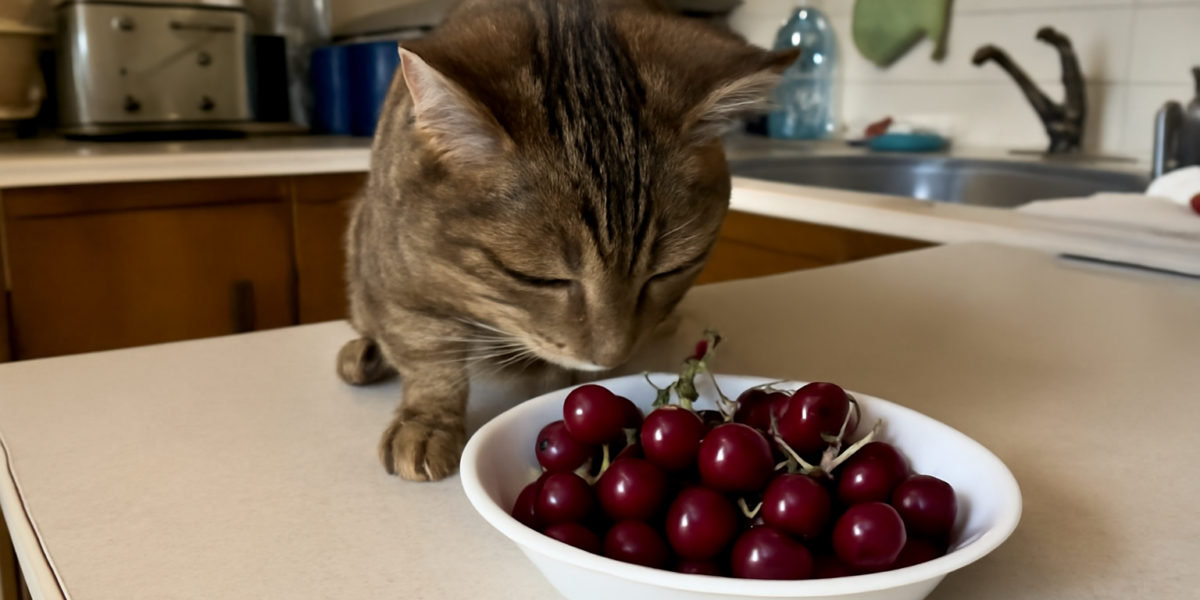
Store fresh cherries in the refrigerator or in a sealed container that your cat cannot open. Never leave a bowl of whole cherries on the counter or table where your cat can reach them. Dispose of cherry pits, stems, and leaves in a sealed trash can that your cat cannot access. If you have a cherry tree in your yard, consider whether your outdoor or indoor-outdoor cat can access fallen fruit, leaves, or branches, and take steps to limit access if needed.
If you’re eating cherries, be mindful of where you place the pits and stems. Cats are curious creatures and may bat around a cherry stem as a toy or investigate a discarded pit. Clean up all cherry remnants promptly and thoroughly.
When to Call the Vet
Call your veterinarian immediately if your cat has consumed any cherry stems, pits, or leaves. Call immediately if your cat shows any symptoms of cyanide poisoning, including difficulty breathing, bright red gums, dilated pupils, drooling, seizures, or collapse. Even if your cat ate a whole cherry and seems fine, contact your vet for guidance, as symptoms of cyanide exposure can develop rapidly after an initial asymptomatic period. When in doubt, always err on the side of caution with cherry-related incidents. Cyanide poisoning is treatable when caught early, but delays in treatment can have devastating consequences.
Frequently Asked Questions
How many cherry pits does it take to poison a cat?
Even a single cherry pit can be dangerous for a cat if it’s cracked or chewed, releasing the cyanogenic glycosides inside. Cats are small animals, and the amount of cyanide in one or two cherry pits could be enough to cause serious symptoms. Don’t assume that a small number of pits is safe. Any exposure to the contents of cherry pits should be treated as a potential emergency. Contact your vet immediately regardless of the number of pits involved.
Are all types of cherries equally toxic?
All varieties of cherries, including sweet cherries, sour cherries, and ornamental cherry varieties, contain cyanogenic glycosides in their stems, pits, and leaves. The concentration may vary slightly between varieties, but all should be treated as equally dangerous for cats. Wild cherries and chokecherries are particularly high in these toxic compounds. No variety of cherry is considered safe for cats to consume in whole form with the pit and stem intact.
My cat knocked a cherry off the counter and batted it around. Should I be worried?
If your cat only played with the cherry without biting into it or chewing on it, there’s likely no cause for concern. The toxic compounds are contained inside the pit and within the stem tissue, so surface contact with a whole cherry doesn’t pose a risk. However, check the cherry for bite marks or signs of chewing. If the cherry is intact, your cat is fine. If the cherry has been bitten into or the stem has been chewed, monitor your cat closely and contact your vet if any symptoms develop. Going forward, keep cherries stored where your cat can’t reach them to avoid a more serious incident.
Can cherry-flavored products harm my cat?
Cherry-flavored foods and products for human consumption typically use artificial flavoring or cherry juice concentrate and do not contain the cyanogenic glycosides found in cherry pits, stems, and leaves. These products are not specifically toxic from a cyanide standpoint. However, they often contain sugar, artificial sweeteners (some of which can be harmful to pets), artificial colors, and other additives that aren’t appropriate for cats. Keep cherry-flavored candies, drinks, and medicines away from your cat as a general precaution, but don’t panic if your cat licks a small amount of a cherry-flavored product.


