
Last updated: May 16, 2026
In this article
- Cherry Trees and Cats: A Toxic Plant Family
- The Cyanogenic Glycoside Mechanism
- Severity Tier and Why It Varies
- Which Parts of the Cherry Tree Matter Most
- Signs of Cherry Tree Toxicity in Cats
- What to Do If Your Cat Has Eaten Cherry Tree Material
- Cherry Trees vs Other Prunus Concerns
- Garden Layout for Cat Households
- Indoor and Container Cherry Plants
- Adoption Considerations
- Frequently Asked Questions
Cherry Trees and Cats: A Toxic Plant Family
Cherry trees are toxic to cats, and the toxicity sits in the moderate-to-severe tier depending on which part of the tree is chewed and how much. The common cherry trees you find in landscapes — sweet cherry (Prunus avium), sour cherry (Prunus cerasus), and ornamental Japanese flowering cherry (Prunus serrulata) — all share the same toxic chemistry. The compound of concern is cyanogenic glycosides, principally amygdalin and prunasin, which are present in the leaves, twigs, bark, and seed inside the pit. When these tissues are chewed, enzymes release small amounts of hydrogen cyanide, the same chemical class that makes apple seeds and almond pits worth keeping away from pets.
Ripe cherry fruit (the flesh, not the pit) is generally safe in moderation for cats, although most cats are not interested in eating fruit. The toxic concern is the rest of the tree — the leaves a curious cat might nibble, the twigs a kitten might play with, the pits a cat might mouth from a fallen fruit. If your cat has chewed any part of a cherry tree or eaten the pit, call your veterinarian, the ASPCA Animal Poison Control Center at 888-426-4435, or the Pet Poison Helpline at 855-764-7661. Search results for cherry trees toxic cats often surface this article precisely because owners are not sure how seriously to take the exposure.
The Cyanogenic Glycoside Mechanism
Cyanogenic glycosides are present in many plants in the Rosaceae family — cherries, peaches, plums, apricots, almonds, apples, pears, and several others. The compounds are stored in plant tissue in inactive form. When the tissue is damaged (chewed, crushed, fermented), enzymes called beta-glucosidases break the glycosides apart, releasing hydrogen cyanide as one of the breakdown products. Cyanide blocks cellular respiration by interfering with cytochrome oxidase, the enzyme cells use to extract energy from oxygen.
The amount of cyanide released depends on how thoroughly the plant tissue is chewed and how much was eaten. A cat that briefly mouths a cherry pit and spits it out is exposed to almost no cyanide. A cat that thoroughly chews a wad of cherry leaves can develop measurable signs. Wilted leaves are particularly worth watching out for — wilting concentrates the precursor compounds and the breakdown enzymes, so wilted cherry leaves are more dangerous than fresh ones. This is the same chemistry covered in our cherry leaves and cats article.
Severity Tier and Why It Varies
For typical exposures, cherry tree toxicity in cats lands in the moderate severity tier. Cats are obligate carnivores and are generally less inclined to chew foliage than dogs, which limits exposure events. When a cat does chew leaves or mouth a pit, the small amount of cyanide released is usually manageable. The body has natural detoxification pathways for low-level cyanide exposure. Symptoms in mild cases include drooling, vomiting, lethargy, and reduced appetite.
In larger ingestions — a cat that has thoroughly chewed multiple leaves, or a kitten that has cracked open a cherry pit — the picture shifts toward severe. Cyanide toxicosis at higher doses produces rapid breathing, bright cherry-red gums (because oxygen cannot be extracted from the blood), weakness, seizures, and in worst cases respiratory failure. Veterinary care for severe cyanide cases includes specific antidotes (sodium thiosulfate, hydroxocobalamin) and supportive intensive care.
Which Parts of the Cherry Tree Matter Most
The seed inside the pit has the highest cyanogenic glycoside concentration per gram. A whole intact pit that passes through a cat’s GI tract is unlikely to release much cyanide because the seed coat is intact. A cracked or chewed pit is much more concerning. Leaves and twigs have moderate concentrations, with wilted leaves being more dangerous than fresh due to enzyme release. Bark and roots contain lower amounts but are not zero. The flesh of ripe fruit contains very little cyanogenic compound, which is why ripe cherries are considered cat-safe in small amounts (most cats will not eat them anyway).
Practical implication: keep cats away from the tree itself, clean up fallen pits and leaves promptly, and watch out for branches that have been recently pruned and left within reach. Wilted prunings are the highest-risk material because they have both the toxic precursor and the activating enzymes ready to go.
Signs of Cherry Tree Toxicity in Cats
Mild cases show drooling, oral irritation, vomiting, decreased appetite, and lethargy. These signs often appear within a few hours of exposure and resolve over twelve to twenty-four hours with supportive care. Moderate cases add diarrhea, panting, mild incoordination, and dilated pupils. Severe cases — usually after a substantial leaf or pit ingestion in a small or already-compromised cat — include rapid labored breathing, bright cherry-red gums, weakness, collapse, seizures, and respiratory difficulty. Severe signs require immediate emergency care.
The cherry-red gum color is a hallmark sign of cyanide toxicosis. It happens because cyanide blocks cells from using oxygen, so the blood remains saturated with oxygen and looks bright red rather than the duller pink of normal gums. This sign is most reliable in cats with normally pink gums and may be harder to see in cats with naturally pigmented (black or dark) gum tissue.
What to Do If Your Cat Has Eaten Cherry Tree Material
Note the time, take a photo of the tree and any chewed material, and try to estimate how much your cat actually consumed. Bring a sample of the plant — including leaves, twigs, and pits if available — to your vet. The species of Prunus affects the response, although cherry, peach, plum, apricot, and almond all share the same chemistry.
Do not induce vomiting at home. At-home protocols developed for dogs (hydrogen peroxide) are unsafe for cats. Your vet has specific medications to induce vomiting in cats when appropriate, and the decision depends on the timing and amount. If your cat is showing breathing changes, weakness, or any neurological signs, head to an emergency vet rather than waiting for a regular appointment.
Cherry Trees vs Other Prunus Concerns
The Prunus genus is large, and many of its members share the same toxic chemistry. We have built up a substantial library on Prunus toxicity over the past few months. Cherry pits and dogs covers the seed-specific concern. Cherry leaves and cats and cherry leaves and dogs dive into leaf-specific exposures. Cherry laurel is an ornamental hedge plant that shares the chemistry. Chokecherry is a wild Prunus relative with similar concerns. Peach pits, almond trees, and others fill out the picture.
The unifying theme is that any plant with “cherry,” “peach,” “plum,” “apricot,” “almond,” or “chokecherry” in its name is worth treating with caution around pets. The chemistry is shared. Cherry trees specifically are the focus here because they are a common landscape choice and produce abundant fallen fruit that pets can encounter.
Garden Layout for Cat Households
If you have an established cherry tree, the practical risks for outdoor cats are fallen fruit, fallen leaves, and pruning debris. Pick up windfall daily during fruiting season. Rake leaves promptly in autumn rather than letting them sit and wilt. Bag pruning debris immediately and put it in a closed bin or take it directly to municipal yard waste. Do not pile prunings in the yard where cats can investigate.
For new gardens or replacement plantings, consider non-fruit-bearing alternatives. Various flowering trees provide spring color without the same toxicity profile — though always verify a specific species’ status with your local poison-control resources before planting. Our pet-safe garden plants roundup is a starting point.
Indoor and Container Cherry Plants
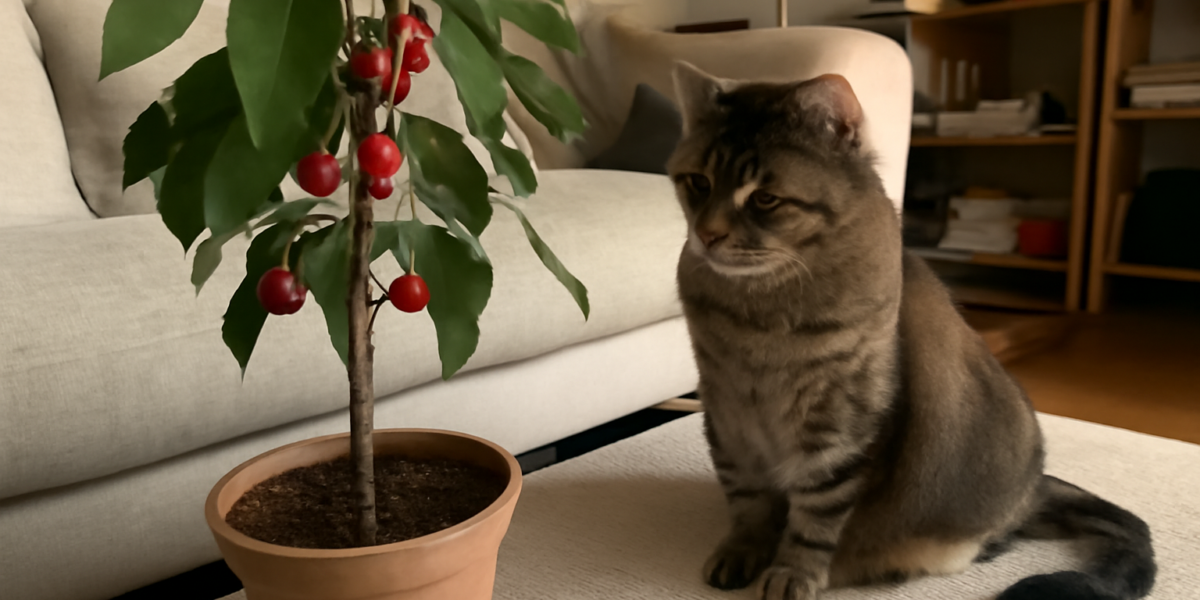
Cherry trees are typically too large for indoor cultivation, but ornamental cherry bonsai are sometimes grown indoors, and some compact cultivars work in patio containers. The toxic chemistry is the same regardless of growth habit. Indoor cats with access to a bonsai cherry tree have an exposure risk, particularly during pruning when small branches and leaves are at floor level. Keep bonsai out of reach in a closed room or on a high shelf.
Cherry blossoms occasionally show up indoors as cut flower arrangements during spring. Treat these the same way as the live tree — keep them out of reach of curious cats. Cat-safe flowers covers alternatives for spring arrangements that do not pose the same concern.
Adoption Considerations
If you are preparing for a new cat, walk the yard and identify any fruit trees during the prep phase. Cherry trees are common in established neighborhoods and many homes have one in the yard or a neighbor’s yard with branches overhanging the fence. Knowing what you are working with lets you plan supervision and cleanup routines accordingly. Visit adopt cats for broader prep guidance.
For cats already in the household, an annual yard audit (early spring before leaves emerge is a good time) catches new growth and any branches that have grown into reachable positions. The cat-care section of our blog includes more practical content for adapting your environment as your cat’s habits change. Cat-safe houseplants and the cherry laurel article are useful companions to this one.
Frequently Asked Questions
Is the cherry fruit itself safe for cats?
The flesh of ripe cherry fruit is generally considered safe in small amounts, although most cats are not interested. The pit, stem, and any unripe fruit are concerning because of the cyanogenic glycoside content. Remove pits before sharing any cherry flesh.
What if my cat just licked a cherry leaf?
A brief lick is unlikely to cause significant exposure. Watch for any drooling, vomiting, or behavior changes over the next several hours. If you see any concerning signs, call your vet. A more cautious owner can call a poison helpline immediately for guidance.
Are wilted cherry leaves really more dangerous than fresh ones?
Yes. Wilting damages plant tissue, which activates the enzymes that release cyanide from the cyanogenic glycosides. The result is more available cyanide per gram of leaf. Fall-cleanup piles of cherry leaves and recently pruned branches are particularly concerning.
How long after eating cherry leaves would my cat show symptoms?
Mild signs (drooling, vomiting) often appear within a few hours. Serious cyanide toxicosis can develop very quickly — within fifteen to thirty minutes of a substantial ingestion. The window for intervention is narrow in severe cases, which is why prompt vet contact is so important.
Are ornamental Japanese flowering cherries safer than fruiting cherries?
The toxic chemistry is the same. Japanese flowering cherries (Prunus serrulata) produce the same cyanogenic glycosides in leaves and twigs as fruiting cherries do. They typically produce little or no fruit, which removes the pit-ingestion risk, but the leaf and twig risk remains.


