
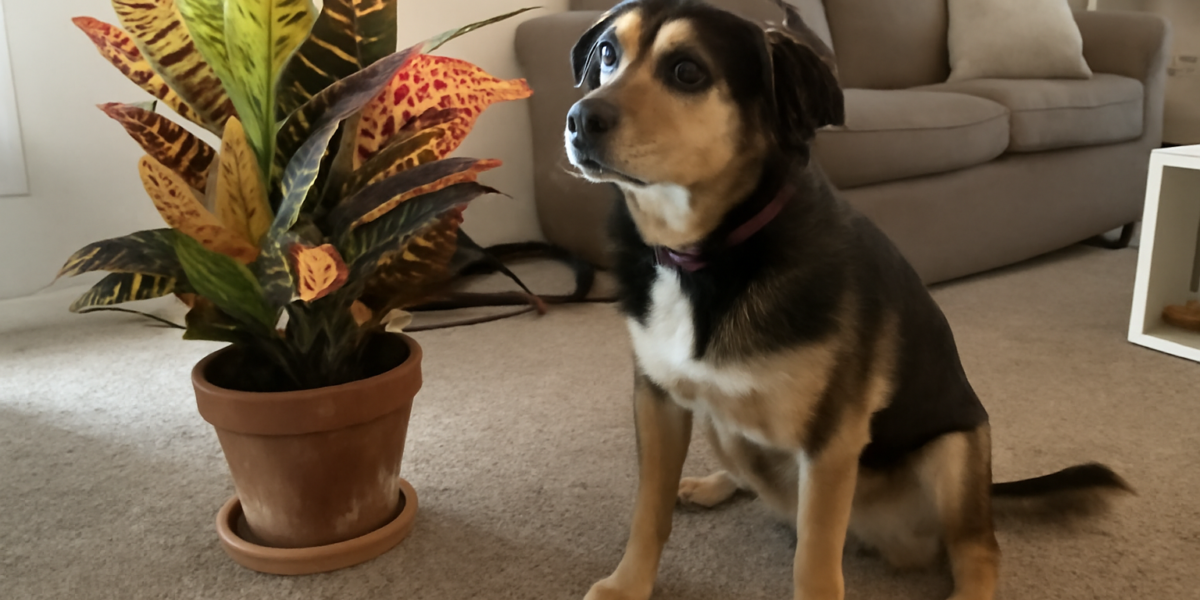
Croton Plants Are Mildly Toxic to Dogs
Croton plants (Codiaeum variegatum) are toxic to dogs, though the toxicity is generally classified as mild. The plant’s milky sap contains compounds called diterpene esters — specifically 5-deoxyingenol — that irritate the skin, mouth, and gastrointestinal tract on contact. Dogs who chew on croton leaves, stems, or bark can develop oral irritation, drooling, vomiting, and diarrhea.
In this article
While croton poisoning rarely causes severe or life-threatening symptoms, the irritant sap can produce significant discomfort, especially if a dog chews extensively or if sap contacts the eyes. If your dog has chewed on a croton plant or you notice signs of oral irritation, contacting your veterinarian for guidance is the responsible next step.
Croton plants are popular for their boldly colored leaves in vivid combinations of yellow, orange, red, green, and purple. They are common both as houseplants and as outdoor landscaping plants in warm climates like Florida, southern Texas, and Hawaii, where dogs may encounter them in yards and public spaces.
Understanding Croton’s Toxic Compounds
Unlike many toxic houseplants that rely on calcium oxalate crystals, croton plants use a different mechanism of toxicity. The primary toxic agents are diterpene esters found in the plant’s milky white sap (latex), which is present in all parts of the plant — leaves, stems, roots, and bark.
The specific compound of concern is 5-deoxyingenol, a diterpene ester that acts as a potent skin and mucous membrane irritant. When the plant tissue is broken — by chewing, snapping a stem, or tearing a leaf — the sap is released and immediately begins irritating any tissue it contacts.
Diterpene esters cause irritation through a pro-inflammatory mechanism, activating protein kinase C and triggering a localized inflammatory cascade. This results in redness, swelling, and pain at the contact site. If ingested, the same inflammatory process occurs along the gastrointestinal tract, producing nausea, vomiting, and diarrhea.
The bark and roots tend to contain higher concentrations of these irritant compounds than the leaves, though all parts should be considered toxic. Young, actively growing shoots also contain ample sap. The level of sap production varies somewhat by variety, but no Codiaeum cultivar is considered safe for dogs.
Symptoms of Croton Poisoning in Dogs
Symptoms of croton toxicity typically appear within minutes to a few hours of exposure. The presentation depends on whether the dog chewed and ingested plant material or simply had skin or eye contact with the sap.
Oral and GI Symptoms (From Chewing or Ingestion)
- Drooling and hypersalivation
- Pawing at the mouth
- Redness and irritation of the gums, tongue, and lips
- Nausea and lip licking
- Vomiting, which may occur one to several times
- Diarrhea, sometimes with blood in severe cases
- Decreased appetite lasting 12 to 24 hours
Skin Contact Symptoms
- Redness and irritation at the contact site
- Itching and possible mild swelling
- Rash-like reaction, similar to contact dermatitis
Eye Contact Symptoms
- Intense redness and tearing
- Squinting or holding the eye shut
- Pawing at the affected eye
- Corneal irritation in severe cases
Most dogs who chew on a croton leaf or two experience a self-limiting episode of drooling and possible vomiting that resolves within a few hours to a day. The bitter, unpleasant taste of the sap typically discourages prolonged chewing, which helps limit the severity of most exposures.
First Aid for Croton Exposure in Dogs
The appropriate first aid response depends on the type of exposure your dog has had.
For Oral Ingestion
- Remove plant access. Take the plant away from your dog and collect any chewed pieces for identification.
- Rinse the mouth. Offer your dog fresh water to drink. You can also gently wipe the mouth, gums, and tongue with a damp cloth to remove residual sap.
- Do not induce vomiting unless specifically instructed by your veterinarian. The irritant sap will cause additional damage to the esophagus on the way up.
- Monitor for symptoms. Watch for vomiting, diarrhea, and signs of discomfort over the next 6 to 12 hours.
- Call your vet. Report the exposure and describe what you observe. For minor chewing with mild drooling, home monitoring may be sufficient. For repeated vomiting or significant oral swelling, an in-person exam is recommended.
For Skin Contact
- Wash the area. Rinse the affected skin thoroughly with lukewarm water and a mild soap to remove all sap residue. Wear gloves to protect your own hands from the irritant.
- Monitor for irritation. If redness develops, a cool compress can soothe the area. Contact your vet if the irritation is severe or if your dog is scratching at the site excessively.
For Eye Contact
- Flush the eye immediately. Use sterile saline solution or clean lukewarm water to gently flush the affected eye for five to ten minutes. This is a two-person job — one to hold the dog, one to flush.
- Seek veterinary care. Eye exposure to plant irritants should always be evaluated by a veterinarian, as corneal damage may not be immediately apparent. Your vet can perform a fluorescein stain test to check for corneal ulceration.
For more on plants that can harm your dog, our article on chinese evergreen and dogs covers another houseplant to watch for.
Veterinary Treatment and Prognosis
Treatment for croton poisoning is supportive and aimed at managing symptoms while the irritation resolves naturally.
Anti-nausea medication: For dogs with persistent vomiting, maropitant (Cerenia) or ondansetron can provide relief and prevent dehydration from fluid loss.
Gastroprotectants: Sucralfate may be given to coat and protect irritated gastrointestinal mucosa. Famotidine or omeprazole can reduce stomach acid production, allowing irritated tissue to heal faster.
Fluid support: If vomiting or diarrhea has been significant, subcutaneous or intravenous fluids replace lost fluids and electrolytes.
Skin treatment: For contact dermatitis, your vet may prescribe a topical corticosteroid cream or antihistamines to reduce inflammation and itching.
Eye treatment: If the eye is affected, prescription ophthalmic drops including antibiotics and anti-inflammatory agents may be needed. A follow-up examination ensures the cornea is healing properly.
The prognosis for croton poisoning in dogs is excellent. Most oral exposures resolve completely within 24 hours with supportive care. Skin reactions typically clear within a few days. Eye exposures have a good prognosis when flushed promptly, though corneal irritation may require several days of treatment.
Keeping Your Dog Safe Around Croton Plants
Whether you grow crotons indoors or they are present in your outdoor landscape, these measures help prevent exposure.
- Position indoor crotons out of reach. High shelves, hanging baskets, or plant stands that your dog cannot access are the simplest solutions. Be mindful that croton leaves can drop naturally — sweep up fallen leaves regularly.
- Fence outdoor crotons. In warm climates where crotons grow as landscape plants, small decorative fences or raised planters can create a barrier between your dog and the plants.
- Clean up pruning debris. When you prune or trim croton plants, collect all cuttings immediately. The fresh-cut stems release the most sap, which is the most irritating.
- Wear gloves when handling. Protect your own skin when pruning, repotting, or moving croton plants. Wash your hands before touching your dog after handling any part of the plant.
- Consider pet-safe tropical alternatives. If you love colorful foliage, consider coleus (now classified in the mint family and considered non-toxic to dogs by the ASPCA), bromeliads, or polka dot plants as safer options with similarly vibrant colors.
For dog owners building a pet-safe home, our dog adoption hub includes preparation guides, and our dog care section covers a wide range of safety and wellness topics.
Frequently Asked Questions
Can a croton plant kill a dog?
Fatalities from croton plant ingestion in dogs are exceptionally rare. Croton toxicity is classified as mild, and the bitter sap taste typically prevents dogs from eating enough to cause serious harm. The primary concern is gastrointestinal irritation and discomfort, which resolves with supportive care. Severe outcomes would only be plausible with massive ingestion and no veterinary treatment.
Are all croton varieties toxic to dogs?
Yes, all cultivars of Codiaeum variegatum are toxic to dogs. Whether it is a Petra, Mammy, Gold Dust, Eleanor Roosevelt, or any other named variety, the irritant sap is present in every Codiaeum plant. The closely related garden croton (Codiaeum species) should be treated with the same caution.
Is croton toxic to cats as well?
Yes, the ASPCA lists croton as toxic to both dogs and cats. Cats who chew on croton may experience the same oral irritation, drooling, and vomiting. Because cats are generally smaller than most dogs, even a small exposure can produce noticeable symptoms.
My dog rubbed against a croton but did not eat it. Is that a concern?
Brief contact with intact croton leaves is unlikely to cause problems because the sap is contained within the plant tissue. However, if a leaf was damaged or broken, sap could transfer to your dog’s fur or skin and cause mild contact irritation. If your dog shows no signs of skin redness or discomfort, they are likely fine. Rinse the area with water as a precaution.
How long do symptoms of croton poisoning last in dogs?
Most gastrointestinal symptoms from croton ingestion resolve within 12 to 24 hours. Oral irritation and drooling typically subside within a few hours. Skin reactions may persist for two to three days if the sap is not washed off promptly. Eye irritation duration depends on severity but usually improves within 24 to 72 hours with appropriate veterinary treatment.


