
Last updated: May 4, 2026
In this article
- Are Crown of Thorns Plants Toxic to Cats?
- Understanding Euphorbia Sap and Its Toxic Compounds
- Symptoms of Crown of Thorns Poisoning in Cats
- First Aid for Crown of Thorns Exposure
- Veterinary Treatment and Prognosis
- Preventing Crown of Thorns Exposure
- Other Euphorbia Plants to Watch Out For
- Frequently Asked Questions
Are Crown of Thorns Plants Toxic to Cats?
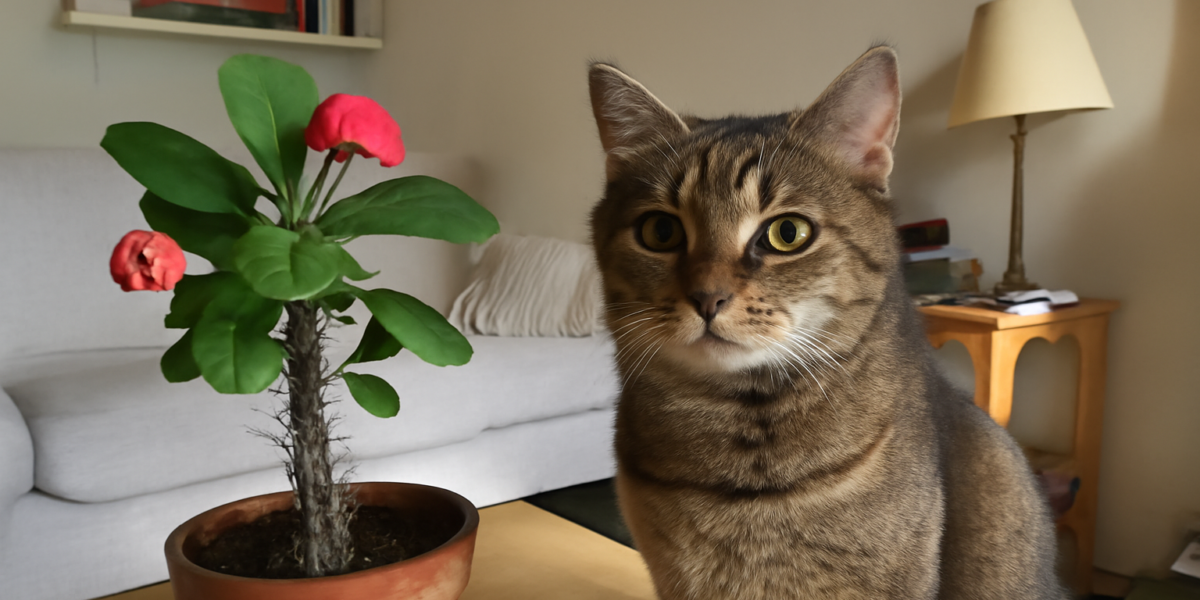
Yes, crown of thorns plants (Euphorbia milii) are toxic to cats. This popular succulent produces a milky white latex sap that contains diterpene esters, which are potent irritants to skin, eyes, and mucous membranes. When a cat chews on or bites into any part of the plant, the sap causes immediate oral irritation, gastrointestinal distress, and potentially eye damage if contact occurs.
The toxicity level is considered mild to moderate. Crown of thorns poisoning is unlikely to be fatal, but the plant’s sharp thorns and caustic sap can cause significant pain and discomfort. The double danger of physical puncture wounds from the thorns combined with chemical irritation from the sap makes this plant particularly problematic for curious cats.
Understanding Euphorbia Sap and Its Toxic Compounds
Crown of thorns belongs to the Euphorbiaceae family, one of the largest plant families in the world. Nearly all Euphorbia species produce the characteristic milky latex that serves as the plant’s defense mechanism against herbivores and pathogens.
The latex contains several toxic compounds, with diterpene esters being the primary irritants. These compounds trigger an inflammatory cascade on contact with living tissue. The sap also contains 5-deoxyingenol, which can cause severe skin reactions in sensitive individuals, including both cats and humans.
The sap is present in every part of the plant, including stems, leaves, flowers, and roots. It oozes freely whenever the plant is cut, broken, or even lightly damaged. A curious cat batting at the plant or biting a leaf can easily release enough sap to cause problems. The sap remains irritating even after drying, so fallen leaves or broken stem pieces on the floor are still hazardous.
Symptoms of Crown of Thorns Poisoning in Cats
Symptoms can vary depending on whether your cat ingested the plant, got sap on their skin, or got sap in their eyes. Oral exposure is the most common route for cats.
Oral and Gastrointestinal Symptoms
- Excessive drooling and salivation
- Pawing at the mouth
- Redness and swelling of the lips, tongue, and gums
- Vomiting, sometimes repeated
- Diarrhea
- Loss of appetite
Skin Contact Symptoms
- Redness and irritation at the contact site
- Blistering in severe cases
- Itching and excessive grooming of the affected area
- Hair loss at the contact site if irritation persists
Eye Exposure Symptoms
- Squinting or holding the eye shut
- Excessive tearing
- Redness and swelling of the eyelids
- Pawing at the affected eye
Eye exposure is a veterinary emergency. Euphorbia sap can cause chemical burns to the cornea and, in severe cases, temporary or permanent vision impairment. If you suspect sap has gotten into your cat’s eye, flush the eye with clean lukewarm water immediately and seek veterinary care without delay.
First Aid for Crown of Thorns Exposure
Your immediate response depends on the type of exposure. For oral ingestion, remove any plant material from your cat’s mouth if safe to do so. Offer fresh water to help dilute the sap and rinse the mouth. Do not induce vomiting, as the sap will cause additional irritation on the way back up.
For skin contact, gently wash the affected area with mild soap and lukewarm water to remove as much sap as possible. Avoid scrubbing, which can push the irritant deeper into the skin. Pat dry with a soft towel.
For eye exposure, flush the eye with clean lukewarm water or sterile saline for at least 10 to 15 minutes. Hold your cat gently but firmly, and use a slow steady stream of water. This is critical for minimizing corneal damage.
Check your cat for thorn puncture wounds as well. The sharp spines on crown of thorns plants can cause painful stab wounds that may become infected. Clean any visible wounds with mild antiseptic.
Call your veterinarian or the ASPCA Animal Poison Control Center (888-426-4435) after providing first aid. Describe the type and estimated amount of exposure so they can advise on whether an in-person visit is needed.
Veterinary Treatment and Prognosis
Veterinary treatment for crown of thorns poisoning is primarily supportive. For oral exposure, your vet may administer anti-nausea medication, pain relief, and gastroprotectants to soothe the irritated digestive tract. IV fluids may be given if your cat has been vomiting repeatedly or is dehydrated.
Skin exposure is treated with thorough cleansing and topical medications to reduce inflammation and prevent infection. Your vet may prescribe a short course of oral antihistamines or corticosteroids for significant skin reactions.
Eye exposure requires a thorough ophthalmic examination, often including fluorescein staining to check for corneal ulcers. Treatment may include medicated eye drops, pain management, and an Elizabethan collar to prevent your cat from rubbing the eye. Follow-up exams are important to ensure the cornea heals properly.
The prognosis for crown of thorns poisoning is generally excellent. Most cats recover fully within one to three days for oral and skin exposure. Eye injuries may take longer to heal depending on severity but typically resolve well with proper treatment.
Preventing Crown of Thorns Exposure
The safest approach is to keep crown of thorns plants out of homes with cats entirely. If you love the plant’s appearance, display it in a room your cat cannot access or in an outdoor area where your cat does not roam.
If you choose to keep the plant, elevate it on a high shelf that your cat truly cannot reach. Keep in mind that cats are exceptional climbers and jumpers, so “high enough” may be higher than you expect. Fallen leaves or broken pieces should be cleaned up immediately.
When pruning or repotting crown of thorns, wear gloves and long sleeves to protect yourself from the sap. Keep your cat in a separate room during plant maintenance, and clean up all debris thoroughly before allowing your cat back into the area.
Consider replacing crown of thorns with cat-safe succulents that offer a similar aesthetic. Haworthia, echeveria, and certain Peperomia species are non-toxic alternatives that thrive in similar conditions. You can explore more about common household plants and cat safety to make informed choices for your home.
Other Euphorbia Plants to Watch Out For
Crown of thorns is just one member of the vast Euphorbia family. Other commonly grown Euphorbia species that pose the same sap-related risks to cats include pencil cactus (Euphorbia tirucalli), poinsettia (Euphorbia pulcherrima), and African milk tree (Euphorbia trigona).
While the severity varies between species, all Euphorbia plants produce the irritant latex sap. Pencil cactus is notably more dangerous than crown of thorns, as its sap is more concentrated and can cause severe eye damage. If you have multiple Euphorbia plants in your home, it may be worth reconsidering their placement or replacing them entirely with cat-friendly alternatives.
Frequently Asked Questions
Can crown of thorns poisoning kill a cat?
Fatal crown of thorns poisoning is very unlikely. The irritant nature of the sap usually limits the amount a cat will ingest because it causes immediate discomfort. The greatest risk is from severe eye exposure, which can cause lasting damage if not treated promptly but is not typically life-threatening.
How long do symptoms of crown of thorns poisoning last?
Most oral and skin symptoms resolve within 24 to 72 hours with appropriate care. Eye injuries may take one to two weeks to heal fully, depending on severity. If symptoms persist beyond 48 hours for oral or skin exposure, follow up with your veterinarian.
Is dried crown of thorns sap still toxic to cats?
Yes. While dried sap is somewhat less potent than fresh sap, it can still cause irritation if a cat chews on dried plant material. Always clean up fallen leaves, broken stems, and any dried sap residue from surfaces your cat can access.
Are the thorns on crown of thorns plants dangerous to cats?
Yes. Beyond the chemical toxicity of the sap, the sharp thorns can cause puncture wounds in the mouth, paws, and face. These wounds can become infected, especially if sap enters the wound. Thorn injuries paired with sap exposure create a painful double impact that warrants veterinary attention.
My cat just sniffed a crown of thorns plant. Should I be concerned?
Sniffing alone, without biting or breaking the plant, is unlikely to cause problems. The sap needs to be released for exposure to occur. However, if your cat rubbed their nose against the plant and contacted sap, you may see mild nasal irritation or sneezing. Monitor for any developing symptoms and contact your vet if concerns arise.


