
Last updated: May 4, 2026
In this article
- Is Pencil Cactus Toxic to Cats?
- Why Pencil Cactus Sap Is So Dangerous
- Symptoms of Pencil Cactus Poisoning in Cats
- First Aid for Pencil Cactus Exposure
- Veterinary Treatment for Pencil Cactus Poisoning
- Keeping Cats Safe From Pencil Cactus
- Pencil Cactus Compared to Other Toxic Houseplants
- Frequently Asked Questions
Is Pencil Cactus Toxic to Cats?
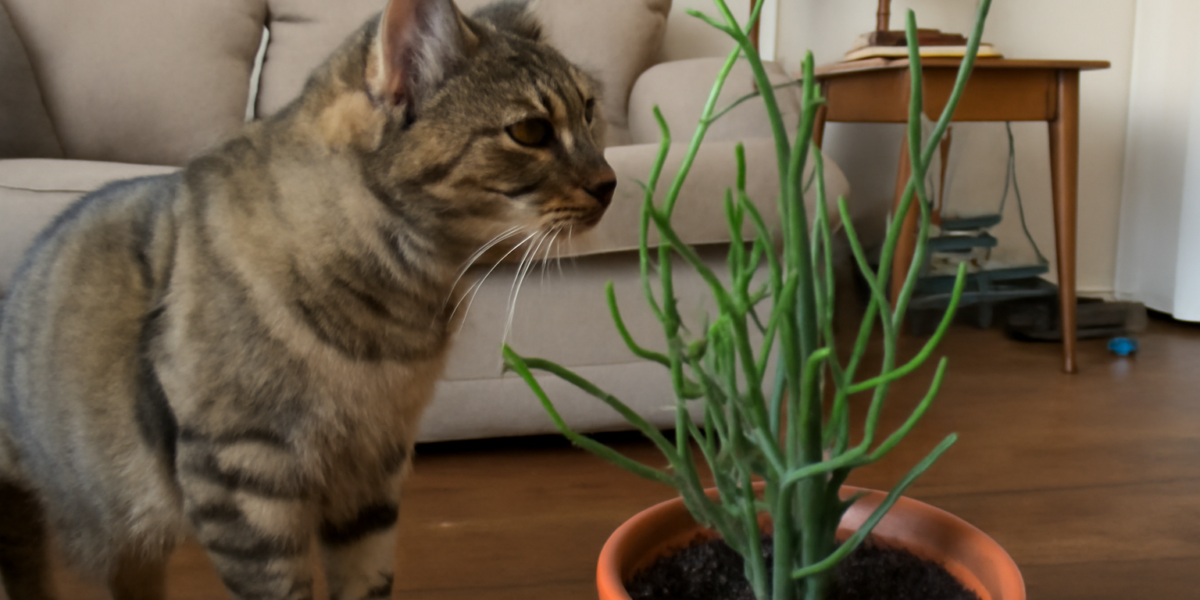
Yes, pencil cactus is toxic to cats and is considered one of the more dangerous common houseplants. Euphorbia tirucalli, known as pencil cactus, firestick plant, or milk bush, produces a highly caustic milky latex sap that causes chemical burns on contact with skin, eyes, and mucous membranes. This plant’s toxicity to cats is rated moderate to severe, making it a significant concern for cat owners.
The sap contains diterpene esters, particularly phorbol esters, which are among the most irritating compounds found in ornamental plants. Even a small amount of sap exposure can cause intense pain, blistering, and in the case of eye contact, temporary or permanent vision damage. The pencil cactus releases sap freely from its brittle, easily broken stems, which makes accidental exposure all too easy.
Why Pencil Cactus Sap Is So Dangerous
All plants in the Euphorbia family produce irritant latex, but pencil cactus sap is notably more concentrated and caustic than many of its relatives. The primary toxic compounds are phorbol esters, which trigger severe inflammatory reactions in living tissue. These compounds are so potent that they have been studied for their tumor-promoting properties in laboratory settings.
The sap is present throughout the plant but is most concentrated in the green, pencil-thin stems that give the plant its name. These stems are brittle and snap easily. A cat playing with, batting at, or biting a stem can release a substantial amount of sap in an instant. The sap is sticky and adheres to fur, skin, and paws, prolonging exposure.
Unlike calcium oxalate plants that cause immediate oral pain (which limits consumption), pencil cactus sap may not produce instant pain when first contacted. This means a cat might get more sap on itself before discomfort sets in, increasing the severity of exposure. The inflammatory reaction builds over minutes to hours, making it deceptively dangerous.
Symptoms of Pencil Cactus Poisoning in Cats
Symptoms depend on the route of exposure. Pencil cactus can affect cats through oral ingestion, skin contact, or eye exposure.
Oral Exposure
- Excessive drooling and salivation
- Swelling of the mouth, lips, and tongue
- Vomiting, potentially severe and repeated
- Diarrhea
- Refusal to eat or drink
- Visible redness or blistering inside the mouth
Skin Contact
- Redness and inflammation at the contact site
- Blistering or chemical burn marks
- Intense itching and discomfort
- Hair loss in the affected area
- Excessive grooming of the exposed area (which can spread the sap)
Eye Exposure
- Squinting or complete closure of the affected eye
- Excessive tearing and discharge
- Severe redness and swelling of the eyelids
- Corneal ulceration in severe cases
- Temporary or, rarely, permanent vision impairment
Eye exposure is the most serious form of pencil cactus poisoning. Veterinary ophthalmologists have documented cases of severe keratitis (corneal inflammation), uveitis (inflammation inside the eye), and permanent scarring from Euphorbia tirucalli sap. If sap gets into your cat’s eye, treat it as a true emergency.
First Aid for Pencil Cactus Exposure
Speed is critical with pencil cactus exposure. The longer the sap remains in contact with tissues, the more damage it causes.
For Eye Exposure
Flush the affected eye immediately with lukewarm water or sterile saline for at least 15 to 20 minutes. Use a gentle, steady stream from a cup, squeeze bottle, or faucet. Hold your cat securely, wrapping in a towel if needed. Do not rub the eye. Head to the nearest emergency vet immediately after flushing.
For Skin Exposure
Wash the affected area thoroughly with mild soap and lukewarm water. Rinse for several minutes to ensure all sap is removed. Prevent your cat from grooming the area, as this transfers sap to the mouth. An Elizabethan collar can help if you have one available.
For Oral Exposure
Offer fresh water to help rinse the mouth. A small amount of plain yogurt or milk may help soothe irritated tissues. Do not induce vomiting. Remove any visible plant material from the mouth if you can do so safely while wearing gloves.
Contact your veterinarian or the ASPCA Animal Poison Control Center (888-426-4435) immediately regardless of the type of exposure. Given the severity of pencil cactus sap, err on the side of seeking professional evaluation.
Veterinary Treatment for Pencil Cactus Poisoning
Treatment is supportive and targeted at the type of exposure. For oral ingestion, your vet will manage pain with appropriate analgesics, control nausea with anti-emetics, and provide IV fluids if your cat is dehydrated from vomiting. Gastroprotectants help protect the already-irritated digestive tract.
Skin burns are treated with gentle cleansing, topical anti-inflammatory medications, and possibly systemic pain relief. Severe chemical burns may require wound management similar to thermal burn care, including bandaging and monitoring for secondary infection.
Eye exposure typically requires a comprehensive ophthalmic exam including fluorescein staining to assess corneal damage. Treatment may include topical antibiotics, anti-inflammatory eye drops, atropine for pain control, and an Elizabethan collar. Severe cases may need referral to a veterinary ophthalmologist. Follow-up exams are essential to monitor healing and catch complications.
Recovery time varies by severity. Mild skin or oral exposure may resolve in two to five days. Significant eye injuries can take two to four weeks to heal and may require ongoing treatment. The prognosis is good with prompt treatment, though severe eye exposure can occasionally result in lasting vision changes.
Keeping Cats Safe From Pencil Cactus
Given the severity of pencil cactus toxicity, the strong recommendation for cat households is to not keep this plant at all. The risk simply outweighs the decorative appeal. The brittle stems break easily, releasing sap with minimal force, and cats’ natural curiosity and tendency to bat at stick-like objects makes contact highly likely.
If you currently have a pencil cactus, wear heavy gloves and eye protection when removing it. Place it in a sealed bag for disposal or rehome it to a pet-free household. Clean any surfaces where the plant sat, as dried sap residue can still cause irritation.
For a similar aesthetic without the danger, consider non-toxic succulents like Haworthia, Echeveria, or Sempervivum. These offer the modern, architectural look that draws people to pencil cactus without posing a threat to your cat. You can read more about Euphorbia family plants and cat safety to understand the broader risks within this plant group.
Pencil Cactus Compared to Other Toxic Houseplants
Among common houseplants, pencil cactus ranks as one of the more dangerous for cats. Its sap is more caustic than that of dumb cane (Dieffenbachia), which causes painful but generally less severe calcium oxalate crystal reactions. It is also more dangerous than poinsettia, a fellow Euphorbia with much milder sap.
The eye damage potential puts pencil cactus in a higher risk category than most common houseplants. While many toxic plants cause temporary gastrointestinal upset, few carry the risk of permanent vision damage that pencil cactus does. This distinction makes removal from cat households especially important.
If you are reviewing all your houseplants for safety, check other common toxic plants that might be in your collection. Creating a fully cat-safe indoor garden is achievable with a bit of research and some thoughtful plant swaps.
Frequently Asked Questions
Can pencil cactus sap blind a cat?
In severe cases, yes. Pencil cactus sap can cause corneal ulceration, scarring, and in rare instances, permanent vision impairment. Prompt flushing of the eye and immediate veterinary treatment significantly reduce the risk of lasting damage. This is why eye exposure should always be treated as an emergency.
Is pencil cactus the most toxic houseplant for cats?
Pencil cactus is among the more toxic common houseplants, particularly regarding eye injury risk. However, true lilies (Lilium and Hemerocallis) are considered more dangerous overall because they can cause fatal kidney failure in cats even from small exposures. Both plants should be kept far from cats.
How much pencil cactus sap is dangerous to a cat?
Even a small amount of sap can cause significant irritation. A single broken stem releases enough latex to cause oral blistering or skin burns. Eye exposure to even a tiny splash can result in corneal damage. There is no “safe” amount of pencil cactus sap for cats.
Is dried pencil cactus sap still toxic?
Dried sap retains some irritant properties, though it is less potent than fresh latex. Dried sap flakes or residue on surfaces can still cause skin or oral irritation if a cat contacts them. Thoroughly clean any areas where the plant was kept after removal.
Can I keep a pencil cactus outdoors away from my cat?
If your cat is strictly indoors and never accesses the outdoor area where the pencil cactus is kept, this can work. However, if your cat has any outdoor access or if wind could blow broken pieces near entry points, the risk remains. Always wear protective gear when handling this plant to protect yourself as well.


