
Last updated: May 4, 2026
In this article
Is Dumb Cane Toxic to Cats?
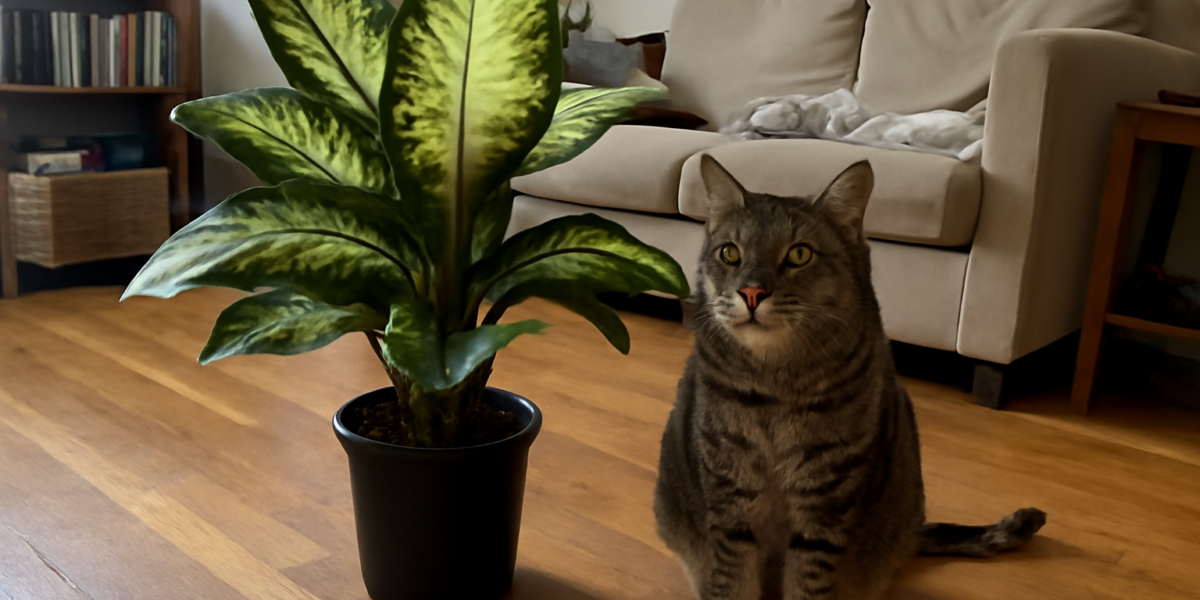
Yes, dumb cane is toxic to cats. Dieffenbachia, commonly known as dumb cane, contains insoluble calcium oxalate crystals throughout its leaves, stems, and roots. When a cat chews on any part of this popular houseplant, microscopic needle-shaped crystals called raphides are released and penetrate the soft tissues of the mouth, tongue, and throat. The result is immediate, intense pain and swelling.
The toxicity is classified as mild to moderate in most cases. The plant gets its common name “dumb cane” from the temporary speechlessness (or in a cat’s case, difficulty vocalizing and swallowing) that severe oral swelling can cause. While fatalities are extremely rare, the combination of pain, swelling, and potential airway compromise means dumb cane exposure in cats should always be taken seriously.
Dieffenbachia is one of the most common houseplants worldwide, prized for its large, attractive variegated leaves. Unfortunately, its popularity means it frequently appears in homes with cats, creating an ongoing exposure risk.
How Dumb Cane Crystals Harm Your Cat
The toxic mechanism of dumb cane involves both physical and chemical components. Calcium oxalate crystals are stored in specialized cells called idioblasts. When the plant tissue is damaged by chewing, these cells essentially fire the raphide crystals like tiny needles into the surrounding tissue.
The crystals themselves cause mechanical damage by puncturing cell membranes in the mouth, tongue, and throat. This triggers the release of histamine and other inflammatory mediators, leading to rapid swelling and pain. The deeper the crystals penetrate, the more severe the reaction.
Dieffenbachia also contains proteolytic enzymes, including a trypsin-like compound, that break down proteins in the tissue. These enzymes amplify the damage caused by the crystals, creating a more intense inflammatory response than calcium oxalate crystals alone would produce. This is why dumb cane reactions can be more severe than those from other oxalate-containing plants.
Symptoms of Dumb Cane Poisoning in Cats
Symptoms typically appear within seconds to minutes of chewing the plant. The rapid onset of pain is actually somewhat protective, as it usually prevents cats from consuming large amounts. Common symptoms include:
- Intense pawing at the mouth and face
- Excessive drooling, often profuse
- Visible swelling of the lips, tongue, and oral tissues
- Difficulty swallowing (dysphagia)
- Gagging or retching
- Vocalizing in pain or unusual quietness
- Vomiting
- Decreased or absent appetite
In more severe cases, the swelling can extend to the throat and upper airway. Signs of airway involvement include noisy breathing, wheezing, open-mouth breathing, and visible distress. If your cat shows any signs of breathing difficulty after chewing dumb cane, this is an emergency requiring immediate veterinary care.
Eye exposure can occur if a cat rubs its face after contacting the sap. Symptoms include squinting, excessive tearing, redness, and pawing at the eye. Corneal damage is possible if sap makes direct contact with the eye surface.
First Aid Steps for Dumb Cane Exposure
Acting quickly can reduce the severity of your cat’s symptoms. Start by gently removing any visible plant material from your cat’s mouth if you can do so without getting bitten. Wear gloves if possible, as the sap can irritate your skin too.
Offer your cat cool fresh water to help rinse the mouth and dilute any remaining crystals. A small amount of plain yogurt, milk, or lactose-free milk can help coat the irritated tissues and may bind some of the calcium oxalate crystals. Do not force fluids if your cat is having difficulty swallowing.
Do not induce vomiting. Bringing the plant material back up forces the crystals to pass through the already-damaged tissues again, worsening the injury. If your cat vomits on its own, that is a normal response and should not be prevented.
If sap has gotten into your cat’s eyes, flush them immediately with lukewarm water or sterile saline for at least 10 to 15 minutes. Hold your cat securely and use a gentle stream from a cup or squeeze bottle.
Contact your veterinarian or the ASPCA Animal Poison Control Center (888-426-4435) immediately. Even if symptoms seem mild, professional guidance ensures you do not miss a potentially serious reaction.
Veterinary Treatment and Expected Recovery
Your veterinarian will assess the severity of the oral swelling and check for airway compromise. Treatment is supportive and aimed at managing pain, reducing inflammation, and preventing complications.
Common treatments include antihistamines (such as diphenhydramine) to reduce swelling, pain medication, anti-nausea drugs if vomiting is ongoing, and gastroprotectants to soothe the GI tract. Corticosteroids may be administered in moderate to severe cases to control inflammation more aggressively.
Cats with significant swelling or those unable to drink may receive IV fluids to maintain hydration. In rare cases where airway swelling is severe, the cat may need to be hospitalized for close monitoring and potentially supplemental oxygen.
Most cats recover from dumb cane exposure within 24 to 48 hours. Oral discomfort may persist for up to a week in severe cases, but permanent damage from dumb cane ingestion is very uncommon. The prognosis is excellent with timely treatment.
Preventing Dumb Cane Exposure in Your Home
The most reliable prevention strategy is removing Dieffenbachia plants from your home entirely. If you are attached to the plant, consider these precautions:
- Place the plant in a room that is permanently closed off to your cat
- Use hanging planters positioned well out of jumping range
- Clean up fallen leaves immediately, as they remain toxic
- Wipe down surfaces below the plant where sap droplets may land
Be aware that cats are persistent and creative when it comes to reaching things that interest them. A shelf you think is inaccessible may not be. If you have a particularly curious or plant-obsessed cat, removal is the only truly safe option.
Many beautiful non-toxic houseplants can fill the same decorative niche. Spider plants, Boston ferns, prayer plants (Calathea), and cast iron plants (Aspidistra) are all safe for cats and offer lush, tropical foliage similar to Dieffenbachia. Explore our cat care resources for more tips on creating a cat-safe home.
Other Common Houseplants With Similar Risks
Dumb cane is not the only popular houseplant that contains calcium oxalate crystals. Philodendrons, pothos, peace lilies, and other common indoor plants pose similar risks. If you are auditing your home for plant safety, check all your houseplants against the ASPCA’s toxic plant database.
Some plants in the same family as Dieffenbachia, including Alocasia (elephant ear) and Caladium (angel wings), contain even higher concentrations of calcium oxalate and may cause more severe reactions. Plants from the Euphorbia family present a different type of toxicity through their irritant latex sap but can cause similar oral and skin symptoms.
Creating a fully pet-safe indoor garden takes some planning, but it is absolutely achievable. Many plant shops and nurseries now label their plants with pet-safety information, making it easier to choose wisely from the start.
Frequently Asked Questions
Can dumb cane kill a cat?
Fatal dumb cane poisoning in cats is extremely rare. The immediate pain from the calcium oxalate crystals usually prevents cats from eating enough plant material to cause life-threatening toxicity. The primary danger is severe oral or throat swelling that could compromise breathing, but this is uncommon and treatable with prompt veterinary care.
How much dumb cane does a cat need to eat to get sick?
Even a single bite can cause symptoms. The calcium oxalate crystals are released on contact with the mouth tissues, so chewing a small piece of leaf is enough to trigger drooling, pawing at the mouth, and oral swelling. Larger amounts consumed increase the risk of more severe reactions.
Is dumb cane toxic to cats if they just touch it?
Simply touching an intact dumb cane leaf is generally not harmful. The crystals are contained within the plant cells and are released only when the tissue is damaged. However, if a cat scratches or breaks a leaf and then contacts the sap, skin irritation can occur. Cats that groom sap off their paws can also develop oral symptoms.
My cat bit a dumb cane leaf but seems fine. Should I still call the vet?
Yes, it is always wise to call your vet for guidance even if symptoms seem minimal. Some cats develop delayed swelling, and your vet can advise you on what to watch for over the next several hours. A quick phone consultation can provide peace of mind and catch developing problems early.
Are all Dieffenbachia varieties equally toxic to cats?
All Dieffenbachia species and cultivars contain calcium oxalate crystals and should be considered toxic to cats. While the exact concentration of crystals may vary between varieties, no Dieffenbachia is safe for cats to chew. Treat every variety with the same level of caution.


