
Last updated: April 10, 2026
In this article
- Are Elephant Ear Plants Toxic to Cats?
- Why Elephant Ears Are Especially Dangerous for Cats
- Symptoms of Elephant Ear Poisoning in Cats
- First Aid for Elephant Ear Ingestion
- Veterinary Treatment and Recovery
- Preventing Elephant Ear Exposure
- Other Toxic Plants for Cat Owners to Avoid
- Frequently Asked Questions
Are Elephant Ear Plants Toxic to Cats?
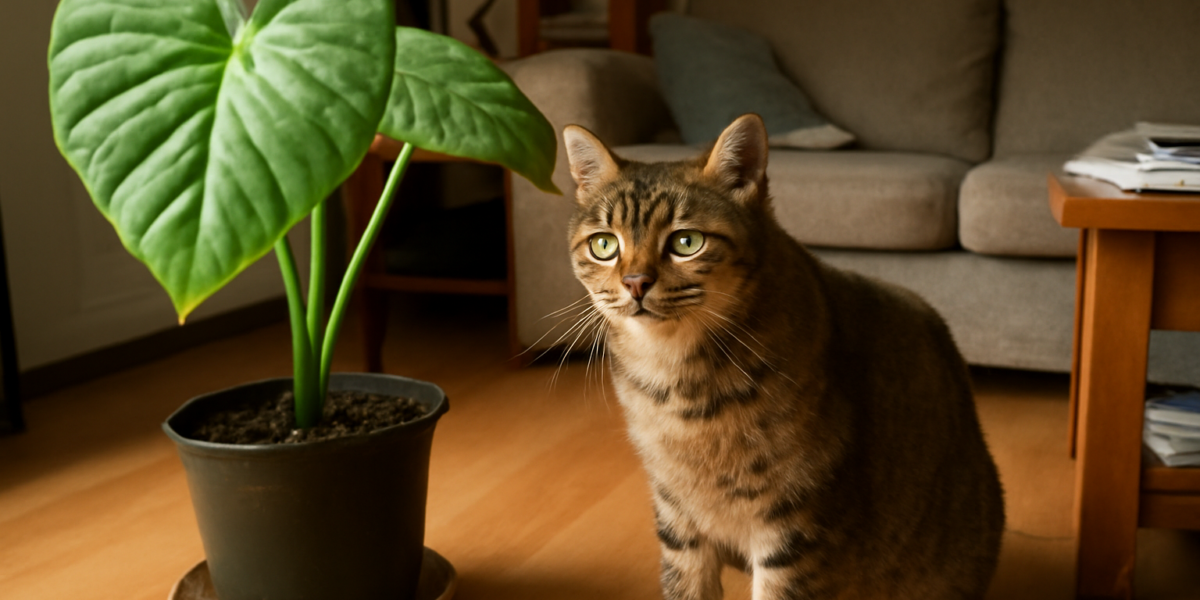
Yes, elephant ear plants are toxic to cats. Species in the Alocasia, Colocasia, and Caladium genera, all commonly called elephant ears, contain high concentrations of insoluble calcium oxalate crystals. When a cat bites into an elephant ear leaf or stem, these sharp, microscopic crystals embed in the mouth, tongue, and throat tissues, causing intense pain, swelling, drooling, and difficulty swallowing. Elephant ear toxicity is considered moderate to severe in cats.
Elephant ear plants are popular both outdoors in tropical-style gardens and indoors as dramatic houseplants. Their large, striking leaves make them eye-catching additions to any space, but for cat owners, the risk they carry is significant. Cats are especially vulnerable because of their smaller size and tendency to chew on dangling or broad-leaved plants.
Why Elephant Ears Are Especially Dangerous for Cats
Elephant ear plants contain some of the highest concentrations of insoluble calcium oxalate crystals among common houseplants. These crystals, called raphides, are stored in specialized cells throughout the plant. When the plant tissue is damaged by chewing, the raphides are ejected like tiny needles, penetrating soft tissue on contact.
Cats are particularly at risk for several reasons. Their smaller body weight means even a small amount of exposure can cause significant symptoms. Cats are obligate carnivores with sensitive digestive systems, making them less tolerant of plant toxins. They also tend to groom themselves thoroughly, which means any plant sap on their fur or paws will likely be ingested during grooming.
The calcium oxalate crystals in elephant ears cause primarily local tissue damage. Unlike soluble oxalates found in some other plants, insoluble calcium oxalate crystals do not typically cause kidney damage. However, the intense oral and throat irritation can be severe enough to cause breathing difficulties in cats, which constitutes a medical emergency.
Symptoms of Elephant Ear Poisoning in Cats
Symptoms appear almost immediately after a cat bites into any part of an elephant ear plant. The speed of onset is due to the mechanical nature of the injury, as the crystals cause instant tissue damage.
- Intense oral pain: Your cat may cry out, paw at their face, or shake their head.
- Excessive drooling: Heavy, continuous drooling is one of the hallmark signs.
- Swelling of the mouth, tongue, and lips: Visible puffiness that can develop rapidly.
- Difficulty swallowing: Gagging, retching, or reluctance to swallow.
- Vomiting: If any plant material is swallowed.
- Pawing at the mouth: Persistent attempts to paw at the face and mouth area.
- Refusal to eat or drink: The pain makes eating and drinking extremely uncomfortable.
- Voice changes: Hoarseness or loss of voice if the throat is affected.
Emergency Warning Signs
The following symptoms indicate a potentially life-threatening situation and require immediate veterinary attention:
- Severe swelling of the tongue or throat
- Difficulty breathing or wheezing
- Blue-tinged gums or tongue (cyanosis)
- Collapse or extreme weakness
Airway obstruction from throat swelling is the most serious risk associated with elephant ear ingestion in cats. If your cat shows any signs of breathing difficulty, treat it as an emergency.
First Aid for Elephant Ear Ingestion
Quick action can significantly reduce your cat’s discomfort and prevent complications:
- Remove your cat from the plant immediately. Prevent any further chewing or contact.
- Gently rinse your cat’s mouth. Use a syringe or damp cloth with cool water to flush the mouth. Be gentle as the tissues are already painful and inflamed.
- Offer cold water or ice chips. Cold can help reduce swelling and provide some pain relief. Do not force your cat to drink.
- Wipe down paws and fur. If sap from the plant got on your cat’s fur, wipe it off with a damp cloth to prevent ingestion during grooming.
- Call your veterinarian immediately. Due to the risk of throat swelling in cats, even mild cases of elephant ear ingestion should be evaluated by a vet.
- Do not induce vomiting. Vomiting would re-expose the esophagus and throat to calcium oxalate crystals and worsen the damage.
Contact the ASPCA Animal Poison Control Center at (888) 426-4435 if your regular vet is unavailable. Time is especially important with cats because throat swelling can progress quickly in small animals.
Veterinary Treatment and Recovery
Your veterinarian will examine your cat’s mouth and throat and assess the severity of the reaction. Treatment typically includes:
- Pain medication: To manage the intense discomfort from crystal-inflicted tissue damage.
- Anti-inflammatory drugs: To reduce swelling, particularly in the mouth and throat.
- Antihistamines: To help control the inflammatory response.
- IV or subcutaneous fluids: To maintain hydration if your cat cannot drink comfortably.
- Gastroprotectants: If plant material was swallowed and gastrointestinal irritation is present.
- Airway monitoring: In severe cases, your vet may need to monitor your cat’s breathing closely and provide oxygen support.
Most cats begin to improve within 12 to 24 hours as the initial swelling subsides. Full recovery typically takes one to three days. Your vet may recommend a soft or liquid diet during recovery to avoid further irritating the healing mouth tissues.
Preventing Elephant Ear Exposure
Given the severity of symptoms elephant ears can cause in cats, prevention is essential. Cats are skilled climbers and can access plants that seem out of reach, so placement strategies need to account for feline agility.
- Remove elephant ears from your home entirely. This is the safest option for households with cats. No amount of careful placement fully eliminates the risk with a determined climber.
- If you keep them outdoors, restrict access. Make sure outdoor elephant ears are in areas your cat cannot reach, such as fenced sections of the yard.
- Watch for fallen leaves. Large elephant ear leaves can drop and remain on the floor, within easy reach of a curious cat.
- Provide cat-safe alternatives. Cat grass, spider plants, and Boston ferns satisfy your cat’s plant-chewing instincts without the danger.
- Use enrichment to reduce plant interest. Bored cats are more likely to chew on plants. Providing indoor enrichment can redirect that energy.
If you love the look of large, tropical leaves but need cat-safe options, consider calathea plants, cast iron plants, or bird’s nest ferns. These provide lush, broad foliage without the calcium oxalate risk.
Other Toxic Plants for Cat Owners to Avoid
Elephant ears are far from the only common plant that contains calcium oxalate crystals. Other plants that pose similar risks to cats include philodendrons, dieffenbachia, peace lilies, and pothos. For more on toxic plants, check our guides on bamboo safety for cats and monstera toxicity.
Lilies (Lilium and Hemerocallis species) are the most dangerous common household plants for cats. Even small exposures to lily pollen, leaves, or flower water can cause fatal kidney failure. Lilies should never be in a home with cats.
If you are preparing to adopt a cat, doing a thorough plant audit of your home before bringing your new companion home is one of the most important safety steps you can take.
Frequently Asked Questions
Can elephant ear poisoning kill a cat?
While rare, severe elephant ear poisoning could potentially be fatal in cats if the throat swelling is severe enough to block the airway. This is more of a risk in cats than in dogs due to cats’ smaller airways. Prompt veterinary treatment virtually eliminates this risk. Always seek veterinary care after elephant ear ingestion, even if initial symptoms seem mild.
Are all elephant ear species equally toxic to cats?
Yes. Plants commonly called elephant ears, including Alocasia, Colocasia, and Caladium species, all contain insoluble calcium oxalate crystals and are toxic to cats. There is no variety of elephant ear that is safe for cats.
My cat touched an elephant ear leaf but did not bite it. Is that dangerous?
Simple skin contact with an intact elephant ear leaf is unlikely to cause problems. The calcium oxalate crystals are released only when the plant cells are broken by biting or tearing. However, if your cat rubs against a broken stem or leaf and gets sap on their fur, they could ingest crystals during grooming. Wipe your cat down with a damp cloth as a precaution.
How quickly do symptoms appear after a cat eats elephant ear?
Symptoms are almost immediate, usually appearing within seconds to minutes of the cat biting into the plant. The calcium oxalate crystals cause instant mechanical damage to mouth tissues, so you will typically see pawing at the mouth, drooling, and signs of pain right away.
Can I keep elephant ears outside if my cat goes outdoors?
If your cat has outdoor access, elephant ears in the garden do pose a risk. Outdoor cats may be less likely to chew on garden plants than indoor cats are to chew on houseplants, but the risk is not zero. Fencing off the plants or choosing alternative landscaping is the safest approach. Many veterinarians recommend keeping cats indoors regardless, as it protects them from plant exposures and many other hazards.


