
Last updated: May 16, 2026
In this article
- Understanding Elephant Ear Plants and Their Toxic Compounds
- Symptoms of Elephant Ear Poisoning in Cats
- First Aid and When to See the Vet
- Veterinary Treatment for Elephant Ear Exposure
- Preventing Elephant Ear Exposure: Cat-Proofing Your Plant Collection
- Understanding the Broader Risk: The Araceae Family
- Frequently Asked Questions
Are Elephant Ears Toxic to Cats? What Cat Parents Need to Know About This Trendy Houseplant
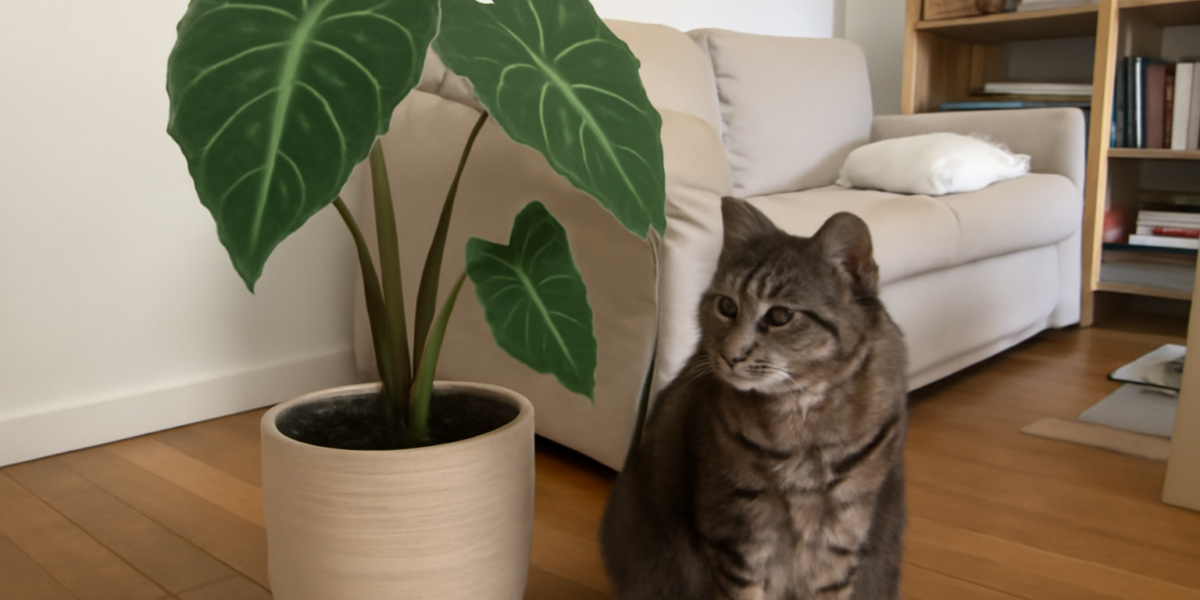
Elephant ear plants have surged in popularity as statement houseplants, and it is easy to see why. With their dramatic, oversized leaves in shades of deep green, black, and even purple, these tropical beauties can transform any room into an indoor jungle. But if you share your home with a cat, elephant ears come with a significant warning label.
Elephant ear plants are indeed toxic to cats. They contain insoluble calcium oxalate crystals — microscopic needle-like structures that can cause immediate and intense pain when a cat bites into the plant tissue. While elephant ear poisoning is rarely fatal, it can cause significant distress, and in severe cases, dangerous swelling that can compromise breathing. Let us walk through everything you need to know to keep your feline friend safe.
Understanding Elephant Ear Plants and Their Toxic Compounds
The common name “elephant ear” actually refers to several related plant genera in the family Araceae, including Alocasia, Colocasia, Caladium, and Xanthosoma. All of these share the same toxic mechanism, though the concentration of toxins can vary between species and even between individual plants depending on growing conditions.
The primary toxic compounds in elephant ear plants are insoluble calcium oxalate crystals, also known as raphides. These crystals are bundled inside specialized cells called idioblasts that are found throughout the plant’s leaves, stems, and roots. When a cat bites into the plant tissue, the mechanical pressure ruptures these cells and launches the needle-like crystals into the soft tissues of the mouth, tongue, and throat.
Think of it like biting into something filled with thousands of microscopic glass shards. The raphides physically penetrate the mucous membranes, causing immediate, intense pain and irritation. But the injury is not purely mechanical — the crystals also carry enzymes (particularly proteases and other irritant compounds) that are injected into the tissue along with the crystals, triggering inflammation, swelling, and a burning sensation that can persist for hours.
The good news, if there is any in this situation, is that the immediate pain usually causes cats to stop chewing after one or two bites. Unlike some toxic plants where a cat might consume a large quantity before symptoms appear, the calcium oxalate defense mechanism is designed to be an instant deterrent. Most cats will drop the leaf, paw frantically at their mouth, drool heavily, and show no interest in taking another bite. This self-limiting nature of the exposure means that life-threatening poisoning from elephant ears is uncommon.
However, “uncommon” does not mean “impossible,” and even a mild exposure can cause your cat considerable suffering. The pain and swelling can last for up to two weeks in some cases, and complications such as airway swelling, difficulty swallowing, and dehydration from refusing to eat or drink are real concerns that may require veterinary attention.
Symptoms of Elephant Ear Poisoning in Cats
The symptoms of elephant ear exposure in cats are typically immediate and dramatic. Because the pain starts the moment the crystals contact soft tissue, you will usually know right away that something is wrong.
The most common and earliest symptom is intense oral pain. Your cat may cry out, paw at their face, shake their head, or rub their mouth against furniture or the floor. Excessive drooling is almost universal — the saliva is the body’s attempt to flush the irritant from the mouth. The drool may be thick and stringy, and in some cases, it may be tinged with blood if the crystals have caused actual tissue damage.
Swelling of the mouth, tongue, and lips is common and can be quite pronounced. Your cat’s tongue may appear red, swollen, and painful. In some cases, the tongue swells so much that it protrudes from the mouth. The inner cheeks and gums may also become inflamed and swollen.
If the cat swallowed any plant material or if the crystals reached the throat, you may see difficulty swallowing (dysphagia), gagging, retching, or vomiting. Voice changes — a hoarse or absent meow — can indicate throat swelling. Loss of appetite and refusal to drink water are common because the act of eating and drinking aggravates the oral pain.
In rare but serious cases, swelling can extend to the upper airway, potentially causing difficulty breathing. Signs of respiratory distress include open-mouth breathing, audible wheezing or stridor (a high-pitched breathing sound), labored breathing with visible effort, and a bluish tint to the gums or tongue (cyanosis). If you observe any signs of breathing difficulty, this is a true emergency requiring immediate veterinary care.
Other less common symptoms include eye irritation if the cat rubbed its face after chewing the plant and then touched its eyes, skin irritation on the face or paws from contact with plant sap, and gastrointestinal symptoms like diarrhea if a significant amount of plant material was swallowed.
First Aid and When to See the Vet
If you catch your cat chewing on an elephant ear plant or notice symptoms consistent with calcium oxalate exposure, here is what to do:
First, gently remove any visible plant material from your cat’s mouth if you can do so without being bitten. A stressed, painful cat may bite defensively, so use caution and do not force your cat’s mouth open. If pieces of leaf are stuck to the lips or tongue, try to remove them gently with a damp cloth.
Offer your cat cool, fresh water or encourage them to drink by placing water bowls in their favorite resting spots. Some veterinarians suggest offering a small amount of milk, yogurt, or another dairy product, which may help coat the irritated tissues and provide some relief. The calcium and proteins in dairy products can help bind and neutralize some of the oxalate crystals. However, this is a comfort measure, not a cure.
You can try rinsing your cat’s mouth gently with cool water using a syringe (without a needle) directed at the cheeks — not straight down the throat, which could cause choking or aspiration. Many cats will not tolerate this, so do not force it if your cat is fighting you.
Contact your veterinarian to describe the situation and get guidance on whether an in-person visit is needed. In most mild cases where the cat took only a small bite, showed immediate distress, and stopped eating the plant, home monitoring with supportive care may be sufficient. However, you should seek veterinary attention if your cat shows any signs of difficulty breathing or throat swelling, refuses to eat or drink for more than 12 hours, has severe or worsening facial swelling, shows signs of dehydration such as dry gums, sunken eyes, or skin that does not spring back when gently pinched, or has persistent vomiting or diarrhea.
This type of calcium oxalate toxicity is also seen with philodendrons and dieffenbachia, so if you have any of these related plants, the same precautions apply.
Veterinary Treatment for Elephant Ear Exposure
When veterinary care is needed, treatment focuses on pain management, reducing swelling, and preventing complications. There is no specific antidote for calcium oxalate crystal exposure, but supportive care is generally very effective.
Your veterinarian will first perform a thorough examination of your cat’s mouth, throat, and airway to assess the extent of swelling and tissue damage. They may sedate your cat lightly to allow a more complete oral examination if the cat is too painful to cooperate.
Pain management is a top priority. Your vet may administer pain medications such as buprenorphine or other opioid analgesics to provide relief. Anti-inflammatory medications, including corticosteroids like dexamethasone, may be given to reduce swelling, particularly if there is concern about airway compromise.
Antihistamines such as diphenhydramine may be used to help control swelling and inflammation, especially if there appears to be a significant inflammatory or allergic component to the reaction. Gastroprotectant medications may be given if the cat has been vomiting or if there is concern about gastrointestinal irritation from swallowed plant material.
If your cat is not eating or drinking due to oral pain, intravenous or subcutaneous fluid therapy may be started to prevent dehydration. In cases where swallowing is significantly impaired, your cat may need to be hospitalized for fluid support and nutritional management until the swelling subsides enough for normal eating and drinking to resume.
In the rare event that airway swelling is severe enough to compromise breathing, more aggressive interventions may be needed, potentially including oxygen supplementation, nebulization, or in extreme cases, intubation or tracheostomy. These severe scenarios are fortunately very uncommon with elephant ear exposure.
Most cats recover fully from elephant ear exposure within a few days to two weeks, depending on the severity of the initial exposure. The prognosis is excellent in the vast majority of cases, and long-term complications are rare.
Preventing Elephant Ear Exposure: Cat-Proofing Your Plant Collection
If you love both plants and cats, you are not alone in facing the challenge of maintaining a beautiful indoor garden that is safe for curious felines. Here are strategies for managing elephant ear plants in a cat household — or, better yet, replacing them with safer options.
The most reliable approach is simply to not keep elephant ear plants in your home if you have cats. Cats are notorious climbers and jumpers, and there is truly no shelf high enough or room secure enough to guarantee a determined cat cannot reach a plant. If you have been thinking about getting an elephant ear plant and you have cats, consider choosing a non-toxic alternative instead.
If you already have elephant ear plants and are not ready to part with them, consider relocating them to a room that your cat absolutely cannot access — a home office with a door that stays closed, a screened porch, or an outdoor garden area. Remember that even a momentary lapse in closing a door can give a curious cat the opportunity to investigate.
Some people try deterrent sprays (citrus-scented or bitter-tasting products) on or around their plants. While these can reduce a cat’s interest, they are not reliable enough to be trusted as the sole line of defense against a toxic plant. Cats’ responses to deterrents vary widely, and some cats are simply not bothered by bitter tastes or citrus scents.
For those willing to swap out their elephant ears, there are many stunning, cat-safe alternatives that can provide similar visual drama. Calatheas and marantas (prayer plants) offer large, patterned leaves with gorgeous colors and are non-toxic to cats. Cast iron plants (Aspidistra elatior) are hardy, low-light tolerant, and safe. Bird’s nest ferns have lush, wavy fronds that make a statement. Check out our full guide to cat-safe houseplants for many more options that let you enjoy indoor greenery without the worry.
Understanding the Broader Risk: The Araceae Family
Elephant ears are part of the Araceae family, which is one of the largest and most commonly encountered groups of toxic houseplants. If you own an elephant ear, there is a good chance you also have other Araceae family members in your collection, and it is worth knowing that many of them share the same calcium oxalate crystal toxicity.
Common houseplants in the Araceae family include philodendrons (all species), monsteras (Swiss cheese plant), dieffenbachia (dumb cane), pothos (devil’s ivy), peace lilies (Spathiphyllum), Chinese evergreens (Aglaonema), and ZZ plants (Zamioculcas zamiifolia). All of these contain insoluble calcium oxalate crystals and pose the same type of risk to cats, though the severity of reaction can vary between species.
Being aware of this family connection can help you quickly identify potentially problematic plants in your home, in plant shops, and in the homes of friends and family where your cat might visit. When in doubt about a plant’s safety, checking whether it belongs to the Araceae family is a good first step.
It is also worth noting that some plants contain soluble calcium oxalates rather than the insoluble crystal form found in elephant ears. Soluble oxalates, found in plants like rhubarb leaves and shamrock plants (Oxalis), pose a different and potentially more serious risk because they can be absorbed into the bloodstream and cause kidney damage. The insoluble crystals in elephant ears primarily cause local tissue damage and do not typically lead to systemic toxicity or organ damage, which is one reason why elephant ear poisoning, while painful, is usually not life-threatening.
Frequently Asked Questions
Can a cat die from eating elephant ear plant?
Death from elephant ear ingestion is extremely rare in cats. The intense pain caused by the calcium oxalate crystals usually causes the cat to stop eating the plant after one or two bites, limiting the amount of toxin exposure. The most serious potential complication is severe swelling of the throat or airway, which could theoretically become life-threatening if left untreated. However, with prompt veterinary care, even severe cases are usually manageable. The vast majority of cats make a full recovery.
How long do symptoms of elephant ear poisoning last in cats?
The acute pain and drooling typically begin to improve within a few hours to a day. Oral swelling usually peaks within the first 24 hours and then gradually subsides over 3 to 7 days. In mild cases, most symptoms resolve within 24 to 48 hours. In more severe cases, particularly where significant swelling occurred, full recovery may take up to two weeks. Appetite and drinking usually return to normal once the oral pain becomes manageable, typically within one to three days.
Are all types of elephant ear plants equally toxic to cats?
All plants commonly called elephant ears — including Alocasia, Colocasia, Caladium, and Xanthosoma species — contain insoluble calcium oxalate crystals and are toxic to cats. The concentration of crystals can vary between species and cultivars, but there is no variety of elephant ear that can be considered safe for cats. Treat all elephant ear plants as toxic and keep them out of reach of your feline companions.
My cat licked an elephant ear leaf but did not bite it. Should I worry?
A brief lick is less concerning than an actual bite because the calcium oxalate crystals are primarily released when the plant cells are ruptured by chewing. A lick may cause mild irritation to the tongue, but it is unlikely to cause significant problems. Watch your cat for signs of oral discomfort such as drooling, pawing at the mouth, or lip licking. If symptoms are mild and resolve quickly, your cat is likely fine. If symptoms persist or worsen, contact your veterinarian for guidance.
What houseplants are safe alternatives to elephant ears for cat owners?
Several beautiful, non-toxic plants can give you a similar lush, tropical look without the risk. Calathea varieties (rattlesnake plant, peacock plant) offer stunning patterned foliage and are safe for cats. Bird of paradise plants provide dramatic leaves, though they are mildly toxic if eaten in large quantities. True palms like areca palm, parlor palm, and ponytail palm are safe and provide a tropical feel. Boston ferns are classic and cat-safe. For a comprehensive list, visit our cat-safe houseplants guide.


