
Last updated: April 10, 2026
In this article
Are Dumb Cane Toxic to Dogs? A Complete Guide to Dieffenbachia Dangers
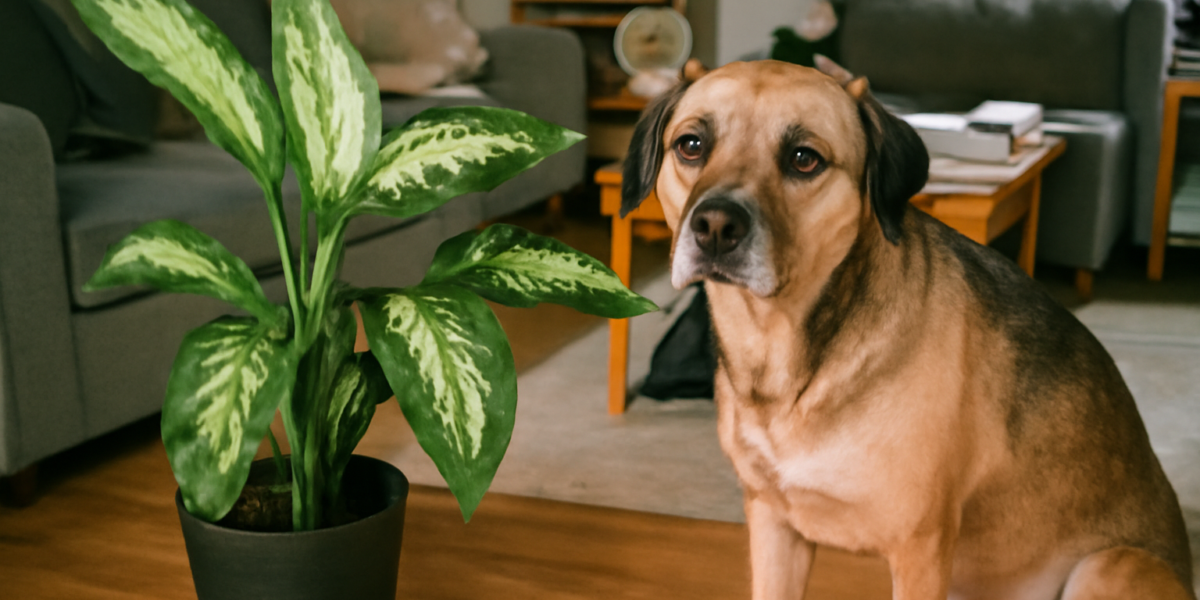
Dumb cane, scientifically known as Dieffenbachia, is one of the most popular houseplants in the world. Its large, patterned leaves in shades of green, cream, and white make it a stunning focal point in any room. But behind that tropical beauty lies a serious danger for our canine companions.
Dumb cane is toxic to dogs. The plant earned its unsettling common name from the effect it has when chewed: the calcium oxalate crystals it contains cause such severe swelling of the mouth and throat that it can temporarily render a person or animal unable to speak or bark. For dogs, who explore the world with their mouths, this plant poses a real and significant risk.
In this guide, we will cover everything dog owners need to know about dumb cane toxicity, from the specific compounds that make it dangerous to the immediate steps you should take if your dog eats it.
The Toxic Compounds in Dumb Cane
Dieffenbachia plants contain insoluble calcium oxalate crystals called raphides. These are microscopic, needle-shaped crystals that are bundled together in specialized plant cells called idioblasts. They are found throughout every part of the plant, including the leaves, stems, roots, and sap.
When a dog bites into a Dieffenbachia leaf or stem, the physical action of chewing ruptures the idioblast cells and forcefully ejects the raphide crystals into the dog’s oral tissues. These crystals act like tiny needles, penetrating the mucous membranes of the mouth, tongue, gums, and throat. The penetration causes immediate, intense pain, tissue damage, and an inflammatory response.
In addition to the mechanical damage caused by the crystals, Dieffenbachia sap contains proteolytic enzymes that can exacerbate tissue irritation and contribute to swelling. Some researchers have also identified other irritant compounds in the sap, including histamine-releasing substances that can worsen the inflammatory reaction.
This combination of sharp crystal penetration, enzymatic activity, and histamine release is what makes Dieffenbachia one of the more potent calcium oxalate-containing plants. While plants like pothos and philodendrons contain similar crystals, Dieffenbachia is often cited as producing more severe reactions, likely due to the additional irritant compounds in its sap.
The toxicity applies to all Dieffenbachia species and cultivars. Whether you have a Dieffenbachia seguine, Dieffenbachia maculata, Dieffenbachia amoena, or any of the numerous hybrid varieties commonly sold in garden centers, the risk to your dog is the same. There is no such thing as a “safe” variety of dumb cane for pets.
Symptoms of Dumb Cane Poisoning in Dogs
The symptoms of Dieffenbachia exposure in dogs are typically immediate and dramatic. Unlike some plant toxins that take hours to produce effects, calcium oxalate crystal exposure causes almost instant distress.
Oral pain and distress are usually the first signs you will notice. Your dog may drop the plant material from their mouth, paw frantically at their face, whimper or cry out, shake their head, or rub their muzzle against the ground or furniture. The pain is intense and sudden, and most dogs clearly communicate their discomfort through their behavior.
Excessive drooling is one of the hallmark symptoms. The irritation of the oral tissues triggers a dramatic increase in saliva production, and you may see thick, ropey drool hanging from your dog’s mouth. In some cases, the saliva may be tinged with blood from small cuts caused by the crystal penetration.
Swelling of the mouth, tongue, and lips can develop within minutes. The tongue may become visibly enlarged, and the lips may appear puffy. In severe cases, the tongue can swell enough to protrude from the mouth. This swelling is caused by the inflammatory response to the crystal injury and the histamine release from the sap.
Difficulty swallowing may occur if the crystals have penetrated the tissues of the throat and esophagus. The dog may gag, retch, or make repeated swallowing motions. They may refuse food and water due to the pain of swallowing.
Vomiting can occur if plant material has been swallowed. The vomiting may further irritate already damaged tissues as the crystal-laden material passes back through the throat.
Respiratory difficulty is the most serious potential complication. If swelling extends to the upper airway, the dog may develop labored breathing, stridor (a high-pitched breathing sound), or visible respiratory distress. This is a veterinary emergency that requires immediate attention.
Eye symptoms can develop if the dog’s eyes come into contact with sap, either directly or from rubbing their face with sap-contaminated paws. Symptoms include redness, pain, excessive tearing, squinting, and swelling of the eyelids. Eye exposure should be treated as urgent due to the risk of corneal damage.
In rare cases involving very large ingestions, dogs may develop more systemic symptoms including temporary inability to bark or vocalize (hence the name “dumb cane”), loss of appetite persisting for several days, and signs of kidney irritation. These severe presentations are uncommon because most dogs stop eating the plant immediately due to the pain.
Emergency First Aid for Dumb Cane Ingestion
If your dog eats or chews on a Dieffenbachia plant, swift action can make a significant difference in their comfort and recovery. Here is a step-by-step guide for what to do.
Step 1: Remove access immediately. Take the plant away from your dog and move your dog to a different area. If there are pieces of plant material in your dog’s mouth, gently remove them if you can do so safely. Do not put your fingers deep into a distressed dog’s mouth, as you could be bitten.
Step 2: Rinse the mouth. Using cool, clean water, gently flush your dog’s mouth to help remove crystal-containing sap and dislodge any embedded crystals. You can use a hose on a gentle setting, a water bottle, or a syringe. Direct the water from the side of the mouth rather than straight down the throat to prevent aspiration.
Step 3: Offer something soothing. Cool water, ice chips, or a small amount of milk or plain yogurt may help soothe irritated tissues. The proteins in dairy products may help bind to some of the calcium oxalate crystals, and the cool temperature provides temporary pain relief. Do not force anything into your dog’s mouth if they are having difficulty swallowing.
Step 4: Check for eye exposure. If you suspect sap may have gotten into your dog’s eyes, flush them with clean, lukewarm water for at least 15 minutes. Hold the eyelids open gently and irrigate from the inner corner outward.
Step 5: Contact your veterinarian or a pet poison emergency hotline. Call your vet, the ASPCA Animal Poison Control Center (888-426-4435), or the Pet Poison Helpline (855-764-7661) for guidance. Be prepared to provide information about the plant species, approximately how much your dog may have eaten, when the exposure occurred, your dog’s weight, and what symptoms you are seeing.
Step 6: Do not induce vomiting unless a veterinary professional specifically instructs you to do so. Vomiting brings the crystal-containing material back through already-damaged tissues, potentially worsening the irritation and swelling in the throat and esophagus.
Step 7: Monitor breathing closely. Watch for any signs of respiratory difficulty, including increased breathing effort, unusual breathing sounds, extended neck posture, or blue-tinged gums. If your dog shows any respiratory distress, transport them to an emergency veterinary clinic immediately.
Veterinary Treatment and Recovery
At the veterinary clinic, treatment for dumb cane poisoning is primarily supportive, as there is no specific antidote for calcium oxalate crystal exposure. The goals of treatment are to manage pain, reduce swelling, prevent complications, and support the dog through recovery.
Pain management is a priority. Your veterinarian may administer injectable pain medications to provide rapid relief. Oral medications are typically avoided initially because swallowing can be painful and oral tissues may not absorb medications effectively when inflamed and swollen.
Anti-inflammatory medications may be given to reduce swelling, particularly if there is concern about airway compromise. In some cases, corticosteroids may be used to quickly reduce severe inflammation.
Antihistamines can help counteract the histamine-mediated component of the reaction, reducing itching, swelling, and irritation.
Intravenous fluids are administered if the dog is unable to drink or has been vomiting, to prevent dehydration and support kidney function.
Gastroprotective medications may be given if the dog has ingested plant material, to protect the stomach and intestinal lining from further irritation.
Most dogs begin to show improvement within 12 to 24 hours of treatment, with significant recovery within 48 hours. Complete resolution of all symptoms, including return of normal appetite and full reduction of swelling, typically occurs within three to five days. Very severe cases may take longer.
If your dog’s eyes were affected, your veterinarian may perform a fluorescein stain test to check for corneal ulceration and prescribe ophthalmic medications as needed. Eye injuries from calcium oxalate exposure generally heal well with appropriate treatment but should be monitored closely.
Preventing Dumb Cane Exposure
The single most effective way to prevent dumb cane poisoning in dogs is to remove all Dieffenbachia plants from your home and yard. If you love the look of large, tropical foliage plants, there are many non-toxic alternatives that can provide a similar aesthetic without the risk.
If you choose to keep a Dieffenbachia plant despite having a dog, take the following precautions. Place the plant in a room that your dog cannot access under any circumstances. A closed study, an upstairs room behind a baby gate, or a sealed sunroom can work. Never rely on putting the plant “up high” as the sole protection, especially with larger dog breeds or athletic dogs that can reach countertops and shelves.
Be aware of fallen leaves and dropped plant material. Dieffenbachia leaves can fall naturally, and pieces may break off during routine care. Even a dropped leaf on the floor can be dangerous if your dog finds it and chews on it. Always clean up any plant debris immediately.
When handling Dieffenbachia yourself, wash your hands thoroughly before interacting with your dog. The sap can transfer from your hands to your dog’s mouth during petting or play, potentially causing mild irritation.
If you are visiting a home that has Dieffenbachia plants, keep your dog leashed or supervised and away from all houseplants. Similarly, if you have a dog walker or pet sitter, make sure they know which plants in your home are toxic and understand the importance of keeping doors to plant rooms closed.
Safe Alternatives to Dumb Cane for Dog Owners
If you want the dramatic, large-leafed tropical look that Dieffenbachia provides, consider these non-toxic alternatives that are safe for dogs.
Calathea species offer stunning patterned foliage in a variety of colors and designs. Calathea orbifolia, Calathea medallion, and Calathea lancifolia (rattlesnake plant) all provide bold leaf patterns that rival any Dieffenbachia. They are completely non-toxic to dogs and cats.
Cast iron plant (Aspidistra elatior) has large, broad, dark green leaves and is virtually indestructible. It tolerates low light and neglect, making it perfect for beginners, and it is entirely pet-safe.
Prayer plant (Maranta leuconeura) features intricate leaf patterns and the fascinating habit of folding its leaves upward at night. It is non-toxic and adds both beauty and entertainment to any room.
Peperomia species, while generally smaller than Dieffenbachia, offer a wonderful variety of leaf shapes, textures, and colors. The watermelon peperomia, in particular, has eye-catching striped leaves. All peperomia species are safe for both dogs and cats.
Replacing toxic plants with safe alternatives does not mean sacrificing beauty. With careful selection, you can build an indoor garden that is every bit as stunning as one filled with Dieffenbachia, while knowing that every plant in your home is safe for your four-legged family member.
Frequently Asked Questions
Can a dog die from eating dumb cane?
Fatal outcomes from dumb cane ingestion are extremely rare in dogs. The intense oral pain caused by the calcium oxalate crystals typically prevents dogs from eating large quantities of the plant. The primary risk of death would come from severe airway swelling compromising breathing, but this is uncommon and can be prevented with prompt veterinary treatment. However, even non-fatal exposures cause significant pain and distress, which is reason enough to keep this plant away from dogs.
How quickly do symptoms appear after a dog eats dumb cane?
Symptoms typically appear almost immediately, within seconds to minutes of the dog biting into the plant. The calcium oxalate crystals cause instant pain upon contact with oral tissues. Drooling and pawing at the face usually begin within the first minute. Swelling may develop over the following 10 to 30 minutes. Gastrointestinal symptoms like vomiting may take slightly longer if plant material has been swallowed. The rapidity of symptom onset is actually somewhat helpful, as it usually means you will notice something is wrong very quickly.
Is the dumb cane plant dangerous to touch for humans?
The sap of Dieffenbachia can cause skin irritation in humans, particularly in people with sensitive skin. It can cause redness, itching, and a burning sensation on contact. Eye exposure to the sap is particularly dangerous and can cause intense pain and temporary vision problems. Always wash your hands after handling a Dieffenbachia plant, and wear gloves when pruning or repotting. This is also important in homes with dogs, as sap on your hands could transfer to your pet.
My dog licked a dumb cane leaf but did not bite it. Should I worry?
A single lick of an intact leaf surface is unlikely to cause significant problems. The calcium oxalate crystals are contained within the plant’s cells and are primarily released when the tissue is damaged by biting or chewing. A lick may expose your dog to a small amount of surface sap, which could cause very mild oral irritation or brief drooling. Monitor your dog for any worsening symptoms, but in most cases, a lick without chewing will not result in a significant reaction. However, take this as a warning sign and move the plant out of your dog’s reach immediately.
Dumb cane is a beautiful plant, but its toxicity makes it incompatible with dog-friendly homes. The severe oral pain, swelling, and potential for airway compromise are risks that no plant is worth taking. By choosing from the many gorgeous non-toxic alternatives available, you can enjoy lush indoor greenery while keeping your loyal companion safe from harm.


