
Last updated: May 16, 2026
In this article
- Is Chinese Evergreen Toxic to Cats? The Short Answer
- What Chinese Evergreen Is
- Why Calcium Oxalate Raphides Hurt
- Symptoms in Cats After Chinese Evergreen Ingestion
- First Aid: What to Do at Home
- Veterinary Treatment for Cats
- Chinese Evergreen in Multi-Pet Homes
- Common Aglaonema Cultivars and Cross-Species Risk
- Preventing Chinese Evergreen Accidents
- Why Chinese Evergreen Is Often Mistaken for “Safer” Plants
- Sibling Aglaonema Cultivar Articles
- Frequently Asked Questions
Is Chinese Evergreen Toxic to Cats? The Short Answer
Yes — Chinese evergreen (Aglaonema species) is toxic to cats. The plant contains insoluble calcium oxalate raphides, microscopic needle-shaped crystals that puncture the soft tissues of the mouth, tongue, and throat when a cat bites or chews any part of the leaf or stem. The result is immediate pain and inflammation, profuse drooling, vomiting, and sometimes oral swelling that can interfere with eating and drinking for a day or two. Severe airway obstruction is rare but possible if a large quantity is chewed or if the swelling response is unusually strong.
Chinese evergreen is one of the most common houseplants in North American homes. Its tolerance for low light, infrequent watering, and indifferent care makes it a starter plant that ends up in many households without much thought to pet safety. If you have a cat that nibbles houseplants — and most cats experiment with plants at some point — Aglaonema is on the list of common indoor plants worth knowing about. The good news is that most exposures resolve with supportive care; the bad news is that the experience is genuinely painful for the cat.
What Chinese Evergreen Is
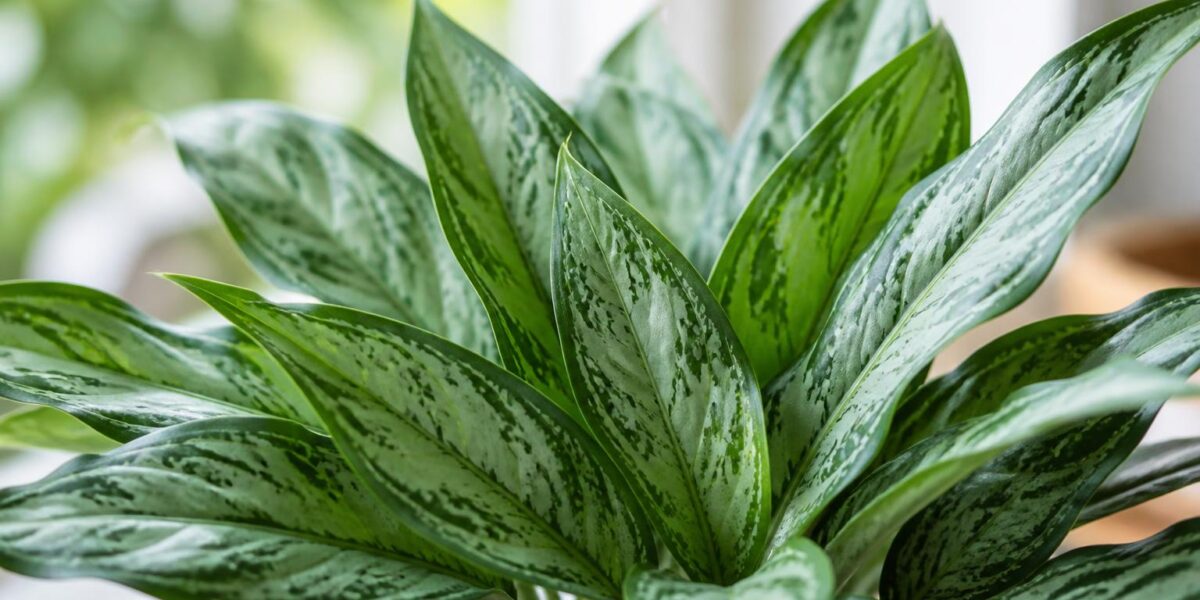
Aglaonema is a genus of about 20 species in the Araceae family — the same family as peace lily, dieffenbachia, philodendron, monstera, pothos, and calla lily. Chinese evergreen species and cultivars share decorative variegated leaves in shades of silver, green, pink, and red. Common varieties include Aglaonema commutatum, Aglaonema modestum (the original “Chinese evergreen”), and dozens of named cultivars like Maria, Silver Bay, Siam Aurora, and Red Emerald.
The Araceae family is well known for calcium oxalate raphide toxicity — almost every member produces these crystals as a defense against herbivores. The Chinese evergreen is no exception, and its risk profile is similar to that of its cousins philodendron and dieffenbachia. The toxic mechanism is mechanical irritation rather than systemic poisoning, which is why most exposures stay localized to the mouth and stomach without causing organ damage.
Why Calcium Oxalate Raphides Hurt
Raphides are bundles of needle-sharp calcium oxalate crystals stored in specialized cells called idioblasts throughout the leaf, stem, and root. When a cat bites the plant, the idioblasts rupture and shoot the crystals into the soft tissues like microscopic syringes. Each crystal embeds itself, causing immediate stinging pain and inflammation. The plant also contains proteolytic enzymes that amplify the inflammation by partially digesting tissue in the immediate area.
The pain is sharp enough that most cats stop chewing within a bite or two and back away from the plant. That self-limiting response is why severe poisonings are uncommon — the cat is unlikely to consume large quantities. The crystals do not absorb into the bloodstream the way water-soluble toxins do, so kidney and liver damage is not part of the typical Aglaonema picture. The risk is acute oral pain, possible swelling, and GI upset.
Symptoms in Cats After Chinese Evergreen Ingestion
Signs appear immediately or within minutes of biting the plant. Look for sudden frantic drooling, pawing at the mouth, head shaking, lip-licking, foaming at the mouth, vocalizing in distress, and rapid avoidance of the plant. Some cats hide and refuse to eat for several hours. Vomiting often follows, sometimes containing shredded plant material. The cat may have difficulty swallowing or refuse to drink water due to oral pain.
Severe presentations are rare but possible. Watch for significant facial or tongue swelling, audible wheezing, difficulty breathing, or any sign of airway compromise — these warrant emergency veterinary evaluation. Persistent vomiting beyond two or three episodes, blood in vomit or stool, profound lethargy, or refusal to eat or drink past 24 hours also deserves a vet visit. Most cats recover fully within 12 to 48 hours with supportive care.
First Aid: What to Do at Home
Move the cat away from the plant and gently wipe out the mouth with a soft damp cloth to remove any embedded plant fragments and clinging crystals. If the cat will tolerate it, offer cool water — some cats will accept syringed water from a needleless oral syringe. Cold dairy (a tablespoon of milk or yogurt) is sometimes recommended anecdotally as a soothing measure, though this is not formally validated and many cats are lactose-intolerant. Do not force-feed.
Call your veterinarian or a 24/7 poison-control hotline: ASPCA Animal Poison Control at 888-426-4435 or the Pet Poison Helpline at 855-764-7661. Both charge a consultation fee but provide species-specific guidance. Do not induce vomiting at home — there is no benefit, and the cat is already in oral pain. Hydrogen peroxide is also not safe for cats and can cause hemorrhagic gastritis.
Veterinary Treatment for Cats
Most Aglaonema exposures are treated as outpatient cases. Your vet will examine the mouth and throat for swelling, prescribe pain control if needed, and may give an injection of an anti-inflammatory or anti-nausea medication. A short course of soft food, encouragement to drink water, and observation at home for 24 to 48 hours usually suffices. Antihistamines may be considered if there is unusual swelling.
For cats with severe oral or airway swelling, treatment is more aggressive: IV fluids, corticosteroids, and observation in hospital. These cases are uncommon but real. Cats with pre-existing dental disease, immune compromise, or kidney disease may need closer monitoring even after a typical exposure. Recovery is generally complete within a few days, with no lasting effects.
Chinese Evergreen in Multi-Pet Homes
Chinese evergreen is also toxic to dogs through the same calcium oxalate mechanism. The dog-side counterpart article — Chinese evergreen and dogs — covers the canine symptoms, first aid, and treatment, which closely mirror the cat-side picture. If you have both species in the household, the safest approach is to keep Aglaonema out of reach of both, or to choose a non-toxic plant instead.
The broader Aglaonema umbrella articles cover the genus across cultivars: Aglaonema and cats and Aglaonema and dogs. Specific cultivar guides include Silver Bay Aglaonema and red Aglaonema. The closely related dieffenbachia is in B121 — its cat-safe houseplants alternatives list overlaps with Aglaonema replacements.
Common Aglaonema Cultivars and Cross-Species Risk
The toxicity profile is the same across all Aglaonema cultivars because they all share the genus’s calcium oxalate biology. Maria (dark green with silver markings), Siam Aurora (bright pink), Pink Dalmatian (green with pink spots), Cutlass (narrow silver-green leaves), and Modestum (plain green, the original Chinese evergreen) all behave the same way for pets. The variegation level does not change the toxicity.
Other Araceae family plants in the home share the same calcium-oxalate mechanism: peace lily, philodendron, monstera, pothos, dieffenbachia, calla lily, anthurium, and ZZ plant. If your cat has reacted to one, expect a reaction to the others. The cat-safe houseplants list provides plants from outside the Araceae family that pose no calcium oxalate risk.
Preventing Chinese Evergreen Accidents
Place Aglaonema on high shelves, in rooms the cat does not access, or in hanging planters. Cats are agile climbers; “high shelf” should mean genuinely out of jump range, not just inconveniently placed. If your cat is a determined plant chewer, removal from the home is the most reliable solution. Many cat-safe plants offer the same low-light tolerance and decorative value as Aglaonema — spider plant (Chlorophytum comosum), Boston fern, parlor palm (Chamaedorea elegans), and African violet are common substitutes.
Cats often chew plants out of boredom or to supplement fiber. Providing a tray of cat-safe greens — wheatgrass, oat grass, catnip — gives cats a satisfying alternative target. Browse cats waiting for homes if you are still in the planning stage; a plant-safe environment is the right welcome for a new cat. Dogs available for adoption face the same plant risks, so the same audit applies.
Why Chinese Evergreen Is Often Mistaken for “Safer” Plants
Chinese evergreen has a deceptively benign appearance — soft variegated leaves, slow growth, and a tropical aesthetic that pairs with low-light interiors. New plant owners frequently assume any plant that thrives in office settings or low-maintenance conditions must be pet-safe. This is not a reliable rule. Many of the most popular indoor foliage plants are in the Araceae family (Aglaonema, philodendron, monstera, pothos, dieffenbachia, peace lily, calla lily, anthurium, ZZ plant) and share the calcium oxalate raphide mechanism. The visual cue people often look for — bright, colorful flowers — is largely absent in this family because the dramatic structures are leaves, not blooms.
If you are trying to build a cat-tolerant indoor jungle, lean toward plant families known for non-toxicity: ferns (Boston fern, bird’s nest fern, button fern, maidenhair fern), palms (parlor palm, areca palm, ponytail palm), Marantaceae (calathea, prayer plant), Pilea peperomioides, spider plant, African violet, and a handful of others. None of these are Araceae and none contain raphides. The visual variety they offer is enough to fill any room without the cat-bite risk.
Sibling Aglaonema Cultivar Articles
If you came here because of a specific Chinese evergreen cultivar in your home, the broader Aglaonema cultivar series can help with identification and care notes. Common pet-toxicology guides include the Silver Bay Aglaonema guide and red Aglaonema guide for two popular variegated forms. The Aglaonema and cats umbrella covers the genus broadly and links the dog-side counterpart at Aglaonema and dogs.
Frequently Asked Questions
Will my cat die from chewing Chinese evergreen?
Fatal outcomes from Aglaonema are extremely rare. The plant causes acute oral pain and GI upset, not systemic poisoning. Most cats recover within a day or two with supportive care. Severe airway swelling is the only realistic life-threatening complication, and it is uncommon.
How long do symptoms last?
Most cats are visibly recovering within 12 to 24 hours. Drooling and oral pain typically peak within the first hour and decline steadily. Soft food, encouragement to drink water, and rest usually carry the cat through. Persistent symptoms past 48 hours warrant a recheck.
Should I rinse my cat’s mouth at home?
Gently wiping the mouth with a soft damp cloth is reasonable to remove residual plant fragments. Do not flush with large volumes of water — cats can aspirate. If the cat is in significant distress, take them to the vet rather than attempting elaborate home rinsing.
What if my cat ate Aglaonema and I have a dog too?
The dog faces the same risks from the same plant. Check the dog for any oral symptoms and read the dog-side guide for canine-specific dosing of supportive care. Move the plant out of reach of both pets going forward.
Is variegated Chinese evergreen safer than the plain green form?
No. Variegation is a leaf-color trait and does not change the calcium oxalate content. Maria, Siam Aurora, Modestum, Cutlass, and every other cultivar share the same toxic mechanism. Treat all Aglaonema cultivars as equally hazardous to cats.


