
Last updated: May 16, 2026
In this article
- Is Aglaonema Silver Bay Toxic to Pets?
- Meet the Silver Bay Cultivar
- Why Aglaonema Silver Bay Is Toxic
- Symptoms After a Silver Bay Bite
- Cats vs. Dogs: How the Risk Differs
- What To Do in the First Ten Minutes
- Veterinary Treatment
- How to Keep Silver Bay Safely With Pets
- Other Toxic Aroid Cousins to Recognize
- When to Call Your Veterinarian
- Adopting Around Toxic Houseplants
- Frequently Asked Questions
Is Aglaonema Silver Bay Toxic to Pets?
If a silver-marbled Chinese evergreen has caught your eye at the garden center and you live with a curious cat or dog, asking whether aglaonema silver bay toxic pets is a real concern is exactly the right question to lead with. The short answer is yes. Aglaonema ‘Silver Bay’ is a popular cultivar of Chinese evergreen, and like every plant in the genus Aglaonema, it is toxic to cats and dogs. Every leaf, stem and root contains insoluble calcium oxalate raphides, the same needle-shaped crystals that show up across the entire aroid family. Toxicity is generally classified as mild to moderate, with severe outcomes being uncommon.
That mid-tier rating does not mean a chewed leaf is harmless. Most pets that bite into a Silver Bay leaf will drool heavily, paw at the mouth, and vomit at least once before retreating. The plant’s silvery, brushed-metal patterning is striking on a coffee table, but that same low placement puts it within easy reach of a kitten or a tail-wagging puppy. This guide explains the chemistry, what to watch for, what to do in the first ten minutes, and how to keep this cultivar in a pet-friendly home without giving up the look you love.
Meet the Silver Bay Cultivar
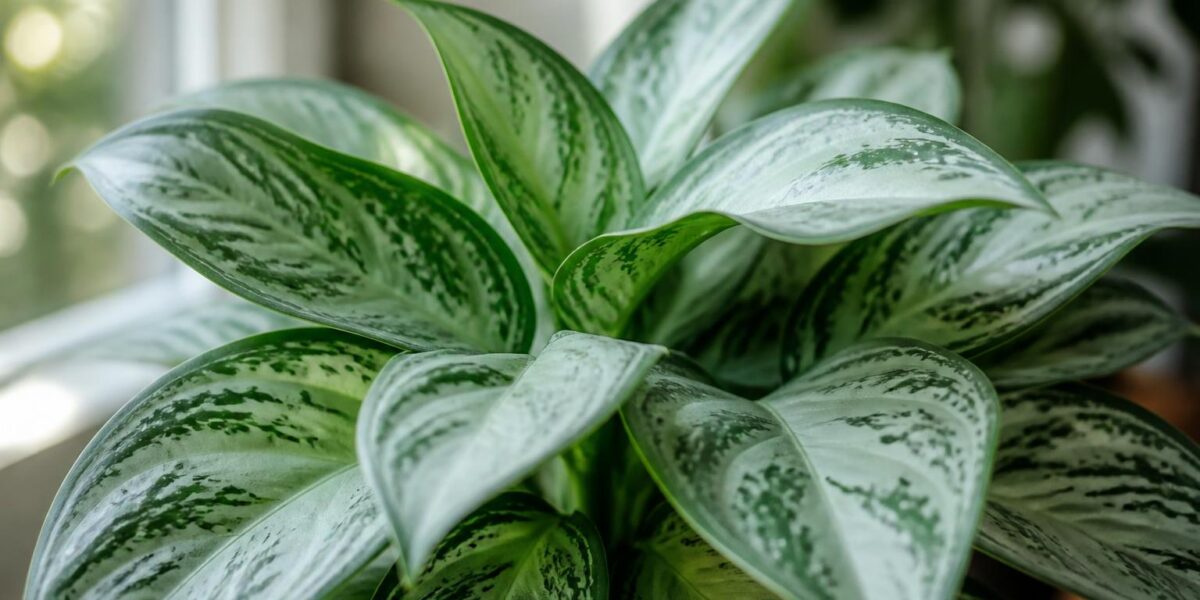
Aglaonema ‘Silver Bay’ is a hybrid Chinese evergreen prized for large, broad leaves brushed with silver and pale grey across a deep green base. Each leaf can reach eight to twelve inches long on a mature plant, and the variegation pattern is dramatic enough that the cultivar earns shelf space in offices, hotels and homes alike. Silver Bay is one of the most widely sold Aglaonema cultivars, often appearing in tabletop pots at supermarkets and big-box retailers.
Indoors, Silver Bay tolerates lower light than most foliage plants and forgives uneven watering. It grows in a clumping, upright habit and matures to roughly two to three feet tall and wide. That bushy form, combined with broad chewable leaves, makes it appealing to bored cats who like to graze and to puppies who like to taste anything new. The cultivar is sometimes labelled as ‘Silver Bay Aglaonema’ or simply marketed as a Chinese evergreen, so reading the plant tag carefully matters when you are shopping for a pet-friendly home.
Silver Bay belongs to the family Araceae, the aroid family. That family connection is the most important fact for pet owners because it puts Silver Bay in the same toxin tier as pothos, philodendron, monstera, dieffenbachia, peace lily, alocasia and anthurium. The protective response any pet owner builds for one aroid covers all of them.
Why Aglaonema Silver Bay Is Toxic
The toxin in Silver Bay is calcium oxalate, packaged into needle-like raphide crystals stored inside specialized cells called idioblasts. When a pet chews a leaf or stem, those cells rupture and shoot the crystals into the soft tissues of the lips, gums, tongue and throat. The crystals lodge in the mucous membranes and cause sharp, immediate mechanical irritation rather than systemic poisoning. Some Aglaonema tissue also releases small amounts of proteolytic enzymes alongside the crystals, which can intensify the burning sensation.
Insoluble calcium oxalates do not cause the kidney damage associated with soluble oxalate plants like rhubarb leaves or wood sorrel. The risk is local injury and inflammation, not internal organ failure. That is why Silver Bay is rated as mildly to moderately toxic and why almost every case resolves with simple supportive care rather than aggressive treatment. The umbrella articles on aglaonema and cats and aglaonema and dogs apply to every cultivar in the genus, including Silver Bay.
The variegated silver patches on a Silver Bay leaf are not more or less toxic than the deep green areas. Variegation comes from areas of leaf tissue that produce less chlorophyll, but the idioblasts containing calcium oxalate are distributed throughout the leaf. A pet that bites the silver section gets the same dose as one that bites the green.
Symptoms After a Silver Bay Bite
Symptoms appear within minutes because the irritation is immediate. Watch for:
- Heavy drooling, foaming and ropey saliva.
- Pawing at the muzzle and rubbing the face on furniture or carpet.
- Head shaking and frequent swallowing.
- Lip-licking and a sudden refusal of food.
- One or more episodes of vomiting, often with shredded leaf material visible.
- Swollen lips, tongue or face in a small minority of cases.
- Soft stool or short-lived diarrhea over the following day.
Less common but more serious signs include marked tongue or throat swelling, noisy breathing, distressed breathing, severe vomiting that contains blood, collapse and tremors. These warrant an emergency vet visit even if the bite was small. Most pets, however, recover within 24 to 48 hours with simple supportive care.
Cats vs. Dogs: How the Risk Differs
Both species are vulnerable to Silver Bay, but their behavior shapes the practical risk. Cats often nibble out of curiosity or boredom, taking small bites and retreating quickly. They are very likely to drool heavily, paw at the mouth and shake their head, but the actual quantity swallowed is usually small. Cats also tend to over-groom after a bite, spreading sap and crystals over their paws and chest, which can prolong the irritation.
Dogs, especially puppies and large breeds, can crunch through several leaves before the burning sensation registers. That means more crystals reach the throat and stomach. Dogs are more likely to vomit, more likely to develop short-term diarrhea, and slightly more likely to need fluids if they refuse food. Larger ingestions in small dogs warrant prompter veterinary contact than in big dogs of the same age.
Pets with pre-existing dental disease, kidney disease, gastrointestinal disease or sensitivities to essential oils may struggle with the inflammation even when they eat very little. Senior pets and pets on multiple medications also deserve a closer eye after even a small exposure.
What To Do in the First Ten Minutes
Stay calm and follow this sequence:
- Move your pet away from the plant and pick up any chewed pieces from the floor.
- Wipe the mouth gently with a damp soft cloth to remove plant fragments.
- Rinse the mouth with cool water using a syringe or small cup if your pet allows. Do not force it.
- Offer cool water to drink. A small spoon of plain yogurt, milk or a plain ice cube can soothe the burning if your pet tolerates dairy.
- Do not try to make your pet vomit at home. Crystals re-irritate the throat and esophagus on the way back up.
- Call your veterinarian, the ASPCA APCC at 888-426-4435 or the Pet Poison Helpline at 855-764-7661 for guidance specific to your pet’s size and the amount eaten.
If you see major facial or throat swelling, breathing changes, repeated forceful vomiting or any neurological signs, head to the nearest 24-hour emergency animal hospital. Bring a leaf sample or a clear photo of the plant, including the silver variegation, so the team can confirm identification.
Veterinary Treatment
Most Silver Bay exposures are managed with supportive care. A typical plan may include:
- An oral exam to look for embedded plant fragments and ulcers.
- Mouth flushing with saline.
- Anti-nausea medication if vomiting is repeated.
- Subcutaneous or intravenous fluids if the pet is dehydrated.
- A bland diet for one or two days while the mouth heals.
- Pain medication if inflammation is significant; many pets do not need any.
Hospitalization is uncommon. Most pets are discharged the same day with a clear at-home recovery plan. Your veterinarian may also recommend baseline blood work for senior pets or pets with chronic conditions, even though the toxin itself is not systemic.
How to Keep Silver Bay Safely With Pets
Many homes can keep a Silver Bay safely as long as it is treated like any moderately toxic plant. Start by relocating it.
Practical placement strategies:
- Use a tall plant stand, mantel or wall-mounted shelf well above leaping range.
- Skip placing the plant on a coffee table, side table or floor pot where pets pass.
- Keep the plant in a closed-off room, such as a home office, that the pet does not access.
- Use a heavy ceramic pot to prevent tipping if a paw bumps it.
- Wipe up any sap and dispose of pruning clippings in a closed bin.
- Discourage chewing by offering cats their own non-toxic plant such as pet-grade wheat grass or cat grass.
If your pet has a history of plant chewing despite training, consider swapping the Silver Bay for a non-toxic look-alike. Several Calathea and Stromanthe cultivars offer striking foliage without the calcium oxalate. Our guide to cat-safe houseplants outlines safer options that pair well with Aglaonema-style decor.
Other Toxic Aroid Cousins to Recognize
Silver Bay is one cultivar in a wide aroid family. Recognizing related plants helps you build safer zones in your home and in the homes of friends and relatives. The chemistry is consistent across the genus, so the same first-aid steps apply if a pet bites any aroid.
Other toxic aroids that share the calcium oxalate profile:
- Red Aglaonema cultivars such as Siam Red and Pink Splash.
- Philodendron species, including Brasil, micans, pink princess and the heart-leaf variety.
- Monstera deliciosa and its cultivars, including the Thai Constellation and Albo Variegata.
- Pothos cultivars, including Snow Queen, Marble Queen and Neon.
- Dieffenbachia (dumb cane), often confused with Silver Bay because of its variegated leaves.
- Peace lily (Spathiphyllum), common in offices and gift baskets.
- Alocasia and elephant ear, with arrow-shaped leaves.
- Caladium, with heart-shaped patterned leaves.
Identifying the cultivar helps your veterinarian narrow the conversation, but the practical response is the same regardless of which aroid is involved.
When to Call Your Veterinarian
Call your veterinarian, the ASPCA Animal Poison Control Center at 888-426-4435, or the Pet Poison Helpline at 855-764-7661 any time a pet chews or swallows Silver Bay. Even small exposures benefit from professional advice because individual responses vary widely.
Head straight to an emergency vet if you see:
- Severe swelling of the tongue, lips or throat.
- Difficulty breathing or noisy breathing.
- Repeated forceful vomiting or blood in vomit.
- Collapse, weakness, tremors or seizures.
- Persistent refusal to drink water.
Have ready your pet’s species, breed, age and weight, the plant’s botanical name (Aglaonema ‘Silver Bay’), an estimate of how much was eaten, how long ago, and any other possible exposures, including fertilizers, insecticides and other plants. A clear photo of the plant and the leftover plant material helps confirm identification quickly.
Adopting Around Toxic Houseplants
Plant-rich homes can welcome new pets safely with a little planning. Walk through every room at floor level looking for trailing leaves and low pots, move toxic aroids before your new pet arrives, and keep poison-control numbers on the fridge. Browse adoptable cats and adoptable dogs through Walk Me Home Rescue to find a companion who fits your lifestyle, your pace, and your plant collection.
Frequently Asked Questions
Is Aglaonema Silver Bay more toxic than other Aglaonema cultivars?
No. Silver Bay shares the same calcium oxalate raphide chemistry as every Aglaonema cultivar. Its broad chewable leaves may make it slightly easier to nibble, but the toxin profile is identical to Red Aglaonema, Maria, Emerald Beauty and other cultivars.
Will my cat or dog die from biting a Silver Bay leaf?
Death is very rare. Toxicity is generally mild to moderate, with oral pain, drooling and vomiting that resolve in a day or two with supportive care. Severe outcomes almost always involve very large ingestions or pre-existing health issues.
Are the silver patches on the leaf more toxic than the green parts?
Neither. The silver variegation comes from areas of less chlorophyll, but calcium oxalate crystals are present throughout both the silver and green tissue.
Should I induce vomiting at home if my pet ate a Silver Bay leaf?
No. Inducing vomiting can drive more crystals into the throat and esophagus and creates an aspiration risk. Call your veterinarian, the ASPCA APCC at 888-426-4435 or the Pet Poison Helpline at 855-764-7661 first.
Are there pet-safe plants that look similar to Silver Bay?
Yes. Several Calathea and Stromanthe cultivars offer dramatic silver and green patterning without the calcium oxalate. Peperomia varieties are also worth a look for compact, patterned foliage that suits the same shelf or table.


