
Last updated: April 26, 2026
In this article
Is Caladium Safe for Pets?
Caladium, often sold as angel wings, heart of Jesus or elephant ear (in smaller indoor forms), is not safe for pets. Caladium toxic pets warnings are well founded: the plant contains insoluble calcium oxalate crystals in every part, and ingestion causes immediate and intense oral pain, drooling, swelling and sometimes more serious complications. If you have a dog or cat in your HDB flat or condo and keep caladium as a decorative plant, you should know what the risks are and how to respond if your pet chews on it.
Caladium toxicity follows the same mechanism as other Araceae (aroid) family plants such as dieffenbachia, peace lily, philodendron and pothos. When the plant tissue is crushed or chewed, microscopic needle-like crystals embed in the soft tissues of the mouth and throat, causing a painful burning sensation. The reaction is usually immediate, the affected pet is visibly distressed, and prompt first aid and veterinary care make a big difference.
The good news is that fatal caladium poisoning is rare. Most pets that chew on a leaf experience painful but manageable oral injury that resolves within a day or two with supportive care. The exception is severe cases involving airway swelling, which is a genuine emergency. Because of how attractive caladium foliage is and how readily it is sold in Singapore garden centres, many pet owners encounter this plant without realising its risks.
Identifying Caladium in Singapore Homes and Gardens
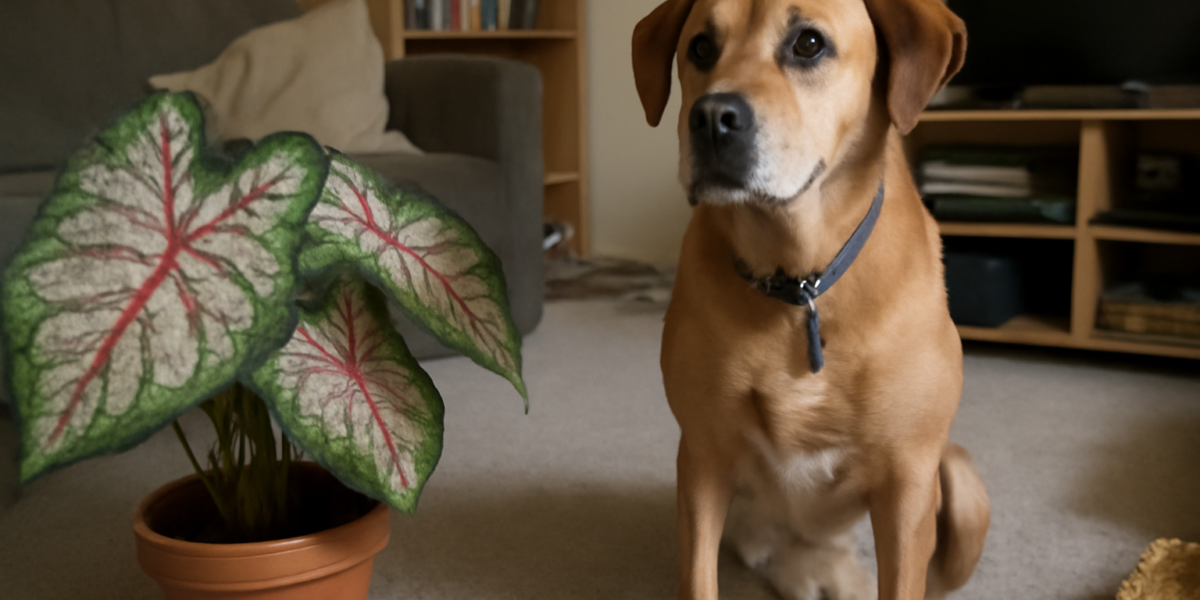
Caladium is a tuberous perennial with spectacular arrow-shaped or heart-shaped leaves that grow on long slender stalks. The leaves are what make it instantly recognisable: patterns of white, pink, red, green and cream in bold splashes and veining. Popular varieties include ‘White Christmas’ (white with green veins), ‘Red Flash’ (red with pink splashes), ‘Fannie Munson’ (pink) and ‘Candidum’ (white). Each plant typically reaches 30 to 60 centimetres tall.
The tubers (also called corms) are hidden underground and serve as the energy store for regrowth. They are also toxic and are occasionally dug up by curious dogs, which adds an additional exposure route beyond the leaves. Unlike some Araceae plants, caladium rarely flowers indoors in Singapore, so the flowers are less of a concern.
Caladiums are sold widely in Singapore nurseries, from Far East Flora to Thomson Nurseries, and are popular for shaded garden beds, covered balconies and indoor displays. They thrive in the humid climate but prefer indirect light. Because the foliage is so colourful, caladium is often used as a centrepiece plant and may end up exactly where a curious cat or dog can reach.
Calcium Oxalate Raphides: The Same Old Villain
Like other toxic Araceae, caladium contains insoluble calcium oxalate raphides bundled inside specialised cells called idioblasts. When a pet chews the tissue, these cells rupture and fire the microscopic needles into the oral mucosa. The crystals embed mechanically, triggering an intense pain response and inflammation.
Accompanying the crystals are proteolytic enzymes that break down tissue proteins, enlarging the injury and amplifying the inflammatory response. Histamine-releasing substances add swelling, redness and itching. Together, these compounds create the classic oxalate plant toxicity picture: sudden onset of oral pain, drooling, head shaking and distress within seconds of chewing.
Systemic absorption of the compounds is limited, so caladium does not typically cause kidney damage, liver failure or other distant effects. The injury stays mostly in the mouth, throat and oesophagus, with some gastric irritation if plant material is swallowed. This is both good news (most pets survive without lasting damage) and a reminder that airway swelling, when it occurs, is the main serious risk.
Dose, Severity and Risk Factors
Most pets that encounter caladium stop eating after the first bite because the pain is so intense. A typical exposure involves a small amount of plant material, produces painful but self-limiting oral injury, and resolves with basic first aid and supportive care. Larger ingestions are uncommon because pets find the experience so unpleasant.
Severity depends on size, age and health of the pet. Small breeds and puppies are at higher risk because a proportionally larger area of their airway can be affected by swelling. Brachycephalic (flat-faced) dogs like pugs, French bulldogs and Persian cats are particularly vulnerable to airway complications because their airways are already narrower and more prone to obstruction.
Pets with pre-existing respiratory disease, heart disease or those taking medications that affect breathing are also at higher risk. Senior pets may not recover from the pain and stress as quickly as younger animals. Take any caladium exposure in a vulnerable pet more seriously than a routine incident.
Symptoms You Will See
Symptoms of caladium ingestion appear almost immediately. Within seconds of chewing, pets show profuse drooling, head shaking, pawing at the face, lip licking and obvious distress. Some vocalise loudly, run around frantically, or rub their faces along the floor or furniture trying to relieve the burning sensation. The mouth may look red, with visible swelling of the lips, tongue or gums.
Over the next few hours, swelling peaks. Affected pets often refuse food and water because swallowing is painful. You may see thick saliva hanging from the mouth, reluctance to chew, and a preference for quiet resting. Some pets vomit if they swallowed plant material, and occasional cases show diarrhoea or abdominal discomfort.
The most concerning signs are related to the airway: noisy breathing, cough, wheezing, difficulty drawing breath, cyanosis (blue-tinged gums or tongue) and collapse. Any of these are medical emergencies requiring immediate veterinary attention. Drooling alone, while dramatic, is not an airway emergency, but if it is accompanied by breathing changes, head to the emergency vet without delay.
First Aid and Vet Care
As soon as you notice your pet has chewed caladium, rinse the mouth thoroughly with lukewarm water. A syringe without a needle, a squeeze bottle or even a wet cloth to wipe the tongue and gums can help flush loose crystals out. Offer cold water to drink, or a few ice chips to lick, to soothe the painful tissues.
Cold soft foods such as plain yoghurt, cold wet food or a small dollop of pet-safe peanut butter (xylitol-free) can coat the inflamed mouth and provide some relief. These home measures reduce pain and help your pet tolerate the first few hours until symptoms begin to settle. Do not try to force-feed or medicate at home.
Call a 24-hour emergency vet in Singapore if symptoms are severe, if your pet is showing any breathing changes, if swelling is not settling after the first hour, or if your pet is very young, very old, very small or has existing health problems. The vet will provide pain relief, anti-inflammatory medication, fluids and in severe cases may need to monitor the airway or provide oxygen. Most pets recover fully within one to three days with appropriate care.
Prevention and Pet-Safe Plant Swaps
Because caladium is such a visually tempting plant, the best prevention is to choose a safer alternative from the start. If you already have caladium and want to keep it, manage access strictly. Place the plant on high shelves, in hanging planters, or in rooms your pet cannot enter. Remove fallen leaves promptly, because they are the most commonly chewed pieces. Consider rehoming caladium to a pet-free friend or family member if you have a habitual plant-chewer.
For the decorative foliage effect without the toxicity, peperomia, parlour palm, Boston fern, maidenhair fern and nerve plant (Fittonia) are all attractive non-toxic options. Our full guide to pet-safe tropical houseplants for Singapore homes has more suggestions organised by light level and room suitability.
If you are auditing your indoor plants for toxicity, our companion guides to dumb cane toxicity and alocasia elephant ear toxicity cover two other common Araceae plants with similar risks. Together these three articles cover most of the serious indoor plant hazards from the aroid family.
Frequently Asked Questions
Will my dog die from chewing a caladium leaf?
Death from caladium ingestion is rare. Most dogs experience painful but short-lived oral injury that resolves within a day or two. The exception is severe airway swelling that blocks breathing, which is a true emergency. If your dog is breathing comfortably and drinking water, the prognosis with supportive care is very good.
How can I soothe my cat’s mouth after chewing caladium?
Rinse the mouth gently with cool water, offer cold wet food or plain yoghurt to coat the inflamed tissues, and provide easy access to fresh drinking water. Avoid forcing anything into the mouth, which adds stress. Contact your vet for pain relief if your cat seems significantly distressed or refuses to eat or drink.
Are caladium tubers as toxic as the leaves?
Yes. The tubers contain calcium oxalate raphides and proteolytic enzymes just like the rest of the plant. A dog that digs up and chews a caladium corm is at the same risk of oral injury as one that chews a leaf, though accessing the tubers is less common.
Is caladium more or less toxic than dieffenbachia?
They are similar in toxicity because they share the same class of calcium oxalate compounds and proteolytic enzymes. Caladium may be slightly less intense than dieffenbachia in some reports, but both plants should be managed with the same level of caution in pet households.
My puppy ate a caladium leaf and is drooling a lot. Should I rush to the vet?
Yes, especially for a puppy. Small pets are more vulnerable to airway complications and benefit from veterinary monitoring. Call the emergency vet to let them know you are coming, rinse your puppy’s mouth gently on the way if possible, and do not try to induce vomiting at home.
Can caladium cause long-term damage if my pet survives?
Long-term damage is uncommon. Most pets recover fully with no lasting effects after caladium exposure. Rarely, severe cases with significant ulceration may take longer to heal or leave behind minor scar tissue, but this does not typically affect long-term health.
Are all caladium colour varieties equally dangerous?
Yes. The colour of the leaves reflects pigment differences but does not indicate variation in toxic compounds. Red, pink, white and green varieties all contain calcium oxalate raphides and should be treated as equally risky.


