
Last updated: April 10, 2026
In this article
Are Caladiums Toxic to Dogs?
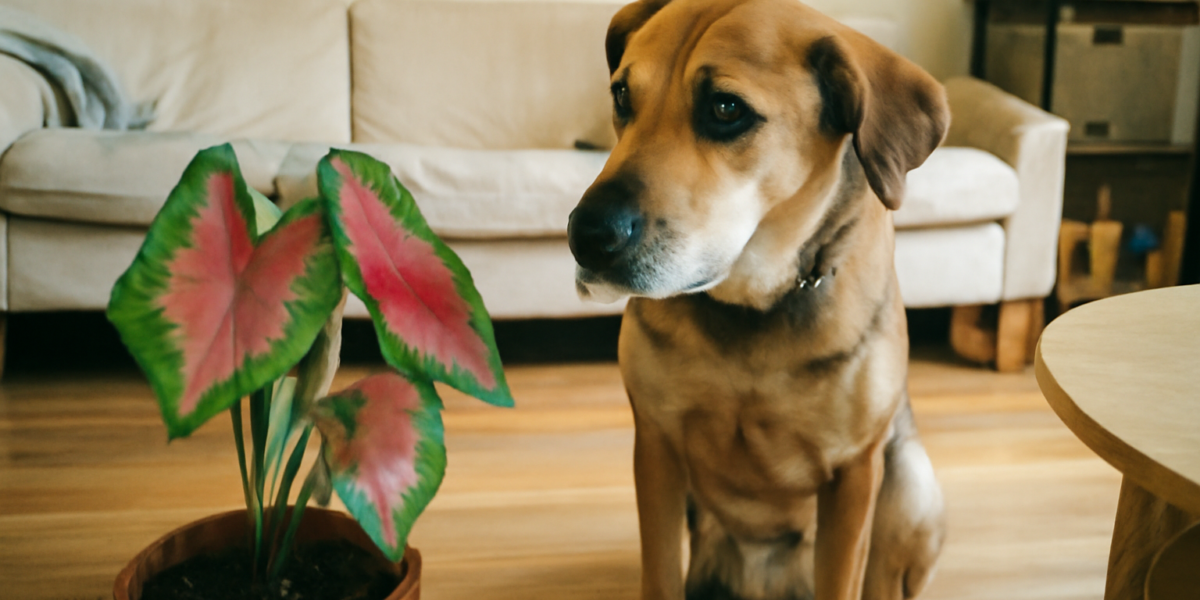
Yes, caladiums are toxic to dogs. These colorful tropical plants, also known as angel wings or elephant ears, contain insoluble calcium oxalate crystals throughout their leaves, stems, and tubers. When a dog chews on any part of a caladium plant, the crystals cause immediate and painful irritation to the mouth, tongue, and throat. The ASPCA classifies caladiums as toxic to dogs, cats, and horses.
Caladiums (Caladium bicolor and related species) are prized for their dramatically patterned, heart-shaped leaves that come in stunning combinations of red, pink, white, and green. Their popularity in shade gardens and as indoor foliage plants means that dog owners frequently encounter them without realizing the danger they pose.
The good news is that the immediate, intense pain from chewing on a caladium usually prevents dogs from eating large amounts. However, even a single bite can cause significant discomfort, and dog owners should take steps to prevent any exposure.
How Caladium Toxicity Works
Caladiums belong to the Araceae family, a plant family notorious for containing calcium oxalate crystals. These microscopic, needle-shaped crystals called raphides are bundled together inside specialized cells throughout the plant.
When a dog bites into a caladium leaf, the pressure ruptures these cells and triggers the rapid ejection of raphide bundles into the surrounding tissue. The crystals physically pierce the delicate mucous membranes of the mouth, acting like hundreds of tiny needles penetrating the tissue simultaneously.
The plant also releases proteolytic enzymes when damaged, which compound the injury by breaking down proteins in the affected tissue. This enzymatic action amplifies the inflammation and pain beyond what the crystal penetration alone would cause.
All parts of the caladium are toxic, but the concentration of calcium oxalate crystals varies. The tubers (bulbs) often contain particularly high concentrations, and because they sit at or just below soil level, they can be accessible to digging dogs. The colorful leaves are the most likely point of contact for curious dogs attracted by the plant’s movement or unusual appearance.
Symptoms of Caladium Poisoning in Dogs
Symptoms appear almost immediately after a dog chews on a caladium, typically within seconds. The speed of onset helps owners identify the cause quickly, which is beneficial for treatment decisions.
Watch for these signs:
- Intense oral pain with yelping or whimpering
- Excessive drooling, sometimes with blood-tinged saliva
- Pawing at the mouth and rubbing the face on the ground
- Swelling of the lips, tongue, and oral tissues
- Gagging or difficulty swallowing
- Vomiting
- Refusal to eat or drink
Severe reactions may include swelling that extends to the throat, potentially compromising the airway. While this is uncommon, any signs of breathing difficulty, including wheezing, straining to breathe, or blue-tinged gums, constitute a medical emergency.
Skin contact with caladium sap can cause irritation, redness, and itching. Eye exposure can be particularly painful and damaging. If sap contacts your dog’s eyes, flush them immediately with clean water for several minutes and seek veterinary care.
First Aid for Caladium Ingestion
Remove your dog from the plant right away and prevent further contact. Gently examine their mouth for remaining plant fragments and remove what you can with a damp cloth. Be careful, as the mouth tissues will be very sensitive.
Rinse your dog’s mouth thoroughly with cool, clean water. A gentle stream from a syringe or spray bottle works well. The rinsing helps remove loose crystals that have not yet embedded in the tissue and provides soothing relief.
Cool water or ice chips can help reduce swelling and provide comfort. Some veterinarians suggest offering a small amount of plain yogurt, milk, or another dairy product, as the proteins may help bind to calcium oxalate crystals. Do not force anything into your dog’s mouth if they are in severe pain or unable to swallow.
Do not induce vomiting. The irritating crystals would cause additional damage on the way back up through the already injured mouth and throat. Contact your veterinarian for guidance on whether your dog needs to be seen based on the severity of their symptoms.
When to See the Veterinarian
While many mild caladium exposures can be managed at home with monitoring, several situations warrant a veterinary visit. Contact your vet if the swelling is significant, if your dog is unable to eat or drink after several hours, or if symptoms are worsening rather than improving.
Emergency veterinary care is needed if you observe:
- Any difficulty breathing
- Severe or rapidly increasing swelling of the tongue or throat
- Inability to swallow or excessive gagging
- Extreme distress or agitation
- Eye exposure to caladium sap
At the veterinary clinic, treatment typically includes pain management, anti-inflammatory medications, and antihistamines. IV fluids may be given if your dog cannot drink. Severe throat swelling may require corticosteroids and careful monitoring.
Recovery from caladium exposure is usually complete within 24-48 hours. Your dog’s mouth may be sore for several days, making soft, lukewarm food more appealing during the healing process. Follow your veterinarian’s recommendations for at-home care during recovery.
Protecting Your Dog From Caladiums
Caladiums are found in both indoor and outdoor settings, so prevention strategies need to address both environments. Indoors, keep potted caladiums in rooms that are inaccessible to your dog or on high surfaces they cannot reach.
For outdoor gardens, consider these approaches:
- Plant caladiums in raised beds or containers that your dog cannot access
- Use decorative fencing around garden beds containing caladiums
- Supervise your dog in the yard and redirect them away from caladiums
- Consider removing caladiums and replacing them with dog-safe plants
Remember that caladium tubers persist in the ground and will regrow each season in warm climates. If you decide to remove caladiums from your garden, dig up the tubers thoroughly to prevent them from returning. In cooler climates where tubers are stored indoors over winter, keep them in a location your dog cannot access.
Fallen caladium leaves retain their toxicity, so regular garden cleanup is important during the growing season. Composting caladium material is fine as long as your dog does not have access to the compost pile.
Dog-Safe Alternatives to Caladiums
If you love the dramatic, colorful foliage that caladiums provide, several non-toxic plants can fill that role. Coleus comes in an incredible range of colors and patterns and is non-toxic to dogs. Rex begonias also offer stunning patterned leaves in shades of pink, red, silver, and green.
For outdoor shade gardens where caladiums typically thrive, consider hostas (note: these are toxic to dogs), or better yet, heuchera (coral bells) which come in a rainbow of foliage colors and are safe for dogs. Ferns, both indoor and outdoor varieties, are also largely pet-safe and add lush texture.
Avoid substituting caladiums with other members of the Araceae family, as they share the same calcium oxalate crystal problem. Elephant ears, dieffenbachia, and pothos should all be avoided in homes and gardens with dogs.
Frequently Asked Questions
Are all caladium varieties equally toxic to dogs?
Yes, all caladium varieties and cultivars contain calcium oxalate crystals. Whether you have a classic red-and-green variety, a white “Moonlight” caladium, or any other cultivar, the toxicity risk is the same. The color and pattern of the leaves do not affect the plant’s chemical composition in terms of toxicity.
Can caladium bulbs poison a dog that digs them up?
Yes, caladium tubers are toxic and may contain even higher concentrations of calcium oxalate crystals than the leaves. Dogs that dig may uncover tubers and chew on them, leading to the same painful oral symptoms. If your dog is a digger, caladium tubers in the ground are a serious concern.
How long does it take for caladium poisoning symptoms to go away?
Most symptoms begin improving within a few hours as the inflammation subsides. Mild cases may resolve within 12-24 hours. More severe reactions with significant swelling may take 48-72 hours to fully resolve. Mouth tenderness may linger for several days. If symptoms have not started improving within 12 hours, consult your veterinarian.
Is touching caladium leaves dangerous for dogs?
Simply touching an intact caladium leaf is not dangerous. The calcium oxalate crystals are contained within the plant’s cells and require physical damage (biting, chewing, or crushing) to be released. However, if a leaf is torn or damaged, the exposed sap can irritate skin and mucous membranes on contact.
My neighbor has caladiums and my dog visits their yard. What should I do?
Have a friendly conversation with your neighbor about the risk. You can share that pet-safe plants like Christmas cactus offer beautiful alternatives. In the meantime, supervise your dog closely during visits and keep them leashed if needed. Teaching a reliable “leave it” command adds an extra layer of safety.


