
Last updated: May 16, 2026
In this article
Are Anthurium Toxic to Cats? What Every Owner Must Know
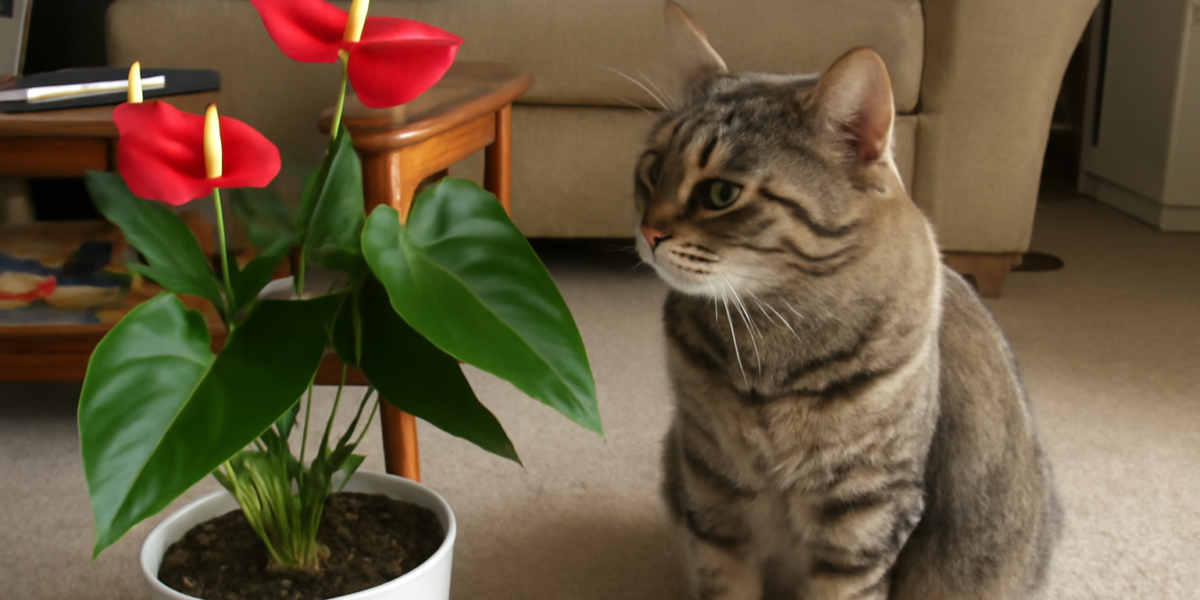
Anthurium plants, sometimes called flamingo flowers or laceleaf, are beloved for their glossy, heart-shaped leaves and striking red, pink, or white spathes. They add a tropical elegance to any room and are a popular gift. But if you share your home with a curious cat, you may be wondering whether these beautiful houseplants belong on your windowsill at all. The short answer is that yes, anthurium plants are indeed toxic to cats, and every cat owner should understand the risks before bringing one into the home.
In this guide, we will walk you through the science behind anthurium toxicity, the symptoms to watch for, what to do in an emergency, and how to create a cat-friendly indoor garden that still satisfies your love of lush greenery.
Why Anthurium Plants Are Toxic to Cats
Anthurium belongs to the Araceae family, a large group of plants that includes philodendrons and dieffenbachia. Nearly every plant in this family contains insoluble calcium oxalate crystals, and anthurium is no exception. These microscopic, needle-shaped crystals are bundled into structures called raphides that are embedded throughout the plant’s tissues, including the leaves, stems, roots, and even the colorful spathes.
When a cat chews on any part of an anthurium, the raphides are released and immediately penetrate the soft tissues of the mouth, tongue, and throat. Think of them as thousands of tiny glass shards firing into delicate mucous membranes. The result is instant pain, intense irritation, and swelling. The crystals themselves are not absorbed into the bloodstream in significant amounts, so anthurium toxicity is considered moderate rather than life-threatening in most cases. However, the mechanical damage the crystals cause can still lead to serious discomfort, difficulty eating, and secondary complications if the swelling becomes severe enough to interfere with breathing or swallowing.
It is important to understand that every part of the anthurium plant is toxic. There is no safe portion that a cat can nibble without risk. Even the sap that leaks from a broken stem or leaf contains enough raphides to cause irritation on contact with skin or mucous membranes.
Symptoms of Anthurium Poisoning in Cats
Because the calcium oxalate crystals cause immediate physical damage rather than a slow metabolic poisoning, symptoms of anthurium ingestion tend to appear almost right away. Most cat owners notice the first signs within seconds to minutes of the cat chewing on the plant.
The most common symptoms include:
- Excessive drooling: One of the first and most obvious signs. The mouth produces extra saliva in response to the irritation.
- Pawing at the face or mouth: Cats will frequently rub or paw at their mouths, trying to relieve the burning sensation.
- Oral pain and swelling: You may notice redness, swelling, or even small blisters on the tongue, gums, and lips.
- Difficulty swallowing: If the crystals reach the throat, your cat may gag, retch, or have trouble swallowing.
- Decreased appetite: Even after the initial pain subsides, your cat may refuse food for hours or even a day because eating is uncomfortable.
- Vomiting: Some cats vomit shortly after ingestion, especially if they swallowed pieces of the plant.
- Hoarse vocalization: In cases where the throat swells, your cat’s meow may sound raspy or muted.
In rare cases, significant swelling in the throat can compromise the airway. This is a veterinary emergency, and you should seek immediate help if your cat appears to be struggling to breathe, making wheezing sounds, or showing signs of distress beyond the typical drooling and pawing.
What to Do If Your Cat Eats Anthurium
If you catch your cat chewing on an anthurium plant, the first thing to do is stay calm. While anthurium poisoning is uncomfortable and frightening, it is rarely fatal. Here is a step-by-step plan for handling the situation.
Step 1: Remove the plant. Gently take any remaining plant material out of your cat’s mouth and move the plant to a location your cat cannot access.
Step 2: Rinse the mouth. If your cat will allow it, use a damp cloth or a small syringe of water to gently rinse the inside of the mouth. This can help wash away some of the crystals and provide a bit of relief. Do not force water into your cat’s mouth, as this could cause choking.
Step 3: Offer something soothing. A small amount of plain yogurt, milk, or even ice chips can help coat the irritated tissues and reduce discomfort. While dairy is not part of a cat’s normal diet, a small amount in an emergency situation can help soothe the burning.
Step 4: Monitor closely. Watch for signs that symptoms are worsening. If drooling and pawing subside within an hour or two, your cat is likely on the mend. If symptoms persist, escalate, or if you notice any breathing difficulty, contact your veterinarian or an emergency animal poison control hotline immediately.
Step 5: Call your vet. Even if symptoms seem mild, it is always a good idea to call your veterinarian for guidance. They may recommend a visit to check for oral damage or prescribe a pain reliever to keep your cat comfortable while the irritation heals.
How to Prevent Anthurium Exposure
Prevention is always better than treatment. If you are determined to keep anthurium plants in your home despite having a cat, you need to be strategic about placement. However, most veterinarians and pet safety organizations recommend simply choosing cat-safe houseplants instead.
If you choose to keep anthuriums, consider the following strategies:
- Hang the plant out of reach: Use a ceiling hook or a high wall-mounted planter that your cat cannot jump to. Keep in mind that cats are remarkably athletic and can reach places you might not expect.
- Use a closed terrarium: A glass terrarium or cloche can keep the plant visible but completely inaccessible.
- Designate a cat-free room: If you have a room that your cat does not enter, such as a home office with a door that stays closed, this can be a safe spot for toxic plants.
- Apply deterrent sprays: Bitter-tasting sprays can be applied to leaves, though these are not foolproof and should not be your sole line of defense.
- Provide cat grass or catnip: Sometimes cats chew on plants simply because they crave greens. Offering safe alternatives like wheatgrass or oat grass can redirect their attention.
Ultimately, the safest approach is to remove anthurium plants from your home entirely and replace them with non-toxic alternatives. The peace of mind is worth far more than any decorative plant.
Safe Houseplant Alternatives for Cat Owners
You do not have to give up your love of indoor plants just because you have a cat. There are dozens of beautiful, non-toxic houseplants that can fill your home with greenery without putting your feline companion at risk.
Some popular cat-safe options include:
- Spider plant (Chlorophytum comosum): Easy to grow, forgiving of neglect, and completely non-toxic to cats.
- Boston fern (Nephrolepis exaltata): Lush, feathery fronds that add a tropical feel without any toxicity concerns.
- Areca palm (Dypsis lutescens): A tall, elegant palm that is safe for cats and works beautifully as a statement plant.
- Calathea varieties: Known for their stunning patterned leaves, calatheas are non-toxic and thrive in indirect light.
- African violet (Saintpaulia): If you love flowers, African violets provide colorful blooms without any risk to your cat.
- Peperomia: With many varieties to choose from, peperomia plants offer interesting textures and shapes, all cat-safe.
For a complete guide to building a cat-friendly indoor garden, check out our full list of cat-safe houseplants.
Understanding Calcium Oxalate Toxicity Across the Araceae Family
Anthurium is far from the only popular houseplant that contains calcium oxalate crystals. In fact, many of the most common and attractive indoor plants belong to the same Araceae family and pose the same type of risk to cats. Knowing which plants share this toxin can help you make informed choices for your home.
Philodendrons are one of the most widely kept houseplants in the world, and they contain the same insoluble calcium oxalate crystals as anthurium. The heartleaf philodendron, split-leaf philodendron, and dozens of other species all carry this risk. Similarly, dieffenbachia, also known as dumb cane, is notorious for causing severe oral irritation in cats and has earned its common name because of the way the crystals can temporarily affect speech in humans who chew on the leaves.
Other Araceae family members to watch out for include pothos (Epipremnum aureum), peace lilies (Spathiphyllum), Chinese evergreen (Aglaonema), and caladium. All of these plants, while beautiful, should be treated with the same caution as anthurium in a household with cats.
The mechanism of injury is identical across all these species. The raphides are released upon chewing and cause immediate mechanical damage to soft tissues. The severity of symptoms tends to depend on how much plant material the cat ingested, how thoroughly they chewed it, and the individual sensitivity of the cat. Kittens and older cats may be more vulnerable to complications than healthy adults.
Frequently Asked Questions
Can a cat die from eating anthurium?
Death from anthurium ingestion is extremely rare. The primary danger is intense oral pain, swelling, and drooling caused by calcium oxalate crystals. In very rare cases, severe throat swelling could compromise breathing, which is why monitoring is important. Most cats recover fully within 24 to 48 hours with supportive care. However, you should always contact your veterinarian if you suspect your cat has eaten any part of an anthurium plant.
Are anthurium toxic to dogs as well?
Yes, anthurium plants are toxic to dogs for the same reason they are toxic to cats. The insoluble calcium oxalate crystals cause oral irritation, drooling, pawing at the mouth, and difficulty swallowing in dogs just as they do in cats. If you have a dog that likes to chew on plants, anthurium should be kept out of reach or replaced with a pet-safe alternative.
How long do anthurium poisoning symptoms last in cats?
Most symptoms of anthurium ingestion in cats resolve within 24 to 48 hours. The initial intense drooling and oral pain usually begin to subside within a few hours as the irritated tissues start to heal. Your cat may refuse food or eat less than normal for a day or so while the mouth remains tender. If symptoms persist beyond 48 hours, or if you notice worsening swelling, difficulty breathing, or complete refusal to eat or drink, seek veterinary attention promptly.
Is it safe to touch anthurium plants with bare hands?
For most people, briefly touching anthurium leaves or spathes does not cause problems. However, the sap from broken stems or leaves contains calcium oxalate crystals and can cause skin irritation, especially in people with sensitive skin. It is a good practice to wear gloves when pruning or repotting anthurium plants and to wash your hands thoroughly afterward. Avoid touching your eyes or mouth after handling the plant.
Keeping your cat safe starts with understanding which plants pose a risk. By recognizing anthurium as a toxic houseplant and taking steps to either remove it or make it completely inaccessible, you are making a responsible choice that protects your feline friend while still enjoying a beautiful home.


