
Last updated: May 16, 2026
In this article
Chinese Evergreens Are Toxic to Cats
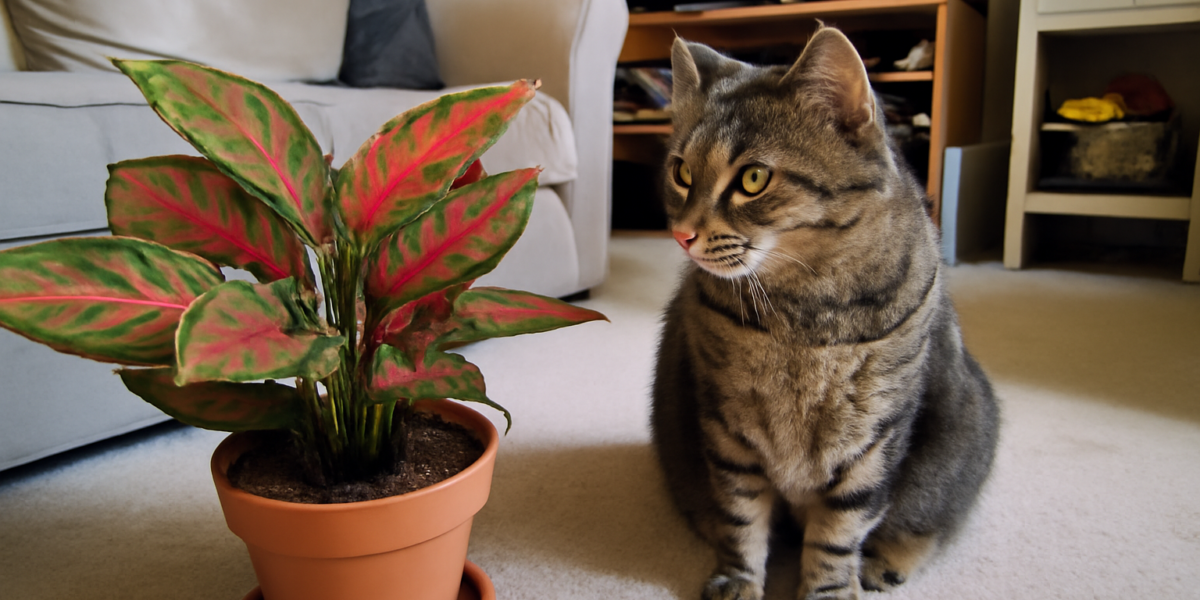
Yes, aglaonema plants, commonly known as Chinese evergreens, are toxic to cats. These popular, low-light-tolerant houseplants contain insoluble calcium oxalate crystals throughout their leaves, stems, and roots. When a cat chews on any part of the plant, these microscopic needle-shaped crystals pierce the soft tissues of the mouth and throat, causing immediate pain, swelling, and irritation. The toxicity level is considered mild to moderate.
Chinese evergreens are prized for their colorful variegated foliage and ability to thrive in low-light conditions, making them fixtures in homes, offices, and shopping centers. All Aglaonema species and cultivars, regardless of leaf color or pattern, contain the same toxic compounds and pose the same risk to cats.
How Aglaonema Affects Your Cat’s Body
The calcium oxalate crystals in aglaonema are stored in specialized plant cells called idioblasts. When a cat bites into a leaf or stem, the pressure causes these cells to fire crystals outward like tiny barbed needles. The crystals embed in the delicate tissues of the tongue, gums, lips, and throat, triggering an intense inflammatory reaction.
The immediate, sharp pain is the plant’s defense mechanism, and it is quite effective. Most cats drop the plant immediately after the first bite and rarely consume large amounts. This built-in deterrent is the primary reason aglaonema poisoning is usually mild rather than life-threatening.
However, cats are curious creatures who may return to the plant more than once, and some cats are less sensitive to the initial pain than others. Kittens exploring their environment are particularly at risk because they tend to mouth and chew on anything within reach.
Symptoms of Aglaonema Poisoning in Cats
Symptoms appear rapidly, usually within minutes of the cat chewing on the plant. The speed of onset is diagnostically helpful because it narrows the list of possible causes. Watch for:
- Intense pawing at the mouth and face
- Excessive drooling, sometimes foamy or blood-tinged
- Oral swelling — puffy lips, swollen tongue
- Difficulty swallowing or gagging
- Decreased appetite or refusal to eat
- Vomiting
- Vocalization indicating pain (meowing, crying)
Less common but more concerning symptoms include swelling of the upper airway, which can manifest as noisy breathing, wheezing, or open-mouth breathing. Cats normally breathe through their noses, so any open-mouth breathing is a red flag that requires immediate veterinary attention.
Eye contact with plant sap can cause conjunctivitis, tearing, and squinting. If your cat rubs its face after chewing on a Chinese evergreen, check the eyes and flush with clean water or sterile saline if you notice redness or irritation.
First Aid for Aglaonema Exposure
Prompt first aid can significantly reduce your cat’s discomfort. Take the following steps as soon as you suspect aglaonema ingestion:
- Remove the plant: Move the aglaonema out of your cat’s reach immediately and pick up any fallen leaves or debris
- Clear the mouth: Gently wipe visible plant fragments from your cat’s mouth using a damp, soft cloth
- Offer water: Encourage your cat to drink cool water or offer ice chips to help rinse the mouth and reduce swelling
- Monitor breathing: Watch for open-mouth breathing, wheezing, or labored respiration
- Contact your vet: Call your veterinary clinic to describe what happened and follow their guidance
Do not attempt to induce vomiting in a cat. Cats are difficult to make vomit safely at home, and the calcium oxalate crystals would cause additional damage to the esophagus on the way back up. Your veterinarian has safer methods if decontamination is needed.
Do not wait to see if symptoms worsen before calling your vet. Early guidance from a professional can prevent complications and give you peace of mind. Have the plant’s name ready when you call, as this helps the vet assess the situation quickly.
Veterinary Treatment Options
Most mild cases of aglaonema ingestion in cats can be managed at home with veterinary guidance over the phone. Symptoms typically resolve within 12 to 24 hours as the inflammation subsides naturally.
For more significant ingestions or cats showing moderate to severe symptoms, your veterinarian may recommend an in-clinic visit. Treatment is supportive and may include:
- Anti-inflammatory medications to reduce oral and throat swelling
- Pain relief to keep your cat comfortable
- Antihistamines if swelling is significant
- IV fluids for cats who cannot drink due to oral pain
- Monitoring of the airway if throat swelling is a concern
There is no specific antidote for calcium oxalate crystal exposure. Treatment focuses entirely on managing symptoms and keeping the cat comfortable while the body’s inflammatory response resolves. The prognosis for full recovery is excellent in the vast majority of cases.
Making Your Home Safe for Cats
Prevention is the most reliable approach to protecting your cat from aglaonema toxicity. Cats are agile climbers and jumpers, so placing plants on high shelves is rarely sufficient. A determined cat can reach almost any surface in your home.
The safest option is to replace toxic houseplants with non-toxic alternatives. Several beautiful plants thrive in the same low-light conditions that aglaonema prefers:
- Calathea (prayer plants): Colorful, patterned foliage similar to aglaonema, non-toxic to cats
- Cast iron plant (Aspidistra elatior): Extremely hardy, tolerates deep shade, safe for cats
- Spider plant (Chlorophytum comosum): Easy to grow, non-toxic, and cats enjoy the dangling leaves
- Boston fern (Nephrolepis exaltata): Lush greenery that is completely safe for cats
If you choose to keep aglaonema in your home, a closed room that your cat never enters is the only reliable option. Remember that cats can push open doors that are not latched firmly. For more on creating a cat-safe living space, explore our guides on lily toxicity in cats and pothos plant safety.
Other Common Houseplants With Calcium Oxalate Crystals
Aglaonema is part of the Araceae family, which includes many popular houseplants that share the same calcium oxalate defense. If you are removing aglaonema for your cat’s safety, check whether you have any of these related plants as well:
- Philodendron — all species
- Dieffenbachia (dumb cane)
- Pothos (devil’s ivy)
- Monstera (Swiss cheese plant)
- Caladium (elephant ears)
- Peace lily (Spathiphyllum)
- Anthurium (flamingo flower)
All produce the same immediate oral pain and swelling when chewed. A systematic check of every plant in your home against the ASPCA’s toxic plant database is the most thorough way to ensure your cat’s safety. If you have recently adopted a new cat, this plant audit should be part of your pet-proofing routine.
Frequently Asked Questions
Can aglaonema kill a cat?
Fatal outcomes from aglaonema ingestion are extremely rare. The intense oral pain typically prevents cats from consuming enough plant material to cause life-threatening toxicity. The primary serious risk is airway obstruction from throat swelling, which is uncommon and treatable with prompt veterinary care.
Are all varieties of aglaonema equally toxic?
Yes, all Aglaonema cultivars contain calcium oxalate crystals regardless of their leaf color or pattern. Whether your plant has silver, red, pink, or green foliage, it poses the same risk to your cat. There is no non-toxic aglaonema variety.
My cat rubbed against an aglaonema but did not eat it. Is that dangerous?
Simply brushing against an aglaonema leaf is unlikely to cause harm. The calcium oxalate crystals are contained within the plant’s cells and are only released when the tissue is damaged by chewing or crushing. Casual contact with intact leaves does not typically cause symptoms.
How long do symptoms of aglaonema poisoning last?
Most symptoms resolve within 12 to 24 hours. Oral pain and swelling are usually at their worst in the first few hours and gradually diminish. Appetite typically returns to normal within a day. If symptoms persist beyond 24 hours or worsen at any point, consult your veterinarian for further evaluation.


