
Last updated: May 16, 2026
In this article
- The Quick Answer on Spathiphyllum and Pets
- What Spathiphyllum Plants Actually Are
- Why “Peace Lily Is NOT a True Lily” Matters
- How Calcium Oxalate Raphides Work
- Cats vs. Dogs With Peace Lily
- Symptoms to Watch For
- Comparing Peace Lily to Other Aroid Houseplants
- What to Do If Your Pet Chewed a Peace Lily
- Living With Peace Lily and a Pet
- Pet-Safer Houseplant Alternatives
- Frequently Asked Questions
The Quick Answer on Spathiphyllum and Pets
Spathiphyllum — the genus most owners know as peace lily — is listed as toxic to cats and dogs by the ASPCA. Every species in the genus shares the same chemistry: calcium oxalate raphides, the needle-shaped crystals common to the Aroid plant family (Araceae). The clinical picture after a chew is sharp acute oral pain, drooling, pawing at the mouth, and sometimes vomiting. The severity tier is mild-to-moderate. So when owners ask whether spathiphyllum toxic pets is a real concern, the answer is yes, and the immediate symptoms can look dramatic, but the typical outcome of a leaf-nibble is unpleasant rather than catastrophic.
One critical clarification leads this whole guide. Spathiphyllum is NOT a true lily. The plants in the Lilium genus — Easter lily, tiger lily, Asiatic lily, and the rest of the showy garden true lilies — are catastrophic for cats: a small ingestion can cause acute kidney injury and death. Peace lily (Spathiphyllum) is in an entirely different plant family (Araceae versus Liliaceae), shares no chemistry with true lilies, and does NOT cause acute kidney injury. The naming overlap is one of the most consequential look-alike confusions in pet houseplant safety. If you have already been searching for information thinking your cat ate a “lily,” you may be in either of two very different worlds: the peace-lily world (irritation, generally manageable) or the true-lily world (kidney emergency, time-critical). Identify the plant first.
What Spathiphyllum Plants Actually Are
Spathiphyllum is a genus of about forty species of evergreen flowering perennials in the Araceae (Aroid) family — the same broad family as monstera, philodendron, pothos, anthurium, dieffenbachia, alocasia, syngonium, and aglaonema. The plants are native to tropical regions of Central and South America and parts of Southeast Asia. They are popular as indoor houseplants because they tolerate low light, signal their water needs visibly (drooping leaves recover quickly after watering), and produce showy white flower-like spathes wrapping a creamy spike — the structure that gives the plant its common name.
The species most commonly encountered as houseplants:
- Spathiphyllum wallisii — the most common nursery-trade peace lily, compact and prolific bloomer
- Spathiphyllum cochlearispathum — larger leaves and bigger spathe, sold in mature plant form
- Spathiphyllum floribundum — smaller flower spike and more numerous blooms
- Various hybrids and cultivars (Mauna Loa, Domino, Sensation) that vary in size and leaf variegation
All of them share the same calcium oxalate raphide chemistry. There is no “safe” cultivar of peace lily; the chemistry is intrinsic to the genus. Variegated forms, dwarf cultivars, and giant Sensation-type peace lilies are all toxic to the same degree.
Why “Peace Lily Is NOT a True Lily” Matters
This is the single most important fact in any pet-safety conversation about peace lilies. True lilies — plants in the genus Lilium (Easter lily, tiger lily, daylily Hemerocallis is also implicated despite different genus, oriental lily, Asiatic lily) — are catastrophic for cats. Even small ingestions of leaves, flowers, pollen, or water from a vase containing true lilies can cause acute kidney injury and death in cats within twenty-four to seventy-two hours. The mechanism is not fully understood, but the clinical picture is well-documented: vomiting, lethargy, refusing food, then progressive kidney failure.
Peace lily (Spathiphyllum) is in a completely different plant family and does NOT cause acute kidney injury. The toxin is calcium oxalate raphides — needle-shaped microscopic crystals in plant cells that release into the mouth on chewing and embed in soft tissue. The clinical effect is local irritation and pain in the mouth and throat, drooling, sometimes vomiting, sometimes a brief food refusal. Cats that have chewed peace lily are uncomfortable; they are not in kidney failure.
The reason this distinction matters so much is that owners search “is my cat going to die from the lily” with the worst-case scenario in mind, and the answer depends entirely on which plant the cat actually got into. We have separate articles for each side: peace lily versus true lily for cats walks through the identification differences, and true lilies and cats covers the genuine kidney emergency. The existing peace-lily-specific resources are peace lily toxicity in cats, peace lilies and cats, and peace lilies and dogs.
How Calcium Oxalate Raphides Work
Calcium oxalate raphides are a specific kind of plant defense chemistry shared across the Araceae family. Inside the cells of the leaves and stems are bundles of needle-shaped crystals (raphides) packed into specialized cells called idioblasts, often surrounded by chemical irritants. When an animal chews on the leaf, the cells rupture, the irritant chemicals release, and the needle crystals embed into the soft tissue of the lips, tongue, gums, and throat. The combination produces an immediate sharp pain that is essentially a chemical-and-mechanical irritation simultaneously.
The clinical effects are usually self-limiting. The crystals are not absorbed systemically in significant amounts; they irritate locally and pass through. The acute pain typically peaks in the first few minutes and improves over the following hours as inflammation subsides and saliva flushes the mouth. Severe outcomes are rare and usually involve large ingestions, prolonged tissue contact (a chewed plant fragment lodged somewhere), or upper-airway swelling that interferes with breathing. The latter is the rare-but-important emergency to watch for.
The same chemistry is at work in pothos, philodendron, monstera, anthurium, dieffenbachia (where it is particularly concentrated, hence the common name “dumb cane”), alocasia, and the rest of the Aroid houseplant family. Read more in the dieffenbachia dumb cane toxicity guide for the highest-irritation member of the family, and alocasia elephant ear toxicity for another raphide-rich relative.
Cats vs. Dogs With Peace Lily
Both cats and dogs are vulnerable to calcium oxalate raphide irritation from peace lily. The difference is in exposure pattern. Cats are typically the species we hear about most because peace lily leaves at floor level or on a low table are within easy chewing reach, and the leaves are appealing texture for cats that have any plant-chewing tendency. The drama of the post-chew picture (suddenly drooling, pawing at the mouth) often makes the owner think something catastrophic is happening, when in reality the plant is delivering its expected immediate-irritation response.
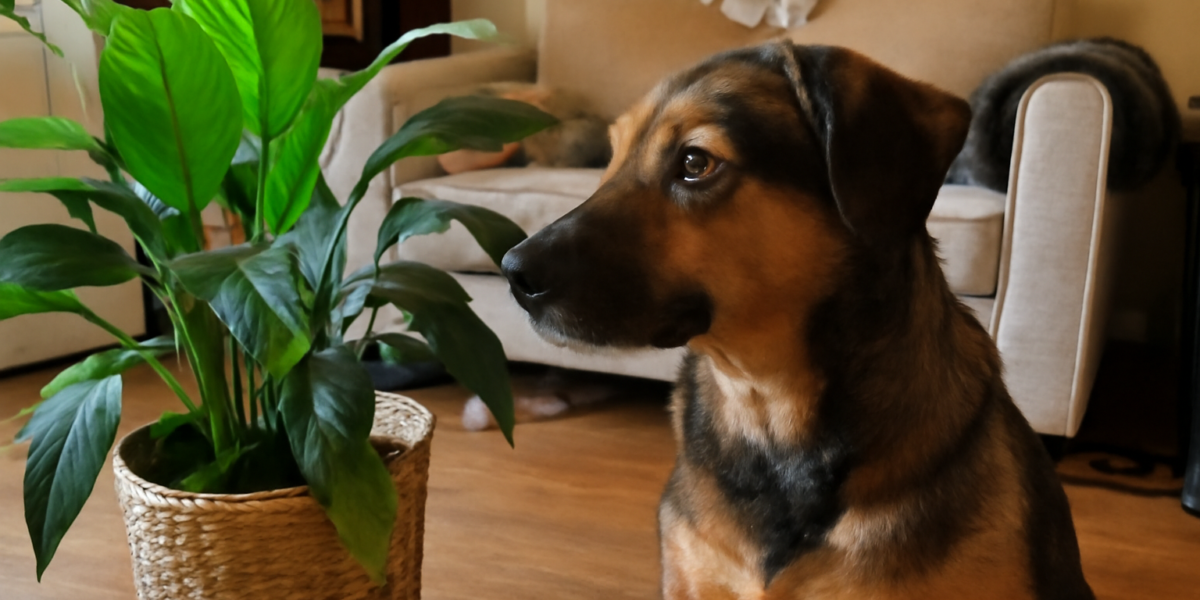
Dogs, especially puppies, also chew peace lily, and a dog who chews a substantial portion of leaf can have meaningful symptoms. Bigger dog body weight typically means a given chew is a smaller per-pound exposure, but the local oral irritation is still uncomfortable. The realistic dog scenarios are puppies left alone with a houseplant, dogs that pull plants off tables in play, and dogs that drink water from peace lily pots or cut-flower vases.
Severity per pound is broadly similar between cats and dogs. There is no species-specific vulnerability the way there is for true lilies in cats. The variable is exposure scale and individual tolerance. Both species recover from typical exposures within hours to a day with supportive care.
Symptoms to Watch For
Symptoms of peace lily ingestion typically begin within minutes of the chew. Watch for:
- Sudden drooling, foaming, or hypersalivation
- Pawing at the mouth, rubbing the face on the floor or furniture
- Vocalizing (yowling, whining) from acute oral pain
- Visible head-shaking or swallowing repeatedly
- Vomiting once or twice within the first few hours
- Loss of appetite for a meal or two
- Visible swelling of the lips, tongue, or face in larger exposures
The threshold for veterinary care is exposure-dependent. Mild symptoms in an alert pet can be managed at home with fresh water and supervision. The signs that mean call-the-vet-now are difficulty breathing, visible swelling of the airway or face, persistent vomiting, refusal to drink, lethargy progressing rather than improving, or any sign of upper-airway compromise. Call your veterinarian, ASPCA Animal Poison Control at 888-426-4435, or Pet Poison Helpline at 855-764-7661 for advice on whether your specific exposure warrants an ER visit. Do not induce vomiting at home unless a veterinary professional has directed you to.
Comparing Peace Lily to Other Aroid Houseplants
Spathiphyllum sits in the middle of the Aroid family in toxicity terms. The chemistry is identical across the family — calcium oxalate raphides — but the concentration and the irritant profile vary. Roughly:
- Dieffenbachia (dumb cane) is at the top of the irritation pile — the common name reflects the temporary inability to vocalize after a serious chew
- Alocasia (elephant ear) and Caladium are also high-irritation members of the family
- Peace lily (Spathiphyllum), Anthurium, and the philodendron-pothos cluster sit in a similar mid-range
- Aglaonema and some Calathea (the latter is in a different but related family) sit at the lower-irritation end
For specific comparisons in our existing guides: pothos and cats, philodendron and cats, monstera and cats, anthurium and cats, and aglaonema and cats.
What to Do If Your Pet Chewed a Peace Lily
If you find your pet with a chewed peace lily leaf, here is the practical path. First, identify the plant honestly. If you are not certain it is a Spathiphyllum (peace lily, white spathe wrapping a creamy spike), and especially if you have any reason to think it might be a true lily (Lilium — orange or pink-spotted trumpet flowers, multiple flowers per stem, often sold as cut-flower bouquets), treat the situation as a potential true-lily emergency and call your vet immediately. The two scenarios diverge dramatically.
If you are confident it is peace lily, gently remove any remaining leaf material from the mouth, wipe with a damp cloth if the pet will allow, and offer fresh cool water to soothe the oral irritation. Many pets will drink readily, which helps flush the mouth. Take the plant out of reach for the rest of the day. Watch for the next several hours for swelling, persistent vomiting, or any breathing difficulty.
Take a photo of the plant before you call your vet. Confirming Spathiphyllum (versus Lilium) and roughly how much was chewed helps the veterinary team make care decisions quickly. Mention any underlying health issues, especially any history of GI problems, kidney disease, or upper-airway issues.
Living With Peace Lily and a Pet
If you already own a peace lily and have a pet, you have options that do not require getting rid of the plant. The practical setup:
- Move the plant to a high shelf, hanging stand, or location the pet cannot reach
- Avoid placing peace lily on low tables, floor pots, or window benches
- If you have a chronic plant-chewing cat, consider gating the room with peace lilies during unsupervised hours
- Pick up shed leaves promptly — fallen leaves are still calcium-oxalate-loaded and chew-attractive
- Skip cut peace lily arrangements where pets can reach the vase water (the crystals leach into the water)
- If you propagate or repot, do that work in a closed room and clean up thoroughly
For broader cat-friendly indoor plant options, our cat-safe houseplants guide walks through species choices that give similar low-light tolerance without the calcium oxalate profile. Spider plants, parlor palms, and several Peperomia species are non-toxic substitutes that thrive in similar conditions.
Pet-Safer Houseplant Alternatives
If the peace-lily aesthetic appeals — glossy dark leaves, white flower spikes, low-light tolerance — but you want to avoid the calcium-oxalate concern, you have a few decent options. Spider plants (Chlorophytum comosum) tolerate low light and arch out of containers attractively. Peperomia obtusifolia (“baby rubber plant”) gives the glossy-leaf look in a different shape and is non-toxic. Various non-toxic ferns (Boston fern, maidenhair, blue-star) tolerate the same low-light moist conditions peace lilies do.
For the showy-white-flower aesthetic specifically, your options are more limited because most flowering houseplants carry some toxicity. African violet (Saintpaulia) is non-toxic and gives a different but appealing flower form. Phalaenopsis orchids are also generally non-toxic and produce striking flower spikes, though their care is fussier.
Frequently Asked Questions
Is peace lily the same as a true lily?
No, and the difference matters enormously. Peace lily is Spathiphyllum, in the Araceae family. True lilies are Lilium, in the Liliaceae family. True lilies cause acute kidney injury and death in cats; peace lilies cause oral irritation. If your cat got into a “lily,” identify the plant before assuming the worst.
Will my cat die from chewing a peace lily?
Almost certainly not. Peace lily toxicity is mild-to-moderate and presents as oral irritation, drooling, vomiting, and brief food refusal. Most cats recover within a day. Severe outcomes are rare and involve very large ingestions or pre-existing health issues — not typical foraging.
What about peace lily and dogs?
The same calcium oxalate raphide chemistry applies to dogs. Symptoms and recovery are similar. Bigger dog body weight typically means a given chew is a smaller per-pound exposure, but the local oral irritation is still uncomfortable. Read peace lilies and dogs for more.
What if my pet drank water from a peace lily pot or vase?
Calcium oxalate crystals leach somewhat into pot water and vase water. A small lick is unlikely to cause significant problems, but a meaningful drink can produce oral irritation and mild GI upset. Watch for drooling and vomiting; call your vet if symptoms persist.
Who should I call if my pet chewed a peace lily?
Start with your own veterinarian, especially if you see persistent symptoms or any sign of upper-airway swelling. ASPCA Animal Poison Control is at 888-426-4435 and Pet Poison Helpline at 855-764-7661 — both are staffed twenty-four hours. If you are also thinking about adopting, our adopt cats and adopt dogs hubs are good places to start.


