
Last updated: May 16, 2026
In this article
- Is Aglaonema Toxic to Dogs? The Quick Answer
- What Aglaonema Looks Like and Where Dogs Encounter It
- The Toxic Mechanism: Insoluble Calcium Oxalate Raphides
- Symptoms of Aglaonema Ingestion in Dogs
- How Bad Is Aglaonema Compared with Other Aroids?
- What to Do If Your Dog Eats Aglaonema
- Veterinary Treatment for Aglaonema Exposure
- Aglaonema for Dogs vs Cats: Different Picture
- Other Aroid Plants to Watch Out For
- Pet-Safe Houseplant Alternatives to Aglaonema
- Prevention: Keeping Dogs Safe Around Houseplants
- Adopting a Dog and Plant Audits
- Frequently Asked Questions
Is Aglaonema Toxic to Dogs? The Quick Answer
Yes, aglaonema, commonly called Chinese evergreen, is toxic to dogs. The ASPCA lists Aglaonema modestum and the broader genus as toxic to dogs and cats because of insoluble calcium oxalate raphides — microscopic needle-shaped crystals embedded in the plant tissue. When a dog chews or bites into aglaonema leaves or stems, those crystals are released and physically embed themselves in the lining of the mouth, tongue, and throat, causing intense oral irritation, drooling, and pain. The severity tier is moderate: not usually life-threatening, but genuinely uncomfortable and worth a vet call to manage.
If your dog has chewed aglaonema, the immediate signs you will see are pawing at the mouth, drooling, head shaking, and possibly vomiting. The good news is that the unpleasantness usually deters dogs from continuing to chew, so most ingestions are small. The bad news is that even a small chew can produce dramatic-looking symptoms, and rare cases involve more significant swelling that affects breathing. Call your veterinarian, the ASPCA Animal Poison Control Center at 888-426-4435 (fee applies), or the Pet Poison Helpline at 855-764-7661 (fee applies) for guidance.
What Aglaonema Looks Like and Where Dogs Encounter It
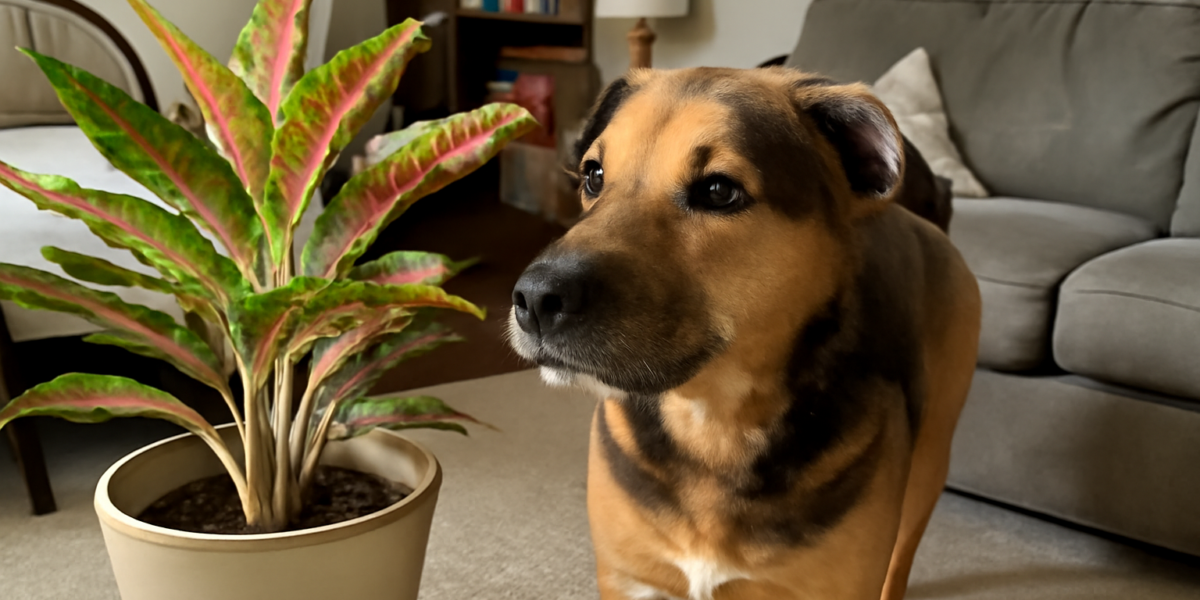
Aglaonemas are tropical evergreen plants in the aroid family (Araceae), the same family as philodendron, pothos, dieffenbachia, monstera, peace lily, and elephant ear. Native to tropical Asia and New Guinea, they are widely grown as low-maintenance houseplants because they tolerate low light, irregular watering, and indoor air. The leaves are oval to lance-shaped, often with striking silver, white, pink, or red variegation against a green background. Popular cultivars include the silvery ‘Silver Bay,’ the pink-tinted ‘Red Siam,’ and the speckled ‘Maria.’
Dogs encounter aglaonema almost exclusively as a houseplant. The plant is rarely grown outdoors except in tropical climates because it is not cold-hardy. Its low-light tolerance makes it a popular choice for offices, hallways, and rooms without direct sunlight, which often puts it at exactly the height where a curious dog can reach it. Dogs that knock over potted plants while playing, or chew on dropped leaves, are the typical exposure profile.
Puppies and young dogs are at higher risk because they are exploring everything by mouth. Adult dogs who have not been around plants before may also investigate a new aglaonema during the first few days after it joins the home. A dog who has been ignoring plants for years usually does not suddenly start chewing them, but new acquisitions and rearranged spaces can shift behavior unpredictably.
The Toxic Mechanism: Insoluble Calcium Oxalate Raphides
Calcium oxalate raphides are needle-shaped microscopic crystals stored in specialized plant cells called idioblasts. When a dog bites into an aglaonema leaf, the cells rupture and the crystals shoot out under pressure, embedding themselves into the soft tissues of the mouth like tiny splinters. This causes immediate, intense pain and irritation. Some plant species (notably dumb cane / dieffenbachia) also contain proteolytic enzymes that worsen the irritation; aglaonema’s effect is somewhat milder but operates on the same physical mechanism.
The “insoluble” part of “insoluble calcium oxalate” matters because it distinguishes this class of toxicity from the soluble calcium oxalate found in plants like rhubarb leaves. Soluble oxalates are absorbed systemically and can cause kidney damage. Insoluble oxalate raphides typically stay where they land — in the mouth and upper GI tract — and cause local mechanical and chemical irritation rather than systemic toxicity. So while aglaonema is genuinely uncomfortable, it does not generally cause kidney failure the way some other oxalate plants can.
The protein component of aglaonema sap can add to the irritation through a histamine-like response, contributing to swelling around the mouth and tongue. Severe swelling that affects breathing is rare but is the worst-case scenario worth knowing about, especially in small dogs whose airways have less margin.
Symptoms of Aglaonema Ingestion in Dogs
The classic signs appear within minutes of chewing. Watch for intense drooling and foaming at the mouth, pawing at the muzzle, head shaking, lip-smacking, vocalization (whining, yelping), and apparent oral pain. Some dogs will refuse to eat or drink for several hours afterward because of mouth discomfort. Vomiting is common and often expels chewed plant material.
Visible swelling of the lips, tongue, or muzzle can develop. Most cases involve mild local swelling that resolves within hours. More severe swelling that progresses to involve the throat or airway is rare but is the symptom set that warrants immediate emergency care — labored breathing, noisy breathing, gum color changes (pale or bluish), or collapse mean a dog needs to be seen right now.
Skin contact with aglaonema sap during a chewing incident can cause redness, mild swelling, or itching. Dogs may rub their face on furniture or the floor to relieve the discomfort. A gentle wipe of the muzzle with a damp cloth and rinsing the mouth with cool water (if the dog tolerates it) can help.
How Bad Is Aglaonema Compared with Other Aroids?
Among the calcium-oxalate aroids commonly kept as houseplants, aglaonema sits in the moderate range — more irritating than peace lily or pothos, less severe than dumb cane (dieffenbachia). The amount of pain and swelling depends on the species, the cultivar, the part of the plant chewed (newer growth tends to have higher concentrations of irritants), and how much was actually crushed in the dog’s teeth.
Our companion guides on pothos and dogs, philodendron and dogs, monstera and dogs, and dieffenbachia and dogs cover the rest of the aroid family. The pattern is the same across the family — calcium oxalate raphides cause local oral and GI irritation, with severity varying by species. If you have multiple aroid plants in your home, the overall management strategy is consistent.
The good news is that aroid ingestions are typically self-limiting. The intense unpleasantness of the first chew usually deters dogs from eating more, and most cases resolve within hours to a day with supportive care. The bad news is that the experience is genuinely painful for the dog, and prevention beats treatment.
What to Do If Your Dog Eats Aglaonema
The first move is to remove your dog from the plant and check their mouth gently for chewed material. Wipe the muzzle with a damp cloth to remove any sap. If your dog will tolerate it, rinse the mouth with cool water using a syringe or by encouraging them to drink. Do not force water if the dog is distressed or struggling to swallow — that can cause aspiration.
Offer a small amount of milk, yogurt, or a soothing food like plain cottage cheese. The calcium in dairy products can help bind some of the loose oxalate crystals and may provide local relief, though this should not replace veterinary consultation. Cool soft food and access to water often help dogs settle.
Then call. Provide your veterinary team or poison control hotline with your dog’s species, weight, age, health background, the part and amount of plant ingested, and the symptoms you are seeing. Have the plant or a clear photograph available. Most aglaonema ingestions can be managed at home with monitoring, but the team will tell you if any of your specific signs warrant a clinic visit. Severe swelling, breathing difficulty, repeated vomiting, or refusal to drink for more than a few hours moves the case into the in-clinic category.
Veterinary Treatment for Aglaonema Exposure
For mild to moderate cases, treatment is supportive: anti-inflammatory medication if needed, anti-nausea medication for vomiting, soft palatable food to encourage eating, and observation. Some dogs benefit from a short course of pain control if oral discomfort is significant. IV fluids may be appropriate if the dog has been vomiting and is dehydrated.
For more severe cases involving airway compromise or significant facial swelling, expect more aggressive intervention. Steroids may be used to reduce swelling. Oxygen support, intubation in the worst cases, and intensive monitoring may be necessary. These severe presentations are uncommon but possible, especially in small dogs.
Most dogs recover fully within 24 hours with appropriate supportive care. There is no specific antidote for calcium oxalate exposure — the management is symptomatic. Bloodwork is generally not necessary for typical aglaonema cases unless the clinical picture is unusually severe or the dog has pre-existing health concerns.
Aglaonema for Dogs vs Cats: Different Picture
Aglaonema is toxic to both dogs and cats, with the same calcium oxalate raphide mechanism. The behavioral differences mean dogs and cats encounter the plant differently. Dogs are more likely to chew larger quantities of foliage in a single incident. Cats are more likely to chew leaves over time as part of regular plant exploration. Our companion piece on aglaonema and cats covers the cat-side picture in detail.
Body size matters. Small dogs and cats with airway compromise from severe oral swelling are at higher risk than larger dogs. The amount of plant material that produces a manageable case in a Labrador can be significantly more concerning in a Yorkie or a Persian cat. Adjust your urgency to your pet’s size and the severity of symptoms you are seeing.
For multi-pet households, the practical step is to keep aglaonema out of reach of all pets. Hanging baskets and high shelves work for cats only if the plant is genuinely out of jumping range. Tabletop plants are at exactly the wrong height for medium and large dogs.
Other Aroid Plants to Watch Out For
The aroid family contains a long list of popular houseplants that share aglaonema’s toxicity profile. Pothos (Epipremnum aureum), philodendron (multiple species), monstera (Monstera deliciosa), dieffenbachia (dumb cane), peace lily (Spathiphyllum), elephant ear (Alocasia and Colocasia), and ZZ plant (Zamioculcas zamiifolia) all contain calcium oxalate crystals.
If you are doing a household plant audit, treat the aroids as a category. They are visually diverse — philodendrons and monsteras have dramatic leaf shapes, pothos and ivy-like aroids trail, ZZ has the glossy succulent look — but they share the underlying chemistry. Our roundup of pet-safe garden plants includes safer alternatives that give you the same indoor jungle vibe without the oxalate concern.
Dumb cane / dieffenbachia in particular deserves emphasis because it is more severely irritating than the others. A dog who chews dieffenbachia is at higher risk of significant airway swelling than a dog who chews aglaonema or pothos. If you have one specific aroid to remove from a dog household, dumb cane is probably the priority.
Pet-Safe Houseplant Alternatives to Aglaonema
If you love the look of aglaonema — variegated foliage, low-light tolerance, low-maintenance care — there are pet-safe alternatives that offer similar visual appeal. Calatheas have dramatic patterned leaves and are non-toxic. Prayer plants (Maranta leuconeura) offer color variation and are pet-safe. Peperomias come in many leaf shapes and patterns and are non-toxic. Spider plants are classic, easy, and safe.
For low-light, neglect-tolerant species similar to aglaonema in care requirements, look at parlor palm (Chamaedorea elegans), cast iron plant (Aspidistra elatior), and Boston fern. None will look identical to aglaonema, but they fill similar functional roles in a houseplant collection.
Our roundup of pet-safe garden plants includes both indoor and outdoor options. The ASPCA’s toxic and non-toxic plant database is the gold-standard reference, and a quick search before bringing home a new plant prevents the kind of toxic-houseplant emergency that no one wants to deal with at 9 PM on a weeknight.
Prevention: Keeping Dogs Safe Around Houseplants
The single most reliable prevention is plant placement out of dog range. Hanging baskets, high shelves, and rooms the dog does not access are the practical solutions. Tabletop and floor placements are tempting because aglaonema looks great there, but they are exactly where dogs encounter and chew plants.
Training matters too. A reliable “leave it” cue helps for moments when you can supervise. Provide alternative chewing outlets — appropriate dog toys, dental chews, food puzzles — to redirect oral fixation away from plants. Crate or gate access to plant-heavy rooms when you cannot supervise, especially during the first few weeks of a new plant or new dog joining the household.
Yard prevention applies in tropical regions where aglaonema is grown outdoors. Fence off plant beds, supervise outdoor time, and clean up any dropped leaves or pruning debris promptly. The same general principles that apply to indoor plant safety apply outdoors with adaptations for the larger scale.
Adopting a Dog and Plant Audits
When a new dog joins your household — through adoption, fostering, or a major routine change — the first few weeks are the highest-risk window for plant exposures. New dogs are exploring everything, the household is in flux, and you do not yet know your dog’s individual chewing personality. Some dogs ignore plants entirely. Others will systematically test every leaf in the house.
For a dog-friendly home, do a quick inventory of every plant. Cross-check each species against the ASPCA toxic-plant database. Move toxic plants out of reach (or out of the home), or replace them with safer options. Aglaonema is a popular target for swap-out because it is moderately toxic and easily replaceable with similarly-easy non-toxic plants.
Our team at Walk Me Home Rescue’s dog adoption page regularly walks adopters through plant audits as part of welcome-home prep. Five minutes of plant ID and toxicity checking is much cheaper than an emergency vet visit during the first week. Dogs deserve to come home to a space designed for their safety.
Frequently Asked Questions
Is aglaonema deadly to dogs?
Aglaonema is toxic to dogs but rarely deadly. The calcium oxalate raphides cause significant oral irritation, drooling, and pain that usually deter further chewing, and most cases resolve with supportive care. Severe cases involving airway swelling are rare but do warrant emergency veterinary care.
What should I do right after my dog chews aglaonema?
Remove your dog from the plant, gently wipe their mouth with a damp cloth, and offer cool water or milk to help rinse the irritants. Then call your veterinarian or poison control. Do not induce vomiting at home unless instructed. Most cases can be managed with monitoring and supportive care.
How long do aglaonema symptoms last?
Most oral irritation symptoms — drooling, pawing at mouth, swelling, mild vomiting — resolve within 12 to 24 hours with supportive care. Persistent symptoms, breathing difficulty, or progressive swelling warrant immediate veterinary attention.
Are all aglaonema cultivars equally toxic?
The genus Aglaonema as a whole contains calcium oxalate raphides, so all cultivars and species should be considered toxic to dogs. Variegated, pink, red, or silver cultivars carry the same toxicity profile as standard green forms. Cultivar differences in concentration are not clinically significant for safety purposes.
What plants can I have instead of aglaonema in a dog household?
Calatheas, prayer plants, peperomias, spider plants, parlor palms, Boston ferns, and African violets are all ASPCA-listed non-toxic options. They offer similar low-maintenance care and visual variety without the calcium oxalate concern. Confirm any new plant against the ASPCA toxic-plant database before bringing it into a dog-friendly home.


