
Last updated: May 4, 2026
In this article
Quick Answer: Both plants are toxic to cats — but in very different ways. Peace lilies (Spathiphyllum spp.) are mildly toxic, causing oral pain and stomach upset due to calcium oxalate crystals. They will not cause kidney failure. True lilies (Lilium spp. and Hemerocallis spp.) are deadly — even a single petal or a few grains of pollen can trigger irreversible kidney failure and death within 72 hours. Knowing which plant you have in your home is not a matter of curiosity. It is a matter of your cat’s life.
Why This Distinction Matters
The word “lily” appears in the names of dozens of plants, and that shared label creates a dangerous illusion of equivalence. Cat owners who know that “lilies are toxic” often do not realize that the severity gap between a peace lily and a true lily is the difference between a bad afternoon and a fatal emergency. A cat that chews a peace lily needs a call to the vet and close monitoring. A cat that chews an Easter lily, tiger lily, or daylily needs to be in an emergency clinic within hours — and even then, outcomes are not guaranteed.
Every year, cats die from true lily poisoning because their owners believed the exposure was no more serious than a peace lily incident, or because they waited for symptoms to worsen before seeking help. The purpose of this guide is to close that knowledge gap. By the time you finish reading, you will know exactly which plant is which, what each one does to your cat’s body, and how to respond if your cat is ever exposed.
Peace Lilies (Spathiphyllum)
Peace lilies are not true lilies at all. They belong to the family Araceae — the same plant family as pothos, philodendron, and dumb cane — and the genus Spathiphyllum. They are prized as houseplants for their glossy dark leaves and elegant white spathes, and they thrive in the low-light conditions common to most homes. They are also consistently misidentified as harmless, or alternatively, as deadly. Neither is accurate.
Every part of a peace lily contains insoluble calcium oxalate crystals — microscopic, needle-shaped structures that rupture out of plant cells when a cat bites into the tissue. These crystals embed in the soft tissues of the mouth, tongue, and throat, causing immediate, intense burning and irritation. The pain is real and the reaction is swift: pawing at the face, excessive drooling, oral swelling, and vomiting are the most common signs. In most cases, the severity of the pain itself acts as a deterrent and prevents cats from eating large amounts.
The critical reassurance is this: calcium oxalate crystals are a local irritant. They do not enter the bloodstream in significant quantities, and they do not damage the kidneys. There is no risk of acute kidney failure from peace lily ingestion. Most cats recover fully within 24 hours with supportive care at home, though a veterinary call is always the right first step. Persistent vomiting, difficulty swallowing, or any sign of throat swelling warrants a clinic visit.
True Lilies (Lilium and Hemerocallis)
True lilies are among the most dangerous plants a cat can encounter. The two genera of concern are Lilium — which includes Easter lilies, tiger lilies, Asiatic lilies, Oriental lilies, stargazer lilies, and rubrum lilies — and Hemerocallis, the daylilies found throughout gardens and floral arrangements worldwide. Every part of these plants is toxic to cats: the petals, leaves, stem, stamens, pollen, and even the water in a vase that has held fresh lilies.
The mechanism of true lily toxicity is not fully understood, but the outcome is devastatingly consistent: acute kidney failure. Feline kidney tissue is uniquely vulnerable to an unidentified compound in these plants, and the damage begins rapidly. The first symptoms — vomiting, lethargy, drooling — typically appear within two to six hours of ingestion and can look deceptively mild. Many owners interpret this phase as a minor stomach upset and wait for improvement. That decision costs precious time.
Within 12 to 24 hours, kidney function begins to deteriorate significantly. Urine output changes, dehydration worsens, and the cat becomes progressively weaker. Without aggressive intravenous fluid therapy started within hours of exposure, the kidneys may fail completely. Even a cat treated promptly may sustain permanent kidney damage. A cat that receives no treatment within the critical window is likely to die within 72 hours. There is no antidote. Time is the only variable that can be controlled.
How to Tell Them Apart
Visually, peace lilies and true lilies are quite different once you know what to look for. A peace lily has broad, lance-shaped dark green leaves growing directly from the soil on long stems, with no true stem between the soil and the leaf base. Its flower is a single white spathe — a modified leaf — surrounding a central spike called a spadix. The overall shape is compact and low-growing, typically under two feet tall.
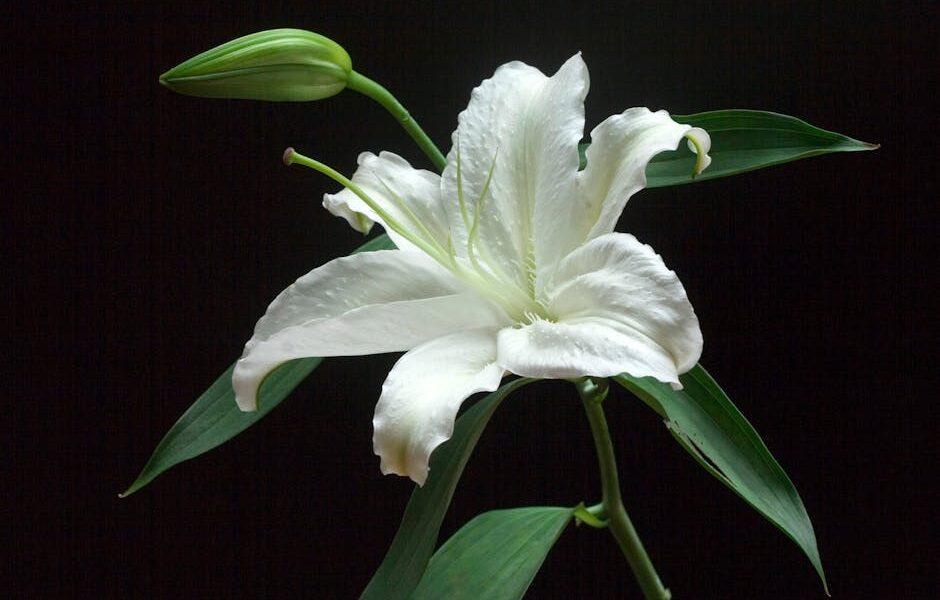
True lilies grow on upright, leafy stems that can reach several feet in height. Their flowers have six distinct petals arranged symmetrically around a central cluster of stamens, often with prominent pollen-bearing anthers. Daylilies grow in clumps of arching, grass-like leaves and produce multiple trumpet-shaped blooms on branching stems.
The most reliable method of identification is the botanical name. If a plant tag, florist label, or online listing shows Spathiphyllum, you have a peace lily. If it shows Lilium or Hemerocallis — or lists a common name such as Easter lily, tiger lily, Asiatic lily, Oriental lily, stargazer, or daylily — it is a true lily and must be kept entirely out of a home with cats. When in doubt, do not bring it inside.
What to Do in an Emergency
Your response depends entirely on which plant your cat has been exposed to, which is why identification matters so much.
If your cat has been exposed to a peace lily: Remove your cat from the area and prevent further ingestion. Offer fresh water to help rinse the mouth. Note how much plant material was consumed and when. Call your veterinarian to report the exposure. Monitor closely for the next 24 hours and seek in-person care if vomiting is persistent, if your cat cannot swallow comfortably, or if you observe any swelling around the throat.
If your cat has been exposed to a true lily: Do not wait for symptoms. Go to a veterinary clinic immediately, or call the ASPCA Animal Poison Control Center at (888) 426-4435 or the Pet Poison Helpline at (855) 764-7661, both available 24 hours a day. Bring a sample or photograph of the plant. Cats treated within the first six hours of ingestion have significantly better outcomes than those who reach care after kidney damage has already progressed. Do not induce vomiting at home unless specifically instructed by a poison control professional.
If you are not certain which plant your cat encountered, treat the situation as a true lily emergency until the plant is positively identified.
Cat-Safe Flower Alternatives
You do not have to give up flowers to keep your cat safe. A number of popular cut flowers and houseplants carry no meaningful toxic risk to cats. Roses, snapdragons, sunflowers, gerbera daisies, orchids, freesia, statice, lisianthus, and celosia are all considered non-toxic by the ASPCA. Spider plants (Chlorophytum comosum), Boston ferns (Nephrolepis exaltata), areca palms (Dypsis lutescens), and most peperomia species are safe houseplant choices.
When purchasing a bouquet, tell your florist you have cats and ask them to confirm every flower included. Mixed arrangements frequently contain lilies hidden among other blooms. Always verify the botanical name of any new plant against the ASPCA’s toxic and non-toxic plant database before bringing it into your home. For more guidance on building a cat-safe environment, visit our cat care blog.
Frequently Asked Questions
Can a peace lily kill a cat?
In the vast majority of cases, no. Peace lilies cause real discomfort — oral burning, drooling, and vomiting — but they do not contain the nephrotoxic compound found in true lilies and will not cause kidney failure. Serious complications from peace lily ingestion are rare. However, no plant exposure in a cat should be dismissed entirely: a veterinary call is always warranted, and a clinic visit is appropriate if symptoms are severe or prolonged.
My cat only licked a true lily — is that still dangerous?
Yes. There is no safe level of true lily exposure for a cat. Grooming pollen from the coat, licking a leaf, or even drinking water from a vase that contained a lily can be enough to trigger kidney failure. The quantity required to cause lethal harm is extremely small and varies between individual cats. If you have any reason to believe your cat has been in contact with a true lily, contact a veterinarian or poison control immediately and do not wait to see whether symptoms develop.
How do I know if a plant in a store or bouquet is a true lily?
Ask for the botanical name. Common names are unreliable — many plants are called “lily” without belonging to the Lilium or Hemerocallis genera. A plant tag showing Lilium or Hemerocallis is a true lily. Common names to treat as true lilies include: Easter lily, tiger lily, Asiatic lily, Oriental lily, stargazer lily, rubrum lily, Japanese show lily, and daylily. If the tag only gives a common name and you cannot confirm the genus, do not bring the plant into a home with cats.
What if I cannot tell whether the plant my cat ate was a peace lily or a true lily?
Assume it was a true lily and act accordingly. Take your cat to an emergency veterinary clinic immediately, or call the ASPCA Animal Poison Control Center at (888) 426-4435 or the Pet Poison Helpline at (855) 764-7661. Bring a sample or clear photograph of the plant. Treating a peace lily exposure with the urgency of a true lily exposure carries very little downside risk. Treating a true lily exposure with the complacency appropriate to a peace lily exposure can be fatal.


