
Last updated: May 16, 2026
In this article
Hibiscus Is Mildly Toxic to Cats
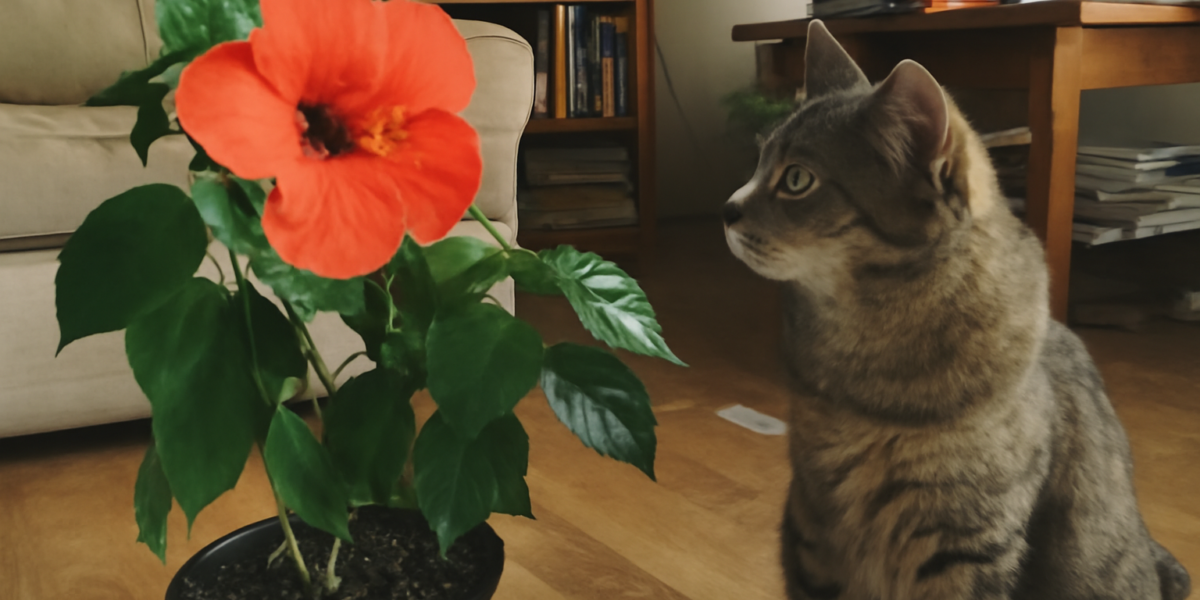
Hibiscus flowers and plants are considered mildly toxic to cats. If your cat chews on or eats hibiscus, the most likely outcome is gastrointestinal upset including vomiting, diarrhea, nausea, and loss of appetite. The toxicity is rated as mild, meaning that while hibiscus ingestion is unpleasant, it is rarely dangerous or life-threatening.
The ASPCA classifies hibiscus (Hibiscus spp.) as toxic to cats, dogs, and horses. The toxic compounds include asparagine (an amino acid found in high concentrations in the plant) and other unidentified substances that irritate the gastrointestinal lining. The flowers, leaves, stems, and roots all contain these compounds, though the flowers and leaves are the parts cats most commonly encounter.
Hibiscus plants are wildly popular — they grow outdoors in warm climates across the southern United States and are commonly kept as indoor potted plants in cooler regions. Their large, colorful, trumpet-shaped blooms make them irresistible focal points, but they can also attract the attention of curious cats.
Which Parts of the Hibiscus Plant Are Toxic?
All parts of the hibiscus plant are considered toxic to cats, but the level of risk varies depending on which part is consumed and how much is ingested.
Flowers: The large, showy blossoms are the part most likely to attract a cat’s attention. Fallen petals on the floor or ground are especially tempting for playful cats who bat at and then mouth lightweight objects. The flowers contain the same irritating compounds as the rest of the plant.
Leaves: Hibiscus leaves contain a slightly higher concentration of irritants compared to the flowers. Cats that chew on the foliage may experience more noticeable gastrointestinal symptoms. The leaves of tropical hibiscus (Hibiscus rosa-sinensis) tend to be glossy and smooth, which some cats find appealing to chew.
Stems and bark: While cats are less likely to chew on woody stems, the bark and younger green stems do contain toxic compounds. Cats that like to gnaw on sticks or branches could encounter these.
Roots: The root system contains irritating substances as well, though exposure is unlikely unless the plant has been repotted, uprooted, or knocked over, exposing the root ball.
The concentration of asparagine and related irritants tends to be highest in actively growing plant tissue — new leaves, developing buds, and fresh flowers. Older, tougher plant material generally contains lower levels but is still not considered safe.
Symptoms of Hibiscus Poisoning in Cats
If your cat eats hibiscus, watch for the following symptoms, which typically appear within a few hours of ingestion:
Most common symptoms:
- Nausea (lip-licking, swallowing repeatedly, restlessness)
- Vomiting (may be a single episode or repeated)
- Diarrhea
- Loss of appetite or refusal to eat
- Drooling
Less common symptoms:
- Lethargy or reduced activity
- Mild abdominal discomfort (may cry when belly is touched)
- Temporary depression or withdrawal
In the vast majority of cases, symptoms are mild and resolve within 24 hours without medical intervention. The gastrointestinal irritation is caused by the plant compounds acting directly on the stomach and intestinal lining, so once the material passes through the system, symptoms subside.
Severe reactions are uncommon but can occur if a cat eats a large quantity of hibiscus or if the cat is particularly small, elderly, or already unwell. Persistent vomiting or diarrhea over many hours can lead to dehydration, which requires veterinary attention. Kittens are at higher risk of dehydration because of their small body size and limited fluid reserves.
One thing to watch for specifically: if your hibiscus plant has been treated with pesticides, fertilizers, or systemic insecticides, the chemical exposure can compound the plant’s own toxicity and cause more severe symptoms. Always consider whether the plant has been chemically treated when assessing the situation.
What to Do If Your Cat Eats Hibiscus
Call your veterinarian for advice if your cat has eaten hibiscus. While the toxicity is mild, your vet can help you determine whether home monitoring is adequate or whether your cat needs to be seen in person.
Here is a step-by-step guide for the immediate response:
- Remove the plant from your cat’s reach or move your cat to a different room to prevent further ingestion.
- Identify how much was eaten if you can. Look for bite marks on leaves, missing petals, or scattered plant debris. This information helps your vet assess the likely severity.
- Do not induce vomiting at home unless your veterinarian specifically instructs you to do so.
- Provide fresh, clean water to encourage hydration. Cats who are vomiting or experiencing diarrhea need fluid replacement.
- Watch for symptoms over the next 12 to 24 hours. Note the frequency of vomiting, any changes in litter box habits, appetite, and energy level.
If symptoms are mild — one or two episodes of vomiting and then your cat returns to normal — home monitoring with access to water and a bland diet is usually sufficient. However, if your cat vomits more than three times, refuses water, appears lethargic, or shows signs of dehydration, take them to the vet promptly.
Veterinary treatment for hibiscus poisoning is supportive: anti-emetic medications to control nausea, intravenous or subcutaneous fluids for hydration, and gastrointestinal protectants to soothe the stomach lining. Full recovery is expected in nearly all cases.
Keeping Cats Safe Around Hibiscus Plants
Many cat owners enjoy hibiscus plants and want to keep them while minimizing risk. Here are strategies that work:
Keep indoor hibiscus out of reach. Place potted hibiscus on high shelves, in hanging baskets, or in rooms your cat does not access. Remember that cats are excellent jumpers and climbers, so “out of reach” needs to truly mean inaccessible. A room with a closed door is the most reliable barrier.
Pick up fallen flowers and leaves immediately. Hibiscus blooms drop readily, and fallen petals on the floor are irresistible to many cats. Make a habit of checking around your hibiscus plant daily and removing any dropped plant material.
Use deterrent sprays. Bitter apple spray or citrus-based deterrents applied to the plant’s pot and surrounding area may discourage some cats from investigating. However, deterrents are inconsistent — some cats are not bothered by them at all.
Provide alternative enrichment. Bored cats are more likely to chew on plants. Make sure your cat has plenty of toys, scratching surfaces, interactive play sessions, and safe plants to nibble (cat grass is an excellent choice). A mentally stimulated cat is less likely to seek entertainment from your houseplants.
Supervise outdoor access. If you have hibiscus growing in your garden and your cat goes outside, supervise their time outdoors or use a catio to keep them contained in a plant-free area. This protects them from hibiscus and from the many other outdoor plants that can be harmful.
For additional guidance on plant safety for your cat, check out our articles on dahlia toxicity for cats and morning glory vine risks for cats. You will also find helpful resources on our cat care blog.
Hibiscus Tea and Cats: A Special Note
Many people enjoy hibiscus tea, which is made from the dried calyces of Hibiscus sabdariffa (roselle). You may wonder whether hibiscus tea poses a risk to your cat.
While a cat is unlikely to seek out and drink hibiscus tea on its own, some cats are attracted to warm beverages or may lick at spills. Hibiscus tea contains the same asparagine and related compounds found in the live plant, though the concentration may differ depending on the brewing strength.
A small lick of hibiscus tea is unlikely to cause significant problems. However, you should not intentionally offer hibiscus tea to your cat, and you should clean up spills promptly. Cats who consume a significant quantity of strong hibiscus tea could experience the same gastrointestinal symptoms as those who eat the plant directly.
As a general rule, the only beverages you should provide your cat are fresh water and, for kittens, kitten milk replacement formula. No herbal teas, even those considered safe for humans, should be given to cats without explicit veterinary approval. If you are looking to bring a new cat home and want to ensure your space is fully prepared, our cat adoption hub is a great starting point.
Frequently Asked Questions
Is hibiscus more dangerous to kittens than adult cats?
Kittens are at greater risk from any toxic ingestion simply because of their smaller body size. The same amount of plant material represents a proportionally larger dose in a kitten than in an adult cat. Kittens also dehydrate more quickly from vomiting and diarrhea. If a kitten eats hibiscus, contact your vet immediately rather than waiting to see if symptoms develop.
Can hibiscus cause long-term health problems in cats?
No. Hibiscus poisoning in cats is an acute reaction that resolves once the plant material passes through the digestive system. There are no known long-term or cumulative health effects from hibiscus ingestion in cats. Once your cat recovers from the initial gastrointestinal upset, they should be completely fine.
Is Rose of Sharon (Hibiscus syriacus) also toxic to cats?
Rose of Sharon is a member of the Hibiscus genus and carries the same mild toxicity rating as other hibiscus species. If your cat eats Rose of Sharon flowers or leaves, expect the same gastrointestinal symptoms — vomiting, diarrhea, and nausea — that occur with other hibiscus varieties.
Are Hardy Hibiscus varieties safer for cats than tropical varieties?
Both hardy hibiscus (Hibiscus moscheutos) and tropical hibiscus (Hibiscus rosa-sinensis) are classified as toxic to cats by the ASPCA. Neither variety is considered safe. While individual cats may react differently to different species, the same precautions should be applied regardless of the hibiscus type.
My cat loves to bat at hibiscus petals on the ground. How can I stop this?
Fallen petals trigger a cat’s prey-play instinct — they are lightweight, colorful, and move when touched. The best solution is to pick up fallen petals promptly before your cat finds them. Alternatively, redirect your cat’s attention with interactive toys like feather wands or crinkle balls that satisfy the same batting and chasing urge without any toxicity risk.


