
Last updated: May 16, 2026
In this article
- Is Rose of Sharon Toxic to Dogs? The Short Answer
- What Rose of Sharon Looks Like
- The Toxic Compounds Inside Rose of Sharon
- Symptoms to Watch For in Dogs
- What to Do If Your Dog Chews Rose of Sharon
- Why Rose of Sharon Is Tempting to Dogs
- How Rose of Sharon Compares to Other Hibiscus and Tropical Shrubs
- Pet-Proofing a Yard That Has Rose of Sharon
- Safer Plant Choices for Dog Households
- Building a Calm Garden-and-Dog Routine
- Frequently Asked Questions
Is Rose of Sharon Toxic to Dogs? The Short Answer
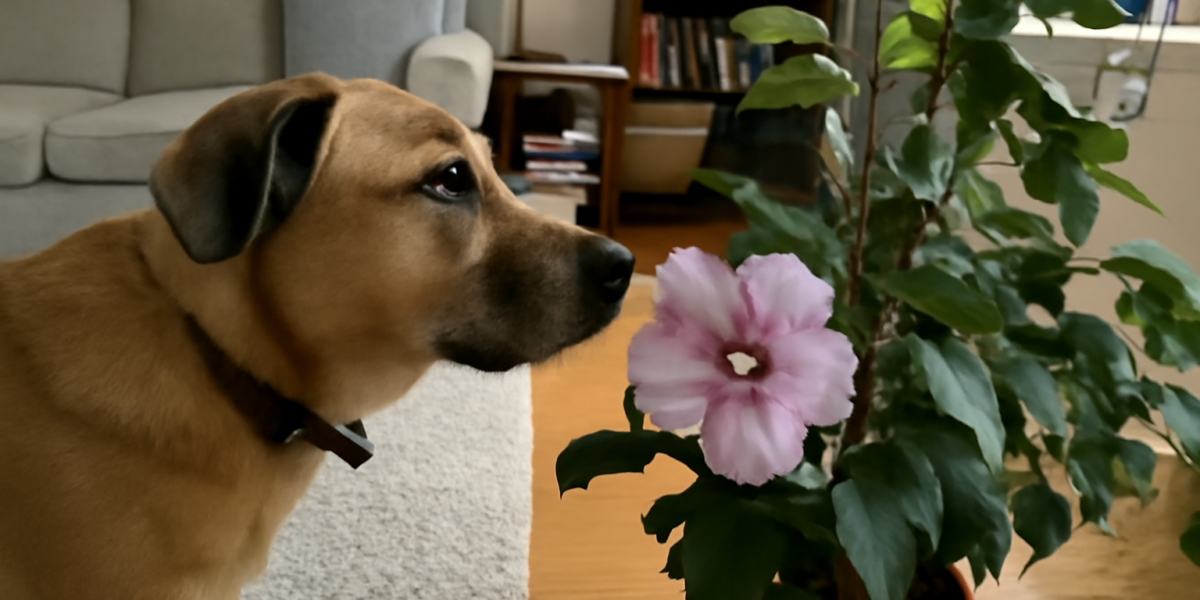
Yes, rose of Sharon is toxic to dogs. The ASPCA lists Rose of Sharon (Hibiscus syriacus, also known as althea or shrub althea) as toxic to dogs, with vomiting, diarrhea, and anorexia as the most commonly reported signs. The toxicity is considered mild to moderate rather than life-threatening for most exposures, but the genuine GI upset that can follow a chew is unpleasant enough to warrant prompt attention and a call to your veterinarian if symptoms appear or if a smaller dog has eaten more than a few flowers or leaves.
One of the most important points about this plant is the species-specific asymmetry in its safety profile. The ASPCA lists Rose of Sharon as toxic to dogs but non-toxic to cats and horses, which is unusual for any single plant species. Dog owners should not assume the cat-safe rating extends to canines, and they should also not assume that all hibiscus species are dog-toxic. The Hibiscus genus is large and varied, and other species such as Chinese hibiscus (Hibiscus rosa-sinensis) and rosella (Hibiscus sabdariffa) carry different chemistry. This article focuses specifically on H. syriacus and the canine risk.
What Rose of Sharon Looks Like
Rose of Sharon is a deciduous flowering shrub native to Asia and widely planted across temperate climates around the world. Mature shrubs reach eight to twelve feet tall and four to ten feet wide, with an upright vase-shaped habit and slightly arching branches. The leaves are three-lobed, medium green, and arranged alternately along woody stems. The flowers are the main attraction. They are large, hibiscus-shaped trumpets two to four inches across, in shades of white, pink, lavender, blue-purple, and red, often with a contrasting darker eye at the center.
The plant blooms in mid to late summer, which is later than most flowering shrubs in temperate gardens, making it a popular choice for late-season color. Each flower lasts only a day or two before falling, so a mature shrub deposits fallen blooms on the ground throughout the bloom period. Those fallen flowers are the most likely source of accidental dog ingestion, since they accumulate within easy reach during garden patrols.
Rose of Sharon is deciduous, meaning it loses its leaves in fall and regrows them in spring. Bare twigs and spent seed capsules persist on the branches through winter and can be chewed by dogs who like to mouth twigs during yard play.
The Toxic Compounds Inside Rose of Sharon
The active compounds in Rose of Sharon that cause GI upset in dogs are reported as saponin glycosides, a class of soap-like plant compounds that foam in water and irritate the digestive tract when ingested. Saponins are widespread across many plant families and are the same general class of compounds that gives some other ornamental plants their GI-irritant profile. The exact chemistry varies by plant tissue and growth stage, with flowers, leaves, and seeds all contributing to the overall load.
Saponin chemistry is one of the explanations sometimes offered for why dogs react to Rose of Sharon while cats and horses do not, although the precise mechanism is not fully characterized in the public veterinary literature. The practical takeaway is that you should treat the dog warning as the binding constraint in any household with both species, and you should not extrapolate the dog data to any other Hibiscus species without checking. Our umbrella guide on hibiscus safety for pets walks through the species-by-species picture across the genus.
Symptoms to Watch For in Dogs
Most dogs who chew Rose of Sharon flowers, leaves, or twigs show signs within a few hours. The classic ASPCA-reported triad is vomiting, diarrhea, and anorexia, meaning a dog who has eaten the plant typically throws up at least once, may pass loose stool, and refuses food for the rest of the day. Some dogs also become subdued, drink less than usual, or rest in a quiet corner rather than playing.
Symptoms generally resolve within twenty-four to forty-eight hours once the plant is out of reach, but escalation always warrants a veterinary call. Persistent vomiting, blood in vomit or stool, lethargy that deepens rather than fading, dehydration signs such as tacky gums and slow skin tent, abdominal tenderness, or any sign of difficulty breathing all push the situation from observe-at-home to in-clinic evaluation. Small dogs and puppies should be evaluated at a lower threshold than adult medium-and-large breeds because their fluid balance is more easily disrupted by repeated vomiting.
What to Do If Your Dog Chews Rose of Sharon
Stay calm and act in order. Bring your dog inside, away from the shrub and any fallen flowers, gently wipe the muzzle with a soft damp cloth, and offer fresh water. Do not try to make your dog vomit at home, do not give kitchen remedies such as milk or oils, and do not give over-the-counter human anti-nausea medications without veterinary guidance. Take a clear photo of the plant, count or estimate how many flowers, leaves, or twigs were eaten, and note the time.
Call your own veterinarian, the ASPCA Animal Poison Control Center at 888-426-4435, or the Pet Poison Helpline at 855-764-7661. The poison control lines are staffed twenty-four hours a day and can advise whether the exposure warrants in-clinic evaluation, observation at home, or emergency transport. Dogs who weigh under twenty pounds, dogs who have eaten a large quantity, and dogs who develop symptoms beyond a single mild bout of vomiting should be evaluated in person rather than monitored alone.
Why Rose of Sharon Is Tempting to Dogs
Rose of Sharon shrubs are common features of mature suburban yards in temperate climates, often planted along driveways, near front entrances, or as informal hedges. Dogs encounter them during yard play, on leashed walks past neighboring yards, and during garden parties when fallen flowers accumulate on patios. The flowers themselves are large, brightly colored, and easy to grab off the ground, which is exactly the size and shape many dogs find satisfying to mouth.
The bloom timing also matters. Rose of Sharon flowers in late summer when many dogs spend more time outdoors due to long evenings and warm weather. Fallen flowers gather in the lawn around the shrub each morning, and a dog patrolling the yard before breakfast can sample several before anyone notices. Recognizing the seasonal pattern helps you adjust your routine during peak risk months.
How Rose of Sharon Compares to Other Hibiscus and Tropical Shrubs
The species-specific dog warning for Rose of Sharon does not extend to all members of the Hibiscus genus. Chinese hibiscus (Hibiscus rosa-sinensis), the showy tropical cultivar most often grown as a houseplant or summer container, is listed by the ASPCA as non-toxic. Rosella (Hibiscus sabdariffa), the species used for hibiscus tea and Jamaica drinks, is also generally non-toxic. The Rose of Sharon listing is therefore the outlier in the genus rather than the rule.
For other tropical flowering shrubs in the same garden niche, see our guides on frangipani, bougainvillea, bird of paradise, and heliconia. Each carries its own profile, and broad assumptions across “tropical-looking flowering shrubs” are not safe to make. The ASPCA database is the most reliable single reference, with poison control hotlines as the live backup.
Pet-Proofing a Yard That Has Rose of Sharon
You do not necessarily have to remove a mature Rose of Sharon to keep a dog safely, but you do need to plan around it. The two highest-impact tactics are sweeping fallen flowers daily during bloom and creating a physical barrier between your dog’s main play space and the shrub. A simple decorative wire fence around the base of the plant slows down casual grazing, and routine yard sweeping during the bloom season removes the bulk of the accessible plant material.
If a dog in the household has previously chewed Rose of Sharon and you are not confident the behavior will stop, removing the shrub and replacing it with a non-toxic alternative is the most durable solution. Late-summer-blooming non-toxic alternatives include certain crepe myrtle cultivars and other shrubs you can verify against the ASPCA database. Talk to a local nursery about replacement options that suit your climate before pulling out a mature specimen.
Safer Plant Choices for Dog Households
If you would rather replace Rose of Sharon with non-toxic alternatives that fill a similar shrub role, several options work well. Petunias in raised beds bring summer color in a mounding habit, and marigolds add bright orange and yellow tones at lower height. Snapdragons bring vertical flower spikes for sunnier spots, and zinnias provide reliable summer-into-fall bloom.
For broader inspiration around the yard, our pet-safe garden plants roundup catalogs species suitable for dog households. Whatever you choose, verify each cultivar against the ASPCA database before planting, since common names occasionally hide species swaps and the same name can refer to different plants in different regions.
Building a Calm Garden-and-Dog Routine
Sharing a yard with Rose of Sharon and a dog is mostly about routine. Sweep fallen flowers off the lawn and patio during the bloom season, walk your dog past the shrub on leash rather than letting unsupervised access become routine, and watch for any chewing behavior that suggests interest. Keep the ASPCA APCC and Pet Poison Helpline numbers stored in your phone alongside your veterinarian’s after-hours line.
If you are still preparing your home for a new family member, our adopt-a-dog hub includes pet-proofing tips that cover indoor risks and outdoor plantings. An afternoon spent installing a small barrier and adjusting your sweeping schedule is much cheaper than an emergency visit, and most Rose of Sharon incidents are preventable once you know where the risk concentrates.
Frequently Asked Questions
Is Rose of Sharon really toxic only to dogs and not to cats?
The ASPCA lists Rose of Sharon (Hibiscus syriacus) as toxic to dogs but non-toxic to cats and horses. The asymmetry is real and is one of the more striking species-specific safety differences in the database. See our Rose of Sharon and cats article for the feline-side picture.
How much Rose of Sharon does it take to make a dog sick?
There is no published toxic dose. A few flowers or leaves typically cause mild GI upset, while larger quantities or repeated chewing increase the chance of more pronounced vomiting and diarrhea. Smaller dogs tend to react to smaller quantities than larger ones.
Are dried fallen flowers as dangerous as fresh ones?
The chemistry persists in dried plant material, so fallen flowers that have been on the lawn for a day or two should still be cleaned up. Sweep during the bloom season as part of normal yard maintenance.
What about the seed pods after the flowers fade?
Seed pods and dried capsules also contain plant tissue and should be treated as potentially irritating. Pruning the shrub in late fall to remove most seed capsules reduces winter exposure for dogs who chew twigs in the yard.
Can I tell my dog has eaten Rose of Sharon if I did not see it happen?
The classic signs are vomiting, diarrhea, and refusal of food, often appearing within a few hours of an unobserved walk past the shrub. If those symptoms appear after yard or neighborhood time, mention the possibility to your veterinarian when you call.


