
Last updated: May 16, 2026
In this article
- Is Rosella Hibiscus Safe for Pets? The Short Answer
- What Rosella Hibiscus Looks Like
- What “Generally Safe” Means for Rosella
- Sensible Caveats for Pet Households
- Symptoms That Could Still Appear
- What to Do If Your Pet Eats Rosella
- How Rosella Compares to Other Hibiscus Species
- Rosella in Home Gardens with Pets
- Indoor and Container Rosella in Pet Households
- Building a Calm Plant-and-Pet Routine
- Frequently Asked Questions
Is Rosella Hibiscus Safe for Pets? The Short Answer
Yes, rosella hibiscus is generally safe for pets. Rosella (Hibiscus sabdariffa), the species used to make hibiscus tea, Jamaica drinks, and rosella jam, is widely considered non-toxic to cats, dogs, and horses. The fleshy red calyces (the cup-like structures that surround the seed pods after the flowers fade) are commonly eaten by humans across tropical regions, and there is no known specific toxin in the species that would meaningfully threaten pet health. Most casual pet encounters with rosella plants end with no symptoms at all, although large or repeated ingestions can still cause mild GI upset because pet digestive systems are not designed for bulk plant fiber.
One important note for households trying to keep all the Hibiscus species straight is that rosella is not the same plant as Rose of Sharon (Hibiscus syriacus), which the ASPCA lists as toxic to dogs. Rosella is also distinct from Chinese hibiscus (Hibiscus rosa-sinensis), the showy ornamental tropical shrub. The Hibiscus genus contains many species with different uses and different safety profiles, and “all hibiscus” generalizations are not safe to make. This guide focuses on H. sabdariffa specifically.
What Rosella Hibiscus Looks Like
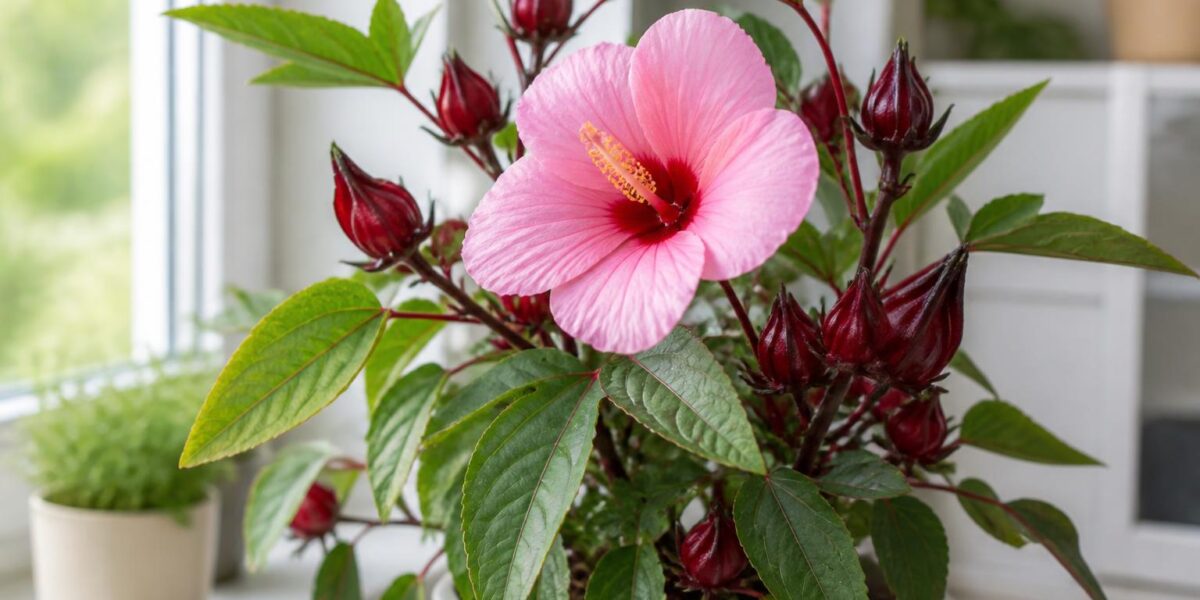
Rosella is an annual or short-lived perennial shrub that grows three to seven feet tall in a single season. The plant is native to West Africa and is now grown across tropical and subtropical regions worldwide for its edible calyces, leaves, and seeds. The stems are reddish, the leaves are deeply lobed and dark green often with red veining, and the flowers are pale yellow to cream with a deep red center. The flowers themselves are showy but short-lived, and what most people recognize as “rosella” is actually the swollen red calyx that develops after the flower fades and surrounds the developing seed pod.
The fleshy calyces are the main culinary product. They are harvested when ripe, deseeded, and used fresh or dried in teas, jams, sauces, syrups, and savory dishes. The dried calyces are the bright red flakes sold as “hibiscus tea” or “Jamaica” in many parts of the world. Pet owners with backyard rosella plants encounter both the fresh and the dried forms, and the species is often grown in home vegetable gardens alongside other tropical herbs and edibles.
Rosella is sometimes called roselle, sorrel (in the Caribbean), or Jamaica (in Mexico). The common name “rosella” is most often used in South and Southeast Asia and Australia.
What “Generally Safe” Means for Rosella
The “generally safe” framing for rosella reflects two facts. First, the species has been consumed by humans across many tropical cultures for centuries with no documented pattern of toxicity in companion animals encountering the plant or its products. Second, the ASPCA toxic-plant database does not list Hibiscus sabdariffa as a known concern, although individual species coverage on the database is not exhaustive and absence is not proof of safety. Read together, the available evidence supports a non-toxic rating for typical exposures.
That said, “generally safe” is not “consume freely.” Pets do not need the calories or fiber that rosella provides, and individual variation in tolerance always exists. A cat with sensitive GI may react more strongly to fibrous plant material than a robust dog, and animals with chronic kidney disease should not graze on any plant material without veterinary input. For broader genus-level context, see our umbrella guide on hibiscus safety for pets.
Sensible Caveats for Pet Households
Several common-sense caveats apply to any plant material in a pet diet, and rosella is no exception. First, large quantities of any plant fiber can produce vomiting or soft stool. A dog who finds a tray of drying calyces on a kitchen counter and eats the whole batch may throw up or pass loose stool, even though no specific toxin is involved. Second, the strong tartness of rosella comes from organic acids that may irritate sensitive stomachs at large doses, even though the same acids are pleasant to humans in moderation.
Third, rosella tea brewed for human consumption often contains added sugar or honey, both of which carry their own pet considerations (excess calories, dental concerns, occasional sensitivities). The plain plant is safer for an accidental pet taste than a sweetened beverage. Fourth, garden chemicals applied for pest control can be harmful regardless of the plant’s own toxicity profile, so check what has been sprayed before letting your pet near outdoor plantings.
Symptoms That Could Still Appear
Most pets who taste fresh rosella leaves, flowers, or calyces show no symptoms at all. A small minority experience brief, mild GI upset that includes one episode of vomiting, a single soft stool, or a few hours of reduced appetite. These signs typically resolve on their own within twenty-four hours and do not require veterinary treatment unless they persist or escalate.
Symptoms that warrant a veterinary call include persistent vomiting, repeated diarrhea, lethargy that deepens rather than fades, refusal to eat or drink for more than half a day, or any sign of unusual swelling or breathing difficulty. These are unlikely with rosella specifically, but cats and dogs often encounter multiple substances at once, and an unrelated exposure could be the actual cause of unusual symptoms.
What to Do If Your Pet Eats Rosella
For a cat or dog who nibbles a leaf, flower, or calyx, the typical response is to do nothing besides remove the remaining material and offer fresh water. The lack of a specific toxin means no antidote or emergency action is required. Wipe any visible plant matter from the muzzle with a soft damp cloth, watch for the next few hours, and let your pet continue with a normal day.
If your pet develops unusual symptoms after a rosella ingestion, call your own veterinarian, the ASPCA Animal Poison Control Center at 888-426-4435, or the Pet Poison Helpline at 855-764-7661. The poison control lines are staffed twenty-four hours a day. Mention what part of the plant was eaten (fresh leaves, flowers, calyces, or dried tea material) and roughly how much, since the dose and form can affect the assessment.
How Rosella Compares to Other Hibiscus Species
The Hibiscus genus is large, and species-specific safety varies. Rosella (H. sabdariffa) is generally considered safe for pets and is widely consumed as a human food and beverage. Chinese hibiscus (H. rosa-sinensis), the showy ornamental tropical species, is also non-toxic per the ASPCA. Rose of Sharon (H. syriacus) is the notable exception, listed as toxic to dogs while non-toxic to cats and horses.
The practical takeaway is to identify the species you actually have rather than working from the generic name “hibiscus.” If you are growing rosella for tea or jam, the plant is unlikely to pose a meaningful threat to pets sharing the garden. If a neighbor’s “hibiscus” hedge is actually Rose of Sharon, the dog calculation changes. Our umbrella hibiscus safety guide tracks the species-by-species picture.
Rosella in Home Gardens with Pets
Rosella is well suited to home vegetable gardens in tropical and warm-temperate climates. The plant grows quickly from seed in a single season, produces calyces from late summer through fall, and dies back after frost in cooler regions. Pet owners growing rosella alongside other edibles can treat it like any other vegetable plant in terms of layout. Avoid placing it where dogs run patrol routes, sweep up dropped leaves and calyces during harvest, and keep drying trays out of pet reach because the concentrated flavor seems to attract some dogs.
For other edible-garden neighbors that are pet-safe, see our guides on papaya plants, banana plants, and jackfruit trees. Tropical herb-and-spice neighbors covered in our curry leaf and pandan guides also fit well into mixed pet-safe edible plantings.
Indoor and Container Rosella in Pet Households
Where outdoor planting is not possible, rosella can be grown in large containers on sunny patios. The plant does not transplant well once mature, so direct seeding into the final container is preferable. In pet households, place containers where dogs cannot bowl them over and where cats with patio access cannot use the soil as a litter box. Mulch the soil surface with smooth pebbles to discourage digging.
For broader inspiration around pet-safe ornamental and edible plant combinations, our pet-safe garden plants roundup includes mixed-use options, and our pet-safe tropical houseplants guide is useful for warmer climates where rosella overwinters in containers.
Building a Calm Plant-and-Pet Routine
Sharing a garden with rosella and pets is mostly an exercise in confirming the safe rating, applying common-sense caveats, and watching for unusual behavior. Keep the ASPCA APCC and Pet Poison Helpline numbers stored in your phone alongside your veterinarian’s after-hours line, even though rosella itself is unlikely to require them. Most pet-and-plant questions are answered at home with a quick check of references and an afternoon of observation.
If you are still preparing your home for a new family member, our adopt-a-cat hub and adopt-a-dog hub include preparation tips that cover indoor plants and outdoor gardens. A short walk through your yard once a season with the ASPCA list in hand is more than enough preparation for most households.
Frequently Asked Questions
Can my dog drink hibiscus tea?
Plain unsweetened hibiscus tea brewed from rosella calyces is unlikely to cause harm in small amounts, but it is not a recommended beverage for dogs. Sweetened tea, iced tea blends, and any tea with caffeine should be avoided. Plain water is the right drink for pets.
Is dried rosella for tea safe if my pet finds the bag?
Dried calyces in a tea bag or loose tea blend carry the same general non-toxic profile as the fresh plant. Large quantities can still cause GI upset, and any added flavors or sweeteners may carry their own concerns.
Can I feed rosella jam to my pet?
No. Most rosella jams contain significant added sugar, which is not appropriate for pets in any meaningful quantity. Stick to plant-based treats designed for cats and dogs rather than human preserves.
Is rosella the same as the hibiscus on Hawaiian shirts?
The hibiscus most often pictured in tropical art and Hawaiian motifs is Chinese hibiscus (H. rosa-sinensis), not rosella. The two species are visually different (rosella has more lobed leaves and smaller pale yellow flowers with red centers).
Are rosella seeds safe for pets?
Rosella seeds are not flagged as toxic, but they are hard and could pose a choking risk if eaten in quantity. Treat seeds as you would other small hard plant material and keep stored seed packets out of pet reach.


