
Last updated: May 16, 2026
In this article
- Are Papaya Plants Safe for Pets? The Quick Answer
- Meet Papaya — What This Plant Actually Is
- Why Papaya Sits on the Pet-Safe List
- Papaya Fruit as an Occasional Pet Treat
- The Sap and the Papain Enzyme
- Realistic GI Upset Even With Non-Toxic Plants
- Pesticide and Soil-Amendment Considerations
- Living With a Papaya Tree in a Pet Household
- Other Pet-Safe Tropical Plants to Pair With Papaya
- What to Do if Your Pet Eats Papaya Plant Material
- When to Call the Vet Anyway
- Frequently Asked Questions
Are Papaya Plants Safe for Pets? The Quick Answer
Yes, papaya plants are broadly considered safe for pets. The plant in question is Carica papaya, the tropical fruit tree native to southern Mexico and Central America and now grown widely across Singapore, Southeast Asia, India, the Caribbean, Florida, parts of Australia, and other tropical and subtropical regions. The leaves, fruit pulp, and most plant parts have no documented serious toxic compounds for cats and dogs. The white milky sap (latex) contains the enzyme papain, which is a mild contact and oral irritant rather than a true toxin. Seeds carry trace amounts of compounds (particularly carpaine, an alkaloid) that warrant moderation but are not severely toxic at small accidental doses.
The papaya plants safe for pets headline is the practical takeaway, but it comes with the same caveats we apply to all “non-toxic” articles: any plant matter eaten in volume can cause GI upset; pesticide residues on commercially grown plants are a separate concern; and individual pets can have unusual sensitivities. Papaya fruit can be offered to dogs and cats in small amounts as an occasional treat. Papaya leaves and sap are not appropriate pet food but are unlikely to cause serious harm if accidentally chewed in small amounts. Call your veterinarian or one of the helplines we list below if your pet shows persistent symptoms after any plant encounter.
Meet Papaya — What This Plant Actually Is
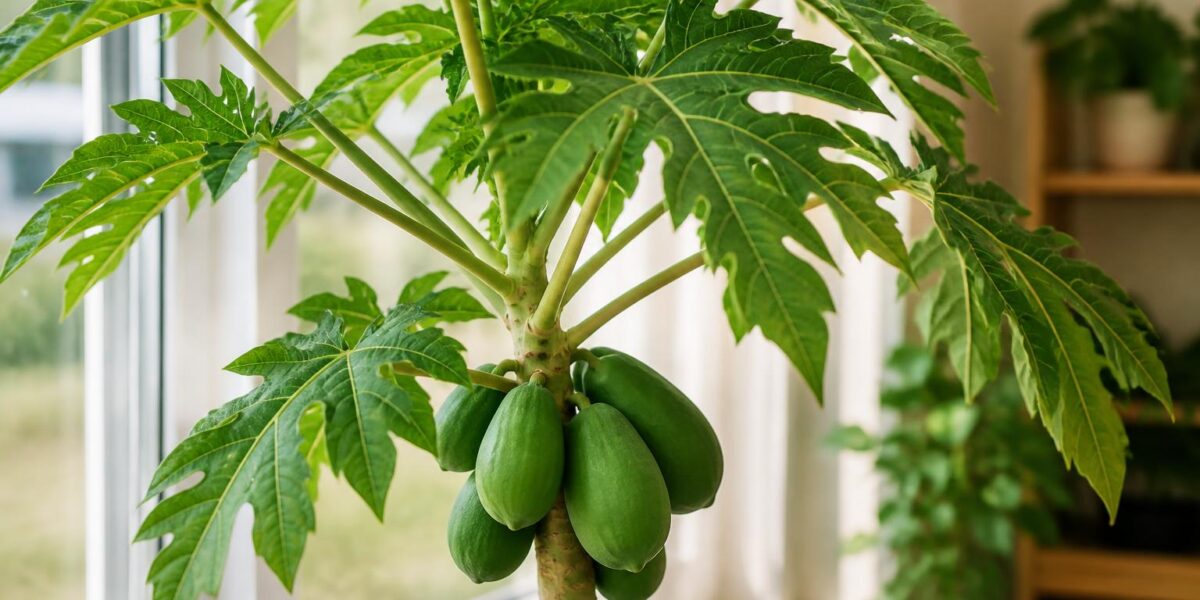
Papaya is a fast-growing tropical tree, usually 2 to 10 meters tall at maturity, with a single soft, hollow stem and a crown of large, deeply lobed leaves at the top. The fruit hangs in clusters near the top of the trunk — green when unripe, ripening to yellow or orange with a soft sweet pulp inside, surrounded by black peppery seeds. Most cultivars are dioecious (male and female flowers on separate trees), with female and bisexual trees producing fruit and male trees producing only flowers.
The plant is grown commercially across the tropics and is also a common dooryard tree in Singapore, Malaysia, the Philippines, southern India, Sri Lanka, the Caribbean islands, southern Florida, Hawaii, and parts of Mexico and Central America. In Singapore in particular, papaya trees often appear in private gardens and HDB estate green spaces, which means pets in those settings frequently encounter them. The fruit, leaves, and sap are all parts of the plant pets might contact.
Papaya leaves are notably large — single leaves can be 50 cm to 70 cm across on a mature tree — with deep palmate lobing. Fallen leaves are dramatic, easy to spot, and rarely chewed on by pets in any meaningful quantity. The sap is the most likely contact for pets, since broken leaf petioles and unripe fruit skin both bleed white milky latex.
Why Papaya Sits on the Pet-Safe List
The ASPCA does not list papaya among plants toxic to dogs or cats. The plant family (Caricaceae) is small and not associated with the major toxic-plant chemistries we worry about — calcium oxalate raphides (aroids), cardiac glycosides (oleander, lily-of-the-valley), grayanotoxins (rhododendron), or cyanogenic glycosides (cherry laurel, chokecherry). The proteolytic enzyme papain, present in the sap and the fruit pulp, is interesting biochemically but is not a systemic poison. It is the same enzyme used commercially as a meat tenderizer.
Papain is a mild irritant on contact with mucous membranes — it can cause oral discomfort, mild drooling, and in sensitized humans a contact dermatitis. The same dynamics apply, in muted form, to pets. Cats grooming themselves after walking through fresh papaya sap might transfer a tiny amount to the tongue and gums; this rarely produces more than brief drooling and self-resolves.
Carpaine, an alkaloid concentrated in the seeds and to a lesser extent the leaves, has cardiac effects at high doses in laboratory studies but does not pose a meaningful risk at the doses pets would realistically encounter from accidental nibbles. Eating a handful of seeds is not the same as a controlled high-dose laboratory exposure. Practical pet-safety means understanding that the realistic-dose risk is mild even where higher doses are theoretically of interest.
Papaya Fruit as an Occasional Pet Treat
Ripe papaya fruit pulp is safe for dogs and cats in small amounts. Many tropical-region owners share occasional bites with their pets. Practical guidelines:
Peel, deseed, and cut into small pieces. The skin contains higher concentrations of latex and is best removed. The seeds are small and slippery; while they are not severely toxic, they are not appropriate pet food either, and large amounts can cause GI upset. The black peppery taste of the seeds is also off-putting to most dogs and cats anyway.
Limit serving size. Papaya is high in natural sugars (fructose, glucose) and high in fiber. A small dog should not get more than a tablespoon at a time; medium dogs can have a couple of small chunks; large dogs can tolerate slightly more. Cats are obligate carnivores and don’t get nutritional benefit from fruit, but a small piece occasionally is harmless.
Skip papaya entirely for pets with diabetes (because of the sugar load), pancreatitis history (because of the fat-and-sugar combination if mixed with other treats), or known fruit sensitivities. Pets on prescription diets for any chronic condition should have any new food, including papaya, cleared with the vet first.
Papaya is a different question from papaya leaf tea or papaya supplement extracts that humans sometimes take for digestive benefits. Concentrated papaya leaf preparations are not appropriate for pets and should not be used as DIY treatments without veterinary guidance.
The Sap and the Papain Enzyme
The most likely point of contact for an outdoor pet is papaya sap. Broken leaf petioles, scratched green fruit, and pruned twigs all bleed thick white milky latex that contains papain in concentration. Papain is a proteolytic enzyme — it breaks down protein. That is what makes it useful as a meat tenderizer and what gives it mild irritant properties on contact.
For a pet’s skin, papaya sap rarely causes more than transient redness or itching, much less than urushiol from mango trees or the milky latex from euphorbia species. For a pet’s mouth, sap that is licked off fur after the pet brushed past a damaged plant can cause brief drooling, lip-smacking, and one-or-two-episode mild oral irritation. This typically resolves within an hour without intervention beyond rinsing the mouth gently with a wet cloth.
Eye contact is more concerning. Papain in the eye is painful and can cause conjunctivitis. If you see your pet squinting, tearing, or pawing at the eye after a papaya tree encounter, rinse with sterile saline or clean lukewarm water and call your vet for a same-day visit.
People who routinely prune or harvest papaya should wear gloves and eye protection — sensitive humans can develop contact dermatitis or eye irritation from sap. Pets that follow their owners through pruning sessions should be kept clear of fresh-cut surfaces for an hour or two until the latex has dried.
Realistic GI Upset Even With Non-Toxic Plants
Here is the standard caveat for safe-for-pets articles. Cats and dogs are not built to process large amounts of cellulose. A single nibble of a papaya leaf or a small piece of fruit is usually a non-event. A cat that hairball-pukes after grooming sap-contacted fur, or a dog that vomits up a leaf chunk, is mostly clearing irritation rather than reacting to a poison. You may also see one or two soft stools the next day. None of that is dangerous on its own.
What matters is the trajectory. Vomiting that stops after one or two episodes, with the pet eating and drinking normally afterwards, is consistent with mechanical GI irritation. Vomiting that continues past four to six hours, or that is paired with lethargy, refusing water, pale gums, or any neurological signs, is no longer a “non-toxic plant ate too much” story and warrants a vet call regardless of what the plant was.
Puppies and kittens are smaller, dehydrate faster, and have less metabolic reserve, so a “minor GI upset” in an adult dog can become a real problem in a 2-month-old kitten. Lower the threshold for vet contact for any pet under six months old.
Pesticide and Soil-Amendment Considerations
The thing most likely to cause symptoms after a papaya plant encounter is not the plant. It is whatever is on the plant. Commercial papaya plantations and even backyard trees sometimes get treated with insecticides for fruit fly, mealybug, and scale management. Foliar sprays leave residue on leaves and fruit skin; systemic treatments can persist in plant tissue for weeks.
If you are picking papaya from a backyard tree to share with your pet, wash the fruit thoroughly under running water before peeling, even if you have not personally sprayed the tree. Skip any fruit with visible spray residue, mold, or insect damage. Don’t share fallen overripe fruit that may have started fermenting on the ground — alcohol from fermentation is a separate hazard from anything in the plant chemistry.
Avoid scented soil amendments, slow-release fertilizer pellets that look like little candies (cats absolutely will lick them), and any cocoa-mulch products — that last one is genuinely toxic and worth knowing about regardless of what plant it surrounds.
Living With a Papaya Tree in a Pet Household
For tropical-region households where papaya is part of the yard, the practical considerations are minimal compared with mango or other higher-risk trees:
Pick up fallen ripe fruit promptly. The fruit pulp is safe in small amounts but high in sugar, and a dog that eats a whole ripe papaya in one go can develop GI upset purely from quantity. Fermenting fallen fruit can also attract insects and small wildlife, including some that bite back.
Keep an eye on dropped seeds. Papaya seeds aren’t severely toxic, but they aren’t pet food either. A handful in one sitting can cause mild digestive disturbance.
During pruning, rinse any patio or low-foliage surfaces where sap may have dripped, and wear gloves yourself to avoid skin transfer to the pet later. Dispose of cut leaves and twigs in a covered green-waste bin rather than an open pile your pet can investigate.
If your pet has known sensitivities (eczema, atopic dermatitis, food allergies), consider that they may react more strongly to papaya sap contact than the average pet. A patch of redness on the muzzle or paws after a tree encounter warrants a vet check rather than home management.
Other Pet-Safe Tropical Plants to Pair With Papaya
If you are stocking a pet-safe tropical garden, papaya combines well with other non-toxic fruit trees. Sibling articles in this batch cover jackfruit, lychee, longan, rambutan, guava, and banana plants — all considered safe for pets. Curry leaf plant and pandan are safe culinary plants common in Asian gardens.
For tropical plants to avoid, see mango trees (sap and unripe fruit are irritants), frangipani, heliconia, and the broader tropical toxic plants in the Singapore garden overview.
For indoor tropical options that are safe for pets, pet-safe tropical houseplants for Singapore covers the houseplant side.
What to Do if Your Pet Eats Papaya Plant Material
For a small ingestion of leaves, fruit, or accidental sap contact, the response is conservative monitoring. Take the rest of the plant material out of reach, offer fresh water, rinse any sap off the muzzle or paws with mild soap and water, and watch for vomiting, drooling, or unusual lethargy over the next 6 to 12 hours. A single episode of vomiting, with the pet eating and acting normal afterward, is consistent with mechanical irritation rather than poisoning.
For larger ingestions — a substantial leaf chunk, multiple unripe fruits, a handful of seeds — call your veterinarian or one of the helplines below. Do not induce vomiting at home. Hydrogen peroxide and other home emetics are unsafe and unreliable. Decontamination decisions belong to the veterinary team.
Useful numbers: your regular veterinarian, the nearest 24-hour emergency vet, the ASPCA Animal Poison Control Center at 888-426-4435 (consultation fee), and the Pet Poison Helpline at 855-764-7661 (fee). For Singapore owners, your usual vet practice or one of the 24-hour clinics is the right contact.
When to Call the Vet Anyway
Even with a non-toxic plant, certain symptoms warrant a same-day call. Persistent vomiting (more than two or three episodes), inability to keep water down, drooling that doesn’t subside within an hour, lethargy that worsens, pale or yellow gums, stumbling or wobbliness, tremors, seizures, swollen face or muzzle, hives, or eye redness/squinting after sap contact — all push from “monitor” to “go.”
Bring a sample of the plant — a piece of leaf, a small portion of fruit if available, the grower tag if you have it. Identification matters because in a tropical garden the same pet may have access to multiple species, and getting the right plant identified affects treatment decisions.
If you are bringing a new pet home and your property has papaya trees, ask us about plant-safety considerations during the adoption process. Browse adoptable cats or adoptable dogs through our network if you are starting that journey.
Frequently Asked Questions
Can dogs eat papaya fruit?
Yes, in moderation. Peeled, seedless, ripe papaya pulp is safe for most dogs as an occasional treat. Limit portion size because of natural sugar content, and skip papaya for dogs with diabetes or pancreatitis history.
Can cats eat papaya fruit?
Cats are obligate carnivores and don’t benefit nutritionally from fruit. A small piece of ripe peeled papaya is unlikely to harm a cat, but most cats won’t show much interest. Keep portions tiny if offered at all.
Are papaya seeds toxic to pets?
Papaya seeds are not severely toxic, but they aren’t pet food either. They contain trace alkaloids (carpaine) and can cause GI upset if eaten in quantity. Best practice is to remove seeds before sharing fruit with a pet.
What if my dog got papaya sap on his face?
Rinse with mild soap and lukewarm water, dry gently, and watch for redness, swelling, or persistent licking over the next 24 hours. Most pets have only transient mild irritation. If a reaction develops or your dog is uncomfortable, call your vet.
Are papaya leaves safe to feed pets as a supplement?
Papaya leaves themselves are not severely toxic, but concentrated papaya leaf preparations and DIY supplements are not appropriate for pets without veterinary guidance. Some human supplements use papaya leaf extract for digestive support; do not extrapolate that to pets without your vet’s input.


