
Last updated: May 16, 2026
In this article
- The Short Answer: Lychee Trees Are Mostly Safe for Pets
- Meeting Litchi chinensis
- The Sapindaceae Family Connection
- The Hypoglycin Caveat in Detail
- Ripe Lychee Fruit and Pet Diets
- Leaves, Bark, and the Tree Itself
- Dogs, Cats, and Lychee Behaviour
- What to Do If Your Pet Ate Lychee
- Look-Alikes and Naming
- Living With a Lychee Tree and Pets
- The Bigger Picture
- Frequently Asked Questions
The Short Answer: Lychee Trees Are Mostly Safe for Pets
Lychee trees (Litchi chinensis), the bright, frilly-fruited Sapindaceae-family trees that line tropical gardens from Guangdong to Florida to Queensland, sit on the friendly side of the pet-toxicity ledger. The tree itself — leaves, bark, and ripe fruit pulp — is not on the ASPCA toxic-plant register, and there are no significant reports of cats or dogs developing serious illness from chewing the leaves or eating ripe lychee flesh in normal amounts. The phrase lychee trees safe for pets is a fair, if slightly hedged, summary.
The hedge is small but worth knowing. Unripe lychee fruit and lychee seeds contain hypoglycin A and methylenecyclopropylglycine, the same compounds famous in human medicine as the cause of acute hypoglycemic encephalopathy in malnourished children in parts of India and Vietnam. The pet-veterinary literature does not contain documented hypoglycin poisoning in companion animals from lychee, but the underlying chemistry is real, the risk scales with the amount eaten on an empty stomach, and we owe pet owners the honest disclosure. Ripe lychee in moderation is fine. Bowls of unripe green lychees left on the counter while the dog is unsupervised are best avoided.
Meeting Litchi chinensis
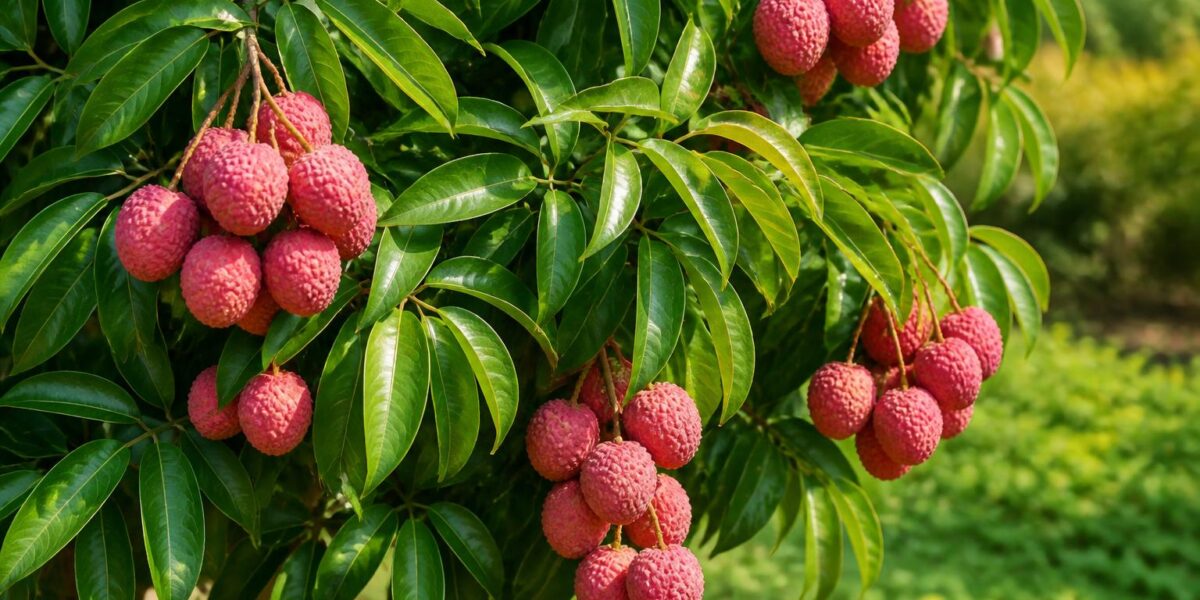
The lychee is a medium-sized evergreen tree, 10 to 15 metres tall in tropical conditions, with a dense, rounded canopy of glossy compound leaves. The fruit hang in long, drooping clusters of bright red or pink-red leathery skin around a single milky-white aril (the edible part) and a single shiny brown seed. A ripe lychee in the hand smells faintly floral, slightly grape-like, and unmistakably tropical.
The species is native to southern China and has spread across South and Southeast Asia, sub-Saharan Africa, the Caribbean, and frost-free regions of the United States and Australia. Lychee is a major commercial crop in Guangdong, Fujian, Vietnam, Thailand, Madagascar, and South Africa, and a beloved backyard tree in Singapore, Malaysia, India, and Hawaii. The fruit season is short and intense — typically May through July in the Northern Hemisphere — and a productive tree fills crates in the space of a fortnight.
For pet households, the realistic exposures are dropped fruit on the lawn during peak season, leaves chewed by a bored puppy, or a cat batting at a low-hanging cluster. Knowing the tree sits in the safer half of tropical fruit trees lets you garden without daily anxiety while still respecting the unripe-fruit caveat.
The Sapindaceae Family Connection
Lychee belongs to the Sapindaceae or soapberry family, alongside its close relatives longan (Dimocarpus longan) and rambutan (Nephelium lappaceum). These three trees are often planted together in Southeast Asian orchards because they share growing conditions, share a fruiting season pattern, and share most of their pet-safety profile. If you are familiar with one, you essentially know the other two.
The Sapindaceae family also contains some less-friendly cousins. The horse chestnut (Aesculus hippocastanum) and the soapberry tree (Sapindus saponaria) produce saponins and quercetin glycosides that are unambiguously toxic to dogs. Ackee (Blighia sapida), the Caribbean fruit famous for “Jamaican vomiting sickness,” contains the same hypoglycin chemistry as unripe lychee and is genuinely dangerous when eaten unripe. The tropical Sapindaceae tree neighbourhood is therefore a mixed neighbourhood, with the three popular Asian fruit trees (lychee, longan, rambutan) being the friendly residents.
Family chemistry matters because pet owners often own one of these trees and assume the others are similar. With Sapindaceae, that assumption is correct for the three friendly cousins and decidedly wrong for ackee. Read fruit-tree pet-safety articles by species, not by family.
The Hypoglycin Caveat in Detail
Hypoglycin A is a non-protein amino acid found in the seeds and unripe fruit of several Sapindaceae species. In humans — specifically in malnourished children in Bihar, India, and northern Vietnam — eating large quantities of unripe lychees on an empty stomach has been linked to outbreaks of acute hypoglycemia and encephalopathy. The toxin interferes with fatty-acid metabolism, which becomes critical when the body is already glycogen-depleted from undernourishment.
Translating this to pets requires careful framing. A well-fed dog or cat eating a few ripe lychees as a treat is in essentially zero danger from hypoglycin. The toxin concentrates in the unripe fruit and seed, and the threshold for problems in human medicine appears to require both substantial unripe-fruit consumption and an empty, glycogen-depleted state. There are no published case reports of dogs or cats developing hypoglycemic encephalopathy from lychee.
That said, an honest article does not pretend the chemistry is irrelevant. A scenario worth respecting is a small dog left alone with a bowl of unripe green lychees overnight, a thin underweight rescue dog with poor body condition, or a diabetic dog on insulin whose blood sugar is already shaky. In any of these cases, a substantial unripe-lychee binge would warrant a vet call. Most pet households never encounter the scenario, but the honest answer is “low concern, not zero concern.”
Ripe Lychee Fruit and Pet Diets
Ripe lychee fruit (the white aril) is safe for pets in small amounts as an occasional treat. The flesh is high in natural sugars and water, modest in fibre, and contains vitamin C, copper, and small amounts of B vitamins. A peeled, deseeded ripe lychee or two is a fair summer treat for a healthy medium-size dog. Cats are usually indifferent to fruit and rarely eat lychee voluntarily.
The seed (the shiny brown stone in the centre of each fruit) should always be removed before offering lychee to a pet. The seed is hard, smooth, and approximately the size that lodges in a small dog’s throat. Beyond the choking risk, the seed itself contains higher hypoglycin concentrations than the ripe pulp and is not digestible. Cracked seeds also expose sharp inner fragments. Always deseed.
The leathery red skin is not toxic but is fibrous and can irritate the gut if eaten in quantity. Whole lychees with skin and seed left intact are the worst-case scenario for a dog on an unsupervised raid.
Leaves, Bark, and the Tree Itself
Lychee tree leaves and bark do not have documented systemic-toxicity problems in cats or dogs. The leaves are leathery, mildly bitter, and unpalatable to most pets. A dog that chews a fallen leaf out of boredom may have a single soft stool the next day, but persistent illness from leaf chewing is not described in the literature.
Freshly cut lychee branches do not exude the dramatic latex that jackfruit trees do. There is no sticky-sap mechanical concern. Pruning lychee in a yard with pets is a routine job, not a hazard.
Flowers (small, greenish-yellow, in branched panicles) are unremarkable from a pet-safety angle. The flowers attract bees and produce a notable monofloral honey in commercial production, but they are not a target for pet chewing and have no documented toxicity.
Dogs, Cats, and Lychee Behaviour
Dogs are the species owners notice the most. A medium-size dog that finds a pile of dropped fruit on the lawn during peak lychee season can eat 20 or 30 fruits in a few minutes if the owner is not watching. The realistic outcomes are a sugar-rush stomach upset, vomiting, and very loose stools the next day, plus the choking risk of swallowed seeds. The dog will be uncomfortable but in most cases not seriously ill.
Cats almost never eat fruit voluntarily. The cat scenarios are paw-batting at a hanging cluster, chewing a fallen leaf, or licking sticky fruit residue off a counter. Cats are also more likely than dogs to choke on a single slippery seed if they do somehow get one in the mouth, simply because their throats are narrower.
For diabetic pets, overweight pets, or pets with chronic kidney disease, fruit treats are best skipped entirely. The sugar load is unhelpful for diabetics, the calorie load is unhelpful for the overweight, and the potassium load is unhelpful in advanced kidney disease.
What to Do If Your Pet Ate Lychee
For the typical scenario — a dog that snacked on a few fallen ripe lychees, or a cat that licked some pulp — home monitoring is appropriate. Withhold food for a single skipped meal, offer fresh water, and watch for vomiting or severe lethargy over the next few hours. Most pets are fine by the next morning, with at most a single soft stool.
Call the vet, the ASPCA Animal Poison Control Center at (888) 426-4435, or the Pet Poison Helpline at (855) 764-7661 (both charge a consultation fee) if you observe persistent vomiting (more than two episodes), profound weakness or collapse, suspected swallowed seeds, signs of choking, or any neurological signs (tremors, disorientation, seizures). Neurological signs in particular would warrant urgent evaluation given the hypoglycin chemistry, even though the literature does not document such cases in pets.
Do not induce vomiting at home. Lychee is not toxic enough to warrant home decontamination, and home emesis carries its own risks, especially when seeds may have been swallowed and could be re-aspirated on the way back up. Decontamination decisions belong to the veterinarian.
Look-Alikes and Naming
Lychee is sometimes spelled litchi (the older transliteration), and the species name Litchi chinensis is the same plant under either spelling. Confusion with other tropical fruits is common but usually easy to resolve once you see them side by side.
The closest relatives that pet owners encounter are longan (smaller, smoother, brown-skinned, white-fleshed cousin) and rambutan (similar pulp inside, with hairy red skin instead of bumpy leathery skin). Both are non-toxic to pets with the same caveats. The Caribbean ackee (Blighia sapida) is the dangerous Sapindaceae relative — pet owners who travel between climates should not assume “Sapindaceae fruit is fine” without checking the species. Pomegranate, although not in the same family, is sometimes mentally lumped with lychee and longan because of the leathery-skinned exotic-fruit aesthetic.
If you live in a tropical climate and want a planted-up garden that stays pet-friendly, our pet-safe tropical houseplants guide covers the indoor companions, and our guide to tropical toxic plants in Singapore gardens covers the trees and shrubs to keep on the other side of the fence from the dog run.
Living With a Lychee Tree and Pets
A lychee tree in a pet-shared garden is generally a low-maintenance neighbour. The bigger management items cluster around fruiting season. Pick up dropped fruit from the lawn daily during the brief, intense bearing window. Bag and dispose of seeds where dogs cannot reach them. Keep harvested fruit in the fridge or out of dog-jump range; a wooden bowl on the dining table is not a barrier to a determined Labrador.
If you grow lychees commercially or hobby-orchard them, the brief unripe-fruit window before harvest is the moment to be most careful. Green lychees on the ground, or fallen during a windstorm before they ripened, are the realistic hypoglycin exposure source. Pick them up rather than letting the dog sample them.
For households new to a tropical home with an established lychee tree, our pet-safe garden plants guide includes layout suggestions for separating fruit-drop zones from active pet areas. Companion non-toxic trees include jackfruit, guava, papaya, and banana.
The Bigger Picture
Lychee earns a spot in the friendly half of tropical fruit-tree articles, with one honest caveat about unripe fruit and seeds. The chemistry that makes hypoglycin a public-health story in human medicine is real, but the conditions required to produce serious illness — substantial unripe-fruit consumption on an empty stomach — are not the routine pet-exposure scenario. Ripe fruit in moderation, deseeded, fed as an occasional treat, is fine for healthy dogs and an unusual but harmless option for the rare fruit-curious cat.
For owners welcoming a new dog or cat into a tropical home with established fruit trees, our dog adoption hub and cat adoption hub include checklists for pet-proofing yards. The afternoon you spend mapping which trees drop what kind of fruit, and where the seasonal hot spots are, pays for itself in fewer “what did he just eat?” moments through the bearing seasons to come.
Frequently Asked Questions
My dog ate several whole lychees, including the seeds. What should I watch for?
Watch for vomiting, choking, or signs of intestinal blockage (repeated retching, lethargy, swollen belly, no stool for 24 hours). Most dogs pass small numbers of swallowed seeds without incident, but a small dog that ate several large seeds can develop an obstruction. Call your vet for guidance, especially for dogs under 10 kilograms.
Is lychee fruit safe for cats?
Ripe lychee pulp in tiny amounts is safe for cats, but cats rarely show interest in fruit and do not need it nutritionally. Skip the seed, skip the skin, and treat any feline lychee snacking as an occasional curiosity rather than a regular offering.
What is the hypoglycin risk in everyday terms?
For a healthy, well-fed pet eating a few ripe lychees, the hypoglycin risk is essentially nil. The risk applies more to large amounts of unripe (green) fruit eaten on an empty stomach, especially in underweight or diabetic animals. Avoid leaving green lychees accessible to unsupervised dogs.
Are lychee leaves toxic if my dog chews them?
Lychee leaves are not on the ASPCA toxic-plant list and have no documented systemic toxicity in pets. A leaf or two will at worst produce a soft stool. Persistent leaf chewing is a sign of boredom or dietary fibre deficiency rather than a poisoning emergency.
Can I plant lychee in a backyard with dogs and small children?
Yes. Lychee is among the friendlier choices for pet-shared and child-shared tropical gardens. Standard fruit-tree common sense — pick up dropped fruit promptly, deseed before sharing with kids or pets, and watch for choking on whole fruit — covers the main risks.


