
Last updated: May 16, 2026
In this article
- The Short Answer: Banana Plants Are Safe for Pets
- Meeting the Banana Plant
- Why the Plant Is Considered Non-Toxic
- Leaves, Pseudo-Stems, and the Mechanical Caveat
- Ripe Banana Fruit and Pet Diets
- Distinguishing From “String of Bananas”
- Dogs, Cats, and Banana Plants Indoors
- Outdoor Banana Plants and Yards
- What to Do If Your Pet Ate Banana Plant Material
- Look-Alikes and Tropical Plant Choices
- The Bigger Picture
- Frequently Asked Questions
The Short Answer: Banana Plants Are Safe for Pets
Banana plants — the towering, broad-leaved Musa species and their cultivated hybrids that line tropical gardens, supermarket produce sections, and a remarkable number of indoor pots in light-flooded living rooms — are not on the ASPCA toxic-plant register and have no documented serious-toxicity record in cats or dogs. Leaves, pseudo-stems (the soft fibrous trunk that looks like a true tree but is not), ripe fruit, and the rest of the plant are all considered friendly to the dogs and cats that share the rooms and gardens where bananas grow. The phrase banana plants safe for pets is straightforwardly true.
Two clarifications belong up front. First, the banana plants this article covers are real banana plants in the Musa genus — botanical relatives of the supermarket fruit. Do not confuse them with “string of bananas,” a totally unrelated trailing succulent (Senecio radicans) that is, despite its name, mildly toxic to pets and shares no kinship with edible bananas. Second, the broad fibrous leaves of large banana plants can produce a mechanical chewing hazard for small puppies, and ripe banana fruit eaten in large quantity will upset any dog stomach with its potassium and natural sugar load. Common-sense supervision applies; chemical toxicity does not.
Meeting the Banana Plant
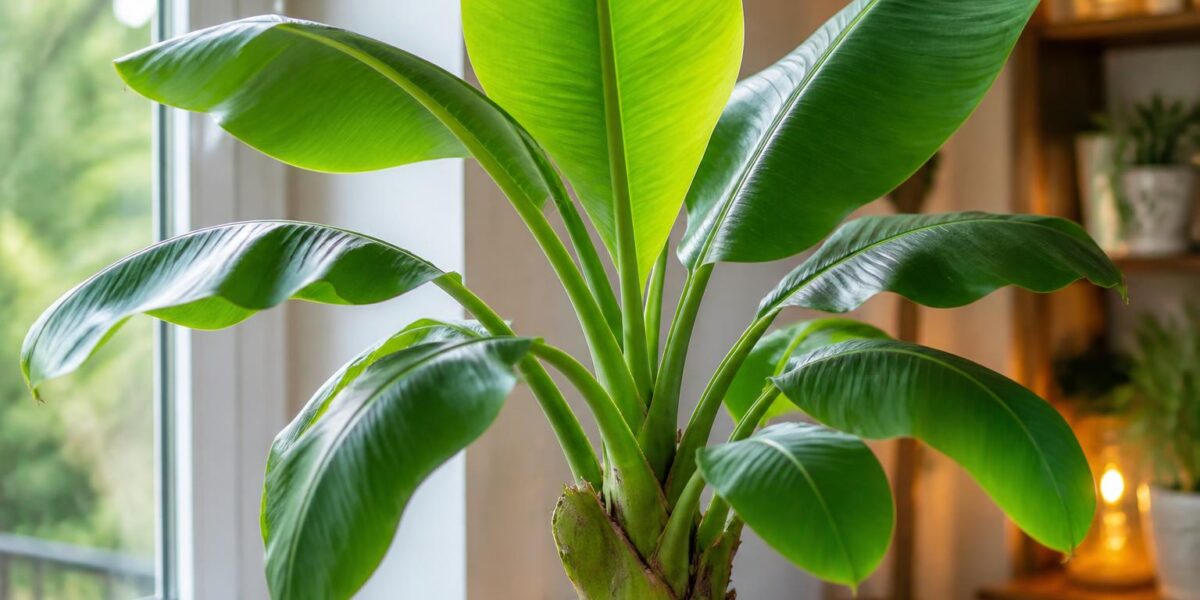
The “banana tree” is botanically a giant herbaceous plant, not a true tree. The trunk is a pseudo-stem made of tightly rolled leaf bases, soft and fibrous when cut. The plant grows from a corm at ground level, sends up its single fruiting stalk, and dies back after fruiting (suckers from the corm replace it). Mature plants reach 2 to 8 metres tall depending on cultivar. The leaves are large, paddle-shaped, and arranged in a spiraling crown — among the most recognizable silhouettes in tropical horticulture.
The genus Musa contains around 70 species native to South and Southeast Asia, with cultivated edible bananas being mostly hybrids of Musa acuminata and Musa balbisiana. The Cavendish supermarket banana is the dominant export cultivar globally; in tropical home gardens, there are dozens of regional cultivars (lady finger, red banana, plantain, dwarf cavendish, and many more). Plantains (cooking bananas) are the same plants — different cultivars selected for higher starch and lower sugar.
For pet households, banana plants appear in two main contexts: as outdoor landscape plants in tropical and subtropical gardens, and as large tropical houseplants in temperate climates (often the smaller Musa basjoo or dwarf cavendish cultivars). Both contexts share the same friendly safety profile.
Why the Plant Is Considered Non-Toxic
The non-toxic conclusion rests on overwhelming evidence. Bananas are one of the most widely consumed fruits in the human diet, with hundreds of millions of plants grown across the tropical belt. The fruit is staple food in many cultures, the leaves are used as cooking wrappers, plates, and roofing material, the pseudo-stems are eaten as a vegetable in some regional cuisines, and the male flower bud is a popular ingredient in Filipino, Thai, and Indian cooking. A plant this thoroughly woven into human food culture does not produce serious toxicity in companion animals.
The species are absent from the ASPCA toxic-plant database, the Pet Poison Helpline alert lists, and the tropical-veterinary case-report literature. There are no published case reports of dogs or cats developing serious illness from chewing banana leaves or eating modest amounts of ripe banana fruit. Veterinary nutrition references routinely discuss banana as a safe occasional treat for dogs, with the standard caveats about portion size.
The chemical profile of the plant is consistent with food crops. The leaves contain flavonoids and trace alkaloids in concentrations not associated with pet toxicity. The fruit is high in starch when green, ripening to high sugar when yellow, with potassium, vitamin B6, vitamin C, and modest fibre throughout.
Leaves, Pseudo-Stems, and the Mechanical Caveat
Banana leaves are large, broadly ribbon-shaped, and fibrous along the central rib. A pet that chews a leaf typically experiences the same outcome as chewing any other large tropical leaf: a single soft stool the next day, no chemistry to manage. Persistent leaf-chewing in dogs usually signals boredom, dietary fibre deficiency, or attention-seeking rather than a poisoning problem.
The mechanical caveat applies to puppies and very small dogs. A determined chewer working through a chunk of banana leaf can swallow a folded fibrous wad that lodges in the esophagus or causes a partial gut obstruction. This scenario is uncommon but worth knowing about, particularly for indoor banana plants where a teething puppy can systematically work through a leaf over an afternoon.
The pseudo-stem (the false trunk) is soft, fibrous, and full of clear sap. Cut sections release a watery fluid that can stain fabric (the sap turns brown on exposure to air). The sap is not toxic to pets; the staining is a laundry problem, not a poisoning problem. Cats sometimes scratch banana pseudo-stems out of curiosity; the plant heals from minor scratching but extensive damage will let in pests.
Ripe Banana Fruit and Pet Diets
Ripe banana flesh is safe for pets in small amounts as an occasional treat. Bananas are routinely included in homemade dog-treat recipes, frozen banana slices are a popular summer treat in dog households, and many vets recommend a small amount of banana as part of a bland diet for dogs recovering from gut upset. Cats are usually indifferent.
The portion guidance is straightforward. For a medium-size dog, a few thin slices of banana once or twice a week is a fair occasional treat. For small dogs, a coin-sized piece is plenty. For cats, a tiny lick of mashed banana is the realistic dose; many cats will refuse it entirely. Plantains (cooking bananas) should be cooked before sharing — raw plantain is unpleasantly starchy and unappetizing.
Avoid banana for diabetic pets (the sugar load), overweight pets (the calorie load), and pets with certain forms of advanced kidney disease (the potassium load). Banana skins are not chemically toxic but are fibrous and difficult to digest; a dog that swallows a banana peel may have looser stools the next day but is unlikely to develop serious illness.
Distinguishing From “String of Bananas”
This is the single most important clarification in the article. String of bananas (Senecio radicans) is a trailing succulent in the daisy family with cylindrical, banana-shaped leaves growing along thin trailing stems. It is a popular houseplant sold in nurseries with names like banana vine, necklace plant, or string of fishhooks. Despite the name, it has no botanical relationship to edible bananas at all.
String of bananas is mildly to moderately toxic to pets. It contains pyrrolizidine alkaloids that can cause GI upset and, with significant exposure over time, liver damage. Cats and dogs that chew the trailing stems can develop drooling, vomiting, lethargy, and reduced appetite. The toxicity is the same chemistry that makes related Senecio species (string of pearls, string of dolphins, ragwort) genuine concerns.
The naming similarity has caused real cases of confusion. A pet owner who reads “banana plants safe for pets” and assumes the trailing succulent on their windowsill falls under the same umbrella has made an honest but consequential mistake. To distinguish: real banana plants have a single thick fibrous pseudo-stem rising from soil with massive paddle-shaped leaves. String of bananas is a trailing pot plant with thin stems and small banana-shaped leaves. The two look nothing alike side by side; the names are the only overlap.
Dogs, Cats, and Banana Plants Indoors
Indoor banana plants (typically dwarf cavendish, Musa basjoo, or other compact cultivars) are popular tropical statement houseplants. The realistic pet exposures are leaf chewing, soil digging, and the occasional fallen-frond chew toy when a leaf yellows and drops.
For dogs, indoor banana plants are usually a non-issue. The leaves are unappetizing once a dog has tasted them, and most dogs lose interest quickly. Puppies are the exception; supervise and consider physical separation (a baby gate or a hanging position) until the puppy outgrows the chewing-everything phase.
For cats, banana plants are essentially safe. Cats may bat at leaves, scratch the soft pseudo-stem, or knock the plant over (the top-heavy silhouette is dramatic when a curious cat decides to climb it). Repotting in a heavier container, securing the plant to a wall mount, or placing it in a room where the cat does not regularly hunt are reasonable countermeasures.
Outdoor Banana Plants and Yards
Outdoor banana plantings are common across tropical and subtropical climates. The pet-safety considerations match the indoor scenario plus a few yard-specific ones. Fallen ripe fruit on the lawn during fruiting season is a draw for sweet-fruit-loving dogs; pick up dropped fruit daily during peak season.
Cut sections of pseudo-stem after harvest can sit around for weeks before fully decomposing. Dogs sometimes investigate or chew the soft tissue. The sap stains, the chewing produces no toxicity, and the only realistic concern is the mess and the possibility of a determined chewer swallowing a fibrous chunk that lodges in the gut. Dispose of cut stems promptly.
The male flower bud (the dramatic dark purple bract that emerges before fruit set) is non-toxic and is actually a culinary ingredient in Filipino, Thai, and Indian cooking. Falling bracts on the lawn are not a pet-safety concern, just a tidy-up task.
What to Do If Your Pet Ate Banana Plant Material
For the typical scenario — a chewed leaf, a few ripe fruit slices, or a dog that nibbled a fallen pseudo-stem section — home monitoring is appropriate. Withhold food for a single skipped meal if the pet is showing any gut upset, offer fresh water, and watch for vomiting or significant lethargy over the next few hours. Most pets are fine within hours.
For a dog that ate a substantial pile of fallen ripe fruit, expect vomiting that evening and loose stools the next day. Standard recovery: bland diet (boiled chicken and white rice for dogs, plain boiled chicken for cats), water, rest. Diabetic pets that accidentally ate sweet fruit need a vet call sooner rather than later because of the blood sugar implications.
Call the vet, the ASPCA Animal Poison Control Center at (888) 426-4435, or the Pet Poison Helpline at (855) 764-7661 (both charge a consultation fee) for persistent vomiting, lethargy beyond a few hours, signs of choking or pawing at the mouth, or any sign of possible obstruction. Persistent symptoms suggest a co-ingested toxic plant (look around the yard for evidence) or an unrelated illness, not banana toxicity. Do not induce vomiting at home; decontamination decisions belong to the veterinarian.
Look-Alikes and Tropical Plant Choices
The string-of-bananas succulent (covered above) is the major naming look-alike. Other Musa relatives include the ornamental flowering banana (Musa ornata), the wild banana (Musa balbisiana, used as a vegetable), and Ensete (the Ethiopian “false banana” used as a starchy staple food). All of these share the friendly Musaceae safety profile.
Visually similar but botanically unrelated plants include the bird-of-paradise (Strelitzia), which has paddle-shaped leaves and a tropical silhouette but belongs to a different family with its own pet-safety concerns — see our coverage of bird of paradise toxicity. Heliconia and ginger plants (Zingiberales) round out the group of “plants people sometimes mistake for banana plants.”
If you are designing a tropical garden or large-houseplant setup, banana plants pair well with other non-toxic tropicals for a pet-friendly setup. Companions include jackfruit, papaya, guava, curry leaf, and many ferns. Browse our pet-safe tropical houseplants guide for indoor options.
The Bigger Picture
Banana plants are among the friendliest large tropical plants you can host in a pet-shared environment. Indoor or outdoor, edible or ornamental, the chemistry is benign and the management considerations are about portion sizes, fallen fruit pickup, and physical separation from puppies during the chewing phase. The ripe fruit is a recommended treat in moderation. The leaves can be useful as cooking wrappers if you cook tropical cuisine. The pseudo-stems are forgiving of curious cats.
For households welcoming a new pet into a home with banana plants, our dog adoption hub and cat adoption hub include practical pet-proofing checklists. The most important takeaway is the string-of-bananas distinction: if your “banana” is a trailing succulent on a shelf rather than a giant herbaceous plant rising from a floor pot, you are looking at a different plant with different chemistry, and the rules change.
Frequently Asked Questions
Can my dog eat banana as a regular treat?
Yes, in moderation. A few thin slices once or twice a week is a fair treat for healthy adult dogs. Skip for diabetic, overweight, or kidney-compromised pets. Frozen banana slices are a popular summer treat — many dogs love the texture.
Are banana leaves toxic if my puppy chews them?
Banana leaves are not chemically toxic. The realistic concern is mechanical — a puppy that swallows a fibrous chunk can occasionally develop a partial gut obstruction. Supervise puppies near indoor banana plants and consider physical separation during the chewing-everything phase.
What is “string of bananas” and why is it different?
String of bananas (Senecio radicans) is a trailing succulent in the daisy family, totally unrelated to edible bananas despite the name. It contains pyrrolizidine alkaloids and is mildly to moderately toxic to pets. If your “banana” is a trailing pot plant rather than a giant herbaceous plant, look it up by the correct name.
Are banana peels safe for dogs?
Banana peels are not chemically toxic but are fibrous and difficult to digest. A dog that swallows a peel may have loose stools the next day. The peel can occasionally cause a partial blockage in very small dogs or puppies. Discourage rather than panic if a dog grabs one.
Can I grow a banana plant indoors with cats?
Yes. Indoor banana plants (dwarf cavendish, Musa basjoo, ornamental cultivars) are essentially safe for cats. Expect occasional leaf-batting and possible scratch damage to the soft pseudo-stem. Repot in a heavy container if your cat is the type to climb tall plants.


