
Last updated: May 16, 2026
In this article
- The Short Answer: Guava Trees Are Safe for Pets
- Meeting Psidium guajava
- Why the Tree Is Considered Non-Toxic
- Ripe Guava Fruit and Pet Diets
- Guava Leaves and Bark
- The Fibre and Sugar Caveat for Dogs
- Cats and Guava
- What to Do If Your Pet Ate Guava
- Look-Alikes and Naming
- Living With a Guava Tree and Pets
- The Bigger Picture
- Frequently Asked Questions
The Short Answer: Guava Trees Are Safe for Pets
Guava trees (Psidium guajava), the small to medium evergreen Myrtaceae trees that produce one of the most beloved tropical and subtropical fruits in the world, are not on the ASPCA toxic-plant register and have no documented serious-toxicity record in cats or dogs. Leaves, bark, ripe fruit pulp, and seeds are all considered safe in normal exposures. The phrase guava trees safe for pets is well supported across veterinary toxicology data and the long human-food history of the species.
The realistic concerns are dietary. Ripe guava fruit is loaded with fibre, modestly high in natural sugar, and rich in vitamin C — all positives in tiny amounts but quick to upset a pet stomach if eaten in quantity. The small hard seeds embedded throughout the flesh add a minor choking hazard for very small dogs and cats, and the mildly astringent green leaves can produce a single soft stool if a bored dog chews several. Guava is on the easy “yes” side of the safe-for-pets ledger, with the same common-sense supervision that any fruit tree warrants.
Meeting Psidium guajava
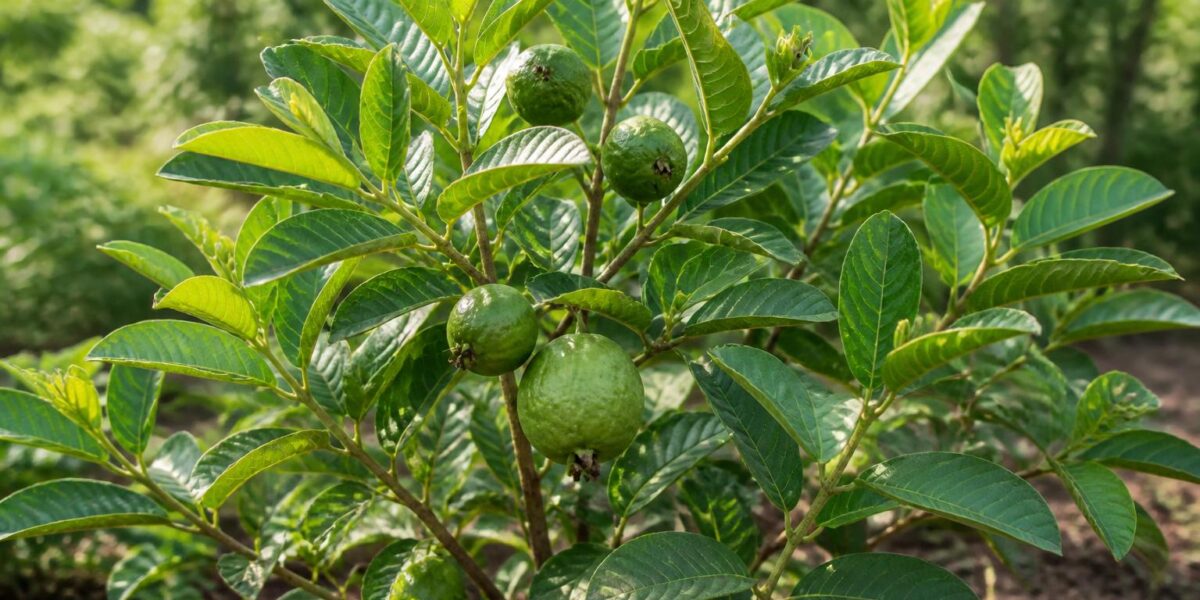
The common guava is a small evergreen tree, typically 3 to 6 metres tall in mature gardens, with smooth, peeling, copper-bronze bark and oval, prominently veined leaves. The species is native to southern Mexico, Central America, and northern South America, and has been planted across the entire tropical belt to the point where it now grows wild in many warm climates. India is the largest commercial producer, but guava is a backyard staple from Florida to Hawaii, from Singapore to Pakistan, from Brazil to Kenya.
The fruit are round or pear-shaped, 3 to 8 centimetres across, with a thin yellow-green or pink skin when ripe and a dense pulp that ranges from white to bright pink to red depending on cultivar. The flesh contains many small hard seeds. The aroma of a ripe guava is unmistakable — sweet, slightly musky, floral, and travelling halfway down the street if a tree is heavy in fruit on a warm afternoon.
For pet households, guava is one of the easier tropical fruit trees to share a garden with. The fruit drops are small and lightweight (no 25-kilogram jackfruit hazard), the canopy provides decent shade, and the tree tolerates pruning into a manageable size for small yards. Pick-pup is the main maintenance task during peak season.
Why the Tree Is Considered Non-Toxic
The non-toxic conclusion rests on multiple lines of evidence. First, guava is one of the most widely consumed tropical fruits in the human diet across hundreds of cultures and millennia. The fruit is eaten fresh and cooked, the leaves are brewed into tea (notably a traditional remedy for diarrhea in folk medicine across Latin America and South Asia), and the bark is used in some traditional preparations. A plant this thoroughly integrated into human use does not typically produce serious toxicity in companion animals.
Second, guava is absent from the ASPCA toxic-plant database, the Pet Poison Helpline alert lists, and the tropical-veterinary case-report literature. There are no published case reports of dogs or cats developing serious illness from chewing guava leaves or eating modest amounts of ripe fruit.
Third, the chemical literature on the species describes flavonoids, polyphenols, tannins, and essential oils in concentrations consistent with a food crop and traditional-medicine herb. Some of these compounds have mild astringent and antimicrobial effects (which underpin the folk use of guava-leaf tea for diarrhea), but the doses are not problematic at pet-exposure levels.
Ripe Guava Fruit and Pet Diets
Ripe guava fruit is safe for pets in small amounts as an occasional treat. The pulp is high in fibre, moderately high in natural sugar, and an excellent source of vitamin C, vitamin A precursors, and folate. A small wedge of ripe guava is a fair occasional treat for a healthy medium-size dog. Cats are usually indifferent.
The small hard seeds embedded in the pulp are not chemically toxic but are a minor mechanical concern. Most pets pass guava seeds without incident. Very small dogs and kittens that swallow a mouthful of seeds can occasionally develop temporary constipation. The realistic risk is low and the seeds do not warrant the meticulous deseeding that lychee or longan demand. Slicing a guava into wedges and offering one wedge as a treat is a reasonable approach.
The thin skin is edible by humans and unproblematic for pets. Some cultivars have a bitterer skin that pets may dislike; this is a flavour issue, not a toxicity one. Underripe green guava is firm, astringent, and unpalatable; pets that bite into one usually back away after the first taste.
Guava Leaves and Bark
Guava leaves are mildly bitter and astringent, leathery, and typically unappetizing to pets. A dog or cat that chews a fallen leaf out of boredom is at most likely to have a single soft stool the next day. Interestingly, guava-leaf tea is a traditional human remedy for mild diarrhea — the leaves contain tannins and flavonoids that have astringent effects on the gut. In pets, very small amounts of leaf material are unlikely to produce noticeable effects in either direction. Larger amounts will tip the gut toward irritation rather than toward calmness.
The bronze, peeling bark is not a target for pet chewing. Pruning a guava tree releases no dramatic latex. Wood shavings, fallen twigs, and dropped leaves can be raked and composted normally.
Flowers are small, white, with a brush of yellow stamens, and grow in the leaf axils. They are not a pet-safety concern. The flowers attract bees and other pollinators and produce a pleasant, light fragrance.
The Fibre and Sugar Caveat for Dogs
The realistic dog-overdoes-it scenario is a Labrador or Golden Retriever finding a pile of dropped fruit on the lawn during peak season and eating a substantial quantity in one sitting. Guava fruit are small and easy to wolf down, and a dog can put away half a kilogram of fruit before an owner walks out to investigate.
The outcome is usually predictable: vomiting that evening, very loose stools the next morning, possibly a second day of unsettled gut, and a hungry but otherwise healthy dog by the third day. The fibre load is the main culprit (guava has more fibre than most tropical fruits), with the sugar load a secondary contributor. Most dogs recover on a single skipped meal and a return to bland diet (boiled chicken and white rice).
For diabetic pets, overweight pets, or pets with chronic kidney disease, fruit treats including guava should be skipped or limited to tiny portions on rare occasions. Dental health is another consideration — sticky sweet fruit is not friendly to teeth, and pets that already have dental issues are better served by dental treats or dental kibble.
Cats and Guava
Cats are largely indifferent to fruit and the guava tree barely registers in their environment. The realistic feline exposures are paw-batting at fallen fruit, walking through dropped fruit on the lawn, or licking sticky guava juice off a counter. None of these escalate to a serious problem.
The rare cat that develops an interest in guava is usually a young, food-motivated indoor-outdoor cat sampling a fallen ripe fruit. A small lick or bite is not concerning. The fibre and sugar caveats that apply to dogs do not really come into play for cats because cats almost never eat enough fruit to upset their gut.
A cat that licks sticky guava residue off a counter is no more at risk than a cat that licks sticky honey or sticky jam — the flavour might be unfamiliar and the cat may drool slightly, but there is no toxicity to manage. Cleaning the counter is the main task.
What to Do If Your Pet Ate Guava
For the typical scenario — a few fallen ripe fruits or a chewed leaf — home monitoring is appropriate. Withhold food for a single skipped meal, offer fresh water, and watch for vomiting or significant lethargy over the next few hours. Most pets are fine by the next morning, with at most a single soft stool.
For a dog that ate a substantial amount of fruit during a fallen-pile raid, expect a day or two of unsettled gut. Vomiting and diarrhea are common, full recovery is the norm. Reintroduce a bland diet (boiled chicken and white rice for dogs, plain boiled chicken for cats) once vomiting stops, then transition back to regular food over 24 hours.
Call the vet, the ASPCA Animal Poison Control Center at (888) 426-4435, or the Pet Poison Helpline at (855) 764-7661 (both charge a consultation fee) if you observe persistent vomiting beyond a few episodes, refusal to eat for more than a single meal, lethargy beyond a few hours, signs of choking or pawing at the mouth, or any breathing difficulty. None of these are typical guava reactions, and persistent symptoms suggest a co-ingested toxic plant or unrelated illness. Do not induce vomiting at home; decontamination decisions belong to the veterinarian.
Look-Alikes and Naming
The most common confusion is between common guava (Psidium guajava) and strawberry guava (Psidium cattleianum), a smaller-fruited cousin native to Brazil. Strawberry guava has the same non-toxic profile and the same caveats about fruit quantity. Pineapple guava (Acca sellowiana, formerly Feijoa sellowiana) is a different genus in the same Myrtaceae family with a similar non-toxic profile. All three are safe with the same common-sense supervision.
Do not confuse guava with the unrelated guayaba in some Spanish-language contexts (regional names overlap), or with cas guava (Psidium friedrichsthalianum), a Costa Rican relative used mostly in commercial juicing. None of these introduce new toxicity concerns; the family chemistry is uniformly friendly.
The Myrtaceae family in general is a friendly neighbourhood for pet-shared gardens. It contains eucalyptus (which has some essential-oil concerns covered separately), bottlebrush (mildly irritating), and many edible fruits including guava, jaboticaba, and feijoa. Read by species rather than by family for the highest precision.
Living With a Guava Tree and Pets
A guava tree in a pet-shared garden is one of the easier tropical neighbours to manage. The peak maintenance period is the fruiting season, when daily pickup of dropped fruit prevents the dog-finds-pile scenarios. Bag fallen fruit and dispose where dogs cannot reach. Store harvested fruit in the fridge or in a covered bowl out of dog-jump range.
Off-season, the tree asks little. Light pruning to maintain shape, occasional fertilising, and removal of suckers (guava is famously prolific in throwing out root suckers) are the typical tasks. None of these are pet-safety concerns. As with any fruit tree, do not let pets onto recently sprayed lawn or eat fruit from systemic-insecticide-treated trees during the post-application withdrawal period.
If you are designing a tropical or subtropical garden from scratch with pets in mind, guava pairs well with other non-toxic fruit trees for a pet-friendly orchard. Companions include jackfruit, papaya, banana, lychee, rambutan, and curry leaf. Browse our pet-safe garden plants guide for layout suggestions.
The Bigger Picture
Guava sits squarely in the friendly zone of fruit-tree pet-safety articles. The fibre and sugar dose is the realistic gut-upset trigger; everything else about the tree is benign. For tropical and subtropical pet households, a guava tree is among the easiest fruit trees to host, and a small piece of ripe guava as an occasional treat is a fair contribution to a varied, balanced pet diet for most healthy adult dogs.
For households welcoming a new pet into a home with established guava trees or considering a planting, our dog adoption hub and cat adoption hub include practical pet-proofing checklists. The afternoon you spend walking your yard, mapping which trees drop what kind of fruit and identifying any genuinely toxic neighbours like oleander or mango sap zones, is a fair trade for relaxed weekends through the bearing seasons to come.
Frequently Asked Questions
Can my dog eat guava as a regular treat?
Small amounts of ripe guava as an occasional treat are safe for healthy adult dogs without diabetes, kidney disease, or weight problems. Stick to a small wedge for medium dogs, smaller for small dogs, and skip the treat for diabetic or overweight pets. Daily fruit feeding is not necessary or beneficial.
Are guava seeds dangerous?
Guava seeds are small, hard, and not chemically toxic. Most pets pass them without incident. Very small dogs or kittens that swallow a mouthful can occasionally develop temporary constipation. The seeds do not warrant the careful deseeding that lychee or longan demand, but offering wedges rather than whole fruit is a sensible default.
What about guava leaves? My dog chews them sometimes.
Guava leaves are not toxic. They are mildly bitter and astringent and a chewed leaf may produce a single soft stool the next day. Persistent leaf-chewing usually signals boredom or dietary fibre deficiency rather than a poisoning problem. Provide chew alternatives and check that the dog’s main diet is balanced.
Is guava safe for cats?
Tiny amounts of ripe guava are safe for cats but rarely interesting to them. Most cats refuse fruit voluntarily. Skip the seed-heavy core and offer a tiny piece of pure flesh if you are sharing a snack, or do not bother — cats do not need fruit nutritionally.
My puppy ate a whole pile of dropped guava. What should I expect?
Expect vomiting that evening, loose stools the next day, and a hungry but recovering puppy by the day after. The fibre and sugar load is unkind to a young gut but not toxic. Withhold food for a meal, offer water, and reintroduce a bland diet. Call the vet if vomiting persists beyond a couple of episodes or the puppy seems lethargic or unwilling to drink.


