
Last updated: March 31, 2026
In this article
Can Cats Eat Guava? Safety Guide for Cat Owners
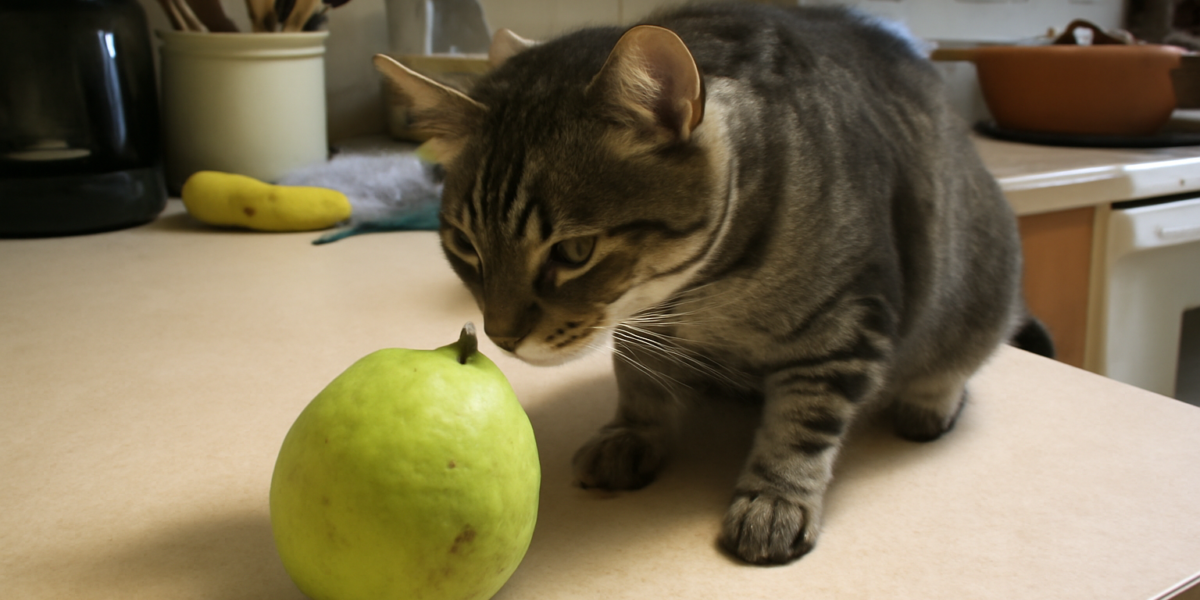
Guava is a tropical fruit prized by humans for its distinctive flavor and impressive vitamin content. If you have been enjoying this sweet, fragrant fruit and noticed your cat investigating, you may be wondering whether it is safe to share a small piece. The short answer is that guava flesh is not toxic to cats — but as with all fruits, the details of preparation, quantity, and feline biology matter considerably.
Quick Answer: Yes, cats can eat guava in small amounts. The flesh of ripe guava is non-toxic to cats and can be offered occasionally as a treat. Remove the skin and seeds before serving, and keep portions very small. Guava offers minimal nutritional benefit to cats, who are obligate carnivores and require animal-based protein as the foundation of their diet.
Quick Answer: Is Guava Safe for Cats?
Guava does not appear on any major veterinary toxicity lists for cats, and the flesh of the fruit is considered safe for feline consumption when properly prepared. The ASPCA does not list guava as toxic to cats or dogs, which places it in the same general category as many other tropical fruits — non-toxic but not nutritionally necessary.
That said, safety is not the same as suitability. Cats are obligate carnivores, a classification that reflects deep evolutionary adaptation. Their digestive systems are built to extract nutrients from animal tissue — protein and fat from meat, organs, and bone. They have shorter digestive tracts than omnivores, higher protein requirements, and limited ability to process carbohydrates and plant sugars efficiently. When we ask whether can cats eat guava, the answer addresses toxicity (no concern) and nutritional relevance (very limited) separately.
The flesh of a ripe guava is soft, mildly sweet, and contains a significant amount of water. These characteristics make it relatively easy for a cat to consume in small quantities without immediate digestive distress. However, the seeds, skin, and any unripe portions require more caution, and processed guava products — jams, pastes, juices, and candies — should never be offered to cats under any circumstances.
Nutritional Considerations for Cats
Guava is considered a nutritional powerhouse in human dietetics. A single guava fruit (approximately 55 grams) contains roughly 37 calories, 8 grams of carbohydrates (including about 5 grams of sugar), 3 grams of fiber, 1.4 grams of protein, and 0.5 grams of fat. It is exceptionally rich in vitamin C — a single guava provides more than twice the daily recommended intake for an adult human.
For cats, however, these numbers carry very different implications.
Vitamin C. Guava’s most celebrated nutrient is largely irrelevant to cats. Unlike humans, cats synthesize their own vitamin C in the liver. Healthy cats do not require dietary vitamin C supplementation, and the amount present in a small piece of guava would not meaningfully affect their vitamin C status in either direction. It does no harm, but it fills no gap.
Fiber. Guava contains both soluble and insoluble fiber, which supports digestive health in humans. For cats, small amounts of fiber can support bowel regularity, particularly in cats prone to hairballs or mild constipation. However, the quantity of guava appropriate for a cat — a few small pieces at most — provides so little fiber that the effect is negligible. Excessive fiber from plant sources can actually cause digestive upset in cats, including gas and loose stools.
Sugar. The natural sugar content in guava, while moderate by fruit standards, is a consideration for cats. Cats lack functional sweet taste receptors and have no biological attraction to sugar. More importantly, their metabolic systems are not designed to handle significant carbohydrate loads. For cats with diabetes, obesity, or metabolic sensitivities, even natural fruit sugars should be minimized. A small piece of guava occasionally is unlikely to cause blood sugar issues in a healthy cat, but it is worth being aware of.
Potassium and lycopene. Guava contains potassium, which supports heart and muscle function, and lycopene, an antioxidant pigment found in pink-fleshed varieties. These nutrients have recognized benefits in human nutrition, and their antioxidant properties are theoretically beneficial to all mammals. In practice, the quantities a cat would consume from guava are too small to produce measurable effects.
Water content. Guava is approximately 80 percent water. For cats — many of whom are chronically under-hydrated, particularly those eating primarily dry food — any moisture-containing food provides a minor positive contribution. This is perhaps the most genuinely relevant nutritional aspect of guava for cats, though it is no substitute for access to fresh water or a wet food diet.
Benefits and Risks of Guava for Cats
The benefits of guava for cats are modest and should be understood in proportion to the limited role that any fruit plays in feline nutrition.
Hydration support. The high water content of guava flesh can provide a small supplemental source of moisture. For cats who are reluctant drinkers or who eat exclusively dry kibble, any moisture-rich treat contributes positively. This does not replace proper hydration strategies but represents a minor advantage over dry treats.
Enrichment value. Novel foods can provide sensory stimulation for indoor cats, engaging curiosity and providing variety. The soft texture and mild aroma of ripe guava may interest some cats, even if they ultimately decide not to eat it. Environmental and dietary enrichment supports overall wellbeing in cats with otherwise predictable routines.
Low-calorie treat option. For cats on weight management programs, a small piece of guava is lower in calories than most commercial treats. With feline obesity affecting a large proportion of pet cats, having low-calorie treat alternatives can help owners manage their cat’s weight without eliminating treats entirely.
The risks, while not severe, are worth understanding clearly.
Seeds. Guava seeds are small, hard, and numerous. While they are not known to contain toxic compounds like the cyanogenic glycosides found in apple seeds, their hard texture poses a potential digestive concern. Small, hard seeds can irritate the gastrointestinal lining or, in theory, contribute to an intestinal blockage if consumed in large quantities. Removing as many seeds as possible before offering guava to your cat is the safest approach.
Skin. Guava skin is edible for humans but can be tough and fibrous, particularly on less ripe fruit. For cats, the skin may be difficult to digest and could cause mild gastrointestinal irritation. Peeling the guava before serving removes this concern. If the guava was not organically grown, the skin may also carry pesticide residue.
Digestive upset. Any new food introduced to a cat’s diet can cause temporary digestive disruption. Guava’s fiber and sugar content, even in small amounts, may trigger loose stools, gas, or mild vomiting in sensitive cats. Start with a very small piece and observe your cat over the next 24 hours before offering more.
Processed guava products. Guava paste, guava jam, guava juice, guava candy, and any commercially prepared guava product should never be given to cats. These products contain concentrated sugars, preservatives, and potentially artificial sweeteners or flavorings that are harmful to cats. Xylitol, an artificial sweetener found in some products, is toxic to animals. Only fresh, ripe guava flesh is appropriate. If you are exploring safe foods for a cat you plan to bring home, our adoption page includes resources to help new owners prepare.
How to Serve Guava Safely to Your Cat
Proper preparation ensures that guava remains a safe treat for your cat. Follow these steps each time you offer guava.
Select ripe fruit. Choose a guava that is fully ripe — it should yield slightly to gentle pressure and have a fragrant aroma. Unripe guava is harder, more acidic, and more difficult for a cat to digest. Avoid fruit with visible mold, bruising, or signs of spoilage.
Wash thoroughly. Rinse the guava under cold running water to remove any surface dirt, bacteria, or pesticide residue. Even if you plan to remove the skin, washing first prevents contaminants from transferring to the flesh during cutting.
Peel the skin. Remove the outer skin completely. While guava skin is not toxic, its fibrous texture can be difficult for cats to digest and may carry chemical residues from agricultural processing.
Remove seeds. Cut the guava open and scoop out or cut away the seeded center. The seeds are small and numerous, and removing all of them can be tedious, but it is worth the effort. If a few small seeds remain in the flesh, the risk is minimal, but aim to remove as many as you reasonably can.
Cut into small pieces. Dice the peeled, seeded flesh into very small cubes — roughly half a centimeter on each side. Small pieces reduce choking risk and make it easier to control the portion size. One or two small cubes is an appropriate serving for an adult cat.
Serve plain and at room temperature. Do not add sugar, salt, or any seasoning. If the guava was refrigerated, allow the pieces to reach room temperature before offering them, as very cold food can cause mild stomach discomfort in some cats.
Monitor your cat. Watch your cat as it eats the guava and for the following 24 hours. If this is the first time your cat has tried guava, be particularly attentive to any signs of digestive upset. If your cat shows no interest, do not force the issue — many cats have no attraction to fruit, and that is entirely normal.
Signs of Problems After Eating Guava
While guava is non-toxic to cats, individual reactions vary, and it is important to know what to watch for after your cat consumes any new food.
Vomiting. A single episode of vomiting shortly after eating guava may simply indicate that the cat’s stomach did not tolerate the new food well. This is usually self-limiting and resolves within a few hours. If vomiting is repeated, persistent, or contains blood, contact your veterinarian.
Diarrhea. Loose stools or diarrhea within 12 to 24 hours of eating guava can result from the fiber and sugar content. Mild diarrhea that resolves within a day is typically not cause for alarm, but persistent diarrhea lasting more than 24 hours warrants veterinary attention, particularly in kittens or senior cats who are more vulnerable to dehydration.
Loss of appetite. If your cat refuses its regular food after eating guava, it may be experiencing stomach discomfort. Monitor for 12 to 24 hours. If appetite does not return or if the cat appears lethargic, consult your veterinarian.
Abdominal discomfort. Signs include a hunched posture, reluctance to be touched on the belly, restlessness, or vocalizing. These may indicate gas, bloating, or gastrointestinal irritation. Mild discomfort should pass within a few hours, but persistent pain requires veterinary evaluation.
Allergic reactions. While rare, food allergies or sensitivities can occur with any new food. Signs include excessive scratching, swelling around the face or mouth, hives, or difficulty breathing. An allergic reaction requires immediate veterinary attention.
In the vast majority of cases, a small piece of properly prepared guava will cause no adverse effects in a healthy adult cat. The signs listed above are precautionary and apply to the introduction of any new food, not specifically to guava.
Healthy Alternatives to Guava for Cats
If you are looking for safe treat options for your cat, several foods provide similar or better value with well-established safety profiles.
Cooked chicken or turkey. Plain, unseasoned, boneless, skinless cooked poultry is the gold standard treat for cats. It aligns perfectly with their obligate carnivore biology, provides high-quality protein, and is almost universally enjoyed. Small pieces of cooked chicken breast or turkey are safe, nutritious, and satisfying for cats.
Blueberries. These small, soft berries are non-toxic to cats and contain antioxidants. Their small size makes portion control straightforward. Like guava, they offer limited nutritional benefit to cats but are a safe occasional treat. For more details, see our guide on whether cats can eat blueberries.
Cooked carrots. Steamed or boiled carrots (plain, with no seasoning) are soft, low in calories, and provide a small amount of fiber. They must always be cooked until soft, as raw carrots pose a choking hazard.
Watermelon. Seedless watermelon flesh is safe for cats and has an even higher water content than guava, making it a good hydration-supporting treat during warm weather. Remove all seeds and rind before serving.
Commercial cat treats. High-quality commercial cat treats formulated specifically for felines remain the most reliable option. They are designed to be nutritionally appropriate and palatable. Look for treats with named meat sources as the primary ingredient and minimal artificial additives.
If you are preparing to welcome a new cat into your home and want to understand what treats are safe to offer, visit our adoption page to find your new companion and access our resources for new cat owners.
Frequently Asked Questions
Can kittens eat guava?
It is best to avoid offering guava or any fruit to kittens. Kittens have developing digestive systems that are more sensitive than those of adult cats, and their nutritional needs are almost entirely met by kitten-formulated food or their mother’s milk. The sugar and fiber in guava could more easily cause digestive upset in a young kitten. Wait until a cat is fully grown — typically around 12 months — before introducing any non-standard treats, and even then, keep portions minimal.
How much guava can I give my cat?
One or two small cubes of peeled, seedless guava flesh — each roughly half a centimeter on a side — is an appropriate serving for an adult cat. Treats of any kind should represent no more than ten percent of your cat’s daily caloric intake. Since a typical indoor cat consumes between 200 and 250 calories per day, and guava contains approximately 68 calories per 100 grams, even a small serving represents a meaningful fraction of the treat budget. Offer guava no more than once or twice per week.
Is guava juice safe for cats?
No. Guava juice, whether commercially produced or freshly squeezed, is not appropriate for cats. Commercial guava juice typically contains added sugars, preservatives, and sometimes artificial sweeteners that can be harmful to cats. Even fresh guava juice concentrates the natural sugars without the fiber that slows their absorption. Cats should drink water as their primary fluid source, and fruit juices offer no benefit to feline health.
Can cats eat guava seeds?
While guava seeds are not known to be toxic to cats, they are hard, small, and difficult to digest. They can potentially irritate the gastrointestinal tract or, if consumed in significant quantities, contribute to digestive discomfort. It is best to remove as many seeds as possible before offering guava flesh to your cat. A few inadvertently consumed seeds are unlikely to cause serious harm, but intentionally including them serves no purpose.
What should I do if my cat eats a large amount of guava?
If your cat has consumed a significant amount of guava — for example, if it got into an unattended fruit bowl — monitor it closely for signs of digestive upset including vomiting, diarrhea, lethargy, or loss of appetite. The most likely outcome is temporary gastrointestinal discomfort from the fiber and sugar content. Ensure fresh water is available to support hydration. If symptoms are severe, persistent, or include signs of an intestinal blockage such as straining without producing stool, contact your veterinarian promptly.


