
Last updated: May 16, 2026
In this article
- The Short Answer: Jackfruit Trees Are Safe for Pets
- Meeting Artocarpus heterophyllus
- Why the Tree Is Considered Non-Toxic
- The Sticky Latex Caveat
- Ripe Jackfruit Fruit and Pet Diets
- Dogs Versus Cats: Different Habits, Same Plant
- Latex Cleanup and First Aid
- When to Call the Vet
- Look-Alikes and Naming Confusion
- Living With a Jackfruit Tree and Pets
- The Bigger Picture
- Frequently Asked Questions
The Short Answer: Jackfruit Trees Are Safe for Pets
Good news for tropical-garden households. Jackfruit trees (Artocarpus heterophyllus), the towering Moraceae-family trees that produce the largest tree-borne fruit in the world, are not on the ASPCA toxic-plant register and have no documented systemic-toxicity problem in cats or dogs. Leaves, bark, ripe fruit pulp, and seeds (cooked) are essentially benign for the pets that share Singaporean kampungs, Indian gardens, Caribbean yards, and Thai backyards with these gentle giants. The phrase jackfruit trees safe for pets reflects the consensus across the limited veterinary toxicology data we have.
The “but” is not chemical — it is mechanical and dietary. The tree drips a thick, white, latex-like sap from any cut branch or freshly snapped leaf. The sap is sticky enough to glue fur together, mat paws, and produce one of the world’s most stubborn cleanup jobs, but it is not a poison. Ripe fruit pulp is safe for pets in small amounts as an occasional treat. Raw seeds, large fibrous flesh chunks, and the spiky rind can cause GI upset or choking. We will walk through each layer of the tree, the realistic risks, and what to do if your dog ate a chunk of fallen jackfruit overnight.
Meeting Artocarpus heterophyllus
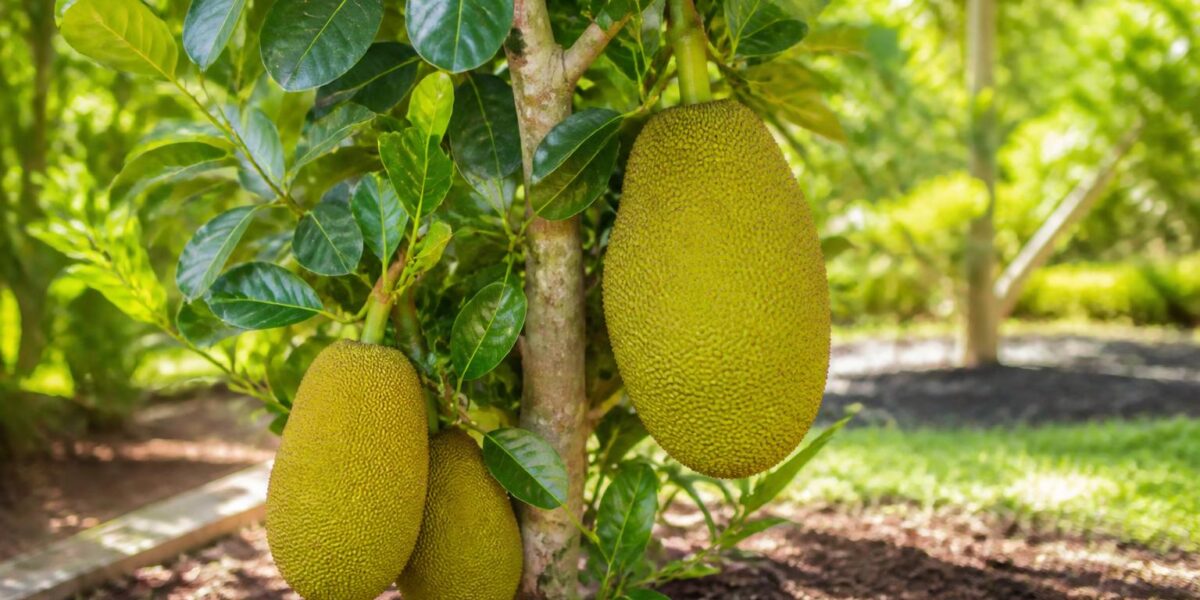
Jackfruit is one of the most distinctive trees in tropical Asia. A mature specimen reaches 20 to 25 metres tall with a dense evergreen canopy of glossy, oval leaves. The fruit grow directly off the trunk and major limbs in a habit called cauliflory — a dozen green spiky pods clinging to the bark like enormous warty lanterns. A single mature fruit can weigh 25 to 35 kilograms, and trees in heavy bearing season carry a hundred at once. The smell of a ripe jackfruit is unmistakable: sweet, fruity, slightly fermented, and travelling halfway down the street.
The tree belongs to the same family as figs, mulberries, and breadfruit. Across South Asia and Southeast Asia it is a staple — eaten ripe as a sweet fruit, eaten unripe as a starchy curry vegetable, and the seeds boiled or roasted as a chestnut-like snack. Jackfruit is a roadside companion in Kerala, a backyard tree in Sri Lanka, a garden specimen in Malaysia and Singapore, and an increasingly common landscape choice in Florida and Hawaii.
For pet households, what matters is that a fully grown jackfruit tree drops branches, leaves, and occasionally enormous fruit during heavy weather. Curious dogs in particular often investigate a fallen jackfruit before owners even know it has dropped. Knowing the tree is non-toxic takes that scenario from emergency to manageable mess.
Why the Tree Is Considered Non-Toxic
The lack of toxicity comes from several converging lines of evidence. First, jackfruit has been a major human food crop for thousands of years across the tropical belt — leaves are sometimes used as wrappers for steamed snacks, seeds are eaten as a vegetable, and the fruit pulp is consumed across all life stages. A plant integrated this thoroughly into human diets does not produce major toxicity in humans or in companion animals that share their environment.
Second, the species is absent from the ASPCA toxic-plant database, the Pet Poison Helpline alert lists, and tropical-veterinary case-report literature. There are no significant published reports of dogs or cats developing serious illness from chewing jackfruit leaves, bark, or sap. Compare this with the well-documented toxic Anacardiaceae trees (mango leaves and sap) or the cardiac glycoside-bearing tropicals (oleander), and jackfruit lives in a quieter, friendlier neighbourhood.
Third, the chemical literature on the tree describes flavonoids, phenolics, and starches in concentrations consistent with food crops, not with poisonous plants. The tree’s defenses against insects and herbivores rely largely on the latex and the spiky outer rind — physical barriers, not chemical ones.
The Sticky Latex Caveat
If there is one thing every jackfruit-tree owner learns the hard way, it is the latex. Cut any limb, snap any twig, or pierce an unripe fruit and a thick, white, sticky sap immediately oozes out. Coconut oil dissolves it; soap and water mostly do not. Pet fur exposed to fresh jackfruit latex turns into stiff dreadlocks within hours.
The latex itself is not chemically toxic in the systemic sense. Cats and dogs that lick small amounts off their paws may have a brief drool or a single soft stool, but they do not develop the burning oral irritation that calcium oxalate aroids cause, nor the cardiac signs of true toxic-tropical sap. The bigger problem is grooming-related: a cat with sticky paws will lick obsessively, can pull out fur, and may swallow latex-laden hair that contributes to a hairball or, very rarely, a small intestinal obstruction.
For dogs, the typical scenario is matted leg fur after running through pruned branches in the yard. Owners often resort to clippers because the latex is so reluctant to wash out. Vegetable oil or coconut oil rubbed into the matted fur for ten minutes loosens the latex enough to comb most of it out before the bath.
Ripe Jackfruit Fruit and Pet Diets
Ripe jackfruit fruit (the bright yellow, gummy-sweet pods inside the spiky rind) is safe for pets in small amounts. The fruit is high in natural sugars, modest in fibre, and contains potassium, vitamin C, and B vitamins. A few small pieces given as an occasional treat will not harm a healthy dog or cat. Diabetic pets, overweight pets, and pets with chronic kidney disease should generally not be offered sweet tropical fruit because of the sugar and potassium load.
The seeds embedded in each pod are edible to humans when boiled or roasted but are best avoided for pets. Raw seeds are hard and starchy and can cause a small dog to vomit or develop temporary constipation. The fibrous outer pith between the pods (the white tendrilly material) is not toxic but is too tough for pets to digest comfortably.
The spiky outer rind is the only part with real risk — not because of chemistry but because of the spikes. A dog that chews a discarded jackfruit rind can puncture the soft tissue of the mouth or, in worst cases, swallow a fragment that scrapes the throat. Bag jackfruit waste tightly and dispose of rinds where dogs cannot reach them.
Dogs Versus Cats: Different Habits, Same Plant
Cats are the lower-risk species for jackfruit exposure. Cats almost never eat sweet fruit, do not chew tree leaves with the enthusiasm dogs show, and tend to avoid the strong ripe-jackfruit smell. The realistic feline scenario is a curious cat batting at a low-hanging leaf, a paw landing in fresh latex, and the cat dragging the mess across your couch. The cat will be physically fine; the upholstery may not be.
Dogs are the species owners actually worry about. Tropical-garden dogs find fallen ripe jackfruit irresistible — sweet, soft, easy to tear apart, and lying right there on the ground. A medium-size dog that finds a whole fallen fruit can easily eat half a kilogram of fruit pulp before the owner notices, which usually translates to vomiting and very loose stools the next day. The episode is unpleasant but not dangerous.
Small dogs and puppies are the only group where supervised fruit access is genuinely advisable. Sugar overload, a stomach unaccustomed to high-fibre fruit, and the risk of swallowing seed fragments or rind pieces all add up. Pick up dropped fruit promptly during bearing season and limit treat portions to a single small cube.
Latex Cleanup and First Aid
If your pet comes home glued together with jackfruit latex, do not panic. Apply coconut oil, vegetable oil, or even peanut butter to the affected fur, work it gently with your fingers, leave it for ten to fifteen minutes, then comb the loosened material out with a wide-toothed comb. Bathe with a degreasing pet shampoo afterwards. For latex stuck to paw pads, the same oil-soak approach works; never use solvents like turpentine or paint thinner.
If a small amount of latex got into the mouth and the pet is licking, drooling slightly, or smacking its lips, offer a small amount of cool water or a lick of plain yogurt. Most cases resolve within thirty minutes. Persistent drooling, repeated vomiting, or any sign of swelling around the lips warrants a call to the vet, although these reactions are uncommon.
For the dog that ate a substantial amount of fallen ripe fruit, expect vomiting and loose stool over the next twelve to twenty-four hours. Withhold food for a single skipped meal, offer plenty of fresh water, and reintroduce a bland diet (boiled chicken and white rice for dogs, plain boiled chicken for cats) once vomiting stops.
When to Call the Vet
For a healthy adult dog or cat that chewed a leaf, licked some sap, or ate a small amount of ripe fruit, home monitoring is appropriate. Most pets show no symptoms at all. Some have a single episode of soft stool the next morning, and that is the outer edge of normal.
Call the vet, the ASPCA Animal Poison Control Center at (888) 426-4435, or the Pet Poison Helpline at (855) 764-7661 (both charge a consultation fee) if you see persistent vomiting (more than two episodes), refusal to eat for more than a single meal, lethargy beyond a few hours, signs of choking or pawing at the mouth, or any breathing difficulty. None of these are typical jackfruit reactions, but they could indicate a swallowed rind fragment, a co-ingested toxic plant, or an unrelated illness.
Do not induce vomiting at home. Jackfruit is not toxic enough to warrant decontamination, and home emesis carries its own risks. Decontamination decisions belong to the veterinarian, not the owner.
Look-Alikes and Naming Confusion
Jackfruit shares its genus with several other tropical trees that pet owners sometimes confuse. Breadfruit (Artocarpus altilis) is a Polynesian relative with smaller, smoother fruit and similar non-toxic safety profile. Cempedak (Artocarpus integer), found across Malaysia and Indonesia, is jackfruit’s smaller, more aromatic cousin and is similarly considered non-toxic. Marang (Artocarpus odoratissimus) is the Borneo version. None of these Artocarpus trees produce serious pet toxicity.
What jackfruit is not is durian (Durio zibethinus) — the unrelated, equally pungent tropical fruit that occasionally gets confused by Western readers. Durian is in the Malvaceae family and is also generally considered safe for pets, though the same fibre and fat caveats apply. The sour-sop tree (soursop) shares a tropical-fruit-tree label but belongs to the Annonaceae family with a different and genuinely concerning toxicity profile in the bark and seeds.
If you are designing a tropical garden in Singapore or another humid climate, our pet-safe tropical houseplants guide covers the indoor options. The roundup of tropical toxic plants common in Singapore gardens covers the trees you should plant away from the dog run.
Living With a Jackfruit Tree and Pets
If you are inheriting a mature jackfruit tree with a new tropical home, you do not need to remove it. The realistic management plan is straightforward. Clean up fallen fruit, leaves, and pruning debris within a day, especially during heavy bearing season. Keep dogs out of the area immediately after pruning when latex is freshest. Bag rinds and seeds in tied trash bags. Store any harvested fruit on counters or in the fridge, not on the floor or low table where a Labrador can reach.
If you are designing a new tropical garden, jackfruit is one of the friendliest large trees you can plant from a pet-safety angle. Pair it with other non-toxic tropicals such as papaya plants, banana plants, guava trees, and curry leaf for an edible-yet-pet-safe canopy.
For households welcoming a new pet into a tropical home, our dog adoption hub and cat adoption hub include checklists for pet-proofing yards and identifying which existing plants warrant a closer look before the pet moves in.
The Bigger Picture
Jackfruit trees occupy a friendly position in pet-toxicity discussions. They are large, dramatic, fruit-heavy companions to tropical homes that ask nothing more from pet owners than common-sense yard cleanup and a watchful eye on dogs that might find a fallen fruit before the gardener does. The latex is annoying, the rinds are spiky, and a dog with a sweet tooth will overdo the fruit if given the chance — but none of those scenarios escalate to a true poisoning.
That ranks jackfruit among the most reassuring trees you can host in a pet-shared garden, alongside guava, papaya, banana, and the safer Sapindaceae relatives like lychee, longan, and rambutan. Knowing where each tree sits on the toxic-to-friendly spectrum is the difference between confident weekend gardening and the slow worry of “what was that he just chewed?”
Frequently Asked Questions
My dog ate a chunk of fallen ripe jackfruit. What should I do?
Most dogs that snack on a small amount of ripe jackfruit pulp simply pass it through with looser stools the next day. Withhold food for a meal, offer water, and watch for vomiting. If your dog ate a large amount (more than a cup of fruit) or you suspect rind or seeds were swallowed, call your vet for guidance.
Is jackfruit latex poisonous to cats?
The latex is sticky and unpleasant but not chemically poisonous. The realistic feline problem is matted fur and obsessive grooming, not systemic toxicity. Use coconut oil to dissolve the latex out of fur, then bathe normally.
Can I feed my dog jackfruit as a regular treat?
Small amounts as an occasional treat are fine for healthy dogs without diabetes, kidney disease, or weight problems. Stick to deseeded ripe pulp, limit portions to a small cube for medium dogs, and skip the seeds and rind entirely. Daily fruit feeding is not necessary or beneficial.
Are jackfruit seeds toxic to pets?
Raw jackfruit seeds are not chemically toxic but are hard, starchy, and difficult to digest. Cooked seeds (boiled or roasted, as humans eat them) are slightly safer but still best avoided as routine pet food. A single accidentally swallowed seed will usually pass without incident; a handful can cause vomiting or temporary constipation.
What about unripe jackfruit used in vegetarian curries?
Cooked, deseeded, plain unripe jackfruit (“jackfruit curry meat”) in small amounts is generally safe for dogs but should not be given when prepared with onion, garlic, salt, or strong spices, all of which are problematic for pets. Plain cooked jackfruit pulp the size of a sugar cube is a safe occasional sample.


