
Last updated: May 16, 2026
In this article
- The Short Answer: Jack-O-Lantern Mushrooms Are Toxic to Pets
- What Jack-O-Lantern Mushrooms Look Like
- The Toxin: Illudins
- Why Pets Eat Jack-O-Lanterns
- Symptoms of Jack-O-Lantern Poisoning
- What to Do in the First Hour
- Veterinary Treatment
- Jack-O-Lantern Mushrooms vs Chanterelles
- Other Wild Mushroom Risks Worth Knowing
- Preventing Jack-O-Lantern Encounters
- Frequently Asked Questions
The Short Answer: Jack-O-Lantern Mushrooms Are Toxic to Pets
Yes, jack-o-lantern mushrooms (Omphalotus olearius in Europe and the closely related Omphalotus illudens and Omphalotus olivascens in North America) are toxic to dogs and cats. They contain compounds called illudins that cause severe gastrointestinal upset within an hour or two of ingestion. The orange, gilled clusters at the base of dead hardwoods are eye-catching, common, and a frequent cause of pet ER visits in fall.
Jack-o-lantern toxicity is not in the same liver-destroying SEVERE tier as the death cap or destroying angel, but the vomiting and diarrhea are dramatic, dehydration sets in fast, and treatment in a clinic is often necessary. The species also famously glows faintly in the dark when fresh — hence the name — but no pet owner should rely on bioluminescence as identification.
If you suspect any wild mushroom ingestion, call your veterinarian, the ASPCA Animal Poison Control Center at 888-426-4435, or the Pet Poison Helpline at 855-764-7661. Bring a sample of the mushroom in a paper bag.
What Jack-O-Lantern Mushrooms Look Like
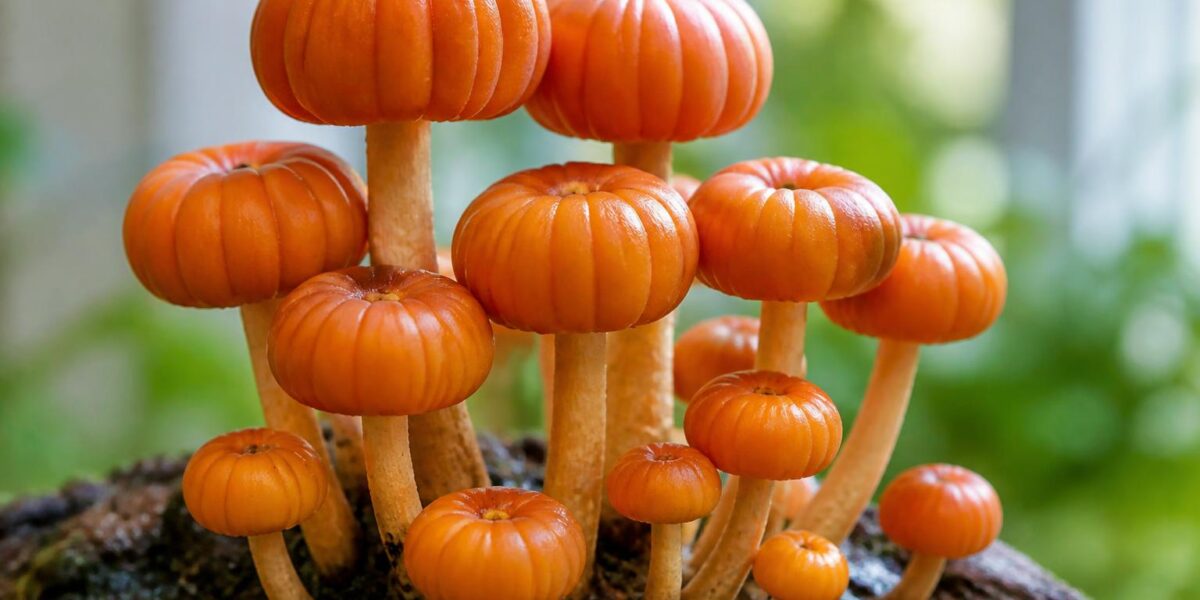
Jack-o-lanterns grow in showy clusters at the base of dead or dying hardwood trees, especially oaks, or from buried roots that look like the mushrooms are growing right out of the lawn. The caps are a uniform pumpkin-orange to yellow-orange, smooth, and can be the size of a small dinner plate. The gills are blade-like, run partway down the stem (decurrent), and are the same orange color as the cap.
The famous trait of fresh jack-o-lanterns is faint greenish bioluminescence on the gills, visible only after several minutes of dark-adapted vision. That is a curiosity, not a pet-safety tool. By the time you have the mushroom in a dark room, you should be at the vet.
The species fruits in late summer through fall in temperate regions across North America, Europe, and parts of Asia. Suburban landscaping with mature oaks is a frequent venue.
The Toxin: Illudins
Jack-o-lantern mushrooms contain a class of sesquiterpene compounds called illudins (illudin S and illudin M are the best-studied). Illudins are gastrointestinal irritants and cytotoxic at higher doses. In pets, the dominant clinical picture is severe GI distress: vomiting, watery diarrhea, abdominal cramping, and dehydration.
Onset is fast — typically 30 minutes to 2 hours after ingestion. The compounds are heat-stable, so cooking does not help (and again, no one should be cooking wild mushrooms for a pet). Most pets recover within 12 to 48 hours with supportive care, but small dogs, cats, puppies, and kittens are at greater risk for serious dehydration and electrolyte derangement.
Importantly, illudins do NOT cause liver failure the way amatoxins do, and they do NOT cause neurological symptoms the way ibotenic acid does. The clinical picture is mostly GI, which is a relief — but a severe-enough GI episode can still be life-threatening in a small pet.
Why Pets Eat Jack-O-Lanterns
Several factors make jack-o-lanterns a common pet ingestion:
- The bright orange color stands out, drawing curious dogs to investigate
- The clusters often grow at lawn level, well within nose reach
- The mushroom has a faintly sweet, fruity smell that can read as “snack” to a foraging dog
- Mowing breaks up the clusters, scattering pieces across the lawn that small dogs and puppies pick up later
- The species is large and fleshy — a single bite is enough to deliver a clinical dose
Cats with outdoor access are far less likely to eat one (cats rarely chew large mushrooms), but kittens have been reported to do so out of curiosity. Dogs are by far the more common patient.
Symptoms of Jack-O-Lantern Poisoning
Watch for these signs after a known or suspected ingestion:
- Vomiting, often profuse and repeated
- Watery or mucous-streaked diarrhea
- Abdominal pain (hunched posture, restlessness, whining)
- Drooling and refusing food
- Lethargy or weakness from dehydration
- Pale gums (a dehydration / circulation sign)
- Cold extremities in severe cases
What you should NOT see with jack-o-lantern poisoning is jaundice, severe tremors, seizures, or hallucinations. If you do see those signs, suspect a different and more dangerous mushroom and treat accordingly.
What to Do in the First Hour
Take the same general steps you would for any suspected wild-mushroom ingestion:
- Move your pet away from the cluster.
- Photograph the mushroom in place from multiple angles.
- Collect a sample with a stick or gloved hand. Place in a paper bag (NOT plastic). A bit of damp soil included is fine.
- Call your vet and the ASPCA APCC (888-426-4435) or Pet Poison Helpline (855-764-7661).
- Do NOT induce vomiting at home unless instructed by a poison control specialist or vet. Cats in particular should not be given hydrogen peroxide.
- Keep your pet hydrated if they will tolerate small sips of water, and head to the clinic.
Identification is helpful but secondary. Even before a positive ID, the GI-only symptom profile of jack-o-lantern poisoning often points your vet in the right direction within the first hour or two.
Veterinary Treatment
Treatment for jack-o-lantern poisoning is supportive and aimed at controlling vomiting, replacing fluid losses, and preventing complications. Your vet may use:
- Decontamination — induced emesis if the ingestion was very recent and the pet is alert, followed by activated charcoal
- Aggressive intravenous fluid therapy for dehydration and electrolyte support
- Anti-nausea medication (maropitant, ondansetron) to control vomiting
- Stomach-protective medications
- Bland diet introduction once vomiting is controlled
- Hospitalization in severe cases until the pet can hold down food and water
Most pets recover within 24 to 48 hours with appropriate care. The biggest risks come from delayed treatment in small pets, where dehydration and electrolyte loss progress quickly.
Jack-O-Lantern Mushrooms vs Chanterelles
Jack-o-lanterns are commonly mistaken for chanterelles by amateur foragers because both are orange and grow in wooded areas. The toxic mistake usually occurs at the human-meal level, but it is worth knowing for two reasons: first, foragers occasionally drop or discard mushrooms that pets later find; second, you may have neighbors who hunt mushrooms and need to be aware that their compost pile is a hazard for visiting pets.
For pet-safety purposes, do NOT use look-alike comparisons as a reason to wait at home. If your pet ate an orange wild mushroom, contact your vet. The actual identification is for the vet and the local mycology contact, not for you in the moment.
Other Wild Mushroom Risks Worth Knowing
While jack-o-lanterns are a frequent fall flush, several other species are worth being aware of. The death cap (Amanita phalloides) is a SEVERE-tier liver toxin with a deceptive recovery window. Destroying angel is the pure-white Amanita with the same amatoxin profile. Fly agaric is the bright red Amanita with neurological toxins, and autumn galerina is a small brown amatoxin-bearing mushroom on rotting wood.
For broader yard mushroom awareness, see our lawn mushrooms guide. The umbrella article on mushrooms and dogs has a category overview.
Preventing Jack-O-Lantern Encounters
Jack-o-lanterns favor decaying hardwood roots and stumps, so the practical prevention work is yard hygiene:
- Remove dead tree stumps and large buried hardwood debris where feasible. These are the substrate for the mycelium.
- Walk your yard daily during fall mushroom season, especially after rain. Pull and bag any mushroom clusters you see at the base of trees or in lawn areas where stumps used to be.
- On walks, leash dogs through wooded paths and oak-heavy parks during mushroom season. A reliable “leave it” cue is your best friend.
- Keep an eye out for orange clusters specifically — they fruit in groups and can dominate a single area for several weeks.
- For multi-pet households, supervise the smallest pets most carefully — they take a smaller dose to develop clinical signs.
The dog-safe houseplants guide is a useful companion for indoor risk management.
Frequently Asked Questions
How fast does jack-o-lantern poisoning show up?
Onset is typically 30 minutes to 2 hours after ingestion, with severe vomiting and diarrhea as the dominant signs. If your pet ate a mushroom and shows nothing within the first few hours, that is a more reassuring picture than with amatoxin-bearing species, but you should still call your vet or a poison control hotline to confirm the safe path forward.
Will my dog die from a jack-o-lantern ingestion?
Most dogs recover with prompt supportive care. The risks come from severe dehydration, electrolyte derangement, and delayed treatment in small pets. We do not publish mortality figures because they would be misleading — the practical answer is that this is a moderate-tier toxicity, not a death-cap-level emergency, but still very much a vet visit.
Are bioluminescent mushrooms always jack-o-lanterns?
Several species in the broader Omphalotus genus and a few unrelated wood-decay fungi can faintly glow. Even if a glow is present, you should not use that as a diagnostic step in the moment of an ingestion. Bag the sample, head to the vet, and let the lab confirm.
Can my dog get jack-o-lantern poisoning from my yard waste pile?
Yes, if the pile contains decaying hardwood and there is a wet, warm spell during fruiting season. Foragers also occasionally dump mushrooms they decided not to eat onto compost piles. Treat compost piles as off-limits for pets year-round.
What if I am not sure whether the mushroom my dog ate was orange?
Do not get hung up on color identification. Bag whatever sample you can find, head to the vet, and treat any unknown mushroom ingestion as an emergency. The clinical course will narrow the possibilities once your pet is being evaluated.


