
Last updated: May 16, 2026
In this article
- The Short Answer: Treat Every Lawn Mushroom Ingestion as a Vet Call
- Why Field Identification Does Not Work for Pet Owners
- Categories of Lawn Mushrooms
- What to Do If Your Pet Ate a Lawn Mushroom
- Symptoms to Watch For
- How Lawn Mushrooms Develop in Your Yard
- Yard Hygiene to Reduce Mushroom Pressure
- Lawn Mushrooms vs Foraged Mushrooms vs Culinary Mushrooms
- Specific Lawn Mushrooms Worth Knowing About
- Training Pets to Leave Mushrooms Alone
- Frequently Asked Questions
The Short Answer: Treat Every Lawn Mushroom Ingestion as a Vet Call
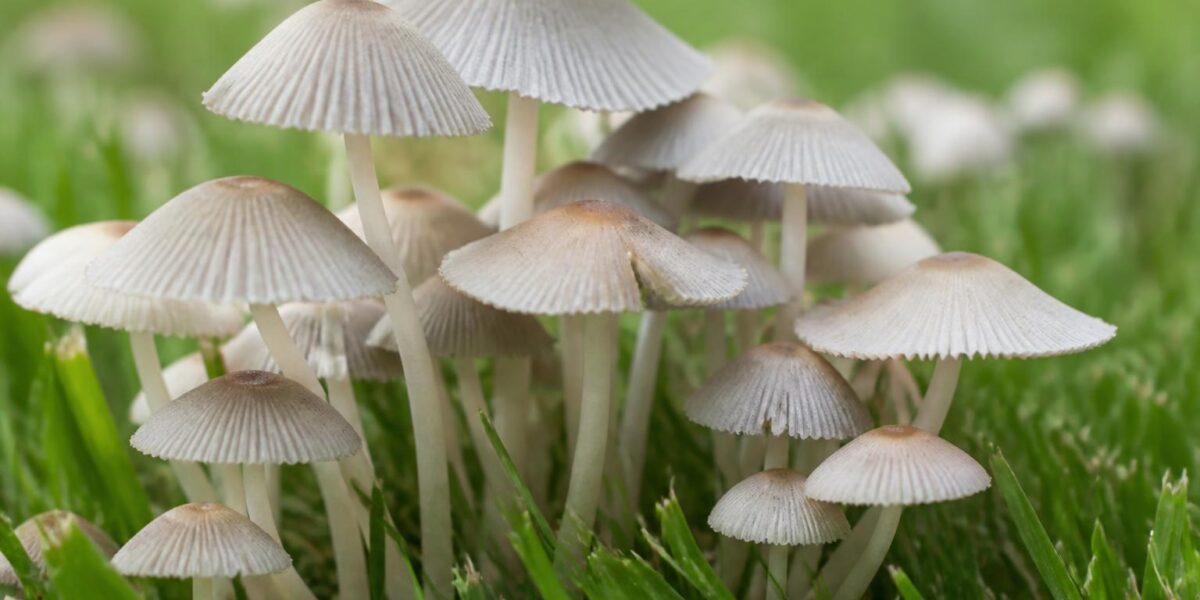
Lawn mushrooms are a mixed bag. Many of the species that pop up in suburban yards are mild irritants or non-toxic. A handful are SEVERE-tier — including amatoxin-bearing species like autumn galerina and the death cap that occasionally fruit on lawns near tree roots or in mulched beds. Field identification by laypeople is unreliable, so the practical rule for pets is the same regardless of how the mushroom looks: any backyard mushroom your dog or cat eats should be treated as a vet call until proven otherwise.
Most lawn-mushroom ingestions end with a worried car ride and a normal pet. A small fraction end with the most dangerous mushroom poisoning known to mammals. There is no reliable way to tell which is which without a mycologist or a clinical timeline. That is why we recommend treating every ingestion the same way.
If your pet ate a mushroom from your yard, contact your veterinarian, the ASPCA Animal Poison Control Center at 888-426-4435, or the Pet Poison Helpline at 855-764-7661. Bring a sample of the mushroom in a paper bag (NOT plastic).
Why Field Identification Does Not Work for Pet Owners
Mushroom identification is genuinely hard. Even seasoned foragers occasionally make fatal errors. Some specific reasons that “I’ll just look it up online” is not a viable plan when your pet has eaten one:
- Look-alikes are common. Toxic and edible species can look almost identical, especially when young. The destroying angel looks like a button mushroom before the cap opens.
- Color varies. The same species can appear in different shades depending on rain, age, and substrate.
- Photo-matching is unreliable. A photo of the cap top often misses the diagnostic features (gills, spore print, base, stem texture).
- Phone apps are not reliable. Mushroom-ID apps can be wrong, especially with toxic species that closely resemble edibles.
- The clock matters more than the answer. By the time you have a tentative ID, the decontamination window may have closed.
The right move is to bag a sample, head to the vet, and let identification happen as a side process while your pet is being evaluated. Many vet clinics have working relationships with regional mycologists or can submit photos to identification networks.
Categories of Lawn Mushrooms
Without going species-by-species, lawn mushrooms generally fall into these qualitative categories:
- Harmless or non-toxic species — many puffballs, some inkcaps, and various wood-decay fungi cause no clinical signs in pets even at moderate ingestion. We do not name them here because field ID is unreliable.
- Mild GI irritants — many small brown lawn species cause vomiting and diarrhea but are not life-threatening.
- Moderate-tier species — including some that cause cholinergic SLUDGE syndrome (Inocybe and similar), and species that contain illudins (jack-o-lanterns).
- SEVERE-tier species — including amatoxin-bearing Amanitas and Galerinas. Liver-destroying. Emergency.
- Neurotoxic species — fly agaric, panther cap, and others with ibotenic acid / muscimol.
- Hallucinogenic species — Psilocybe mushrooms can fruit on lawn pasture and animal-manure-fertilized turf.
The mix that shows up in any given yard depends on the substrate (soil, mulch, grass clippings), the trees nearby, the climate, and the season. A yard can produce harmless mushrooms one week and a dangerous flush the next.
What to Do If Your Pet Ate a Lawn Mushroom
Take these steps regardless of how the mushroom looked:
- Move your pet away from the area so they cannot eat any more.
- Photograph the mushroom or remaining cluster from multiple angles, including the base where it meets the substrate.
- Collect a sample with a stick or gloved hand. Place it in a paper bag (NOT plastic). Include a bit of the substrate (soil, mulch, wood) if possible.
- Call your vet and the ASPCA APCC (888-426-4435) or Pet Poison Helpline (855-764-7661). Both have per-incident fees but offer expert guidance for your vet.
- Do NOT induce vomiting at home unless instructed by a vet or poison control specialist. Cats should generally not be given hydrogen peroxide.
- Note the time of ingestion (estimated if you did not see it) and your pet’s weight and recent meals.
- Bring the sample with you to the clinic.
If your pet is already showing symptoms, head straight to the closest open clinic. Symptoms after a mushroom ingestion are always urgent.
Symptoms to Watch For
Because lawn mushrooms span many toxin classes, the symptom set is broad. Call your vet immediately if you see any of these after a known or suspected ingestion:
- Vomiting, especially repeated
- Diarrhea, watery or bloody
- Drooling and refusing food
- Wobbly walking or stumbling
- Tremors or twitching
- Seizures
- Excessive urination or defecation (a sign of cholinergic toxin)
- Constricted pupils
- Abdominal pain (hunched posture)
- Yellow tint to gums, eyes, or inner ears (jaundice)
- Dark urine
- Lethargy, weakness, or collapse
Some of the most dangerous mushroom toxins (amatoxins) cause NO symptoms for the first 6 hours. The absence of symptoms is not reassurance for an Amanita-type ingestion.
How Lawn Mushrooms Develop in Your Yard
Mushrooms are the fruiting bodies of underground fungal mycelium. The mycelium feeds on organic matter — decaying grass, dead roots, buried wood, mulch, leaf litter, animal waste. When weather conditions trigger fruiting (usually moisture plus moderate temperature), mushrooms appear above ground for a few days to a couple of weeks.
Common substrates that produce lawn mushroom flushes:
- Buried tree stumps or roots from old removals
- Hardwood mulch in flower beds and around shrubs
- Leaf debris piled in corners or along fence lines
- Old construction debris from previous landscaping
- Dog or wildlife waste left to decompose
- Heavily-thatched lawns where grass clippings have built up
You can change which mushrooms fruit (or whether any fruit) by changing the substrate. Removing decaying wood, raking out thatch, picking up pet waste, and using inorganic mulch in pet-accessible areas all reduce mushroom pressure substantially.
Yard Hygiene to Reduce Mushroom Pressure
Practical, ongoing steps:
- Daily yard scan during fruiting season. Walk the yard before letting pets out, especially after rain. Pull and bag any mushrooms with a glove or poop bag.
- Remove decaying wood. Old stumps, fallen branches, rotting fence posts, and buried construction debris are the substrate for many of the SEVERE-tier species.
- Replace hardwood mulch. Inorganic alternatives (gravel, river rock, rubber mulch) in dog-accessible areas eliminate the substrate for autumn galerina and similar wood-decay species.
- Pick up pet waste daily. Animal manure is the substrate for several Psilocybe and Panaeolus species.
- Aerate compacted soil and remove thatch. Healthy turf out-competes most lawn mushroom mycelium.
- Reduce shade and improve drainage in chronic mushroom hotspots — fungi favor damp, shaded ground.
None of this eliminates mushrooms entirely. The goal is to reduce frequency and to know which corners of the yard need the most attention during fruiting season.
Lawn Mushrooms vs Foraged Mushrooms vs Culinary Mushrooms
Three different categories of mushroom show up in pet households, and they have very different risk profiles:
- Lawn mushrooms (this article) — wild fungi growing in your yard. Always treat as potentially toxic.
- Foraged wild mushrooms — mushrooms a household member collected from somewhere else. Same rule: pets should not eat these.
- Commercial culinary mushrooms — button, cremini, portobello, shiitake, oyster, etc. These are species-controlled, grown indoors, and generally safe for pets in small amounts when plain-cooked. See our can dogs eat mushrooms article for moderation guidance.
The “safe” framing in the can-eat articles applies ONLY to commercially-grown culinary mushrooms in moderation. It does not extend to anything growing in your lawn or being collected from the woods.
Specific Lawn Mushrooms Worth Knowing About
Other articles in this batch cover the most-encountered toxic lawn mushrooms in more detail:
- Death cap — SEVERE-tier amatoxin, often near oak roots in lawns.
- Destroying angel — SEVERE-tier amatoxin, pure white.
- Autumn galerina — SEVERE-tier amatoxin, on hardwood mulch and stumps.
- Fly agaric — neurological toxins, near birches and conifers.
- Jack-o-lantern — severe GI illudin, on hardwood stumps.
- Inocybe — muscarine, SLUDGE syndrome.
- Psilocybin mushrooms — hallucinogenic, on lawn pasture and dung.
The umbrella articles on mushrooms and cats and mushrooms and dogs cover the broader category. For broader pet-proofing of indoor and outdoor spaces, the cat-safe houseplants list and dog-safe houseplants guide are good companions.
Training Pets to Leave Mushrooms Alone
Behavioral training is your second-line defense after substrate management. A few principles:
- Train a strong “leave it” cue. This is one of the most useful obedience cues for any pet, and it generalizes well to mushrooms, food on the sidewalk, and anything else you do not want them to eat.
- Reinforce “drop it” with high-value treats so your pet will give up an item once it is in their mouth.
- Use a basket muzzle on walks if your dog is a chronic ground-grazer. Modern basket muzzles allow panting, drinking, and treat-feeding while preventing pickup.
- Supervise puppies and kittens carefully — they are at the highest risk and the smallest body size, which means a smaller dose causes more harm.
- For cats with outdoor access, supervised harness time or a catio is the most reliable prevention.
No amount of training replaces yard hygiene. Both layers together are stronger than either alone.
Frequently Asked Questions
My dog ate a small white mushroom from the lawn. Is this an emergency?
Treat it as one. Small white mushrooms include the destroying angel and several other Amanita species among the toxic possibilities. Bag a sample (or what is left of it) in a paper bag, call your vet, and head to the clinic. The early treatment window is the highest-value window you have, even if your pet looks fine.
Will my dog get sick from every yard mushroom?
No, most lawn mushrooms are mild or non-toxic. But because the same yard can produce harmless and severe-tier species across a season, and because field ID is unreliable, treating every ingestion the same way (vet call, sample bag, observe carefully) is the only way to avoid missing the dangerous ones.
How do I get rid of mushrooms in my yard for good?
You probably will not eliminate them entirely, but you can reduce them substantially by removing the substrate (decaying wood, hardwood mulch, leaf debris, pet waste), improving drainage, and aerating compacted soil. Targeted fungicides exist but are generally not recommended in pet-accessible areas. The most reliable plan is daily inspection during fruiting season and substrate management between seasons.
Are puffballs safe for dogs?
Some species of puffball are non-toxic when fully closed and white inside, but several puffball look-alikes (including young Amanita button stages) are severely toxic. Pet owners should not be in the business of distinguishing safe from unsafe puffballs. Treat any wild mushroom ingestion as a vet call.
What if my dog eats a mushroom every walk?
Train a strong “leave it” cue, consider a basket muzzle for walks, switch to crowded sidewalks instead of grassy parks during fruiting season, and rule out underlying conditions (some pets eat unusual things due to nutritional or behavioral issues — your vet can advise on a workup). For dogs that won’t quit, the muzzle plus owner vigilance is the most reliable combination.


