
Last updated: May 16, 2026
In this article
- The Short Answer: Psilocybin Mushrooms Are Toxic to Pets
- Be Honest with Your Vet
- The Toxins: Psilocybin and Psilocin
- Symptoms After Psilocybin Ingestion
- What to Do in the First Hour
- Veterinary Treatment
- Common Accidental Ingestion Scenarios
- Wild Psilocybe vs Stash Mushrooms
- Other Wild Mushroom Risks Worth Knowing
- Prevention Strategies
- Frequently Asked Questions
The Short Answer: Psilocybin Mushrooms Are Toxic to Pets
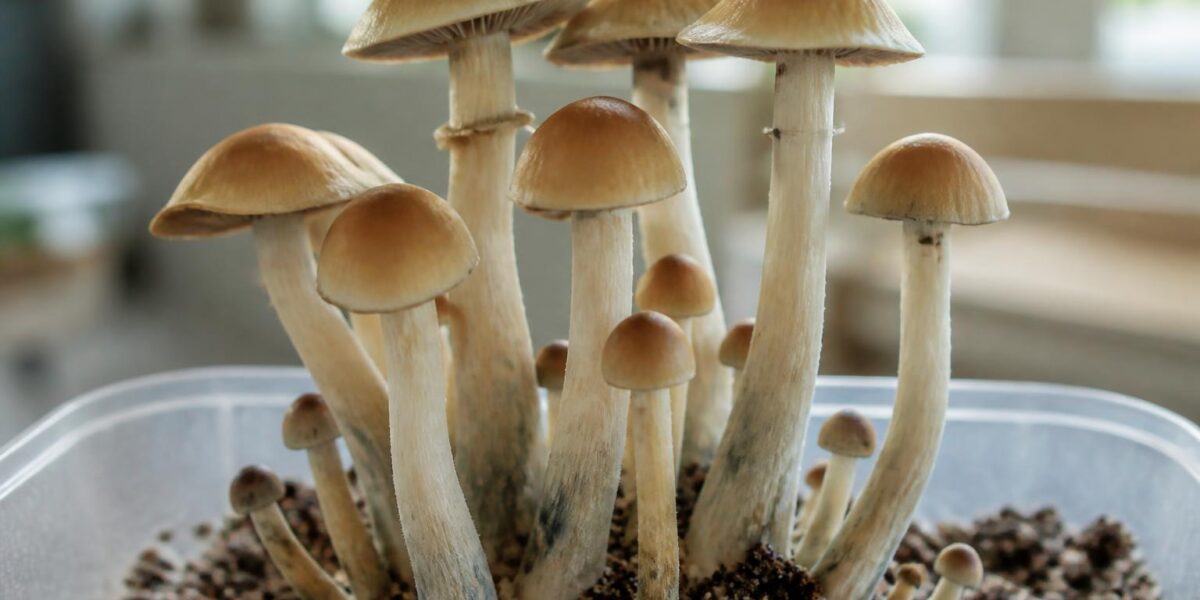
Yes, psilocybin mushrooms (Psilocybe species, often called magic mushrooms or shrooms) are toxic to dogs and cats. They contain psilocybin and psilocin, hallucinogenic compounds that affect the central nervous system. Pets who ingest them — usually accidentally from a recreational stash, a discarded baggie, or rarely from wild fruiting on lawn pasture — develop dramatic neurological symptoms including disorientation, tremors, hallucinations, and changes in heart rate and body temperature.
Most psilocybin ingestions in pets are accidental. The most common scenario is a dog finding a forgotten stash in a backpack, drawer, or coat pocket; raiding a roommate’s plastic bag; or eating dried mushrooms that fell on the floor during preparation. Wild Psilocybe species do fruit on lawn pasture and animal dung in some climates, so outdoor encounters happen too.
If you suspect any mushroom ingestion, including a recreational stash, contact your veterinarian, the ASPCA Animal Poison Control Center at 888-426-4435, or the Pet Poison Helpline at 855-764-7661. Be honest with the clinic about what your pet got into — this is a medical conversation, not a legal one, and your honesty saves time.
Be Honest with Your Vet
This is the most important thing in this entire article. Veterinarians are not law enforcement. They have a single job in this scenario: keep your pet alive. If your pet ate your stash, said your roommate’s stash, or got into something from a houseguest, tell the clinic. Doctor-patient confidentiality applies in spirit even if the legal situation around the substance is complicated where you live.
The reason this matters is that psilocybin poisoning has overlapping symptoms with several other dangerous toxin classes — including amatoxin-bearing wild mushrooms, ibotenic-acid Amanitas, certain pesticides, marijuana, antidepressants, amphetamines, and serotonin-syndrome-inducing combinations. The clinical course of psilocybin is generally manageable; some of those other substances are not. A vet who knows what your pet ate can rule out the more dangerous possibilities and provide targeted supportive care faster.
Pets do not need lectures about their owners’ choices. They need fluids, anti-anxiety medication, and a quiet dim room. Tell the clinic, and let them help.
The Toxins: Psilocybin and Psilocin
Psilocybe mushrooms contain psilocybin, which the body rapidly dephosphorylates to psilocin. Psilocin is the active compound — a partial agonist at serotonin (5-HT2A) receptors in the brain. The effect in mammals is altered sensory perception, mood changes, autonomic nervous system stimulation, and motor coordination changes.
Onset is typically 30 minutes to 1 hour after ingestion of fresh or dried mushrooms; faster with mushroom-infused chocolate, capsules, or “tea” because the dose is more concentrated and absorption is quicker. Effects last 4 to 8 hours in people, with similar duration in pets, though pets often appear distressed for the entire window because they cannot make sense of what is happening to them.
Psilocybin is heat-stable to a degree but degrades with prolonged cooking. The compounds are not destroyed by stomach acid. Cooked or raw, fresh or dried, capsule or chocolate — all forms can poison a pet.
Symptoms After Psilocybin Ingestion
The symptom picture is mostly neurological with autonomic features. Watch for:
- Disorientation, staring at nothing, or appearing to track invisible objects
- Anxiety, agitation, vocalization, or hiding
- Tremors or full muscle twitching
- Wobbly walking or stumbling
- Dilated pupils
- Elevated heart rate
- Elevated body temperature
- Vomiting
- Drooling
- Seizures in severe cases
- Sensitivity to light and sound — pets often hide or startle
- Loss of bladder or bowel control
The combination of dilated pupils, agitation, dramatic visual tracking, and a known mushroom or stash exposure is suggestive of psilocybin. But several other substances cause overlapping pictures, which is why vet evaluation matters even when you are sure of what was ingested.
What to Do in the First Hour
Take these steps:
- Move your pet to a quiet, dim, secure room where they cannot fall down stairs or escape outside.
- Secure any remaining mushrooms so they cannot be eaten by another pet, child, or the same pet again.
- Bring the packaging or remaining material to the clinic — even an empty baggie or a label from a chocolate bar gives the vet useful information.
- Call your vet and the ASPCA APCC (888-426-4435) or Pet Poison Helpline (855-764-7661). Be honest about what was ingested.
- Do NOT induce vomiting at home unless instructed. Pets that are already neurologically affected can aspirate vomit into their lungs.
- Keep your pet warm and quiet on the way to the clinic. Avoid bright lights and loud noises.
If your pet is having a seizure, has collapsed, has stopped breathing, or has a rapidly rising temperature, this is a code-red emergency — head to the closest open clinic immediately and call ahead.
Veterinary Treatment
There is no specific antidote for psilocybin. Treatment is supportive and aimed at riding out the toxic period in a controlled environment. Your vet may use:
- Decontamination — induced emesis if the ingestion was very recent and the pet is alert, followed by activated charcoal
- Intravenous fluid therapy to support kidney perfusion and replace GI losses
- Anti-anxiety medication such as a benzodiazepine to calm severe agitation
- Anti-seizure medication if seizures develop
- Anti-nausea medication for persistent vomiting
- Cooling measures if body temperature is elevated
- Cardiac monitoring for elevated heart rate or arrhythmia
- A quiet, dim recovery space — the clinic environment matters for these patients
- Continuous observation until the pet is mentating normally
Most pets recover fully within 6 to 24 hours. The rare severe cases involve very large doses, very small pets, prolonged seizures, hyperthermia, or aspiration pneumonia. Recovery is usually complete with no lasting effects.
Common Accidental Ingestion Scenarios
The vast majority of psilocybin pet ingestions fall into a few patterns:
- A dog raids a backpack or coat pocket where dried mushrooms or capsules were stored.
- A pet finds an open package on a coffee table or counter that an adult was preparing.
- Mushroom-infused chocolate or gummies are left within pet reach (chocolate is its own toxicity issue, compounding the risk).
- A pet finds dried material that fell on the floor during grinding or preparation.
- A guest’s stash is left in an accessible bag at a party or visit.
- Outdoors, a dog grazes on lawn or pasture where wild Psilocybe species are fruiting (most common in temperate coastal regions in fall).
The single best preventive measure is the same as for any household toxin: keep it out of pet reach. Locked cabinet, top shelf in a closed box, or in a bag that goes home with the visiting human at the end of the night.
Wild Psilocybe vs Stash Mushrooms
Wild Psilocybe species do fruit on certain lawns and pastures, especially in the Pacific Northwest, the Gulf Coast, parts of Europe, and other mild damp climates. They prefer animal dung, manure-fertilized turf, and sometimes wood chip mulch. The clinical course of a wild Psilocybe ingestion is similar to a stash ingestion, but with one important caveat: wild mushroom ID is unreliable, and a brown-spored small lawn mushroom might be a Psilocybe — or it might be a much more dangerous look-alike like autumn galerina, which contains the same liver-destroying amatoxin as the death cap.
For pets, the takeaway is: if you find your dog or cat eating a wild brown lawn mushroom, you cannot assume it is “just a Psilocybe” and ride it out. Bag the mushroom in a paper bag, call the vet, and let the clinic confirm.
Other Wild Mushroom Risks Worth Knowing
Several other species worth being aware of:
- Death cap — SEVERE-tier amatoxin liver toxin.
- Destroying angel — pure-white amatoxin Amanita.
- Fly agaric — neurotoxic Amanita with ibotenic acid.
- Jack-o-lantern — orange clusters with severe GI toxin.
- Lawn mushrooms — broader category overview.
- Inocybe — muscarine and SLUDGE syndrome.
The umbrella articles on mushrooms and cats and mushrooms and dogs are useful overviews. For broader pet-proofing, see the cat-safe houseplants list and dog-safe houseplants guide.
Prevention Strategies
Indoor:
- Store any psychoactive substances in locked cabinets out of pet reach. “Locked” is not “high shelf” — dogs counter-surf and cats jump.
- Treat mushroom-infused edibles as the highest risk: a chocolate bar with mushrooms combines two toxins in one product. Both can kill a small dog.
- Communicate with houseguests about pet safety. A visitor’s stash in a bag on the floor is a frequent ingestion scenario.
- Watch for spilled material during preparation. Clean up immediately and check under counters.
- If a pet shows sudden neurological signs at home and you cannot pinpoint a cause, search the house — accidental access is more common than owners realize.
Outdoor:
- Pick up pet waste from your yard daily. Manure-fertilized soil supports several Psilocybe-like species.
- Walk your yard before letting pets out, especially after rainfall in fall in temperate climates.
- Train a strong “leave it” cue.
- For cats with outdoor access, supervise time outside or use a catio.
Frequently Asked Questions
My dog ate my mushrooms. Will I get in trouble for going to the vet?
No. Veterinary clinics are not required to report personal substance use to law enforcement, and they are focused entirely on saving your pet’s life. Honesty about what your pet ingested helps the clinic give the right treatment faster. This is not a legal conversation, it is a medical one. Your dog is what matters here.
Can I just let my pet sleep it off at home?
No. Some dogs do recover at home with mild ingestions, but the variability of dose, the risk of hyperthermia or seizures, and the overlap of symptoms with more dangerous toxins make home management a poor bet. Vet care is supportive but valuable — fluids, anti-anxiety meds, and observation reduce the worst-case outcomes.
Are mushroom-infused gummies more dangerous than dried mushrooms?
Often yes. Edibles are concentrated, easier to overdose, and frequently contain other ingredients (chocolate, sugar substitutes like xylitol, THC) that compound the toxicity. A pet that eats a single mushroom gummy may have ingested several human doses simultaneously.
Will psilocybin show up on a normal vet panel?
Routine vet bloodwork does not test for psilocybin specifically. The vet relies on history, symptoms, and ruling out other causes. This is exactly why honesty about what was ingested matters — a clinic that knows what to expect can skip unnecessary diagnostics and start supportive care faster.
How long until my pet is fully recovered?
Most pets are mentating normally within 6 to 24 hours and fully recovered within 24 to 48 hours, with no lasting effects. Severe cases (seizures, hyperthermia, aspiration) take longer and may require ICU monitoring. Follow-up bloodwork is sometimes recommended to rule out delayed effects from co-ingested substances.


