
Last updated: May 4, 2026
In this article
Yes, Monkshood Is Extremely Toxic to Cats
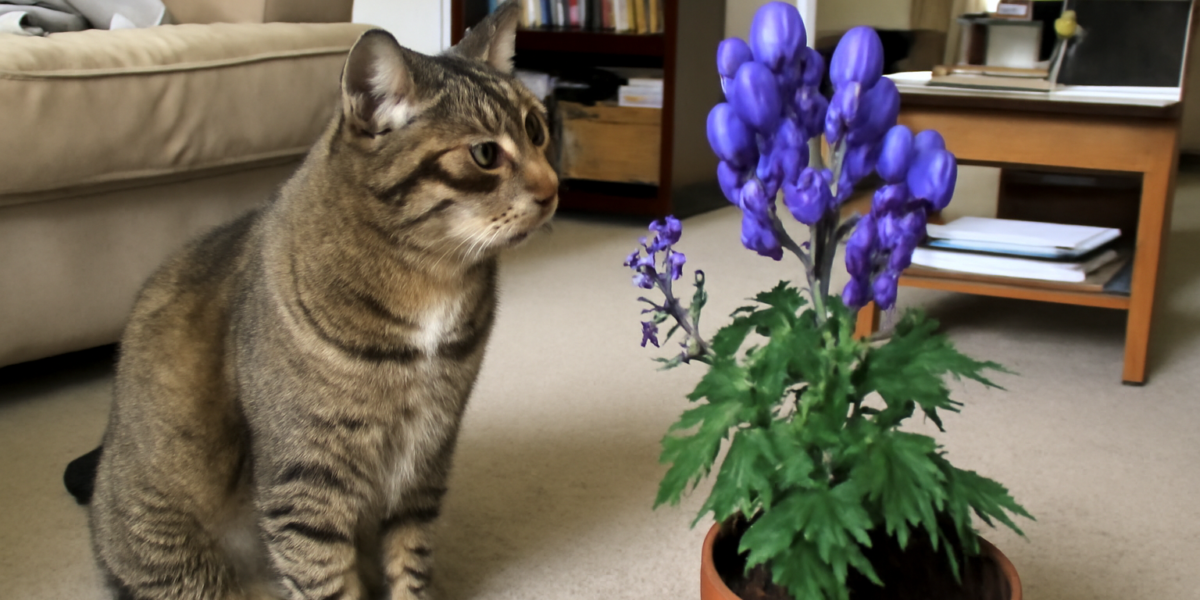
Monkshood is one of the most toxic plants a cat can encounter, and any confirmed or suspected ingestion should be treated as a life-threatening emergency. Also known as wolfsbane, aconite, or devil’s helmet, monkshood (Aconitum species) has a long and dark history in human folklore and medicine because of its extreme potency. Every part of the plant is poisonous, from the roots to the flowers, and even skin contact with cut stems or sap can cause symptoms in both people and pets.
The toxic compounds in monkshood are diterpenoid alkaloids, primarily aconitine and its relatives. These alkaloids act on sodium channels in nerve and muscle cells, causing progressive paralysis, cardiovascular collapse, and, in serious cases, death. Unlike many toxic plants where small tastes cause only mild upset, monkshood can be fatal at remarkably small doses. Cats, with their small body sizes and sensitive metabolisms, are particularly vulnerable.
Severity rating: Severe to potentially fatal. Monkshood ingestion is a life-threatening emergency. Immediate veterinary care is essential.
Why Monkshood Is So Dangerous
Aconitine alkaloids are among the most potent plant toxins in temperate climates. They work by keeping sodium channels in nerve cells permanently open, which causes continuous stimulation followed by complete failure of signaling. The result is a cascade of effects:
- Neurological: Tingling, burning sensations, weakness, paralysis, and loss of consciousness
- Cardiac: Arrhythmias, low blood pressure, and ultimately cardiac arrest
- Respiratory: Weakness of breathing muscles leading to respiratory failure
- Gastrointestinal: Severe vomiting and diarrhea from direct irritation
The entire plant is dangerous, but toxin concentrations are highest in:
- Roots (most toxic)
- Seeds and young shoots
- Leaves and stems
- Flowers
Even the nectar has been reported to cause symptoms in pollinators. For cats, who groom themselves obsessively, brushing against a monkshood plant and then licking their fur can be enough to cause illness.
Clinical Symptoms of Monkshood Poisoning
Symptoms often begin within 10 to 30 minutes of ingestion and progress rapidly. Early signs include:
- Excessive drooling
- Vomiting
- Diarrhea
- Tingling or numbness (cats may paw at mouth or face)
- Weakness
- Wobbly gait
- Abdominal pain
Severe symptoms follow quickly and indicate life-threatening toxicity:
- Muscle weakness progressing to paralysis
- Collapse
- Slow, irregular, or racing heart rate
- Low blood pressure
- Difficulty breathing or shallow breathing
- Dilated pupils
- Convulsions
- Cardiac arrest
- Respiratory failure
Death can occur within a few hours of ingestion in untreated cases. This is not a plant where you can wait and see how your cat responds. If there is any chance of exposure, treat it as an emergency.
What to Do If Your Cat Ate Monkshood
Act immediately. Every minute matters:
- Remove any remaining plant material from your cat’s mouth, fur, and paws. Wear gloves to protect yourself, as aconitine can be absorbed through skin.
- Rinse your cat’s mouth gently with water if possible.
- Take a photo of the plant to confirm identification and bring a sample if you can do so safely.
- Call your veterinarian or nearest emergency animal hospital immediately. Tell them it is a suspected monkshood ingestion and you are on the way.
- Call the ASPCA Animal Poison Control Center at 888-426-4435 or the Pet Poison Helpline at 855-764-7661 while en route.
- Do not induce vomiting at home. With a cardiac toxin this potent, home remedies can cause fatal instability.
- Keep your cat still, warm, and calm during transport. Carry rather than walk them if possible.
Do not stop to research or consult online information. Call the vet first and get moving. Survival depends on how fast treatment begins.
Veterinary Treatment for Monkshood Toxicity
There is no specific antidote for aconitine poisoning. Treatment focuses on decontamination, aggressive stabilization, and supportive care:
- Induced vomiting under veterinary supervision if ingestion was very recent and the cat is still stable
- Gastric lavage (stomach pumping) in recent severe ingestions
- Activated charcoal repeated doses to bind remaining toxins
- IV fluids to support circulation and promote toxin clearance
- Continuous cardiac monitoring with ECG
- Antiarrhythmic medications as needed
- Oxygen therapy or mechanical ventilation for respiratory support
- Anti-seizure medications for neurological symptoms
- Vasopressors to support blood pressure
- Intensive care hospitalization for monitoring over 24 to 72 hours
Even with aggressive care, monkshood poisoning carries a guarded prognosis. The sooner treatment begins, the better the outcome. Cats that survive the first 24 hours with supportive care generally recover without lasting damage.
Preventing Monkshood Exposure
The only safe approach is to keep monkshood completely out of any space your cat can access. Specifically:
- Do not plant monkshood in any garden where cats roam
- If you already have monkshood, remove it while wearing gloves and long sleeves, and dispose of all plant material sealed in trash bags
- Replace with safer alternatives such as snapdragons, catmint (safe and cat-loved in moderation), or hardy geraniums
- Never bring monkshood into the house in cut flower arrangements
- Check bouquet ingredients before accepting or purchasing floral arrangements
- Watch for wild-growing monkshood, which can appear in woodland areas
- Clean gardening tools that have touched monkshood before handling your cat
Monkshood belongs to the same deadly plant family as larkspur, delphinium, and several other garden ornamentals. Our guides on delphinium and cats, larkspur and dogs, and hellebore and dogs cover other plants in this dangerous group.
Emergency Warning Signs
Seek emergency veterinary care immediately if your cat:
- Was seen eating, chewing, or sitting on monkshood
- Is drooling excessively after outdoor access
- Is vomiting or has diarrhea after garden time
- Is weak, wobbly, or cannot stand
- Is breathing irregularly or having trouble breathing
- Has a slow, weak, or racing heartbeat
- Is collapsed or unresponsive
- Has pawed at their mouth or face unusually
The ASPCA Animal Poison Control Center (888-426-4435) and Pet Poison Helpline (855-764-7661) are available 24/7 and can coordinate with your veterinarian in real time. Given the speed at which monkshood can kill, having these numbers saved in your phone before you need them is genuinely important. If you find monkshood in your yard, handle its removal today.
Frequently Asked Questions
How much monkshood is fatal to a cat?
Remarkably small amounts can be fatal. A single leaf or a few flowers may contain enough aconitine to kill a small cat. There is no safe dose, and any exposure is a medical emergency.
Can my cat be poisoned just by touching monkshood?
Yes, in some cases. Aconitine can be absorbed through skin, and cats who brush against the plant and then groom themselves can ingest enough to cause symptoms. Always wear gloves when handling monkshood.
Is monkshood the same as wolfsbane?
Yes. Monkshood, wolfsbane, aconite, devil’s helmet, and blue rocket are all common names for plants in the Aconitum genus. They are all equally toxic.
Are other plants in the buttercup family similarly dangerous?
Several are toxic, though monkshood is generally the most dangerous. Delphinium, larkspur, hellebore, and columbine all contain toxic compounds, but aconitine in monkshood is in a class of its own for potency.
What should I do with monkshood plants I already have in my garden?
Remove them as soon as possible while wearing gloves and long sleeves. Seal all plant material in trash bags and dispose of it in the trash, not the compost. Wash tools, clothes, and hands thoroughly afterward. Replace with cat-safe plants. For more dangerous plants, see our guide on narcissus and cats.


