
Last updated: May 4, 2026
In this article
Yes, Delphinium Is Highly Toxic to Cats
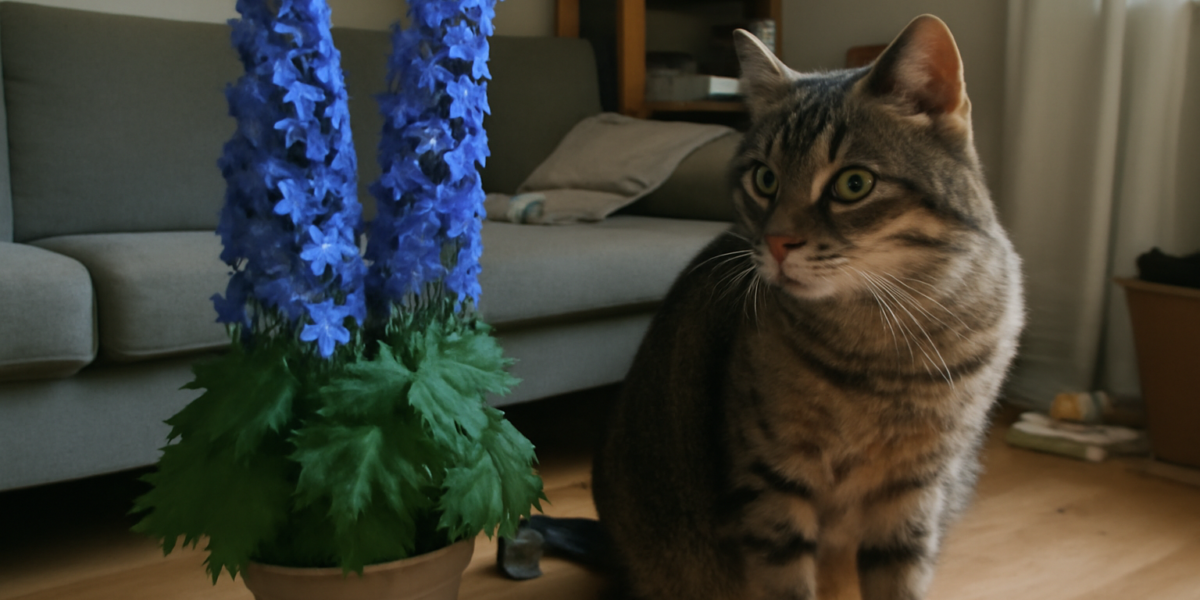
Delphinium is highly toxic to cats, and all parts of the plant pose a serious risk if ingested. These tall, elegant perennials with their towering spikes of blue, purple, white, or pink flowers are garden favorites, but they contain the same family of diterpenoid alkaloids found in larkspur and monkshood. Even small amounts can cause severe neurological and cardiovascular symptoms in cats, and fatalities have been documented in both pets and livestock.
Delphiniums (Delphinium species) and larkspurs (Consolida species) are so closely related that they share toxicity profiles and are often discussed together. For cat owners, the key takeaway is simple: if the flower looks like a tall spike of blue, purple, or white blooms with spurred petals, treat it as dangerous and keep your cat far away from it. Fortunately, most cats do not find delphinium particularly palatable, but curious kittens, bored indoor cats with access to fresh-cut arrangements, and outdoor cats browsing garden beds are all at risk.
Severity rating: Severe. Delphinium ingestion is a veterinary emergency. Immediate treatment is essential to prevent life-threatening cardiovascular and neurological effects.
How Delphinium Harms Cats
The toxic compounds in delphinium are diterpenoid alkaloids, including methyllycaconitine, delphinine, and elatine. These compounds block nicotinic acetylcholine receptors at neuromuscular junctions, interfering with the signals between nerves and muscles. The result is muscle weakness that can progress to paralysis, along with disruption of the nerves controlling the heart and respiratory muscles.
Cats are especially vulnerable because of their small body size and the efficiency with which these alkaloids are absorbed. Toxicity is highest in:
- Young plants and new growth in early spring
- Seeds, which contain concentrated alkaloids
- Leaves and stems throughout the growing season
- Flowers, though slightly less concentrated than other parts
There is no safe part of the plant, and dried delphinium used in craft arrangements or pressed flower projects remains toxic. The alkaloids are stable and do not break down significantly with drying or time.
Clinical Symptoms of Delphinium Poisoning
Symptoms often appear within hours of ingestion and can progress rapidly. Early signs include:
- Drooling
- Vomiting
- Diarrhea
- Loss of appetite
- Lethargy
- Abdominal discomfort
- Weakness
- Stiffness or wobbly gait
More severe symptoms indicate systemic toxicity and require immediate emergency care:
- Muscle tremors and twitching
- Inability to stand or walk
- Collapse
- Slow, weak, or irregular heartbeat
- Low blood pressure
- Difficulty breathing or shallow breathing
- Dilated pupils
- Seizures
- Respiratory or cardiac arrest
Do not assume that mild early symptoms will stay mild. Cats can deteriorate rapidly, and by the time advanced symptoms appear, treatment options become limited.
What to Do If Your Cat Ate Delphinium
Treat this as a medical emergency and act immediately:
- Remove any remaining plant material from your cat’s mouth and the area around them.
- Collect a sample of the plant, including leaves, flowers, and stems if possible, or take clear photos.
- Call your veterinarian or nearest emergency animal clinic immediately.
- Call the ASPCA Animal Poison Control Center at 888-426-4435 or Pet Poison Helpline at 855-764-7661 while you prepare to transport.
- Do not induce vomiting at home. Home remedies can make cardiac toxin cases worse.
- Keep your cat calm and warm during transport.
- Do not wait to see if symptoms develop. Early intervention saves lives.
Bring the plant or photo with you to the vet. Correct identification helps the veterinary team choose appropriate monitoring and treatment.
Veterinary Treatment for Delphinium Toxicity
There is no specific antidote for delphinium alkaloids. Treatment focuses on decontamination, stabilization, and supportive care:
- Induced vomiting under veterinary supervision if ingestion was very recent
- Activated charcoal to bind remaining toxins in the gut
- IV fluids to support circulation and help flush toxins
- Cardiac monitoring with ECG to detect and respond to arrhythmias
- Medications to stabilize heart rate and blood pressure
- Oxygen therapy or mechanical ventilation for respiratory distress
- Anti-seizure medication if neurological symptoms develop
- Gastric protectants and anti-nausea medication
- Hospitalization in an intensive care setting for 24 to 72 hours
Recovery depends on how much your cat ingested, how quickly treatment began, and the cat’s overall health. Cats treated within a few hours of ingestion have the best outcomes. Those with advanced symptoms face a more guarded prognosis.
Preventing Delphinium Exposure
The safest approach is to avoid delphinium entirely if you have cats. If you already grow it or have arrangements containing it, take these precautions:
- Remove delphinium from any yard area accessible to your cat
- Replace with cat-safe alternatives like snapdragons, African violets, or roses (thornless varieties)
- Never bring fresh or dried delphinium into your home
- Check bouquets and floral arrangements for delphinium or larkspur before bringing them indoors
- Pull seedlings in spring before they mature, and watch for volunteer plants from dropped seeds
- Dispose of trimmings directly in sealed outdoor trash
Delphinium is part of a dangerous family of garden plants. Our guides on larkspur and dogs, monkshood and cats, and columbine and dogs cover other buttercup family toxins you should recognize.
Emergency Warning Signs
Do not delay veterinary care if your cat:
- Ate any amount of delphinium, confirmed or suspected
- Is drooling, vomiting, or refusing food after garden access
- Is weak, wobbly, or cannot stand normally
- Has tremors, twitching, or seizures
- Is breathing abnormally
- Has a slow, weak, or irregular pulse
- Is collapsed or unresponsive
Time is critical with delphinium exposure. The ASPCA Animal Poison Control Center (888-426-4435) and Pet Poison Helpline (855-764-7661) are available 24/7 and can provide expert guidance while you transport your cat. Both services charge a consultation fee but can be lifesaving. Save these numbers in your phone now so you do not have to search for them in a crisis.
Frequently Asked Questions
How much delphinium is toxic to a cat?
Even small amounts can cause serious symptoms because of a cat’s small body size and sensitivity to alkaloids. There is no known safe dose, and any ingestion is a reason to call the vet immediately.
Is delphinium the same as larkspur?
They are closely related but technically different genera. Delphinium refers to perennial species, larkspur to annuals, but both contain the same class of toxic alkaloids and pose similar dangers to cats.
Are dried delphinium flowers still dangerous?
Yes. The toxic alkaloids remain active after drying, so dried delphinium used in craft projects, pressed flower art, or dried bouquets is still hazardous to cats.
Can drinking vase water with delphinium harm my cat?
Vase water may contain leached alkaloids, though direct plant ingestion is the bigger risk. If your cat drank from a vase holding delphinium, call the vet to be safe.
What are some cat-safe alternatives to delphinium in gardens?
For vertical interest, consider snapdragons, hollyhocks (non-toxic), or ornamental grasses. For blue and purple color, African violets, lavender (in moderation), and phlox are generally safer. Always double-check any new plant with the ASPCA’s toxic plant database. For more safety info, see our guide on bleeding heart and dogs.


