
Last updated: June 2, 2026
In this article
- Quick Answer: Mulberry Bushes Are Safe for Cats and Dogs (When the Fruit Is Ripe)
- What Are Mulberry Bushes?
- ASPCA Position and Toxicity Profile
- Ripe vs. Unripe Mulberry: Why It Matters
- How Pets Typically Interact with Mulberry Bushes
- Mulberries the Fruit vs. Mulberry Bushes the Plant
- The Fallen-Fruit and Stained-Yard Problem
- Symptoms to Watch For
- If Your Pet Eats Mulberry Plant Parts or Fruit
- Pruning and Yard Management
- Pet-Safe Mulberry Setup
- When to Call the Vet
- Frequently Asked Questions
Quick Answer: Mulberry Bushes Are Safe for Cats and Dogs (When the Fruit Is Ripe)
If you grow mulberry as a multi-stemmed bush form or have a Morus shrub in the backyard, the headline is reassuring: mulberry (Morus alba, Morus rubra, Morus nigra) is not listed as toxic to cats or dogs by the ASPCA Animal Poison Control Center. The leaves, woody stems, and fully ripe fruit are all considered non-toxic. A dog that grazed under the bush during peak harvest or a cat that batted at low foliage is not in a poisoning emergency.
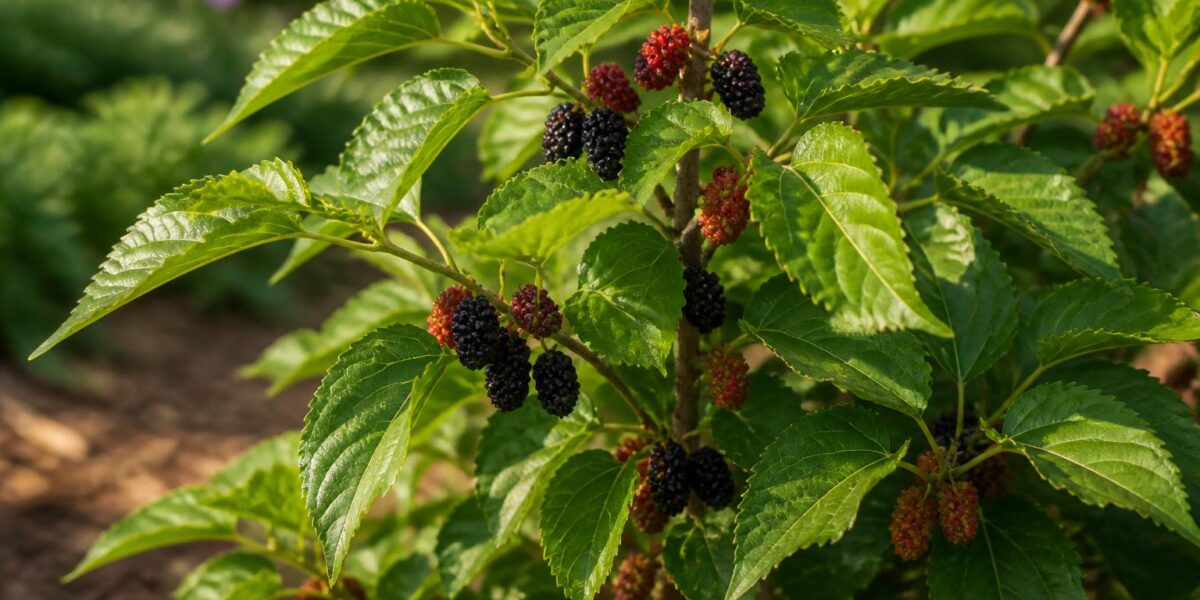
The caveat worth knowing: unripe (green-to-pink, not yet fully colored) mulberries contain higher levels of natural compounds that can cause stomach upset and a transient mildly hallucinogenic effect in some animals. The ripe black, red, or white fruit is the safe form. Mulberry sits in the same general non-toxic-fruit-tree-or-shrub category as blueberry plants, raspberry plants, and serviceberry.
What Are Mulberry Bushes?
Mulberries belong to the genus Morus (family Moraceae) and grow naturally as small to medium trees, but they are also cultivated and pruned as multi-stemmed bushes or hedge forms — particularly the white mulberry (Morus alba) and its weeping ornamental cultivars. The three species commonly seen in gardens are:
- White mulberry (Morus alba) — Asian origin, naturalized widely; fruit ripens white-to-pink-to-light-purple.
- Red mulberry (Morus rubra) — North American native; fruit ripens through red to deep purple.
- Black mulberry (Morus nigra) — Mediterranean/West Asian; fruit ripens to dark purple-black, generally considered the highest-flavor of the three.
The leaves are alternate, often variable on the same plant (some lobed, some entire) — silkworms feed exclusively on white mulberry leaves, which is why the species spread globally. The fruit is technically a multiple of small drupelets fused on a fleshy axis; it pulls cleanly off the stem when fully ripe.
ASPCA Position and Toxicity Profile
The ASPCA does not list any Morus species on its toxic plants list for dogs, cats, or horses. This article is a sibling to the existing mulberry trees safe for pets umbrella, which covers the same plant in tree form. The chemistry is identical between bush-pruned and tree-grown specimens — what changes is canopy access and harvest cleanup.
The unripe-fruit caveat deserves attention. Green mulberries contain higher concentrations of natural latex (from the milky sap that all Moraceae produce) and other compounds that have historically been described as causing GI upset and “hallucinogenic” or stimulant effects in some animals. The reports are old and not well quantified, but the practical conclusion is solid: the ripe fruit is safe; the unripe fruit can cause mild GI upset and is best avoided.
Ripe vs. Unripe Mulberry: Why It Matters
Mulberry trees and bushes ripen unevenly. A single branch can carry green, pink, and fully ripe fruit at the same time, and the fruit ripens steadily over a four- to six-week harvest window. A dog grazing fallen fruit underneath the canopy is most likely eating ripe fallen berries (those fall first), but a dog that strips a branch or a cat that bats at a hanging cluster can ingest unripe fruit along with the ripe.
The realistic outcome of unripe mulberry ingestion is mild to moderate GI upset: vomiting, diarrhea, possibly drooling. In larger quantities, some animals show mild restlessness or apparent disorientation, attributed historically to compounds in the green fruit and milky sap. These effects are typically self-limiting within 12 to 24 hours.
The leaves are non-toxic per ASPCA, but they too contain milky latex sap when broken. Large volumes of leaf chewed can also cause GI upset for the same reason — fiber and latex load, not a specific toxin.
How Pets Typically Interact with Mulberry Bushes
Mulberry is one of the more pet-attractive garden plants during fruit season because the berries are sweet, abundant, and fall in significant quantity. Many dogs become enthusiastic mulberry grazers during the harvest weeks. Cats are generally less interested but may use the canopy as a shaded nap area.
Common interactions:
- Dogs grazing fallen ripe berries from the soil during harvest — usually fine.
- Dogs eating mixed ripe-and-unripe berries from low branches — possible mild GI upset.
- Pets walking through fallen fruit and tracking purple stains into the house (annoying but harmless).
- Birds eating berries and dropping fragments that pets graze.
The mulberry-purple paw print on the carpet is iconic. Plant the bush far from light-colored hardscape if you can.
Mulberries the Fruit vs. Mulberry Bushes the Plant
This article is about the bush as a whole — the woody plant, leaves, branches, and surrounding garden. The food side of “can my pet eat ripe mulberries” is covered separately. Ripe mulberries are moderate-OK for cats per can cats eat mulberry; for dogs the same general moderate-OK guidance applies. The umbrella plant pillar for the genus is are mulberry trees safe for pets; this bushes-specific article focuses on the shrub form for owners who searched “are mulberry bushes safe.”
If you grow mulberry alongside other safe fruit shrubs, see also the blackberry plants and raspberry plants articles for a broader pet-friendly-orchard view.
The Fallen-Fruit and Stained-Yard Problem
The single most consistent issue with mulberry around pets is the volume of fallen fruit during harvest. A mature mulberry can drop pounds of fruit per day for several weeks. The fallen fruit ferments quickly in warm weather and develops mold and yeast.
The risks of fermenting fallen fruit:
- Ethanol — fermenting fruit produces low levels of alcohol; a dog that grazes a lot of fermented fruit can show mild intoxication signs (wobbly gait, lethargy).
- Mold — wet decomposing fruit grows molds that can produce tremorgenic mycotoxins, a known cause of canine emergency visits during fruit-fall season.
- GI overload — sheer volume of fiber and sugar.
The mitigation is simple: rake or pick up fallen fruit at least every few days during harvest, and do not let dogs graze under the canopy if you cannot keep up with cleanup.
Symptoms to Watch For
True poisoning is not expected from ripe mulberry. The signs that warrant attention are:
- Persistent vomiting or diarrhea after a known fruit binge — usually from too much ripe fruit or some unripe fruit mixed in.
- Wobbly gait, mild disorientation, or lethargy — possible fermented-fruit ethanol or mycotoxin exposure.
- Tremors, agitation, or fever — possible tremorgenic mycotoxin from moldy fallen fruit; this is an emergency.
- Drooling or pawing at the mouth after a known leaf-chewing event — usually transient.
- Black tarry stool that is clearly not just mulberry pigment — call your vet.
Mulberry juice stains stool a deep purple-red. As with other dark berries, this is pigment, not blood. The distinction: pigment-stained stool is normally formed and the staining clears in a day or two. Melena is sticky and persistent.
If Your Pet Eats Mulberry Plant Parts or Fruit
For ingestion of ripe fallen berries or a small amount of leaf, no special action is needed. Watch for GI symptoms over the next 12 to 24 hours.
For a large binge of fresh fruit (especially with significant unripe content), withhold the next meal, offer fresh water, and observe. Most dogs return to normal within a day. Call your veterinarian if vomiting persists, the dog seems lethargic, or you notice any neurologic signs (tremors, agitation, wobbly gait).
For suspected moldy-fruit ingestion (fallen fruit that has been on the ground for days), treat the call as more urgent. Tremorgenic mycotoxin exposure can progress from mild restlessness to severe tremors and seizures. Call your veterinarian, the ASPCA APCC at 888-426-4435, or the Pet Poison Helpline at 855-764-7661 — all available 24/7 with a consultation fee.
Pruning and Yard Management
Mulberry pruned as a bush requires more frequent shaping than a typical shrub because the species naturally wants to grow into a tree. Annual late-winter pruning to maintain bush form is standard. The pruning debris is sap-rich for a few hours after cutting (the milky latex flows freely from fresh cuts) and then dries to a non-toxic, mildly splinter-prone wood. Bag and remove debris promptly.
If you prefer a fruitless cultivar, several male/fruitless mulberry cultivars exist (often sold for shade-tree use). These eliminate the fallen-fruit cleanup problem entirely while keeping the same non-toxic foliage profile.
Pet-Safe Mulberry Setup
A few practical choices make a mulberry bush easier to live with:
- Plant in a corner of the yard rather than over a pet path or near a kennel run.
- Mulch heavily under the canopy with a coarse material to make fallen-fruit cleanup easier.
- Rake or sweep fallen fruit at least every few days during harvest weeks.
- Restrict dog access to the canopy area during peak harvest if cleanup cannot keep pace.
- Consider a fruitless male cultivar if your dog is a notorious yard-grazer.
- Bag pruning debris and remove it from the yard the same day you cut.
When to Call the Vet
For mulberry-related concerns, contact your regular veterinarian if you notice persistent vomiting or diarrhea, neurologic signs (tremors, wobbly gait, agitation), or any signs of fermented-fruit or moldy-fruit ingestion. After hours, the ASPCA Animal Poison Control Center is at 888-426-4435 and the Pet Poison Helpline is at 855-764-7661 — both 24/7 with a consultation fee.
For pure ingestion of ripe fresh mulberries with no symptoms, watchful waiting is appropriate. The plant is non-toxic; the issue most pet owners actually face is volume management and fermentation cleanup, not poisoning.
Frequently Asked Questions
Are unripe mulberries actually dangerous to dogs?
“Dangerous” overstates it. Unripe mulberries can cause GI upset (vomiting, diarrhea) and historically have been described as causing mild stimulant or hallucinogenic effects in animals, but the ripe fruit is unambiguously non-toxic. Most dogs that get into mixed ripe-and-unripe fruit have a brief upset and recover within a day. Call your vet if symptoms persist or are severe.
Can cats eat mulberries?
Cats are obligate carnivores and do not need fruit. Ripe mulberry is non-toxic — see can cats eat mulberry for serving notes. Most cats are not interested.
My dog has eaten fallen mulberries from under the tree — should I be worried about fermentation?
Maybe, depending on how long the fruit has been on the ground. Ripe-and-fresh-fallen is fine. Wet, moldy, days-old fruit is a real concern (tremorgenic mycotoxins). If your dog seems wobbly, agitated, or has tremors, call your vet immediately.
Are mulberry leaves safe for cats and dogs?
Yes per ASPCA. Mulberry leaves are not on the toxic plants list. Large volumes can cause GI upset from fiber load and the milky latex sap, but a small chew is not a poisoning concern.
Are paper mulberry, false mulberry, or other “mulberry” common-name plants safe?
Be careful with common names. Paper mulberry (Broussonetia papyrifera) is a Moraceae relative and is not specifically listed as toxic per ASPCA, but it is not the same plant as Morus. If you cannot positively identify a “mulberry” plant in your yard, do not assume the safety profile transfers. Confirm botanical identification before allowing pet access, and call ASPCA APCC at 888-426-4435 if a misidentified ingestion happens.


