
Last updated: May 16, 2026
In this article
- Are Spider Lilies Toxic to Dogs? The Short Answer
- What Spider Lilies Are
- Why Spider Lilies Are Dangerous
- Symptoms in Dogs After Spider Lily Ingestion
- First Aid: What to Do at Home
- Veterinary Treatment for Dogs
- Spider Lilies in Multi-Pet Homes
- Spider Lilies Compared to Other “Lilies”
- Preventing Spider Lily Accidents
- The Amaryllidaceae Family: Why So Many Bulbs Are Hazardous
- Sibling Lily Articles for Dog Owners
- Frequently Asked Questions
Are Spider Lilies Toxic to Dogs? The Short Answer
Spider lilies are toxic to dogs. Unlike true lilies (Lilium), which cause only mild GI upset in dogs, spider lilies contain the alkaloid lycorine and related compounds that produce significant vomiting, drooling, diarrhea, abdominal pain, and — in larger ingestions — tremors, low blood pressure, and possible cardiac effects. The bulb is the most concentrated and dangerous part. A dog that swallows a bulb or a substantial mouthful of leaves needs prompt veterinary evaluation. Spider lilies are also toxic to cats, so this is one of the rare “lily” categories where both species face serious risk.
“Spider lily” is a common name applied to two distinct genera that both shed the dangerous alkaloid: Hymenocallis (true spider lily, with long ribbon-like petal extensions giving the spidery look) and Lycoris (red spider lily, surprise lily, hurricane lily). Both belong to the Amaryllidaceae family, the same family as daffodils and amaryllis, and they share a similar toxicity profile. If you grow either or both in your yard, treat them as severe-tier hazards on par with daffodil bulbs.
What Spider Lilies Are
Hymenocallis species are tropical and subtropical bulbs, often grown for their fragrant white flowers with long thread-like petal segments connected by a central cup. Common cultivated species include Hymenocallis caribaea (Caribbean spider lily) and Hymenocallis littoralis (beach spider lily). They are popular in southern US gardens and tropical landscaping.
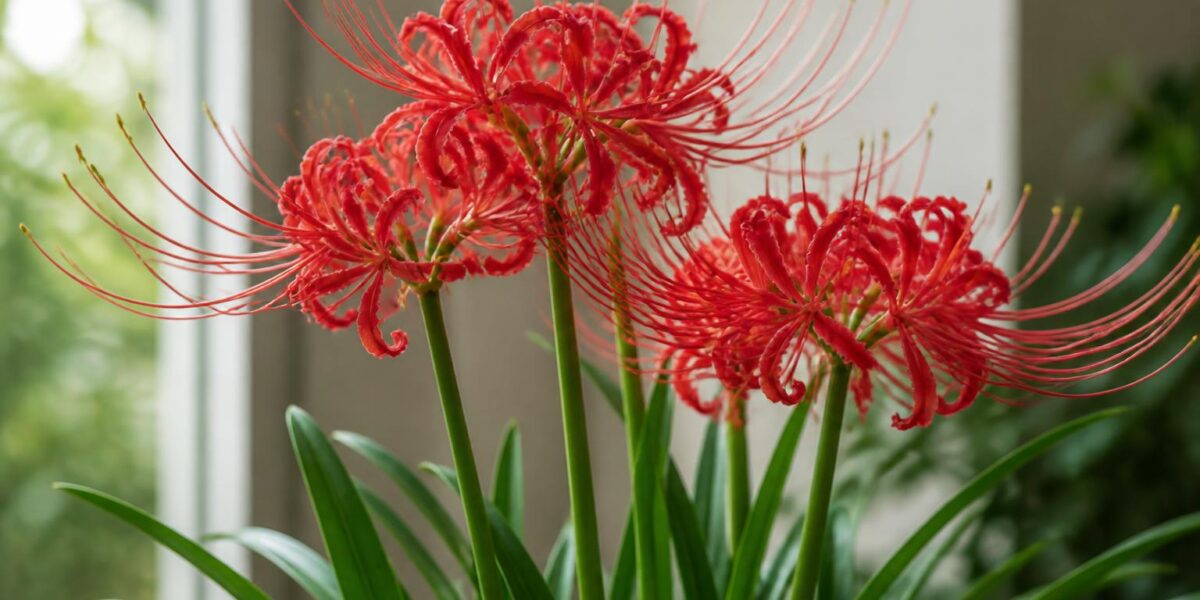
Lycoris species are deciduous bulbs known for sending up bare flower scapes after a summer rain — hence the name “surprise lily” or “hurricane lily.” Lycoris radiata, the red spider lily, is the most familiar — vivid red flowers with curling stamens that bloom in late summer and fall. Lycoris squamigera, the magic lily, has pink flowers. All Lycoris and Hymenocallis species contain lycorine and related Amaryllidaceae alkaloids, which is the source of their toxicity. Neither is in the Lilium genus, so the cat-specific renal-failure mechanism that defines true-lily toxicology does not apply here.
Why Spider Lilies Are Dangerous
Lycorine is an alkaloid found throughout the Amaryllidaceae family — daffodils, amaryllis, snowdrops, and spider lilies all contain it. The compound triggers vomiting reliably and at low doses, which is the body’s defense response to a chemical it identifies as harmful. At higher exposures, lycorine and related alkaloids can cause hypotension, cardiac arrhythmias, and central nervous system effects including tremors and seizures. The bulbs concentrate the alkaloid more than leaves or flowers, which is why bulb ingestion is the most dangerous scenario.
The ASPCA Animal Poison Control Center lists Lycoris radiata as toxic to both dogs and cats, with symptoms including vomiting, diarrhea, abdominal pain, hypersalivation, anorexia, tremors, and possible cardiac changes. Hymenocallis species share the alkaloid profile and toxic potential. Treat both as a severe-tier exposure when significant amounts are ingested, especially bulbs.
Symptoms in Dogs After Spider Lily Ingestion
Signs typically appear within one to four hours of ingestion — sometimes faster after a large bulb meal. Watch for forceful vomiting (often the earliest sign), drooling, lip-smacking, diarrhea (sometimes bloody), abdominal pain (a hunched posture or reluctance to lie down), reduced appetite, lethargy, and in larger exposures, tremors, weakness, low blood pressure, and possible cardiac changes. Dogs that ate the bulb may produce vomit containing visible plant fragments.
Severe presentations need urgent veterinary care. Profuse or persistent vomiting beyond two or three episodes, blood in vomit or stool, profound lethargy, tremors, collapse, irregular heartbeat, or any change in mental status warrants emergency evaluation. Small dogs, puppies, geriatric dogs, and dogs with pre-existing cardiac or kidney disease are at higher risk for serious outcomes from any given dose. Do not adopt a wait-and-see approach with spider lily bulb ingestion.
First Aid: What to Do at Home
Move the dog away from the plant and remove any remaining material from the mouth. Wipe the muzzle and paws with a damp cloth. Note the time of exposure, the parts eaten (especially whether bulbs were involved), and the approximate quantity. If you can, photograph the plant or save a leaf and a piece of the bulb for vet identification. Do not offer food.
Call your veterinarian or one of the 24/7 poison-control hotlines: ASPCA Animal Poison Control at 888-426-4435 or the Pet Poison Helpline at 855-764-7661. Both charge a consultation fee but provide species-specific guidance from a veterinary toxicologist. For spider lily ingestion, expect them to recommend a vet visit rather than home monitoring, especially if the dog ate a bulb. Do not induce vomiting at home unless your veterinarian directs you to. Hydrogen peroxide can cause aspiration pneumonia or hemorrhagic gastritis, complicating an already difficult situation.
Veterinary Treatment for Dogs
Spider lily exposure is treated more aggressively than true-lily exposure in dogs. Your vet may induce vomiting with apomorphine (a controlled, safer emetic than hydrogen peroxide) if ingestion was recent and the dog is not already vomiting. Activated charcoal binds residual alkaloid in the gut. IV fluids restore hydration, support blood pressure, and help flush the alkaloid through renal clearance. Anti-nausea medication such as maropitant controls protracted vomiting.
For dogs showing cardiac signs or tremors, the vet will run an ECG, draw a baseline chemistry panel, monitor blood pressure, and provide cardiac medications as needed. Most dogs that get prompt care recover fully within 24 to 48 hours. Delays in treatment, large bulb ingestions, and pre-existing illness all worsen the prognosis. The treatment course may include overnight hospitalization with IV fluid therapy and continuous monitoring.
Spider Lilies in Multi-Pet Homes
Spider lilies are toxic to cats too — and through the same alkaloid mechanism, not the cat-specific renal-failure pathway that defines true lilies. Cats face vomiting, diarrhea, hypersalivation, lethargy, and possible cardiac and neurologic effects from lycorine. Read the spider lilies and cats guide for the full feline emergency protocol. If your cat had any access to the same plant, treat the situation as a dual-species emergency.
For context on related Amaryllidaceae plants and other “lily” categories with very different mechanisms, see the true lilies and cats umbrella, the dog-side lily umbrella, and the severe-tier neighbour glory lilies (Gloriosa superba), which is genuinely life-threatening for both species through colchicine.
Spider Lilies Compared to Other “Lilies”
Spider lily is not a true lily — it is in the Amaryllidaceae family, alongside daffodils, amaryllis, and snowdrops. The toxic mechanism (lycorine alkaloid) is different from true lilies (Lilium and Hemerocallis), peace lilies (Spathiphyllum, calcium oxalate), calla lilies (Zantedeschia, calcium oxalate), and water lilies (Nymphaea, presumed safe). The most clinically relevant difference is that spider lilies are seriously toxic to dogs, whereas true lilies typically cause only mild canine GI upset.
For comparison guides, see the sibling B122 article on water lilies and dogs and the look-alike clarifiers peace lily and dogs, calla lily and dogs, and canna lily and dogs. Knowing exactly which “lily” you are dealing with changes the urgency of your response — for spider lilies, urgency is high.
Preventing Spider Lily Accidents
If you grow Hymenocallis or Lycoris, fence the bed, mulch heavily to discourage digging, and supervise dogs in the yard during bloom season. Bulbs are the most dangerous part — store any dug-up or unplanted bulbs in sealed bins, never in open buckets where a curious dog might investigate. Lycoris bulbs are sometimes sold loose at garden centers in late summer; carry them home in a sealed bag and plant them the same day.
For pet-safe alternatives, the pet-safe garden plants guide lists flowering options that pose no toxic risk to dogs or cats. Rescue-minded readers can browse dogs available for adoption while redesigning the garden — a safer yard is the right welcome mat for a new arrival.
The Amaryllidaceae Family: Why So Many Bulbs Are Hazardous
Spider lilies are part of the Amaryllidaceae family, which also includes daffodils (Narcissus), amaryllis (Hippeastrum), snowdrops (Galanthus), and snowflakes (Leucojum). The shared toxicity is the alkaloid lycorine and a small group of related compounds. If you have spider lilies in the yard, take a quick inventory of any other Amaryllidaceae bulbs in the same beds — they pose similar risks, and a dog that has shown interest in one is likely to show interest in others. Daffodil bulbs are a particularly common cause of pet poisoning in spring when bulbs are dug up for transplant or storage.
Bulb storage practices matter for the whole family. Cardboard boxes of bulbs left in the garage or shed, mesh bags hanging from a workbench, and unplanted bulbs in nursery pots are all attractive to a curious dog. Use sealed plastic bins for any unplanted Amaryllidaceae bulbs, label the bin clearly, and store it in a closed cabinet or shelf out of pet reach. The investment in proper storage is small compared to an emergency vet bill after a bulb ingestion.
Sibling Lily Articles for Dog Owners
If you came here looking for guidance on a different “lily,” the dog-side lily series can help you triangulate. The true-lily group (Lilium and Hemerocallis) — which causes mild dog-side GI upset rather than the alkaloid-mediated severe response of spider lilies — includes Easter lilies and dogs, tiger lilies and dogs, Asiatic lilies and dogs, Oriental lilies and dogs, stargazer lilies and dogs, and day lilies and dogs.
For the genuinely safer “lily,” see water lilies and dogs (aquatic Nymphaea, presumed safe with mild caution). For the most-confused look-alike clarifiers, see peace lily and dogs, calla lily and dogs, and canna lily and dogs. None of these contain lycorine or share the spider lily mechanism.
Frequently Asked Questions
How toxic are spider lilies compared to true lilies?
For dogs, spider lilies are notably more toxic than true lilies. True lilies cause mild GI upset in dogs; spider lilies can cause vigorous vomiting, diarrhea, hypotension, and cardiac effects. For cats, the comparison is different — true lilies cause acute kidney failure (often fatal), while spider lilies cause GI and cardiac symptoms similar to dogs. Both are serious in cats.
Are red spider lilies more toxic than white?
Lycoris radiata (red spider lily) and Hymenocallis (white spider lily) both contain lycorine and related alkaloids. The clinical risk is similar across species and across colors — bulb ingestion is the most dangerous scenario regardless of which spider lily species is involved.
What if my dog only chewed a leaf?
Leaves contain less alkaloid than bulbs but still cause vomiting and drooling. A small leaf chew typically produces mild signs that resolve within 12 to 24 hours, but a phone consult with your vet or ASPCA Animal Poison Control at 888-426-4435 is appropriate. Pet Poison Helpline at 855-764-7661 is another 24/7 option. Watch for any escalation to severe signs.
Will my dog die from spider lily exposure?
With prompt veterinary care, most dogs recover fully. Fatal outcomes are rare but possible after large bulb ingestions, in small or already-ill dogs, or when treatment is delayed. The most dangerous complications are dehydration from severe vomiting, hypotension, and cardiac arrhythmias.
Are spider lily bulbs the most dangerous part?
Yes. Bulbs concentrate the alkaloid more than leaves, stems, or flowers. Dogs that dig up and chew a bulb need urgent veterinary evaluation regardless of body size. If you grow spider lilies, mulch heavily and discourage digging behavior, and store unplanted bulbs in sealed bins.


