
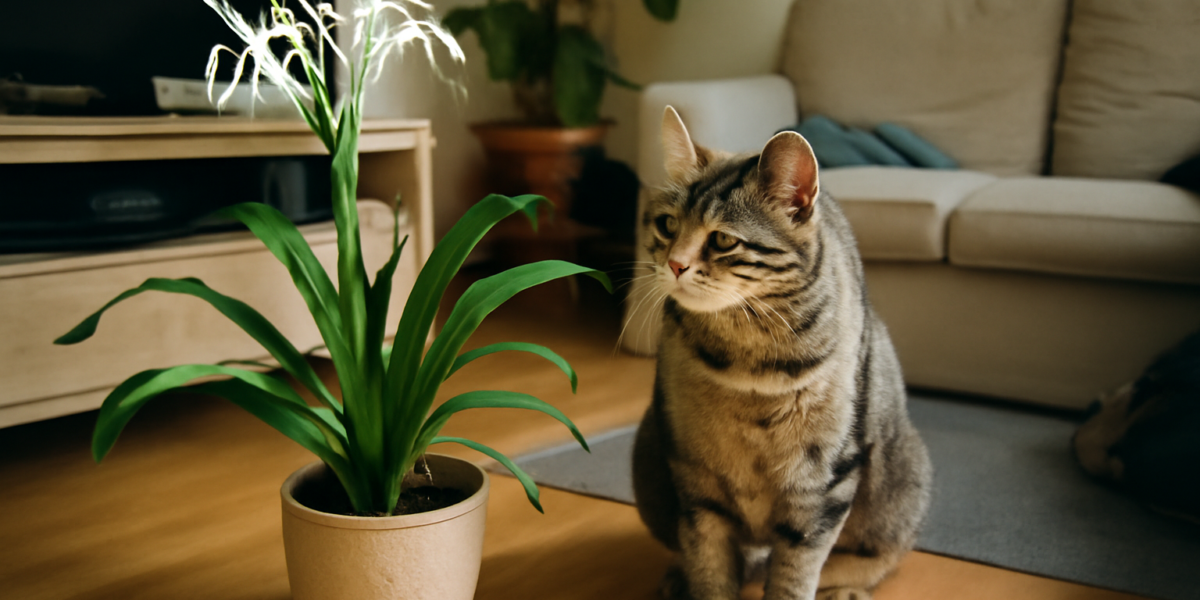
Spider Lilies and Cats: Toxic, but Different from True Lilies
Yes, spider lilies are toxic to cats, and the toxicity sits in the moderate range rather than the severe, kidney-killing category that true lilies occupy. The plants commonly called “spider lily” usually belong to one of two genera in the amaryllis family: Lycoris (red spider lily, surprise lily, magic lily) or Hymenocallis (also called spider lily or Peruvian daffodil). Both groups contain lycorine and related Amaryllidaceae alkaloids, concentrated most heavily in the bulbs but present throughout the plant.
In this article
- Spider Lilies and Cats: Toxic, but Different from True Lilies
- What Spider Lilies Look Like
- The Toxic Compounds: Lycorine and Friends
- Symptoms in Cats
- How Spider Lily Differs from True Lily for Cats
- Bulb Ingestion Is the Bigger Concern
- What to Do If Your Cat Eats Spider Lily
- Veterinary Treatment for Spider Lily Ingestion
- Other Amaryllidaceae Plants to Watch For
- Building a Safer Indoor and Outdoor Space
- Frequently Asked Questions
If your cat has chewed leaves, flowers, or — most concerningly — dug at a bulb, contact your veterinarian, the ASPCA Animal Poison Control Center at 888-426-4435, or the Pet Poison Helpline at 855-764-7661 (both charge a consultation fee). The good news is that spider lily ingestions usually do not cause acute kidney injury the way true lilies do in cats. The not-so-good news is that significant bulb ingestion can produce serious gastrointestinal and occasionally cardiovascular effects, so this is still a vet phone call situation rather than something to wait out at home.
What Spider Lilies Look Like
The Lycoris spider lilies are best known for their dramatic red, pink, or yellow flowers that emerge on bare stalks in late summer or early autumn, often before the strap-like leaves appear. The classic Lycoris radiata, the red spider lily, has long curling stamens that give the bloom a spidery silhouette and a deep crimson color. The plants grow from underground bulbs that look much like daffodil or onion bulbs.
Hymenocallis spider lilies, sometimes called Peruvian daffodils, have white, fragrant flowers with a frilly central cup surrounded by long narrow petals. They also grow from bulbs and are popular in southern gardens and as patio container plants. Both genera are sometimes brought indoors over winter or used in cut flower arrangements.
Cats interact with these plants in a few different ways. Indoor cats may chew leaves or play with stems and bulbs in pots. Outdoor cats may dig in flower beds or garden borders. Bulbs that have been removed from the garden and left in garages or potting sheds are also a problem, because they look enough like onions or other interesting objects to attract a curious cat.
The Toxic Compounds: Lycorine and Friends
Both Lycoris and Hymenocallis are members of the Amaryllidaceae family, which is also home to daffodils, narcissus, snowdrops, and amaryllis. Across this family, the principal toxic compound is lycorine, an alkaloid concentrated in the bulbs but present in lower amounts in stems, leaves, and flowers. Other related alkaloids and chemical irritants are also present.
Lycorine has direct irritant effects on the gastrointestinal tract, which is why drooling, vomiting, and diarrhea are the most common signs after ingestion. With larger doses, especially when the bulb itself has been chewed or swallowed, lycorine and related compounds can also affect the heart and central nervous system, producing more serious cardiovascular and neurologic symptoms.
Compared with the still-not-fully-characterized nephrotoxin in true lilies, the chemistry of spider lily poisoning is reasonably well understood, and the clinical pattern is more like that of daffodil ingestion. That is why spider lily exposure rarely produces the catastrophic acute kidney injury that defines true lily ingestion in cats. Both situations need a vet, but the worry is differently shaped.
Symptoms in Cats
The most common clinical signs after a cat chews on spider lily foliage or flowers are gastrointestinal:
- Drooling and lip-smacking, sometimes with foamy saliva
- Vomiting, occasionally repeated
- Loss of appetite
- Diarrhea, sometimes containing flecks of blood
- Abdominal discomfort and reluctance to be picked up around the belly
- Lethargy and hiding behavior
With larger ingestions — most commonly when a cat has actually eaten part of a bulb — additional signs can appear, including tremors, weakness, low blood pressure, and irregular heart rhythms. These cases are uncommon but they do happen, and they are why the recommendation is always to call rather than to assume a small chewed leaf is harmless.
Symptoms typically appear within a few hours, sometimes within minutes if the cat has chewed and swallowed plant material directly. If your cat is suddenly drooling around a chewed-up leaf, or you find vomit with green plant fragments, take the time to figure out which plant was involved before the next decision.
How Spider Lily Differs from True Lily for Cats
This is one of the most important things to take away from the article. True lilies in the genus Lilium (tiger, Asiatic, Oriental, stargazer, Easter) and day lilies in the genus Hemerocallis can cause acute kidney injury in cats from very small exposures, including pollen on fur, vase water, and a single chewed leaf. Read more in our guide on lilies and cats and our piece on peace lily versus true lily for cats.
Spider lilies are not in the Lilium genus. They are amaryllis relatives, and the toxic mechanism is gastrointestinal and occasionally cardiovascular rather than kidney-specific. A cat exposed to spider lily is at much lower risk for the catastrophic kidney failure pattern that defines true lily emergencies.
That distinction matters for how panicked you should be on the drive to the vet, but it does not change the basic recommendation: any ingestion of an unfamiliar plant, especially anything in the lily-family-of-common-names, is worth a phone call to a veterinary professional. The triage on the phone is what tells you whether you are looking at a same-day visit or a rest-and-monitor situation.
Bulb Ingestion Is the Bigger Concern
Most spider lily exposures in cats involve a chewed leaf or a flower stem, and most of those cases recover with a vet visit, anti-nausea medication, and supportive care. The much bigger concern is when a cat has gotten into a bulb, either dug from the garden or stored in a pot, garage, or basement.
Bulbs concentrate the alkaloids, and ingesting bulb tissue produces a more severe and prolonged toxicity. Cats that have eaten bulb material may need more aggressive decontamination, intravenous fluid support, monitoring of blood pressure and heart rhythm, and longer hospitalization than cats with leaf-only exposures. Bulbs also pose a mechanical risk in cats prone to swallowing chunky objects.
If you are storing bulbs for next season, treat them like you would treat household chemicals: out of reach, in sealed containers, and clearly labeled. The same applies to bulbs received as gifts or kept indoors over winter for forcing.
What to Do If Your Cat Eats Spider Lily
Move the cat away from the plant first, then start working the phone:
- Call your regular veterinarian or the nearest emergency veterinary clinic.
- If you cannot reach a clinic immediately, call ASPCA Animal Poison Control at 888-426-4435 or the Pet Poison Helpline at 855-764-7661 (consultation fees apply).
- Try to identify exactly which plant was involved. The label, the genus and species name, or a clear photograph will all help the team triage your call.
- Estimate how much was ingested and how long ago. Even rough numbers help.
- Note any symptoms already present and write them down so you can describe them clearly.
Do not induce vomiting at home. Cats are particularly prone to aspiration during induced emesis, and some at-home methods that circulate online can hurt a cat more than help. Decisions about decontamination, anti-nausea medication, fluid therapy, and any further treatment all belong to the veterinary team after they have assessed your cat in person or talked you through it on the phone.
Bring a sample of the plant, including the bulb if relevant, to the appointment. Photographs of the rest of the plant in your home or garden are also useful for confirming the identification.
Veterinary Treatment for Spider Lily Ingestion
For mild leaf or flower exposures, treatment is often outpatient and supportive: anti-nausea medication, possibly a single dose of activated charcoal, fluid support, and a recommendation to monitor at home for the next 24 to 48 hours. Many cats are home the same day with prescription anti-nausea medication for a few days.
For larger ingestions, particularly bulb ingestions or cases where the cat is already showing more serious signs, treatment becomes more intensive. The team may pursue induced emesis or gastric lavage if the timing is right, give intravenous fluids to support hydration and circulation, monitor heart rhythm and blood pressure, and run baseline bloodwork to evaluate kidney and liver function. Hospitalization for 24 to 72 hours is not unusual in significant exposures.
The prognosis for spider lily exposure in cats is generally good when veterinary care is sought promptly. Most cats recover fully. Outcomes worsen when owners delay care, when the cat ingested a large amount of bulb tissue, or when underlying conditions complicate the toxicity.
Other Amaryllidaceae Plants to Watch For
Because spider lily belongs to the amaryllis family, the same alkaloid story applies to several other common ornamentals. Read our guides on daffodils and cats, narcissus and cats, snowdrops and cats, and paperwhites and cats. The clinical pattern across this whole family is broadly similar, with bulbs being the most concentrated source.
For comparison with true lilies (a completely different toxic pattern in cats), the most important reads are our pieces on Easter lilies and cats and tiger lilies and cats. Knowing which group your cat got into is one of the most useful pieces of information you can give a veterinarian.
Other spring bulbs worth knowing include tulips, hyacinths, crocus, and iris. None of these belong in arrangements that go into rooms a cat can reach.
Building a Safer Indoor and Outdoor Space
The simplest preventive step is keeping spider lilies out of indoor floral arrangements and out of garden beds where your cat patrols. If you already have established plants in the yard and removing them is not feasible, focus on supervision, fencing problem areas, and removing dropped flowers and bulbs that have come up in the wrong spot.
Indoors, cut flowers are the most common point of exposure. Ask florists for the species names of anything in a delivered bouquet, and pull out anything in the lily, daffodil, narcissus, or amaryllis family before the vase reaches the dining table. Our roundup of cat-safe houseplants and cat-safe flowers can give you a sense of what to bring in instead.
For an even broader picture of household plant safety, browse pet-safe garden plants. And if you are still in the planning phase before bringing a cat home, our cat adoption hub includes preparation resources to help you set up a low-toxicity space from day one.
Frequently Asked Questions
Are spider lilies as dangerous as Easter lilies for cats?
No. Easter lilies and other true Lilium species can cause acute kidney injury in cats from very small exposures, including pollen and vase water. Spider lilies (Lycoris and Hymenocallis) cause a different pattern of mostly gastrointestinal symptoms with possible cardiovascular effects in larger ingestions. Both warrant a vet call, but the kidney-failure profile is unique to true lilies.
What part of the spider lily is most toxic?
The bulbs contain the highest concentrations of lycorine and related alkaloids. Stems, leaves, and flowers contain smaller amounts. A cat that has chewed a bulb is at higher risk than a cat that has nibbled a leaf, but any meaningful ingestion warrants a phone call to a vet.
How long after eating spider lily will my cat show symptoms?
Drooling, vomiting, and other early gastrointestinal signs usually appear within a few minutes to a few hours after ingestion. More serious effects from larger ingestions can develop over the first 12 to 24 hours, which is why monitoring under veterinary guidance matters.
Can red spider lily kill a cat?
Fatal outcomes from spider lily ingestion are uncommon when veterinary care is sought promptly, but large bulb ingestions can produce serious and potentially life-threatening cardiovascular and neurologic effects. The honest answer is that it is rarely fatal in well-monitored cases, but it is never safe to assume a particular cat will tolerate a particular ingestion.
Should I make my cat vomit at home?
No. Decisions about inducing vomiting belong to the veterinary team. Cats are particularly prone to aspiration during induced emesis, and some plant ingestions are made worse by at-home decontamination. Call your veterinarian, ASPCA Animal Poison Control at 888-426-4435, or the Pet Poison Helpline at 855-764-7661 first.


