
Last updated: May 16, 2026
In this article
- The Quick Answer on Zebra Aloe and Pets
- What Zebra Aloe Actually Is
- The Anthraquinone Mechanism
- Symptoms to Watch For
- How Quickly Symptoms Develop and Resolve
- Distinguishing Zebra Aloe from Zebra Haworthia
- What to Do If Your Pet Chewed Zebra Aloe
- Comparing Zebra Aloe to Other Aloes
- Keeping Pets Safe Around Zebra Aloe
- Frequently Asked Questions
The Quick Answer on Zebra Aloe and Pets
Yes, zebra aloe is toxic to cats and dogs. The compact, triangular-leaved succulent with the bright white horizontal banding belongs to Gonialoe variegata, formerly classified as Aloe variegata, and also called partridge breast aloe. The chemistry is the same as the more familiar aloe vera — anthraquinone glycosides in the leaves and the inner gel — and ASPCA lists the species as toxic to both cats and dogs. The toxicity tier is mild to moderate for typical exposures.
An important naming clarification before we go further: zebra aloe is sometimes confused with “zebra haworthia” (Haworthiopsis fasciata or H. attenuata), which looks superficially similar and is widely sold under the same casual “zebra plant” common name. Zebra haworthia is non-toxic to cats and dogs per ASPCA, while zebra aloe is toxic. The distinction matters. If your pet has chewed a succulent with stripes and you are not certain which plant you have, treat it as a toxic exposure until proven otherwise. Call your veterinarian, the ASPCA Animal Poison Control Center at 888-426-4435, or the Pet Poison Helpline at 855-764-7661.
What Zebra Aloe Actually Is
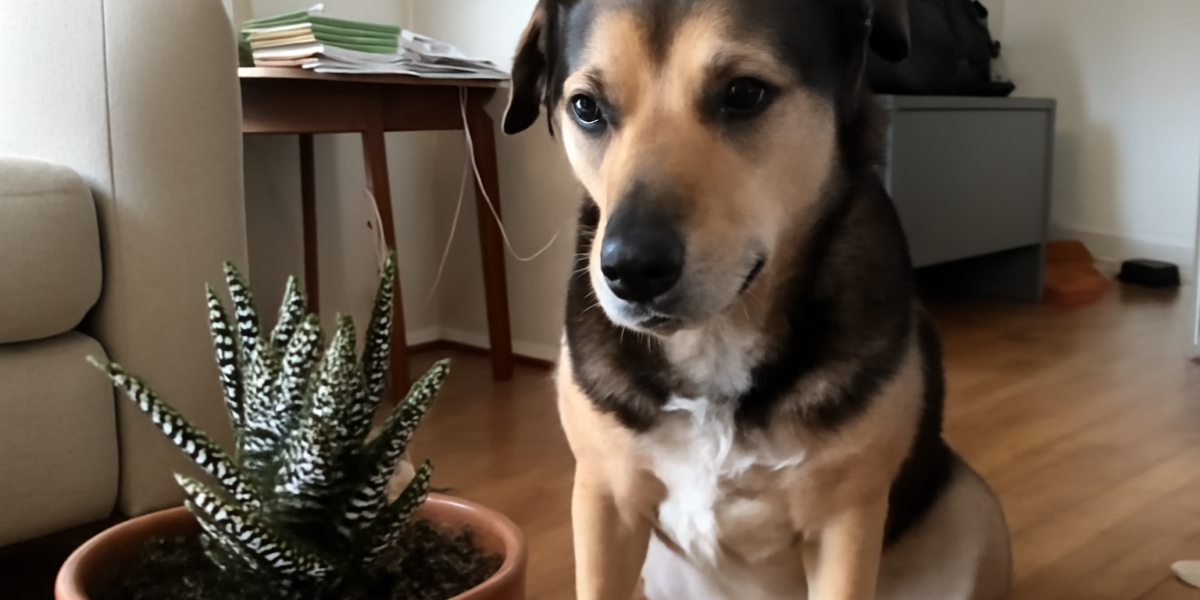
Zebra aloe is a small, slow-growing succulent native to South Africa and Namibia. It forms a compact rosette of stiff, triangular, dark-green leaves that are heavily spotted and banded with bright white markings — hence the “zebra” common name. The plant rarely exceeds twelve inches tall and produces tubular salmon-pink flowers on a tall stalk in spring or summer. It has been a beloved windowsill succulent for generations because of the dramatic patterning and the manageable size.
Botanically, the plant has been reclassified more than once. It was long known as Aloe variegata, then moved to the new genus Gonialoe along with two other species (Gonialoe sladeniana and Gonialoe dinteri). The reclassification was based on genetic and morphological work showing these species are distinct from the larger Aloe genus that includes aloe vera. Despite the genus change, the chemistry is similar to true aloes — anthraquinones in the latex and inner gel — and ASPCA still lists the plant as toxic.
The same plant is sometimes sold as “tiger aloe” or “partridge breast aloe,” which adds to the naming confusion. The sibling B117 article on tiger aloe and pets covers the overlap. For the broader Aloe family, see our umbrella articles on aloe and dogs and aloe and cats.
The Anthraquinone Mechanism
The toxic compounds in zebra aloe are anthraquinone glycosides — primarily aloin (also called barbaloin) and a few related compounds. These are the same molecules that make aloe vera latex a powerful laxative in human use, and they are the same molecules that cause the toxic reaction in cats and dogs. The compounds concentrate in the yellowish latex layer just under the leaf skin, with smaller amounts present in the inner gel.
When a pet chews a leaf, anthraquinones reach the digestive tract and stimulate intestinal motility powerfully. The result is the textbook toxicity picture — vomiting, diarrhea (sometimes with a reddish or orange tint from the pigments), abdominal discomfort, and lethargy. In larger ingestions or smaller pets, dehydration becomes the bigger concern as fluid losses mount.
This same chemistry is present in aloe vera and dogs, aloe vera and cats, and other aloe vera contexts. The story for zebra aloe is essentially the same story as aloe vera, with comparable severity. Same family, same toxin, same picture.
Symptoms to Watch For
Most pets show signs within a few hours of chewing zebra aloe. The classic picture includes:
- Vomiting, sometimes with shredded leaf material visible
- Diarrhea, occasionally with a reddish or orange tint
- Lethargy or unusual sleepiness
- Loss of appetite
- Abdominal discomfort — pets may tense up, hide, or whine when touched on the belly
- Drooling or smacking lips
- Tremors in significant exposures (uncommon)
Less common but more concerning signs include severe diarrhea leading to dehydration, repeated vomiting that prevents fluid intake, weakness, or collapse. Any of those mean it is time to call the vet rather than wait it out.
How Quickly Symptoms Develop and Resolve
The timeline for a zebra aloe exposure differs from calcium oxalate plants. Anthraquinone effects build over a few hours rather than starting in seconds. Signs typically begin within two to six hours of ingestion, with vomiting and diarrhea the first to appear. Lethargy and abdominal discomfort tend to follow as the irritation settles into the gut. Most uncomplicated cases peak in the first twelve to twenty-four hours and resolve within a day or two with supportive care.
The main complication to watch for is dehydration. Vomiting plus diarrhea moves a lot of fluid out of a small body quickly, and pets that cannot keep water down need intravenous fluid support. Signs of dehydration include sticky gums, slow capillary refill (press the gum and see how fast color returns), reduced skin elasticity at the scruff, and a sunken-eye appearance. Any of those mean the pet needs in-clinic care rather than continued home monitoring.
Persistent vomiting beyond a few hours, repeated diarrhea, severe lethargy, weakness, or collapse are emergency signs. Do not wait out a worsening trajectory hoping it will turn around — earlier intervention is consistently associated with better outcomes in anthraquinone cases. Recovery is generally complete within forty-eight to seventy-two hours for most pets, though appetite can take a day or two longer to fully return.
Distinguishing Zebra Aloe from Zebra Haworthia
This is the most important practical takeaway from this article. Two completely different plants get sold under casual “zebra plant” names, and they have opposite toxicity profiles:
- Zebra aloe (Gonialoe variegata, formerly Aloe variegata): TOXIC. Triangular leaves, irregular white banding and spotting, salmon-pink tubular flowers, anthraquinone chemistry.
- Zebra haworthia (Haworthiopsis fasciata or H. attenuata): NON-TOXIC. Similar rosette shape, but the white markings are typically more uniform raised tubercles in a more orderly pattern. Smaller flowers, white or off-white. ASPCA lists Haworthia as non-toxic.
If you are buying a “zebra plant” succulent at a nursery and you have pets, ask the seller which species you are buying. The plant tag often gives the genus, which is the most reliable identification. We have separate articles on haworthia for cats and haworthia for dogs that cover the non-toxic side of this naming overlap.
What to Do If Your Pet Chewed Zebra Aloe
Stay calm and act methodically. Remove any leaf material visible in the mouth — zebra aloe leaves are firm and easy to dislodge if your pet will let you. Take photos of the plant and try to estimate how much was actually eaten. If you have the plant tag, save it for the vet visit.
Call your veterinarian, an emergency clinic if it is after hours, the ASPCA Animal Poison Control Center at 888-426-4435, or the Pet Poison Helpline at 855-764-7661. Bring the plant or a clear photograph if you visit in person — confirming species matters, especially if there is any chance the plant could be a non-toxic haworthia look-alike instead.
Do not try to induce vomiting at home. Some pets aspirate the vomit and develop pneumonia, and at-home dosing is hard to get right. Your vet may recommend in-clinic decontamination depending on how much was eaten and how recently. Supportive care — fluids, anti-nausea medication, and monitoring for dehydration — is usually the mainstay of treatment. Most pets recover well within twenty-four to forty-eight hours.
Comparing Zebra Aloe to Other Aloes
Within the broader Aloe family, zebra aloe sits in the same toxic camp as aloe vera, aloe arborescens, and other true aloes. The chemistry — anthraquinone glycosides — is shared across the family, with some variation in concentration between species. The reclassification of Aloe variegata into Gonialoe variegata does not change the chemistry; it simply reflects updated botanical understanding of how the plants are related.
The sibling B117 articles on tiger aloe (the same Gonialoe variegata under a different common name) and aloe arborescens (the krantz aloe, a tree-form aloe) cover related plants. The umbrella articles on aloe vera in dogs and aloe vera in cats walk through the toxicity in more depth.
Keeping Pets Safe Around Zebra Aloe
The compact size of zebra aloe makes physical separation easier than for larger succulents. Move the plant to a high shelf, a windowsill above jumping range, or a closed room your pets do not enter. A glass propagation cabinet or enclosed succulent display also works and looks attractive. Avoid floor-level pots and low coffee tables in homes with cats or curious dogs.
Watch for fallen leaves and pruned cuttings. Zebra aloe leaves are stiff and thick — a dropped leaf on the floor is essentially identical to a live one and just as toxic if chewed. Sweep around the plant regularly and gather any pruning waste promptly. If you propagate from leaf cuttings, keep the propagation jars or trays out of pet reach.
If you cannot keep the plant out of pet reach, consider rehoming it. Zebra aloe is popular enough that local plant swaps and online communities will eagerly take a healthy plant. Pet-safer alternatives include haworthia (the non-toxic look-alike), echeveria, and certain non-toxic sedums. Our cat-safe houseplants guide walks through more options.
Frequently Asked Questions
Is zebra aloe the same as aloe vera?
They are different species in the same broader plant family. Zebra aloe (Gonialoe variegata, formerly Aloe variegata) was reclassified out of the Aloe genus, but it shares the anthraquinone chemistry with aloe vera. The toxicity picture is essentially the same.
Is zebra aloe the same as zebra haworthia?
No, and the distinction matters. Zebra aloe (Gonialoe variegata) is TOXIC. Zebra haworthia (Haworthiopsis fasciata or H. attenuata) is NON-TOXIC per ASPCA. Both get sold as “zebra plant” casually. Check the genus on the plant tag if you have any doubt.
How toxic is zebra aloe to cats and dogs?
It is in the mild-to-moderate range. Common symptoms include vomiting, diarrhea, lethargy, and abdominal discomfort. Severe cases are uncommon but possible with large ingestions or in small pets. Dehydration from fluid losses is the main complication to watch for.
Should I induce vomiting if my dog ate zebra aloe?
No, do not induce vomiting at home without veterinary guidance. Some dogs aspirate the vomit, and at-home dosing is hard to get right. Call your veterinarian or a poison-control line for individualized advice.
What pet-safe succulents look similar to zebra aloe?
Zebra haworthia (Haworthiopsis) is the closest non-toxic look-alike — same compact rosette shape with white markings, but no anthraquinones. Echeveria and certain non-toxic sedums are also good options. Our cat-safe houseplants guide walks through more, and the haworthia comparison articles for cats and dogs are worth reading. If you are also considering adoption while redesigning your plant collection, our adopt cats and adopt dogs hubs are good starting points.


