
Last updated: May 16, 2026
In this article
- Aloe Arborescens and Pets: A Mild-to-Moderate Concern
- What Is Aloe Arborescens?
- The Anthraquinone Chemistry
- Symptoms After an Aloe Arborescens Chew
- Why Tree-Form Aloes Carry a Higher Practical Risk
- What to Do If Your Pet Eats Aloe Arborescens
- Outdoor vs Indoor Aloe Arborescens
- Aloe Arborescens vs Other Aloes
- Reducing Risk in a Pet Home
- Common Misidentifications
- Adoption Note
- Frequently Asked Questions
Aloe Arborescens and Pets: A Mild-to-Moderate Concern
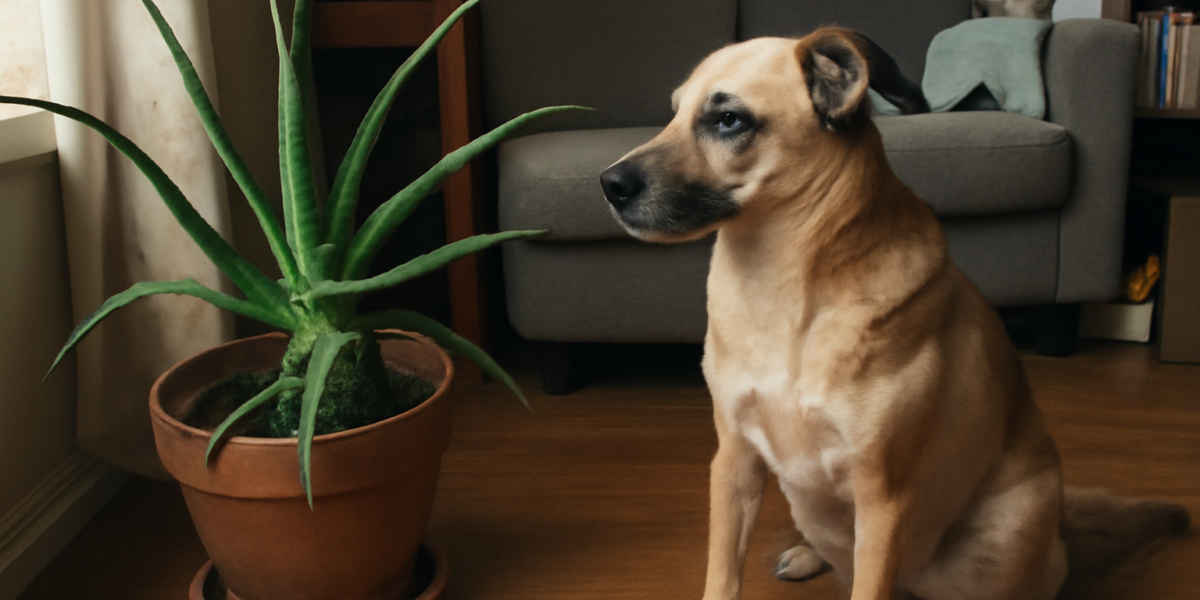
Yes, aloe arborescens is toxic to cats and dogs, and the question of whether aloe arborescens toxic pets risks are realistic deserves a clear answer because this is one of the largest aloes a pet owner is likely to encounter. Aloe arborescens, commonly called krantz aloe, candelabra aloe, or tree aloe, is a South African succulent that can grow into a multi-stemmed shrub six to nine feet tall in warm climates. It is widely used in landscape design across southern California, Florida, the Mediterranean, and southern Africa, and it is increasingly sold as a striking specimen plant for large pots indoors. Because the plant shares the anthraquinone chemistry of Aloe vera, the ASPCA toxicity listing for the Aloe genus applies to aloe arborescens as well.
The toxicity tier is mild to moderate for typical exposure: vomiting, diarrhea, lethargy, and occasionally tremors or color change in the urine. The reason krantz aloe deserves its own write-up rather than an “see Aloe vera” footnote is that it produces a much larger leaf than the average houseplant aloe, so a single chew can deliver more plant material in one bite. If your cat or dog has gotten into a krantz aloe, call your veterinarian, the ASPCA Animal Poison Control Center at 888-426-4435, or the Pet Poison Helpline at 855-764-7661 to plan the next steps.
What Is Aloe Arborescens?
Aloe arborescens translates roughly to “tree-like aloe” and the name fits — mature plants form thick woody stems with rosettes of long, recurved, toothed leaves at the top of each branch, eventually creating a candelabra-shaped shrub. Native to mountainous regions of southern Africa, the plant tolerates light frost and produces dramatic torch-shaped clusters of red-orange tubular flowers in winter, which is unusual timing for ornamental plants and contributes to the species’ popularity in landscape design.
The leaves themselves are blue-green to gray-green, eight to twenty-four inches long, with soft serrations along the edges and a clear-to-yellowish gel and latex inside. In medicinal traditions across southern Africa, aloe arborescens has been used externally and (cautiously) internally for centuries, and Italian folk medicine also incorporates it. The folk-medicine history can confuse pet owners into thinking the plant must be safe — but human use, often heavily processed and dosed by weight, does not translate to a small mammal that has ripped a leaf off the plant and crunched on it.
The Anthraquinone Chemistry
The toxic compounds in aloe arborescens are the same family that appear in Aloe vera and in tiger or zebra aloe — anthraquinones, including aloin (also called barbaloin) and aloe-emodin. They concentrate in the yellow latex layer just under the leaf skin, the part that drips when a leaf is cut and that gives processed aloe juice its bitter taste. The clear inner gel is much lower in these compounds, but a chewing pet does not separate the layers, so any biting through the skin delivers a mix.
Anthraquinones act as stimulant laxatives in mammalian intestines. They irritate the bowel lining and trigger water and electrolyte movement into the gut, which produces the diarrhea seen in pet exposures. They also have a mild dermatological irritant effect on contact, which is why some pets drool and shake their heads after a chew before any GI symptoms appear. Our umbrella articles on Aloe vera toxicity in cats and Aloe vera toxicity in dogs dig deeper into the mechanism, and the same chemistry applies here.
Symptoms After an Aloe Arborescens Chew
The most common signs after a pet ingests aloe arborescens are GI: vomiting, often with shredded plant material visible, followed by diarrhea within a few hours. Drooling and lip-smacking can begin within minutes if the latex contacted the gums or tongue directly. Some dogs (and rarely cats) pass urine that looks pinkish or reddish — this is a non-blood pigment change from the anthraquinones, but it is alarming enough on its own to be worth a vet call.
More concerning signs include repeated vomiting, inability to keep water down, profound lethargy, weakness, tremors, or signs of dehydration like sunken eyes, dry sticky gums, and decreased skin elasticity. Cats hide discomfort more readily than dogs, so watch for retreat to closets, refusal of food and water, or unusual vocalization. The progression from mild to moderate signs can move quickly in small dogs or cats over a few hours, so a wait-and-see approach is only appropriate when the chew was clearly tiny.
Why Tree-Form Aloes Carry a Higher Practical Risk
The chemistry of aloe arborescens does not differ from a small windowsill Aloe vera, but the practical risk is higher for two reasons. First, the leaves are simply larger, sometimes longer than a forearm and several inches thick at the base. A single chewed leaf delivers significantly more anthraquinone than a finger-sized leaf from a young Aloe vera plant. Second, krantz aloe is more often planted outdoors as a landscape feature, where dogs especially have free access during yard time.
Many botanical-garden plantings, hotel landscapes, and Mediterranean-style residential gardens use aloe arborescens as a focal specimen, so dog-walking routes and visiting-relatives’ yards may include the plant without you knowing it. Sibling articles like our tiger aloe and pets guide cover the small succulent forms; aloe arborescens is the dramatic landscape opposite — bigger plant, bigger leaves, bigger potential bite.
What to Do If Your Pet Eats Aloe Arborescens
Move calmly and quickly. Gather a sample of the chewed leaf, take photos of the plant, and estimate how much material was actually swallowed versus shredded onto the floor. Note when the chew likely happened. If you saw the chew within the past hour, call your vet for guidance on whether vomiting should be induced — but do not try to make your pet vomit at home with salt, mustard, or hydrogen peroxide unless explicitly directed by a veterinarian. At-home emesis goes wrong often, particularly in cats, who are uniquely sensitive to peroxide and can develop hemorrhagic gastritis.
Your vet will likely recommend an in-clinic exam if any GI signs are present, the chew was substantial, or your pet is small or has any pre-existing conditions. Treatment is supportive: anti-nausea medication, subcutaneous or intravenous fluids, and bland diet for forty-eight to seventy-two hours. Activated charcoal is sometimes used for very recent ingestions; our companion piece on activated charcoal for dogs covers the indications and limits. Most exposures resolve within two or three days with appropriate supportive care.
Outdoor vs Indoor Aloe Arborescens
The toxicity is the same regardless of where the plant lives, but the access patterns differ. Outdoor krantz aloe in a landscape bed presents a chronic exposure risk during yard time. The risk goes up after pruning, after a frost has damaged leaves, or during the winter flowering season when fallen blooms litter the base of the plant. Walk your yard periodically and pick up fallen leaves, especially those with the yellow latex still oozing from the cut end.
Indoor krantz aloe, more often kept as a small specimen until it outgrows its space, sits in living rooms and sunrooms where supervision is more constant but where curious cats can reach the plant on shelves and tables. Mature plants get heavy and woody and are usually placed on the floor in a large pot, which puts them squarely in dog and cat range. A physical barrier — a baby gate around the pot, or a room with a closed door — is often easier than rehoming the plant.
Aloe Arborescens vs Other Aloes
Within the broader Aloe family, aloe arborescens behaves like its relatives in terms of pet risk. Compare it to Aloe vera (small to medium pot plant, well-studied), zebra aloe and tiger aloe (both small succulents now in the Gonialoe genus), and aloe maculata (soap aloe, common landscape aloe). The chemistry is the same anthraquinone profile across the group, but the plant size and indoor-vs-outdoor habit shape the practical exposure picture.
For genus-wide guidance, our is aloe toxic to cats and are aloe toxic to dogs umbrella articles cover the family-level message. Pet owners who want to keep an Aloe-family plant despite the risk should consider that aloe arborescens specifically is one of the harder ones to keep out of reach because of its eventual size — even a young plant in a fifteen-gallon container is already four feet across and waist-high.
Reducing Risk in a Pet Home
The most realistic strategies for keeping aloe arborescens in a pet home are containment, distance, or substitution. Containment means a secured area — a fenced corner of a yard, a sunroom your pet does not access, or a pot inside a wire frame that blocks chewing access while letting the plant grow. Distance means height, which works better for younger plants in pots than for mature landscape specimens. Substitution means swapping for a non-toxic look-alike.
If you love the architectural form but want to remove the worry, our cat-safe houseplants list includes echeveria varieties that grow into impressive rosettes and Haworthia attenuata for the small-scale aloe look. For outdoor specimens, ornamental grasses (with the mechanical-edge caveat we cover in the lawn-grass series) and pet-friendly succulents in our pet safe garden plants roundup can fill the same landscape role without the GI-toxicity concern.
Common Misidentifications
Aloe arborescens is sometimes confused with Aloe ferox (Cape aloe, similar landscape size and same chemistry — the toxicity guidance is the same), with Agave species (different family entirely; agaves have their own irritant sap chemistry, calcium oxalate), and with Yucca species (also different family, separate saponin-based toxicity). The shape can also be mistaken for “century plant” agaves at a distance, especially when not in flower.
For Aloe-vs-Agave confusion, the easiest tell is the leaf surface and tip: aloes have soft serrations along the edges and a softer leaf with gel inside, while agaves have stiff fibrous leaves often with a sharp terminal spine. If you are unsure what you have inherited in a new house or rental yard, a clear photo to a local nursery or to a regional botanical-garden helpline will resolve the ID. The response plan changes meaningfully between aloe and agave, so do not eyeball it.
Adoption Note
Pre-adoption is the easiest moment to audit a yard or home for plant hazards. If you are working through our adopt dogs hub or the adopt cats hub, walking your space with a notepad and identifying every plant by name takes a single afternoon and prevents a string of awkward emergency vet visits later. Krantz aloe is a common landscape plant in the Sun Belt and can be inherited unwittingly with a new property.
If aloe arborescens is already in your yard and you are bringing home a new pet, you have time to plan. The plant tolerates transplanting well in cooler months and can rehome to a friend with a pet-free yard. Alternatively, fencing the bed or strategic supervision for the first few weeks while you observe whether your new pet shows any chewing interest in landscape plants gives you data to work with. The sibling guides in this batch on jade tree and zebra aloe walk through the same audit-and-decide process for related succulents.
Frequently Asked Questions
Is aloe arborescens more toxic than Aloe vera?
The per-gram toxicity is the same — both rely on anthraquinones in the leaf latex. Aloe arborescens leaves are larger, so a single chew often delivers more plant material than from a small Aloe vera, but the underlying chemistry does not differ.
My dog chewed an aloe arborescens leaf outdoors. How urgent is the call?
Same-day urgent. Even if your dog seems fine, the GI signs can develop over four to twelve hours. Call your vet or a poison helpline with the leaf size, the time of the chew, and your dog’s weight to plan the next step. A small chew with no symptoms may be watch-and-wait; a larger ingestion warrants an exam.
Can the medicinal use of aloe arborescens in humans tell me anything about pet safety?
Not really. Human folk-medicine preparations are processed, fermented, or diluted in ways that change the chemistry, and they are dosed by weight under intentional medical supervision. A pet biting a raw leaf is a completely different exposure scenario.
Is aloe arborescens safer once it has stopped flowering?
No. The toxic compounds are in the leaf latex year-round and the flowering cycle does not change the toxicity profile. The flowers themselves are also not a known additional concern, but they are not separately tested as safe either.
What pet-safe alternatives have a similar look?
Haworthia attenuata gives the small Aloe-look in pots, while echeveria varieties offer the dramatic rosette form. For large landscape specimens, ornamental grasses and certain pet-safe succulents listed in our pet safe garden plants roundup can fill the architectural role without the Aloe-family chemistry.


