Last updated: May 4, 2026
In this article
- Overview of the Asian Shorthair Cat
- History and the Asian Group
- Appearance and Coat
- Temperament and Personality
- Care and Grooming
- Health and Lifespan
- Diet and Nutrition
- Living with an Asian Shorthair
- Common Behavioral Traits to Expect
- Adopting an Asian Shorthair
- Kitten Care and Socialization
- Senior Asian Shorthair Care
- Asian Shorthair vs Burmilla vs Burmese
- Is the Asian Shorthair Right for You?
- Frequently Asked Questions
Overview of the Asian Shorthair Cat
The Asian Shorthair cat is a UK-developed breed in the Asian Group, sharing body type and much of the temperament of the Burmese while expressing a wider range of coat colors and patterns. The breed name is geographically misleading — these cats were developed in Britain, not Asia. The “Asian” label refers to their Burmese ancestry, which traces to Southeast Asia, rather than where the breed itself was created.
The Asian Shorthair is the broad shorthaired umbrella within the UK Asian Group, encompassing several pattern subdivisions. The Burmilla, also part of the Asian Group, is technically the silver-shaded shorthaired variety; other patterns including selfs (solids), smokes, tabbies, and tortoiseshells fall under the Asian Shorthair name in GCCF terminology.
This profile covers the broader Asian Shorthair as a Burmese-type cat in diverse colors. If you are specifically interested in the silver-shaded variety, see the Burmilla profile for that variation.
History and the Asian Group
The breed traces to a single accidental mating in the early 1980s between a chinchilla Persian and a Burmese in the UK. The resulting kittens combined Burmese body type with novel coat traits inherited from the Persian side. From that founding cross, breeders pursued a deliberate program to develop the Asian Group as a family of breeds — the Burmilla in silver, the Asian Shorthair in other colors, the Tiffanie as the longhaired sibling, and a smoke variant called the Bombay (UK type, distinct from the American Bombay).
Recognition with major registries varies. The GCCF in the UK has championed the breed, while international registries have engaged at different levels. The Asian Shorthair remains rare even within the UK and is genuinely uncommon outside Europe.
Appearance and Coat
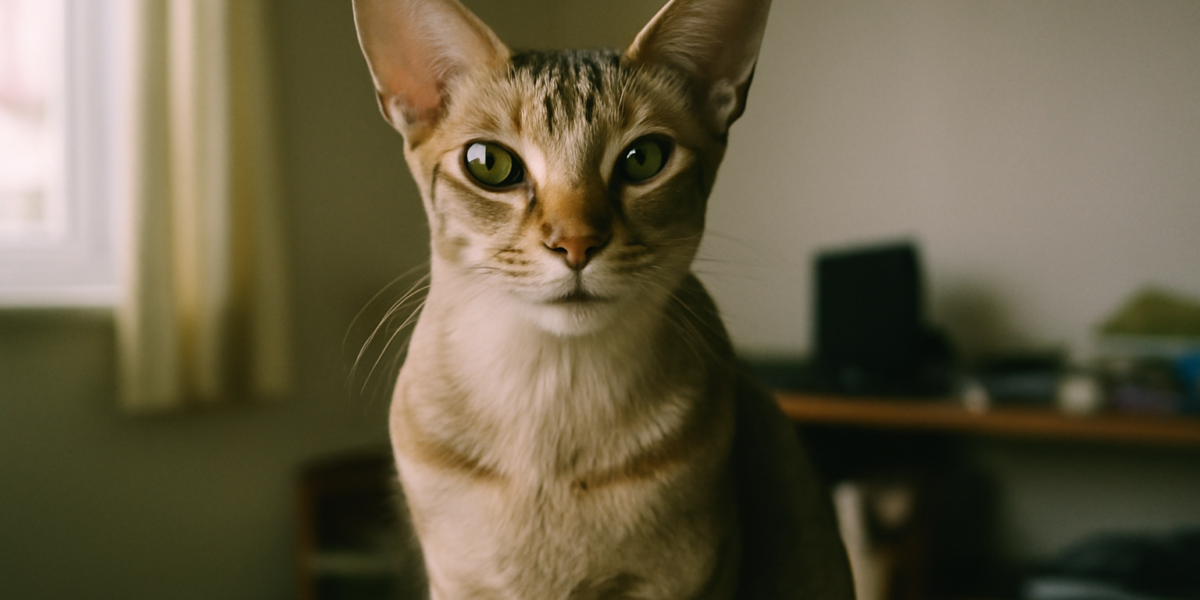
The Asian Shorthair shares the body type of its Burmese ancestor: medium-sized, muscular, well-proportioned, and heavier than it looks. The head is rounded with a short muzzle, the ears are medium and slightly forward-set, and the eyes are large, slightly slanted, and typically yellow to amber-gold.
The coat is short, fine, and lies close to the body with a satin sheen. Coat colors and patterns vary widely. Solids include black, blue, chocolate, lilac, red, cream, caramel, and apricot. Tortoiseshell, tabby, and smoke patterns also appear. The variety of acceptable colors is one reason the breed appeals to enthusiasts who like Burmese-type cats but want more visual options.
Size and Build
Adult males typically weigh 10 to 14 pounds, females 7 to 11 pounds. The substantial Burmese-type frame means the breed feels denser than its silhouette suggests. A well-proportioned Asian Shorthair has clear muscle definition without bulk.
Temperament and Personality
Asian Shorthairs inherit much of what makes the Burmese a beloved companion breed. They are affectionate, people-oriented, and emotionally engaged with their household. Many are described as dog-like in their loyalty — following owners around, greeting people at the door, and preferring company to solitude.
They are intelligent and learn quickly. Many take to harness training, fetch, and basic cue work. They are typically tolerant of handling, including grooming and nail trimming, which makes them good fits for adopters who want a hands-on companion.
Vocally, they are conversational without being demanding. Expect chirps, soft trills, and occasional meows rather than the constant declarations of pure Siamese lines. With other pets, well-socialized Asian Shorthairs generally do well, particularly when matched with similarly sociable cats.
Care and Grooming
Grooming is straightforward. The short, fine coat does not mat and benefits from a weekly run-through with a soft brush or grooming glove. Seasonal shedding is moderate and easily managed with slightly more frequent brushing.
The breed does not require professional grooming, specialty shampoos, or any unusual coat care. Standard cat hygiene — periodic ear checks, nail trims, dental attention — is enough.
Exercise and Enrichment
Asian Shorthairs are moderately to highly active. Plan for daily interactive play, a cat tree or climbing options, and rotating toys. Puzzle feeders work well for engaged eaters; the puzzle feeders for cats guide covers good starter options.
The breed does not handle long isolation well. If your home is empty for ten or more hours a day regularly, consider a second cat as a companion or alternative arrangements. The most affectionate cat breeds roundup includes other people-oriented breeds for comparison.
Health and Lifespan
The Asian Shorthair inherits some health considerations from its Burmese and Persian ancestry. Burmese lines have been associated with certain conditions including hypokalemia and orthopedic concerns; Persian ancestry can introduce concerns around tear duct anatomy and dental crowding, though these are typically less expressed in cats with moderate facial structure rather than extreme flat faces.
Veterinary consensus does not flag any single condition as breed-defining. Routine preventive care matters: annual exams, age-appropriate bloodwork, dental attention, and prompt response to changes. Bookmark the annual vet exam for cats guide and the cat vaccination schedule for setting up wellness care.
Healthy individuals typically live 12 to 16 years, with many reaching the upper end when kept indoors and well cared for.
Diet and Nutrition
A complete and balanced commercial diet appropriate for life stage forms the foundation. Asian Shorthairs are typically enthusiastic eaters, and their solid build can mask weight gain. Measure portions, monitor body condition monthly, and adjust as needed.
Wet food contributes to hydration and is worth including in regular feeding rotation. Multiple water stations help, and many cats prefer fountains to still bowls.
Living with an Asian Shorthair
Asian Shorthairs adapt to apartments and houses, single-person and family households, with the consistent requirement that someone be present and engaged with them daily. They are not aloof cats and will not thrive in households that treat them as decorative.
They do well in multi-cat homes when introductions are managed thoughtfully. The introducing kitten to resident cat guide is a useful starting point. Cat-friendly dogs are typically accepted; small mammals and birds may be viewed as prey, so plan housing carefully.
Common Behavioral Traits to Expect
Beyond the broad temperament profile, several specific behaviors are commonly observed in Asian Shorthairs. They tend to be talkative without being loud, with chirps and trills that comment on household events. Many follow their humans from room to room rather than settling in one favorite spot. They typically meet visitors at the door rather than hiding, and they often involve themselves in whatever activity is happening — cooking, reading, working from home.
Play styles favor interactive engagement. Wand toys, puzzle feeders, and games involving the human are usually preferred over solitary play. Many take readily to harness training and supervised outdoor time. They are typically agile climbers and benefit from cat trees and elevated perches.
Sleep patterns are typical for cats — long stretches of rest punctuated by bursts of activity, often dawn and dusk. Asian Shorthairs that have human companionship through the day tend to align their schedules with the household, sleeping during work hours and engaging during evening family time.
Adopting an Asian Shorthair
Availability is the central challenge for North American adopters. The breed is concentrated in the UK and parts of Europe, with very few breeders working with the lines outside that region. Even within the UK, the Asian Shorthair is uncommon compared to mainstream pedigree breeds.
Realistic paths include: contacting GCCF-registered breeders for waitlist availability, exploring breed-specific rehoming networks, and reviewing the finding a reputable rescue in your state guide for organizations that occasionally place imported or surrendered pedigreed cats. The cat-only rescues overview can identify rescues equipped for unusual placements.
If a true Asian Shorthair is out of reach, the Burmese offers nearly identical temperament and is more available. The Burmilla shares the Asian Group heritage with a different coat color expression.
Kitten Care and Socialization
Asian Shorthair kittens are typically active, curious, and quick to bond with their humans. Early socialization in the first sixteen weeks shapes adult temperament more than most other variables. Expose kittens to gentle handling by different people, household sounds, supervised interactions with other pets, and routine grooming and nail trims. Kittens that learn these early experience them as normal rather than threatening.
Establish a consistent feeding schedule, introduce litter box habits early, and start handling habits in kittenhood. The kitten feeding schedule by age guide is a useful reference for the first year.
Senior Asian Shorthair Care
As Asian Shorthairs enter their senior years — typically around age ten — care priorities shift. Annual exams should become twice-yearly. Watch for changes in appetite, water consumption, weight, and litter box habits. The senior cat care checklist covers what to monitor. Joint support and accessible furniture become more important as activity naturally decreases. Many senior Asian Shorthairs retain their sociable nature well into old age, with quality time and consistent routines supporting good quality of life.
Asian Shorthair vs Burmilla vs Burmese
The differences among these closely related breeds confuse many adopters. The Burmese is the foundation breed: solid colors, Burmese-type body, established globally. The Burmilla is the silver-shaded variety from the Asian Group. The Asian Shorthair encompasses all the other colors and patterns within the Asian Group — solids, tabbies, tortoiseshells, smokes, and more — that share the Burmese type but diverge in coat color.
Functionally, the temperaments are very similar across all three. The choice often comes down to coat appearance preferences and what is actually available in your region.
Is the Asian Shorthair Right for You?
Choose an Asian Shorthair if you love Burmese temperament but want more color variety and you have the patience to find one. They suit engaged households, multi-cat homes, and adopters who want a sociable, intelligent companion.
Skip the breed if you need quick local availability, want an independent cat that ignores you happily, or cannot provide daily engagement. For comparable but more available alternatives, browse the most popular cat breeds roundup or consider the broader Asian cat breeds overview for related lineages.
Frequently Asked Questions
Is the Asian Shorthair the same as the Burmese?
Closely related but not identical. The Asian Shorthair has Burmese-type body and temperament but appears in colors not accepted in the Burmese standard. Pedigree paperwork distinguishes them; behaviorally, you would notice few differences.
How vocal are they?
Moderately. They communicate readily but are not as constantly vocal as Siamese lines. Conversational chirps and trills are typical.
Do they get along with other cats?
Generally yes, particularly with sociable companions. Multi-cat households work well when introductions are managed gradually. They are not loners.
How much exercise do they need?
Daily interactive play of fifteen to twenty minutes plus access to climbing and play structures throughout the day. They are not extreme athletes but they are not couch potatoes.
Why is the breed called Asian if it is from the UK?
The “Asian” label references the Burmese ancestry — Burma being in Southeast Asia — rather than where the breed itself developed. The name has caused understandable confusion since the breed’s creation.
Looking to adopt a Asian Shorthair Cat Breed Profile?
Browse Asian Shorthair Cat Breed Profile cats and mixes available for adoption from shelters and rescues near you.
Find Asian Shorthair Cat Breed Profile Cats for Adoption