
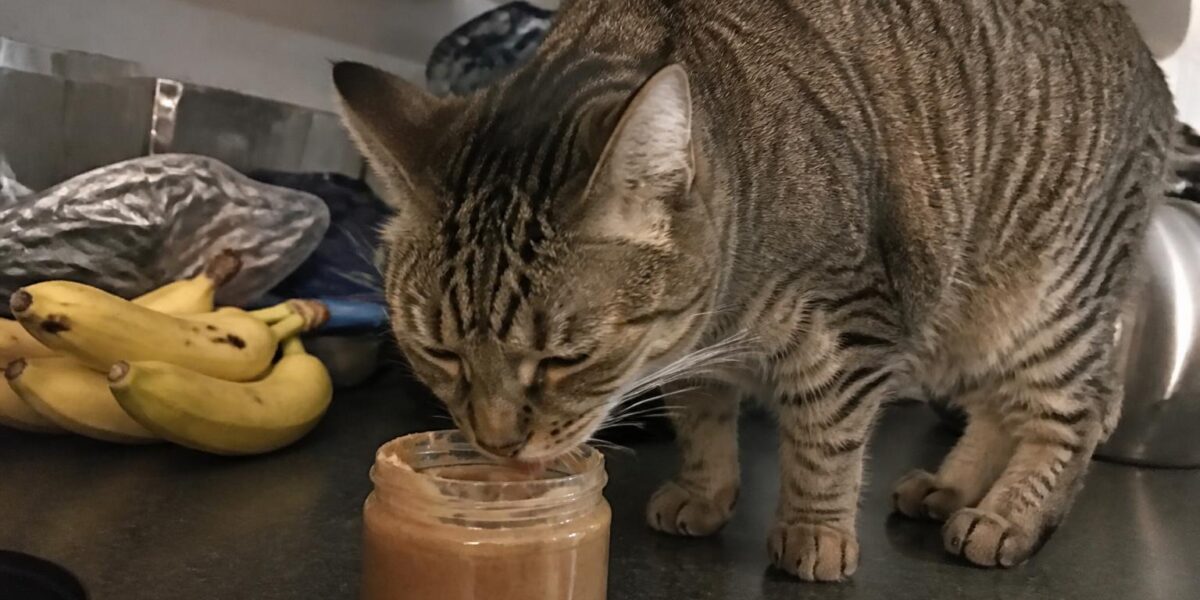
The Short Answer on Almond Butter for Cats
Can cats eat almond butter? Almond butter is not classified as toxic to cats, but it is best avoided. It offers your cat nothing nutritionally and carries real risks from its high fat content, possible additives, and the danger of xylitol in some brands. At best it is a “moderation to avoid” food, and there is no good reason to make it part of your cat’s diet.
In this article
Cats are obligate carnivores, built to thrive on animal protein rather than nuts. Almond butter is a calorie-dense plant food that a cat’s body is not designed to use, so even the plain version provides empty calories and a sticky texture that some cats struggle with.
If your cat licks a tiny bit of plain almond butter, it is unlikely to cause harm, but you should check the label and keep portions to essentially none going forward. Here is what every cat owner should know.
Almond butter has surged in popularity as a wholesome human food, which naturally leads loving owners to wonder if a little dab might be a nice treat for their cat. The thinking is understandable, especially since some cats are drawn to the rich, fatty smell. But the leap from “healthy for me” to “good for my cat” does not hold up for an obligate carnivore, and almond butter is a clear case where what is wholesome for us simply does not translate.
Why Almond Butter Isn’t Good for Cats
Almond butter has several drawbacks that make it a poor choice for cats, even when it is not strictly toxic.
No nutritional value. As obligate carnivores, cats cannot make good use of plant protein and fats. The nutrients in almond butter that benefit humans simply do not help a cat, so it is empty calories at best.
High fat content. Almond butter is very rich and fatty. For a small carnivore, this can lead to vomiting, diarrhea, weight gain, and in some cases pancreatitis, a painful inflammation of the pancreas.
Xylitol danger. Some nut butters contain xylitol, a sweetener that is highly toxic to pets. Always check the label, and never offer any nut butter that lists xylitol.
Added salt and sugar. Many almond butters include added salt or sugar, neither of which is good for cats.
Choking and sticky texture. The thick, sticky consistency can be hard for a cat to swallow comfortably.
Does Almond Butter Offer Any Benefit?
People often assume that because almond butter is healthy for humans, a little must be good for cats. Unfortunately, that logic does not hold for an obligate carnivore. The protein, healthy fats, and vitamin E in almond butter are tailored to human and herbivore-style metabolisms, not feline ones.
Your cat gets everything it needs from a complete, balanced, meat-based diet. There is no nutrient in almond butter that your cat cannot obtain more safely from proper cat food, so the supposed health halo of almond butter does not transfer.
The only thing almond butter reliably offers a cat is extra fat and calories, which most cats do not need. For that reason, it is a food to skip rather than seek out.
There is also a practical concern with the texture that often gets overlooked. Almond butter is thick and sticky, and a glob of it can cling to the roof of a cat’s mouth or throat, causing distress and gagging as the cat works to clear it. For a small animal, that sticky mouthful is genuinely unpleasant and, in a worst case, could pose a choking risk. This is yet another reason the rich, gummy consistency that humans enjoy on toast simply does not suit a cat.
What If My Cat Eats Almond Butter?
If your cat licks a small amount of plain, xylitol-free almond butter, there is usually no cause for alarm. Watch for mild digestive upset and make sure fresh water is available.
The situation is more serious if the almond butter contained xylitol. Signs of xylitol poisoning can come on quickly and include vomiting, weakness, loss of coordination, tremors, and collapse. This is an emergency that requires immediate veterinary care.
Also watch for signs of fat-related upset after a larger amount, such as repeated vomiting, diarrhea, lethargy, or belly pain, which could point to pancreatitis. If you see any of these, or if you are unsure whether the product contained xylitol, call your veterinarian right away and bring the jar so they can check the ingredients.
Safer Treats for Cats
Because cats are carnivores, the best treats are animal-based and far more appealing to them than a sticky spoonful of nut butter. Try these instead.
- Small pieces of plain cooked chicken
- A bite of plain cooked salmon or other fish
- A little plain scrambled egg
- Commercial treats made specifically for cats
Keep all treats to no more than about 10 percent of your cat’s daily calories, with the rest from a balanced cat food. Introduce new treats slowly and watch for any digestive upset.
If you use almond butter yourself, store it sealed and out of reach, and avoid using it to hide pills, since safer pill-pocket products made for cats exist. Your veterinarian can recommend treats and pilling methods suited to your cat.
Other Foods to Watch With Cats
Almond butter is one of many human foods that are better kept away from cats. Some are simply unhelpful, while others are genuinely dangerous.
If your cat enjoys nut-related flavors, know that whole almonds and peanut butter raise the same concerns about fat and additives. Truly toxic foods to avoid completely include chocolate, along with onions and garlic.
The safest habit is to feed a proper diet and treat human foods as off-limits unless you have confirmed they are safe. Whenever you are unsure about a food, your veterinarian is the best and quickest resource for clear guidance.
The Hidden Danger of Xylitol in Nut Butters
Of all the reasons to be cautious with almond butter, the single most important is xylitol. This sugar substitute has become common in “no sugar added” and “reduced sugar” nut butters, and it is the one ingredient that turns an otherwise merely unhelpful food into a genuine emergency risk. Reading the label every single time is not optional.
Xylitol is far better documented as a danger in dogs, where it causes a dangerous insulin surge and can lead to liver failure. While the feline data is more limited, there is no good reason to take chances. The prudent approach is to treat any product containing xylitol as off-limits for your cat, full stop, and to keep such products well out of paw’s reach.
The tricky part is that xylitol hides under several names on ingredient lists, including “birch sugar” and the broad term “sugar alcohol.” Many people scan for the word xylitol and miss these alternatives. When in doubt about a nut butter, peanut butter, or any sweetened product, assume the worst and keep it away from your cat rather than risk it.
If your cat does ingest a product that may contain xylitol, do not wait to see what happens. Contact your veterinarian or a pet poison control line immediately and bring the label so the team can identify the exact ingredients. Quick action makes a real difference, and this is one situation where it is always better to overreact than to wait.
Frequently Asked Questions
Is almond butter toxic to cats?
Plain almond butter is not classified as toxic, but it offers cats no nutritional value and carries fat and additive risks. Almond butter containing xylitol, however, is dangerous and must never be given.
Can I use almond butter to give my cat pills?
It is better to use a cat-safe pill pocket or treat. Almond butter is high in fat, sticky, and may contain xylitol, so it is not an ideal or safe choice for hiding medication.
My cat licked almond butter off a spoon. Is that okay?
A small lick of plain, xylitol-free almond butter is usually harmless. Watch for mild stomach upset, and call your vet if the product contained xylitol or your cat seems unwell.
Why isn’t almond butter good for cats if it’s healthy for people?
Cats are obligate carnivores and cannot use plant protein and fats the way humans do. The nutrients that make almond butter healthy for people do not benefit cats and just add unnecessary fat and calories.


