
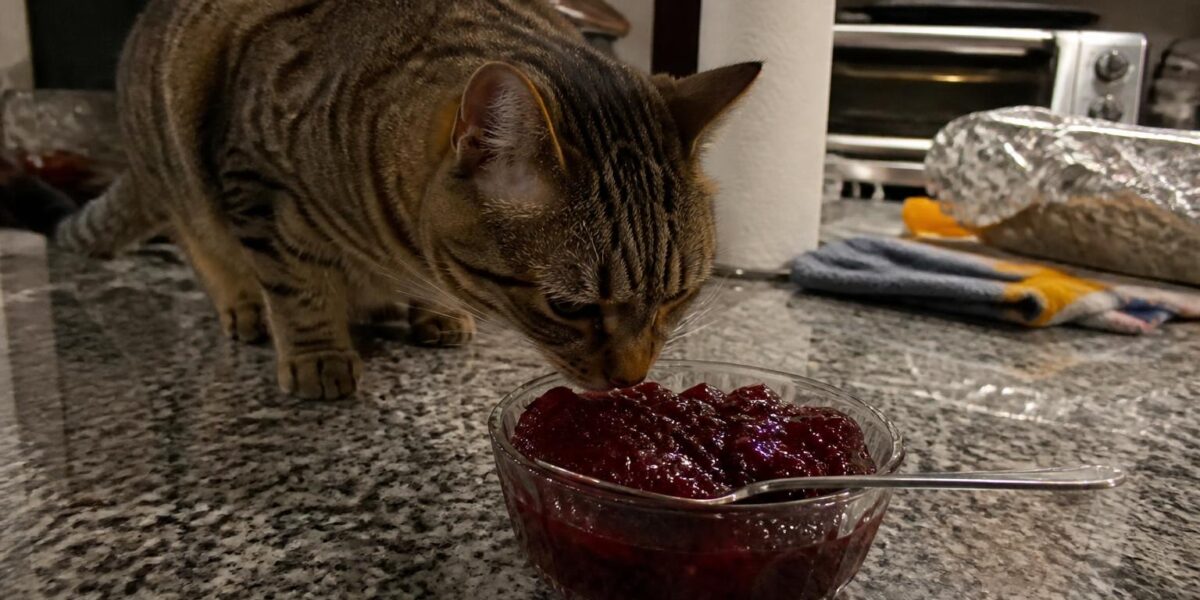
The Short Answer on Cranberry Sauce for Cats
Can cats eat cranberry sauce? You should avoid the typical canned or homemade sugary cranberry sauce, even though plain cranberries themselves are not toxic to cats. The problem is everything added to the sauce: heaps of sugar, sometimes raisins or orange zest, and occasionally seasonings that do not belong anywhere near a cat.
In this article
Plain cranberry is a different story. A tiny bit of plain, unsweetened cranberry is generally considered safe in small amounts, and cranberry extracts even appear in some feline urinary supplements. But the holiday sauce on the dinner table is not that, so keep it off your cat’s plate.
Cats are obligate carnivores and have no nutritional need for cranberry sauce. If your cat sneaks a lick, watch them and skip it going forward. Here is the full picture for cat owners.
This question comes up most around the holidays, when the table is crowded with rich dishes and a hopeful cat is weaving between everyone’s ankles. Cranberry sauce, with its bright color and jiggly texture, can catch a curious cat’s eye even though cats cannot taste the sweetness that makes it appealing to us. Knowing the difference between the festive sauce and plain cranberry helps you make a quick, confident call when those pleading eyes appear.
Why Cranberry Sauce Isn’t Good for Cats
The issue is not the cranberry at its core but the way sauce is made. Here is what makes it a food to avoid.
High sugar content. Canned and homemade cranberry sauce is loaded with sugar. Cats cannot taste sweetness and have no need for sugar, which can contribute to weight gain, dental problems, and trouble for diabetic cats.
Possible raisins or grapes. Some recipes add raisins, which are treated as dangerous to cats because of grape and raisin toxicity. This alone makes many sauces risky.
Citrus and spices. Orange zest, cinnamon, and other flavorings are common in cranberry sauce and are not appropriate for cats.
Possible toxic add-ins. Savory or homemade versions can include onion, garlic, or alcohol, all of which are dangerous to cats.
Because you cannot always know what is in a given sauce, the safest move is to avoid it entirely.
What About Plain Cranberries?
Plain, unsweetened cranberries are a separate question from cranberry sauce. They are not toxic to cats, and a tiny amount of plain cranberry, fresh or in a vet-approved supplement, is generally considered safe.
Cranberries are sometimes associated with urinary health, and cranberry-based supplements made for cats exist for that reason. However, you should never assume a human cranberry product is right for your cat, and you should talk to your veterinarian before giving any supplement.
Even plain cranberries are tart and not something most cats enjoy or need. As obligate carnivores, cats get complete nutrition from a balanced, meat-based diet, so plain cranberry is at most a rare tiny novelty, not a beneficial food. The sugary sauce, on the other hand, is best avoided altogether.
It is also worth clearing up a common misconception about cranberry and urinary health. While cranberry is popularly linked to preventing urinary tract infections, the evidence in cats is limited, and the type of urinary problems cats most often face, such as crystals and inflammation, are not the same as the bacterial infections cranberry is associated with. This is exactly why you should never self-prescribe cranberry products for a cat with urinary symptoms. Those signs warrant a prompt veterinary visit, because some urinary blockages, especially in male cats, are life-threatening emergencies that no home remedy can address.
What to Do If Your Cat Eats Cranberry Sauce
If your cat licks a small amount of plain-ish cranberry sauce, the main concern is the sugar, and a tiny lick is unlikely to cause serious harm. Watch for mild stomach upset and make sure fresh water is available.
The situation is more serious if the sauce contained raisins, onion, garlic, or alcohol. Watch for these symptoms:
- Vomiting or diarrhea
- Lethargy or weakness
- Loss of appetite
- Changes in urination (a concern with raisins)
- Pale gums (a concern with onion or garlic)
Call your veterinarian if your cat ate sauce that may have contained raisins, onion, garlic, or alcohol, or if any of these symptoms appear. Try to recall the recipe or bring the can so the vet knows the ingredients. When in doubt, a quick call is always the safe choice.
Homemade cranberry sauce can be especially hard to assess after the fact, since recipes vary so much from one cook to the next. If a relative made the sauce, it is worth a quick phone call to ask exactly what went into it, particularly whether it included raisins, orange liqueur, or any savory additions. The more accurately you can describe the ingredients to your veterinarian, the better they can judge the level of concern and advise you on the right next step for your cat.
Safer Treats for Cats
During holidays and everyday meals alike, the best treats for your cat are animal-based, not sugary fruit sauces. Reach for these instead.
- Small pieces of plain cooked turkey or chicken with no skin or seasoning
- A bite of plain cooked salmon
- A little plain scrambled egg
- Commercial treats made specifically for cats
Keep all treats to no more than about 10 percent of your cat’s daily calories, with the rest from a balanced cat food. At holiday gatherings, ask guests not to slip your cat table scraps, since many holiday foods are unsafe.
If you want to support your cat’s urinary health, talk to your veterinarian about proper cat-formulated supplements rather than feeding human cranberry products.
Other Holiday Foods to Keep Away From Cats
Cranberry sauce is just one of many festive foods that can harm cats. Knowing the common dangers helps you keep your cat safe at the table.
Other foods to keep well away include anything with onions or garlic, plus grapes and raisins and chocolate. All of these are toxic or dangerous to cats and appear frequently in holiday dishes.
The safest approach is to feed your cat its normal diet and offer only confirmed cat-safe treats during gatherings. Whenever you are unsure whether a holiday food is safe, your veterinarian is the best and quickest resource.
Keeping Your Cat Safe at Holiday Gatherings
The holidays bring extra people, open doors, and tables full of tempting food, which together create a perfect storm for accidental ingestion. A little planning keeps your cat safe while everyone else enjoys the feast. The single most effective step is to designate the dining area and kitchen as cat-free zones during meals and prep.
Guests are often the weak link, because a kindly relative may not know that cranberry sauce, stuffing made with onions, or chocolate desserts are dangerous to cats. A friendly heads-up at the start of the gathering, asking everyone not to feed the cat from the table, prevents most problems before they start. Many owners find it easiest to set their cat up in a quiet room with food, water, and a cozy bed during the busiest hours.
Cleanup matters just as much as the meal itself. Plates left within reach, scraps in an open trash can, and leftovers cooling on the counter are all temptations for a curious cat. Clear and cover food promptly, and use a secured trash bin so your cat cannot fish out something harmful after everyone has gone to bed.
If you would like to include your cat in the celebration, prepare a small dish of cat-safe goodies ahead of time, such as a few bites of plain cooked turkey with no skin or seasoning. That way your cat gets to share in the festivity safely, and you are not tempted to slip them a forkful of something off the holiday table. A little forethought lets everyone, cat included, enjoy the day.
Frequently Asked Questions
Is cranberry sauce toxic to cats?
Plain cranberry is not toxic, but cranberry sauce is best avoided because of its high sugar and possible raisins, onion, garlic, or alcohol. Those add-ins, especially raisins, can be dangerous to cats.
Are plain cranberries safe for cats?
Plain, unsweetened cranberries are not toxic, and a tiny amount is generally considered safe. They are tart and unnecessary for cats, though, so offer only a small taste and ask your vet about cranberry supplements.
My cat licked some cranberry sauce. Should I worry?
A small lick of plain-ish sauce is mainly a sugar concern and usually harmless. But if the sauce may have contained raisins, onion, garlic, or alcohol, contact your veterinarian right away.
Can cranberry help my cat’s urinary health?
Cranberry is sometimes used in cat-formulated urinary supplements, but you should not feed human cranberry products for this purpose. Talk to your veterinarian about proper supplements made for cats.


