
Last updated: April 9, 2026
In this article
Can Cats Eat Mushrooms? What Every Cat Owner Must Know
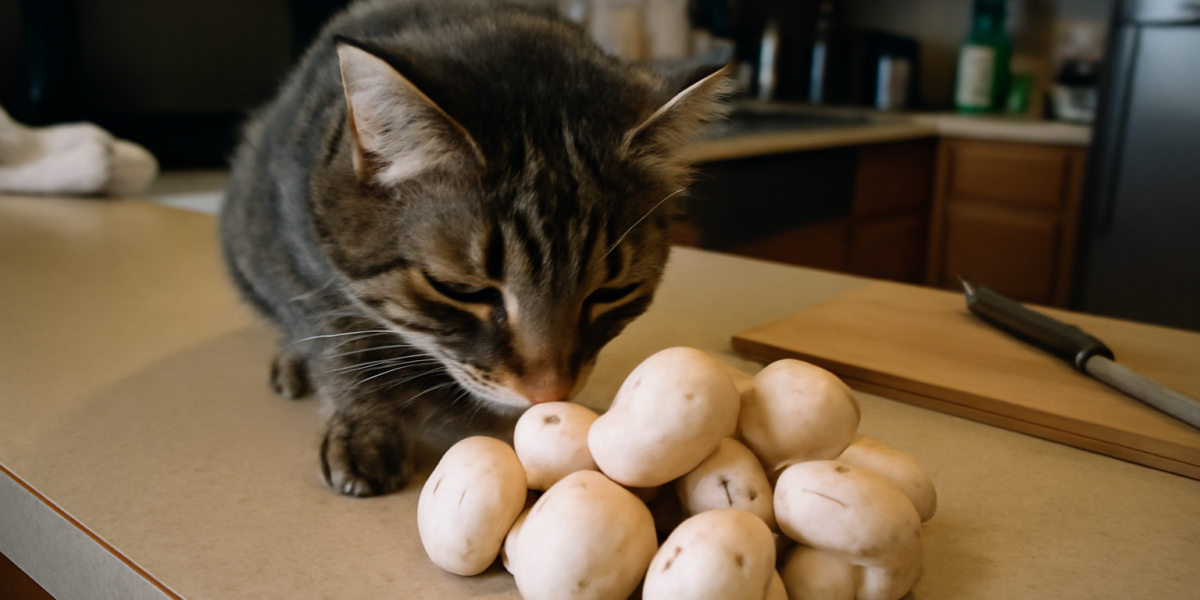
Your cat is on the kitchen counter again — a battle you have long since lost — and this time they are nosing at the mushrooms you just rinsed for dinner. Or maybe the concern is different: you spotted your outdoor cat sniffing at a mushroom growing in the yard after yesterday’s rain. These are two very different situations, and the answer to whether cats can eat mushrooms depends entirely on which scenario you are dealing with.
Plain, store-bought mushrooms are generally safe for cats in small amounts. They are not toxic, and a cat that eats a bite of cooked button mushroom, cremini, or portobello is not in danger. However, wild mushrooms are a completely different matter. Many species of wild mushrooms are highly toxic to cats, and some can cause fatal liver or kidney failure within hours of ingestion. Because even experienced foragers struggle to distinguish safe wild mushrooms from deadly ones, any contact between your cat and a wild mushroom should be treated as a potential emergency. This guide covers both situations in detail.
Store-Bought Mushrooms and Cats
The common mushroom varieties you find at the grocery store — white button, cremini, portobello, shiitake, and oyster mushrooms — are safe for cats to consume in small quantities. These cultivated mushrooms are non-toxic to cats and contain nutrients including B vitamins (particularly niacin and riboflavin), selenium, potassium, copper, and small amounts of protein.
That said, mushrooms are not a food that cats need in their diet. Cats are obligate carnivores, meaning their bodies are designed to derive nutrition primarily from animal protein. They lack the digestive enzymes to efficiently process plant-based foods, and the nutrients in mushrooms are available in more bioavailable forms from the meat-based diet that should form the foundation of a cat’s nutrition. A cat that eats a small piece of cooked mushroom is not being harmed, but they are also not getting meaningful nutritional benefit from it.
If you do offer your cat a small taste of store-bought mushroom, preparation matters. Plain, cooked mushrooms are the safest option. Raw mushrooms are harder for cats to digest and may cause mild gastrointestinal upset. Mushrooms that have been cooked with butter, oil, garlic, onion, salt, or other seasonings are not safe. Garlic and onion are toxic to cats and can cause oxidative damage to red blood cells, leading to Heinz body anemia. Even small amounts of garlic or onion can be harmful to cats, who are more sensitive to allium toxicity than dogs.
The simplest guideline is this: if you want to let your cat try a mushroom, offer a tiny piece of plain, cooked button or cremini mushroom. If your cat is not interested — and many cats will not be, since mushrooms are not a food that appeals to most feline palates — do not push it. There is no dietary reason a cat needs mushrooms.
Wild Mushrooms: A Serious Danger to Cats
Wild mushrooms represent one of the most serious poisoning risks for cats that spend time outdoors. There are thousands of mushroom species growing across North America, and while the majority are not lethally toxic, a meaningful number are capable of causing fatal organ damage. The most dangerous species include Amanita phalloides (death cap), Amanita virosa (destroying angel), Galerina marginata, and several species of Conocybe and Lepiota.
Amanita phalloides alone is responsible for the majority of fatal mushroom poisonings in animals and humans worldwide. It contains amatoxins that specifically target the liver and kidneys, causing irreversible damage that can lead to multi-organ failure and death within three to seven days of ingestion. The insidious aspect of amatoxin poisoning is that initial symptoms (vomiting and diarrhea) may resolve temporarily, creating a false sense of recovery before the catastrophic organ damage becomes apparent hours or days later.
The challenge with wild mushrooms is identification. Toxic and non-toxic species can look remarkably similar, and even mushroom experts are sometimes fooled. For cat owners, the safest policy is unambiguous: treat any wild mushroom contact as a potential poisoning event. If you see your cat eating, chewing on, or even playing with a wild mushroom, take the following steps immediately.
Remove any remaining mushroom material from your cat’s mouth if you can do so safely. Try to collect a sample of the mushroom, including the base and any fragments, and place it in a paper bag (not plastic, which accelerates decomposition and makes identification harder). Call your veterinarian or the ASPCA Animal Poison Control Center at 888-426-4435 immediately. Do not wait for symptoms to appear — early treatment is critical for many types of mushroom poisoning, and some of the most dangerous toxins do not produce symptoms for six to twelve hours after ingestion.
Symptoms of Mushroom Poisoning in Cats
The symptoms of mushroom poisoning in cats vary depending on the species of mushroom ingested, the amount consumed, and the size and health of the cat. Different mushroom toxins affect different organ systems, so the clinical presentation can range from mild gastrointestinal upset to rapid organ failure.
Gastrointestinal symptoms. Vomiting, diarrhea, drooling, and abdominal pain are the most common initial symptoms, appearing within one to six hours of ingestion for most mushroom species. These symptoms may be mild and self-limiting if the mushroom was a relatively harmless species. However, they can also be the first phase of a much more serious poisoning, so they should never be dismissed.
Neurological symptoms. Some mushroom species contain neurotoxins that cause tremors, seizures, disorientation, incoordination (ataxia), agitation, and apparent hallucinations. The cat may appear confused, react to stimuli that are not present, or exhibit exaggerated startle responses. Neurological symptoms typically appear within 30 minutes to two hours of ingestion and require immediate veterinary care.
Liver and kidney failure. This is the most dangerous outcome and is associated with amatoxin-containing species like Amanita phalloides. Symptoms may not appear for six to twelve hours and can include jaundice (yellowing of the gums and whites of the eyes), lethargy, loss of appetite, increased thirst and urination, bruising, and eventually collapse. By the time liver failure symptoms are apparent, the damage may be irreversible. This is why early veterinary intervention is so critical — treatment started before symptoms develop offers a much better prognosis.
Muscarinic symptoms. Certain mushroom species affect the parasympathetic nervous system, causing excessive salivation, tearing, urination, diarrhea, slow heart rate, and constricted pupils. These symptoms develop quickly, usually within 30 minutes to two hours, and while they are uncomfortable, the prognosis with treatment is generally good.
Preventing Mushroom Exposure in Cats
Prevention is far preferable to treatment when it comes to mushroom poisoning. A few practical steps can significantly reduce your cat’s risk of encountering wild mushrooms.
Survey your yard regularly. Mushrooms tend to appear after rain, particularly in shaded areas with organic debris. Walk your property after rainstorms and remove any mushrooms you find. Wear gloves and dispose of them in a sealed bag in the trash. Do not compost mushrooms you cannot positively identify, as the spores can generate new growth.
Supervise outdoor time. If your cat goes outdoors, supervised outdoor time in a screened enclosure (catio) or on a leash and harness eliminates the risk of unsupervised mushroom encounters. Cats that roam freely are at the highest risk, as you have no way of knowing what they encounter during their time away from home.
Keep indoor mushrooms secured. Store-bought mushrooms left on the counter can attract curious cats. While these mushrooms are not dangerous, a cat that develops an interest in mushrooms may seek them out in other contexts, including outdoors. Store mushrooms in the refrigerator where your cat cannot access them.
Know the high-risk seasons. In most of North America, mushroom growth peaks in spring and fall, when rainfall combines with moderate temperatures. Be particularly vigilant during these seasons if your cat spends any time outdoors. In warmer climates with year-round rainfall, mushrooms may appear at any time.
What to Do If Your Cat Eats a Wild Mushroom
Time is the most critical factor in mushroom poisoning treatment. If you know or suspect your cat has eaten a wild mushroom, act immediately — do not wait to see if symptoms develop.
Step one: Collect a sample. If any mushroom material remains, collect it. Take a photo as well. Bring the sample and photo to the veterinary clinic, as identification of the mushroom species will guide treatment decisions. Place the sample in a paper bag or wrap it in a damp paper towel.
Step two: Call ahead. Call your veterinarian or an emergency veterinary hospital before you arrive so they can prepare. If it is after hours, locate your nearest 24-hour emergency veterinary facility. You can also call the ASPCA Animal Poison Control Center at 888-426-4435 for immediate guidance. There is a consultation fee for this service, but the toxicology expertise is worth it.
Step three: Do not attempt home treatment. Do not try to induce vomiting in your cat without veterinary guidance. Cats respond unpredictably to vomiting induction, and certain mushroom toxins can cause additional damage to the esophagus if vomited back up. Your veterinarian will determine the appropriate decontamination approach based on the suspected mushroom type, the amount consumed, and the time since ingestion.
Step four: Follow veterinary instructions. Treatment for mushroom poisoning may include activated charcoal to bind remaining toxins, intravenous fluids to support kidney function, anti-nausea medications, liver-protective agents, and in severe cases, hospitalization for intensive monitoring. The duration and intensity of treatment depend on the species of mushroom and the severity of the poisoning.
Frequently Asked Questions
Can cats eat cooked mushrooms from pizza or pasta?
Mushrooms on pizza or in pasta dishes are almost always cooked with garlic, onion, oil, salt, and cheese. All of these additions create problems for cats. Garlic and onion are toxic to cats. The fat and salt content is excessive. The cheese may cause digestive upset in lactose-intolerant cats, which includes the majority of adult cats. Do not give your cat mushrooms that were prepared as part of a human meal. If you want to offer mushroom, prepare a small piece separately without any seasoning or additions.
My indoor cat has never been outside. Can they still be at risk for mushroom poisoning?
The risk is extremely low for strictly indoor cats, but it is not zero. Mushrooms can occasionally grow indoors in potted plant soil, particularly in humid environments with organic potting mix. Check your houseplant pots periodically and remove any fungal growth. As for store-bought mushrooms, keep them stored in the refrigerator rather than on the counter where a curious cat might investigate.
Are dried mushrooms safe for cats?
Dried store-bought mushrooms like dried shiitake, porcini, or morel mushrooms are not toxic to cats, but they are a poor choice as a treat. Dried mushrooms are concentrated, tough, and can expand in the stomach when they absorb moisture, potentially causing gastrointestinal discomfort. They are also often stored in bags on countertops or in pantries, making them accessible to curious cats. Keep dried mushrooms sealed and stored where your cat cannot reach them.
How quickly does mushroom poisoning kill a cat?
The timeline varies enormously depending on the mushroom species. Neurotoxic mushrooms can cause severe symptoms within 30 minutes but are rarely fatal with treatment. Amatoxin-containing mushrooms like Amanita phalloides may not produce serious symptoms for 6 to 12 hours, but once liver failure sets in (typically 24 to 72 hours after ingestion), the condition can become fatal within three to seven days without aggressive treatment. Some cats survive amatoxin poisoning with intensive care, but the prognosis is guarded even with the best available treatment. This is why immediate veterinary intervention is so important.
Can cats eat mushroom-based supplements or broths?
Mushroom supplements marketed for pets (typically containing reishi, turkey tail, or lion’s mane extracts) have gained popularity among pet owners interested in alternative health approaches. While some preliminary research suggests potential immune-supporting properties of certain medicinal mushroom extracts, the evidence in cats specifically is very limited. Never give your cat a mushroom supplement formulated for humans, as the dosing may be inappropriate and the product may contain additives not safe for cats. If you are interested in mushroom supplements for your cat, discuss it with your veterinarian first.


