
Last updated: April 9, 2026
In this article
- Is Pizza Safe for Cats?
- Nutritional Profile of Pizza and Why It Fails Cats
- Specific Pizza Ingredients That Are Dangerous for Cats
- Risks and Side Effects of Cats Eating Pizza
- What to Do If Your Cat Eats Pizza
- Signs of Problems After Eating Pizza
- Healthy Alternatives to Pizza for Cats
- Frequently Asked Questions
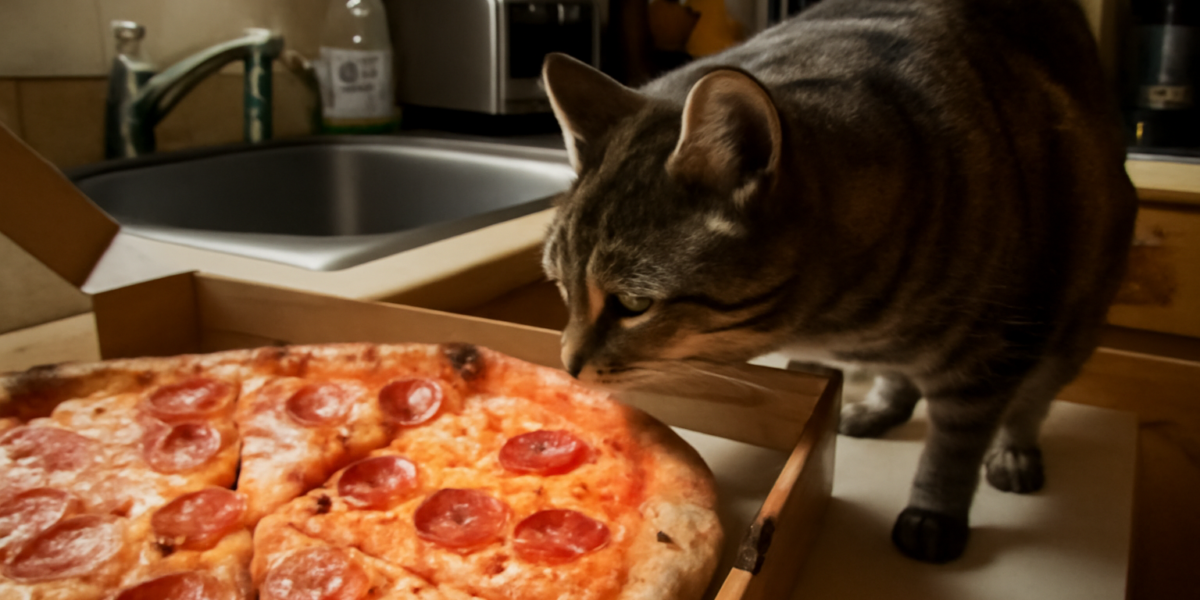
Pizza night is a beloved tradition in countless households, and it is almost guaranteed that your cat will be nearby, staring intently at every slice you pull from the box. The combination of melted cheese, savory meat toppings, and warm dough produces an aroma that appeals to felines just as much as it does to us. But should you tear off a corner and share it with your whiskered companion? The answer, unfortunately, is that pizza is not a safe or appropriate food for cats. From the dough to the sauce to the toppings, nearly every component of a typical pizza poses some level of risk to your cat’s health.
Quick Answer: No, cats should not eat pizza. Pizza contains high levels of fat, sodium, and carbohydrates that cats cannot process efficiently. Common toppings like garlic, onions, and certain spices are toxic to cats. While a tiny nibble of plain crust is unlikely to cause an emergency, pizza should not be offered as a treat.
Is Pizza Safe for Cats?
Pizza is not considered safe for cats, and veterinarians do not recommend offering it in any amount. The issue is not a single dangerous ingredient but rather the combination of multiple problematic components that make pizza a poor choice for feline consumption.
Cats are obligate carnivores, meaning their digestive systems are optimized for processing animal protein and fat. They have limited ability to handle the carbohydrates in pizza dough, the lactose in cheese, and the complex blend of spices in tomato sauce. While a single small bite of plain cheese pizza crust is unlikely to cause a medical emergency in a healthy adult cat, it offers zero nutritional benefit and sets a precedent for begging behavior that can be difficult to reverse.
The greater danger lies in the toppings and seasonings. Garlic and onions, which are present in virtually all pizza sauces and many topping combinations, are toxic to cats even in small quantities. These allium family members can damage red blood cells and lead to hemolytic anemia over time.
Nutritional Profile of Pizza and Why It Fails Cats
A single slice of cheese pizza typically contains approximately 270 to 350 calories, 10 to 15 grams of fat, 30 to 40 grams of carbohydrates, and 600 to 900 milligrams of sodium. To put this in perspective for a cat:
- Calories: An average indoor cat needs only 200 to 250 calories per day. A single pizza slice could exceed an entire day’s caloric requirement.
- Carbohydrates: Cats have minimal carbohydrate requirements and lack the salivary enzyme amylase that helps break down starches. The refined flour in pizza crust provides empty calories with no nutritional value for cats.
- Sodium: Cats require only about 21 milligrams of sodium per day. One pizza slice contains 30 to 40 times that amount, placing significant strain on feline kidneys.
- Fat: While cats do need dietary fat, the saturated fat from cheese and processed meats in pizza can contribute to obesity and pancreatitis.
- Lactose: Most adult cats are lactose intolerant. The cheese on pizza can cause bloating, gas, diarrhea, and abdominal discomfort.
In short, pizza delivers exactly the wrong nutritional profile for cats — too many carbohydrates, too much sodium, too much fat, and none of the complete animal protein that cats actually need.
Specific Pizza Ingredients That Are Dangerous for Cats
Understanding which pizza components pose the greatest risks can help you assess the severity of the situation if your cat manages to steal a bite.
Garlic: Found in nearly all pizza sauces and often on the crust as garlic butter, garlic is one of the most toxic common foods for cats. It is roughly five times more potent than onions in causing oxidative damage to feline red blood cells. Even garlic powder in small quantities can be harmful.
Onions: Another allium family member frequently present in pizza sauce and as a topping. Like garlic, onions cause hemolytic anemia in cats. The toxic effect is cumulative, meaning repeated small exposures can be just as dangerous as a single large dose.
Raw dough: If your cat encounters unbaked pizza dough, the situation is more urgent than cooked crust. Raw yeast dough continues to rise in the warm, moist environment of the stomach, causing painful bloating and potentially dangerous gastric dilation. The fermentation process also produces ethanol, which can lead to alcohol poisoning.
Processed meats: Pepperoni, sausage, and bacon toppings contain extremely high levels of sodium, nitrates, and spices that can cause gastrointestinal distress and are not appropriate for cats.
Cheese: While not toxic, the lactose in cheese causes digestive upset in most adult cats, who lose the ability to produce sufficient lactase enzyme after weaning.
Risks and Side Effects of Cats Eating Pizza
If your cat eats pizza, the severity of the reaction depends on the amount consumed and the specific ingredients involved.
Mild exposure (a small nibble of plain crust): Unlikely to cause significant problems in a healthy adult cat. You may notice mild digestive upset such as soft stool or a brief episode of vomiting.
Moderate exposure (a bite or two including cheese and sauce): Likely to cause gastrointestinal distress including vomiting, diarrhea, and gas. The garlic in the sauce is a concern, and you should monitor your cat closely for signs of toxicity over the following 48 to 72 hours.
Significant exposure (multiple bites or a full slice): Warrants a call to your veterinarian. The combination of garlic, onion, high fat, and high sodium can cause serious digestive upset and potential toxicity. Watch for pale gums, lethargy, rapid breathing, and dark urine — signs of anemia from allium poisoning.
Chronic exposure from regularly sharing pizza with your cat can lead to obesity, kidney strain from sodium overload, and cumulative allium toxicity even from small individual doses.
What to Do If Your Cat Eats Pizza
If your cat sneaks a bite of pizza, remain calm and take the following steps:
- Remove access to any remaining pizza immediately.
- Determine what toppings and ingredients were on the pizza, paying special attention to garlic, onions, and any unusual spices.
- Estimate how much your cat consumed.
- If the amount was very small (less than a thumbnail-sized piece of plain crust), monitor at home for any signs of digestive upset.
- If your cat consumed sauce, cheese, or toppings, contact your veterinarian or the ASPCA Animal Poison Control Center (888-426-4435) for guidance.
- Ensure your cat has access to plenty of fresh water to help flush excess sodium.
- Monitor for vomiting, diarrhea, lethargy, pale gums, or changes in urination over the next 24 to 72 hours.
Do not induce vomiting unless specifically instructed to do so by a veterinary professional.
Signs of Problems After Eating Pizza
Watch for the following symptoms in the hours and days after your cat eats pizza:
- Vomiting or dry heaving
- Diarrhea, possibly with an unusual odor
- Excessive thirst and urination (from sodium overload)
- Lethargy and decreased interest in normal activities
- Loss of appetite
- Abdominal bloating or tenderness
- Pale or yellowish gums (a sign of anemia from garlic or onion exposure)
- Rapid or labored breathing
- Dark reddish-brown urine
Symptoms of allium toxicity may not appear for two to four days after ingestion, so continued monitoring is important even if your cat seems fine initially. If you notice any of the more serious symptoms listed above, seek veterinary care immediately.
Healthy Alternatives to Pizza for Cats
If you want to treat your cat during your own pizza night, consider offering a cat-friendly option instead:
- Plain cooked chicken: Unseasoned, boneless chicken breast is a high-protein treat that cats love. Read our guide on can cats eat chicken.
- Small pieces of plain cooked steak: Lean, unseasoned beef satisfies the craving for meat without the harmful extras. See our article on can cats eat steak.
- Commercial cat treats: Treats specifically formulated for cats provide appealing flavors without dangerous ingredients.
- Freeze-dried meat treats: Single-ingredient freeze-dried chicken, turkey, or salmon treats offer convenience and safety.
- A small amount of plain cooked fish: A tiny piece of cooked salmon or tuna without seasoning can be an exciting treat.
Looking to add a feline companion to your family? Visit our adoption page to meet cats waiting for their forever homes.
Frequently Asked Questions
Can cats eat pizza crust?
While plain pizza crust without any garlic butter, seasoning, or sauce is less dangerous than the rest of the pizza, it is still not recommended. Pizza crust is essentially refined white flour with very little nutritional value for cats. It provides empty carbohydrate calories that cats cannot metabolize efficiently. A tiny piece is unlikely to cause harm, but there is no reason to make it a habit.
Can cats eat pizza sauce?
No. Pizza sauce almost always contains garlic and onion, both of which are toxic to cats. Even commercially prepared pizza sauces that do not list garlic or onion as separate ingredients often contain them as part of the spice blend. The acidity of tomato sauce can also cause gastrointestinal upset in cats.
My cat ate a whole slice of pizza — should I go to the vet?
A full slice of pizza is a significant amount for a cat and warrants at minimum a phone call to your veterinarian. The combination of garlic and onion in the sauce, high sodium content, and high fat content can cause serious health issues. Your vet can advise whether an in-person visit is needed based on your cat’s size, health status, and the specific pizza ingredients.
Why does my cat love pizza so much?
Cats are attracted to the fat and protein in cheese and meat toppings. Their sense of smell is approximately 14 times stronger than a human’s, and the warm, rich aroma of pizza is extremely appealing. Cats also learn quickly that begging behavior results in food rewards, which reinforces their interest. This is why it is important not to start the habit of sharing human food in the first place.
Can cats eat frozen pizza?
Cats should not eat any type of pizza, whether frozen, fresh, or delivery. Frozen pizzas contain the same problematic ingredients as other pizzas — garlic, onion, high sodium, high fat, and refined carbohydrates — and often contain additional preservatives and artificial ingredients that are not suitable for feline consumption.
Is there any type of pizza that is safe for cats?
No commercially available pizza is safe for cats. However, if you are feeling creative, you could make a cat-safe “pizza” at home using a small piece of cooked chicken as the “crust,” a thin smear of plain pumpkin puree (not pie filling) as the “sauce,” and a small amount of cat-safe cheese alternative as the “topping.” This is entirely for fun and not a necessary part of your cat’s diet, but it can be a safe way to include your cat in pizza night without risking their health.


