
Last updated: May 4, 2026
In this article
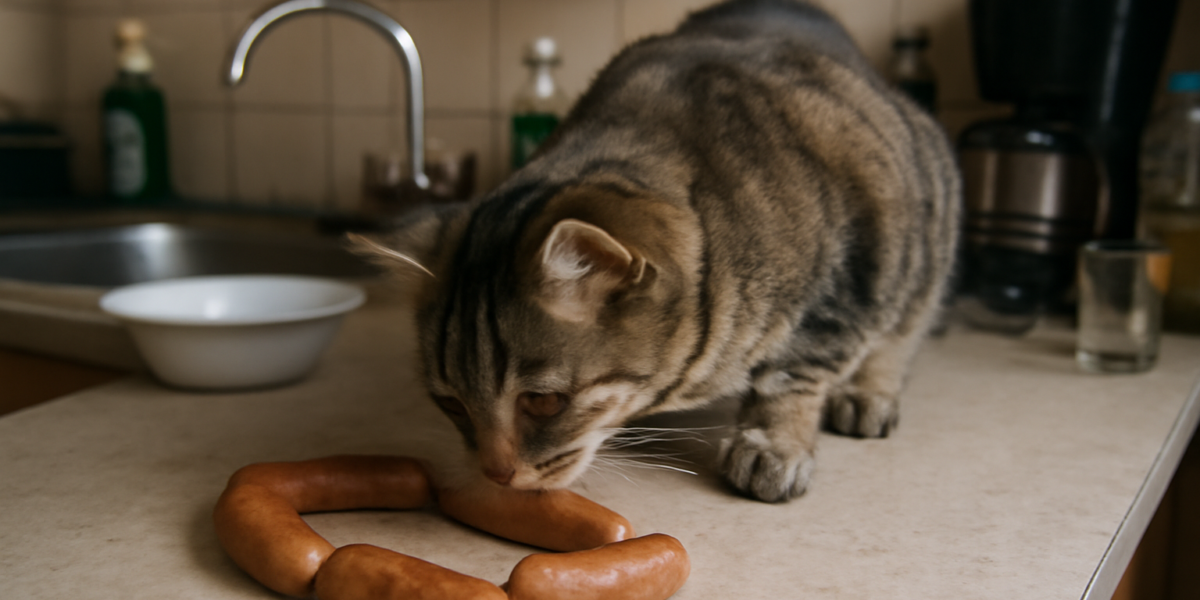
Sausage is one of those breakfast staples that can send a cat sprinting into the kitchen at the first sizzle. The rich, meaty aroma is deeply appealing to felines, and since sausage is made from meat, it might seem like a logical treat for an obligate carnivore. But the reality is far more complicated. The processing, seasoning, and fat content that make sausage delicious to humans also make it problematic — and potentially harmful — for cats.
Quick Answer: No, sausage is not recommended for cats. While the base meat (pork, chicken, turkey, or beef) is not toxic, sausage contains dangerously high levels of sodium, fat, and seasonings — including garlic and onion powder, which are toxic to cats. Even a small piece can deliver more salt and fat than a cat should consume in an entire day. Stick to plain, unseasoned cooked meat instead.
Is Sausage Safe for Cats?
Sausage is not safe for cats as a regular treat, and most veterinarians would advise against feeding it at all. The issue is not the meat itself — pork, chicken, turkey, and beef are all appropriate protein sources for cats when prepared plainly. The problem is everything else that goes into making sausage.
A typical sausage recipe includes:
- Salt: Sausage is one of the highest-sodium processed meats. A single breakfast sausage link can contain 200–400 mg of sodium. A 10-pound cat’s entire daily sodium requirement is approximately 42 mg. One sausage link provides 5–10 times that amount.
- Garlic and onion powder: These are nearly universal sausage seasonings and are among the most dangerous foods for cats. Both belong to the Allium family and can cause oxidative damage to red blood cells, leading to Heinz body anemia. Toxicity can occur from surprisingly small amounts.
- Fat: Sausage typically derives 60–80 percent of its calories from fat. High-fat foods can trigger pancreatitis in cats — a painful, potentially life-threatening inflammation of the pancreas.
- Preservatives: Many sausages contain nitrates, nitrites, sulfites, BHA, or BHT — chemical preservatives that have no place in a cat’s diet.
- Spices: Sage, fennel, red pepper flakes, paprika, and other spices used in sausage can cause gastrointestinal irritation in cats.
Even a single small piece of sausage delivers a concentrated dose of sodium, fat, and potentially toxic seasonings that can harm your cat.
Nutritional Profile of Sausage
One cooked pork breakfast sausage link (about 27 grams) contains approximately 82 calories, 7 grams of fat (including 2.5 grams of saturated fat), 4.4 grams of protein, 0.4 grams of carbohydrates, and roughly 200 mg of sodium. Some varieties contain significantly more salt.
Comparing this to what a cat actually needs reveals the mismatch. A 10-pound cat requires approximately 200–250 calories per day. One sausage link represents roughly a third of their daily caloric needs — and that third would be overwhelmingly composed of fat and salt rather than the lean protein that cats thrive on.
The protein-to-fat ratio in sausage is inverted compared to what feline nutritionists recommend. Cats do best with lean animal protein as their primary calorie source. Sausage delivers a fraction of its calories from protein and the majority from fat, making it a poor nutritional choice even before considering the toxic seasonings.
Risks and Side Effects of Feeding Sausage to Cats
- Allium toxicity: Garlic and onion are present in virtually all sausage formulations. Even small amounts can damage red blood cells in cats, causing Heinz body anemia. Symptoms may not appear for 1–5 days and include lethargy, pale gums, rapid breathing, dark-colored urine, and collapse. This is a veterinary emergency.
- Sodium overload: Excessive sodium can cause increased thirst, urination, dehydration, elevated blood pressure, and in severe cases, sodium ion poisoning — characterized by vomiting, diarrhea, tremors, elevated body temperature, and seizures.
- Pancreatitis: The high fat content of sausage is a well-established trigger for pancreatitis in cats. Symptoms include severe abdominal pain, vomiting, diarrhea, fever, and lethargy. Pancreatitis can be life-threatening and may require hospitalization.
- Obesity: The calorie density of sausage (mostly from fat) makes even small amounts a significant caloric addition to a cat’s daily intake. Chronic overfeeding of high-fat foods contributes to feline obesity, which increases the risk of diabetes, joint disease, and hepatic lipidosis.
- Gastrointestinal distress: Spices, preservatives, and excess fat can cause vomiting, diarrhea, and stomach pain even without triggering the more serious conditions listed above.
- Nitrate and nitrite exposure: These preservatives, common in cured and processed sausages, can interfere with oxygen transport in the blood (methemoglobinemia) in sensitive animals.
What If My Cat Already Ate Sausage?
If your cat ate a small piece of sausage, do not panic, but do monitor them closely:
- Watch for vomiting, diarrhea, or excessive thirst over the next 12–24 hours
- Ensure fresh water is available to help flush excess sodium
- Check the sausage ingredient list for garlic and onion content
- If garlic or onion are listed — even as powders — contact your veterinarian, as the toxic effects may be delayed by several days
For larger amounts of sausage consumption, or if your cat shows any of the following symptoms, seek veterinary care promptly:
- Persistent vomiting or diarrhea
- Lethargy, weakness, or collapse
- Pale, white, or yellowish gums
- Dark brown or reddish urine
- Rapid breathing or panting
- Tremors or seizures
- Abdominal pain (hunched posture, crying when touched)
How to Satisfy Your Cat’s Meat Cravings Safely
- Kittens: Stick to complete kitten food formulas. If you want to supplement with whole food, offer a teaspoon of plain cooked chicken or turkey once a week.
- Adult cats (6–10 lbs): Up to 1 ounce of plain, cooked, unseasoned meat (chicken breast, turkey breast, or lean beef) once or twice per week as a treat.
- Large cats (over 10 lbs): Up to 1.5 ounces of plain, cooked, unseasoned meat once or twice per week.
The key is to give your cat what sausage actually is underneath all the processing — plain meat. Bake, boil, or steam chicken, turkey, or lean pork without any salt, oil, garlic, onion, or spices. Dice or shred it into small pieces. This provides the meaty flavor and aroma your cat craves, plus high-quality protein, without any of the dangerous additives found in sausage.
Alternatives to Sausage for Cats
- Plain cooked chicken: Lean, safe, and nutritionally appropriate. Boneless, skinless chicken breast is ideal.
- Plain cooked turkey: Another excellent lean protein. Avoid deli turkey, which shares many of the same problems as sausage (high sodium, preservatives).
- Cooked salmon: Provides protein plus omega-3 fatty acids. Bake or steam without seasoning.
- Cooked shrimp: Low-calorie, high-protein treats that most cats love. Peel and devein before serving.
- Commercial cat treats: High-quality freeze-dried meat treats formulated for cats provide the meaty satisfaction of sausage without dangerous additives.
Frequently Asked Questions
Can cats eat turkey sausage?
Turkey sausage is not safe for cats either. While turkey sausage may be lower in fat than pork sausage, it still contains high levels of sodium, garlic, onion, and other seasonings that are harmful to cats. The “healthier” reputation of turkey sausage applies to human nutrition, not feline nutrition. Feed your cat plain, cooked turkey breast instead.
Can cats eat chicken sausage?
No, chicken sausage is not recommended for cats for the same reasons as other sausage varieties. It contains sodium, seasonings (commonly including garlic and onion), preservatives, and often added fat. Plain, unseasoned cooked chicken is always the better option.
What about sausage without garlic or onion?
Even garlic- and onion-free sausage is problematic for cats due to its extremely high sodium and fat content. A single sausage link typically contains 5–10 times a cat’s daily sodium needs. The fat content can trigger pancreatitis. While removing the Allium toxicity risk is an improvement, the product still fails as appropriate cat nutrition on multiple other fronts.
My cat seems fine after eating sausage — is it really that bad?
A cat may not show immediate symptoms after eating a small piece of sausage, but that does not mean no harm was done. Allium toxicity from garlic and onion can take 1–5 days to manifest as anemia. Sodium stress on the kidneys is cumulative over time. Pancreatitis risk increases with repeated exposure. The absence of immediate symptoms does not equal safety — it simply means the acute threshold was not reached this time.
Can cats eat raw sausage?
Raw sausage is even more dangerous than cooked sausage for cats. In addition to all the seasoning and sodium concerns, raw sausage — particularly pork sausage — carries a risk of Trichinella parasites, Salmonella, E. coli, and other foodborne pathogens. Never feed raw sausage to your cat.
Is there such a thing as cat-safe sausage?
Some pet food companies produce sausage-style treats formulated specifically for cats, using cat-safe ingredients, controlled sodium levels, and no toxic seasonings. These are the only “sausages” appropriate for cats. Always check that the product is specifically labeled for feline consumption and review the ingredient list for any problematic additives.
Looking for a furry companion who will appreciate plain chicken just as much as any gourmet sausage? Visit our adoption page to find cats waiting for loving homes.


