
Last updated: May 4, 2026
In this article
- Can Dogs Eat Char Siu? The Short Answer
- The Hoisin Sauce Problem
- Sodium and the Soy Sauce Layer
- Five-Spice Powder and Other Seasonings
- The Pork Itself and the Cooking Method
- What to Do If Your Dog Ate Char Siu
- Char Siu Bao, Char Siu Rice, and Other Dishes
- Plain Pork Alternatives for Asian-Cuisine Households
- Frequently Asked Questions
Can Dogs Eat Char Siu? The Short Answer
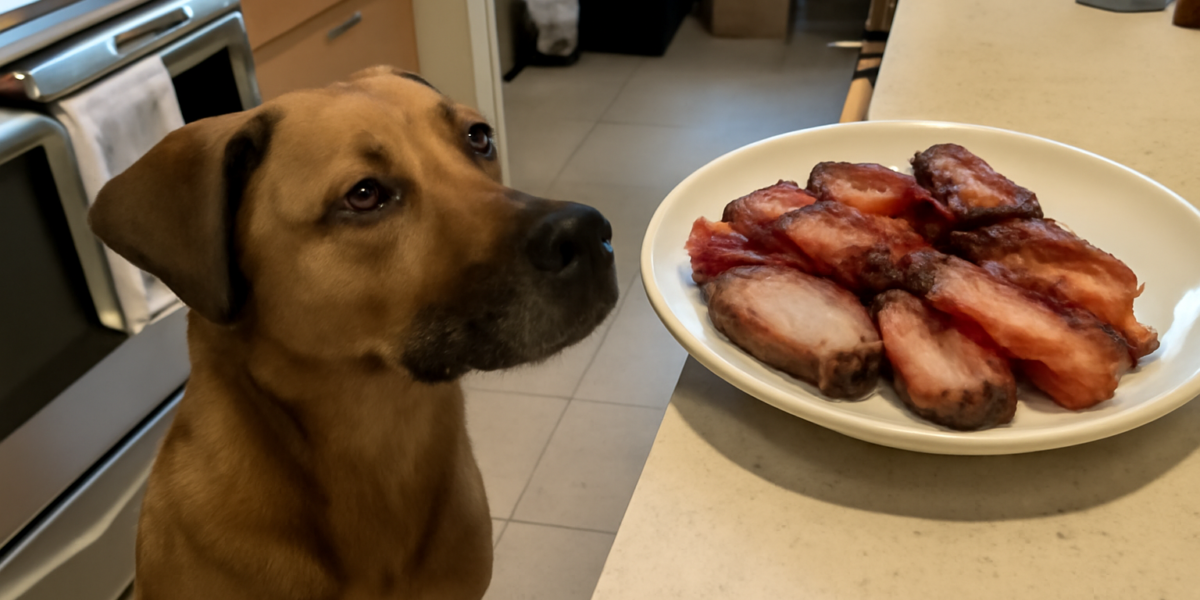
If you are wondering whether dogs can eat char siu — the glossy red Chinese barbecue pork found in Cantonese roast meat shops, dim sum carts, and char siu bao — the answer is no, not in any meaningful portion. The pork itself is not the problem; pork is a routine and generally dog-safe protein when prepared plainly. The problem is the marinade. Char siu is built on a thick coating of hoisin sauce (which contains garlic), honey or maltose, soy sauce (high sodium), Chinese five-spice powder, sometimes red fermented bean curd, and food coloring or red yeast rice. Each of those is a distinct concern for dogs, and together they make char siu unsuitable as a deliberate treat.
A small accidental taste — a corner that fell on the floor, a piece your dog snuck off a takeout container — is unlikely to cause acute harm in a healthy adult dog, but the layered allium and sodium content makes regular feeding a bad idea. Below, we will go through the marinade ingredients, the cooking method, and what to do if your dog ate a meaningful portion.
The Hoisin Sauce Problem
The biggest concern in char siu marinade is hoisin sauce, the dark sweet-savory paste that forms the base of most authentic recipes. Despite its mild taste, hoisin almost always contains garlic — sometimes listed prominently, sometimes hidden under “spices” or “flavorings.” Garlic is genuinely toxic to dogs, with the same mechanism as onion: organosulfur compounds damage red blood cell membranes, leading to oxidative anemia with delayed-onset symptoms one to three days after exposure.
The amount of garlic in hoisin varies by brand, but most include enough that consistent or larger exposures put a dog over the dose-response threshold. Lee Kum Kee, Koon Chun, and most other commercial brands use garlic; some artisanal versions use more. Our deeper guides on garlic for dogs and onions for dogs walk through the chemistry and the typical dose calculations.
Beyond garlic, hoisin contains soybean paste (high sodium), sugar, fermented red bean curd in some recipes, sesame oil, and various spice blends. None of those individual components are catastrophically toxic, but stacked together with the sodium and the rest of the char siu marinade they pile on. There is no safe way to “rinse off” hoisin — it has cooked into the meat surface for hours and infused several millimeters deep.
Sodium and the Soy Sauce Layer
Char siu marinade typically includes both light and dark soy sauce, sometimes shao xing wine, oyster sauce, and salt. The cumulative sodium load is significant. A single ounce of finished char siu can carry 300 to 600 milligrams of sodium, sometimes higher in commercial versions where the marinade is concentrated and the meat is brined.
For comparison, a healthy 25-pound dog has a daily sodium tolerance around 250 to 300 milligrams. A few ounces of char siu can blow past that allowance in one sitting. The acute symptoms in most healthy dogs are mild — increased thirst, more frequent urination — but for dogs with heart, kidney, or hypertension issues, the sodium load is a real concern. Salt-driven thirst-vomit cycles in small dogs with limited water access can rarely progress to hypernatremia and neurological signs, although this is uncommon from food alone.
The sweet glaze does not balance the sodium — it adds a separate sugar concern on top of it. Honey, maltose, or rock sugar caramelizes during the high-heat finish, creating the lacquered surface that defines proper char siu. The combination of high sugar plus high sodium plus high fat (since char siu is typically made from pork shoulder or pork belly cuts) is rough on a dog stomach not used to it.
Five-Spice Powder and Other Seasonings
Chinese five-spice powder — a mix of star anise, fennel seed, cloves, cinnamon, and Sichuan peppercorn (some recipes substitute or add white pepper) — is another marinade component that does not belong in a dog’s food. None of the five spices is acutely toxic at the trace amounts found in a small bite, but combined and concentrated in char siu marinade they can cause GI upset, drooling, and mouth irritation.
Star anise and fennel seed in larger amounts have been associated with mild neurological symptoms in some animal toxicology reports, though the threshold is much higher than typical food exposure. Cinnamon in small amounts is tolerated by most dogs, and our cinnamon for dogs guide covers the dose considerations. Cloves contain eugenol, which can be irritating to dog livers in larger doses. None of this is a primary concern from a small piece of char siu, but it adds to the cumulative reasons to skip routine feeding.
Some home and shop char siu recipes also use Chinese rose wine (mei kuei lu chiew), which contains alcohol that is partially driven off during cooking. Soy bean paste varieties may contribute additional fermented compounds. Red fermented bean curd (nam yu), used in some traditional recipes, is heavily salted and contains additional alliums in some brands. The cumulative ingredient list is long and dog-unfriendly.
The Pork Itself and the Cooking Method
Plain pork is a fine protein for dogs in moderation — see our guide to pork for dogs for general safety information. The cuts used for char siu are typically pork shoulder (boneless, with good marbling) or pork belly. Pork shoulder is reasonable in moderation when cooked plainly, while pork belly’s high fat content is a pancreatitis trigger for fat-sensitive dogs. Our pork belly guide covers the fat content concern in detail.
Char siu is roasted at high heat — often over open flame or in a high-temperature oven — to develop the characteristic charred edges and lacquered surface. The high-heat cooking creates Maillard browning compounds and some heterocyclic amines, which are not acutely toxic at the levels in a single piece but are not health-promoting either. The charred sections concentrate sodium and seasonings, making them the worst part of the cut for dogs.
If you have access to plain unseasoned pork shoulder before it goes into the marinade — say, you are cooking char siu at home and can set aside a piece — that is a perfectly fine dog protein. A few ounces of plain cooked pork shoulder, with no marinade, no glaze, and no char, is a reasonable dog meal addition. The finished char siu, however, is too seasoned to recommend.
What to Do If Your Dog Ate Char Siu
The first question is amount. A small piece — a corner that dropped off a takeout box, a bite a child shared at the dim sum table — in a healthy adult medium or large dog is unlikely to cause more than mild GI upset. Watch for vomiting, diarrhea, lethargy, or excessive thirst over the next twelve to seventy-two hours. The delayed window matters because allium-related anemia can develop over one to three days.
For larger amounts — a meaningful portion of a char siu serving, an entire piece pulled from the table, the contents of a takeout container — call Pet Poison Helpline at 855-764-7661 or your veterinarian for case-specific advice. Have ready your dog’s weight, the approximate amount eaten, and any information you can give about the recipe (commercial restaurant char siu, homemade, brand of hoisin if known).
For small dogs — under fifteen pounds — even a “small piece” can represent a significant relative dose. Call right away rather than waiting for symptoms. Watch specifically for pale gums, dark or coffee-colored urine, weakness, rapid breathing, and exercise intolerance over the seventy-two-hour window — these are the late signs of hemolytic anemia and warrant emergency care.
Char Siu Bao, Char Siu Rice, and Other Dishes
Char siu shows up in many other Cantonese and Singaporean dishes — char siu bao (steamed buns filled with chopped char siu in a sweet sauce), char siu fried rice, char siu noodles, char siu chow fun, and char siu over rice plates from Chinese roast meat shops. All of these carry the same marinade-related concerns, plus additional ingredients in the surrounding dish.
Char siu bao filling typically combines chopped char siu with additional hoisin, oyster sauce, and sometimes onions or scallions, concentrating the allium load further. The bao dough itself is high in refined carbs and sugar but not directly toxic. Char siu fried rice often contains scallions, garlic, and additional soy sauce — full of allium sources. Char siu noodles share these concerns.
If you are eating at a Cantonese restaurant or a hawker centre and want to share something with the dog, a piece of plain steamed rice or plain steamed chicken (not soy-glazed) is a much better option. For broader Asian condiment guidance, our guides on miso paste, gochujang, sambal, and harissa cover similar high-sodium, allium-heavy condiments common in Asian cooking.
Plain Pork Alternatives for Asian-Cuisine Households
If your household regularly cooks Cantonese, Singaporean, or other Chinese dishes and you want to give the dog a similar-flavor protein, you have several options. Set aside a piece of pork shoulder before marinating it — cook it plainly with no seasoning, slice it, and add it to the dog’s bowl as a meal topper. A teaspoon of plain unseasoned pork drippings (not glazed pan drippings) is also fine in moderation.
For a “Chinese flavor” without the toxic ingredients, a small amount of plain unsalted bone broth (no onion, no garlic) gives some of the umami profile. Our bone broth powder guide covers what to look for. Plain steamed chicken with a sprinkle of plain ginger root powder — see ginger root for dogs — adds a mild Asian-style flavor profile without anything toxic.
Avoid adding any sauces from the takeout bag — soy sauce, oyster sauce, hoisin, plum sauce, and chili oil are all high in sodium, and many contain garlic, onion, or other concerning ingredients. The dog is better off with plain protein than with seasoned meat washed off, since seasonings infuse rather than coating.
Frequently Asked Questions
My dog ate a small piece of char siu — is that an emergency?
For a healthy adult medium or large dog, a small piece is unlikely to cause acute toxicity but warrants 72-hour observation for delayed allium signs (pale gums, dark urine, weakness). For small dogs, puppies, senior dogs, or dogs with health conditions, call your vet or Pet Poison Helpline at 855-764-7661 right away.
Can I give my dog char siu if I scrape off the glaze?
Not really — the marinade has soaked into the meat for hours during preparation. Scraping the surface only removes the most concentrated layer, not the infused garlic, soy, and spices in the meat itself. Use plain unseasoned pork instead.
What about char siu bao filling — is that safer because the meat is chopped?
It is generally worse, not safer. The filling typically includes additional hoisin, oyster sauce, and sometimes scallions or onions, concentrating the allium load. The chopped form also makes it easy for a dog to eat a larger relative amount before anyone notices.
Are there dog-safe Chinese-style cooking sauces?
Most commercial Chinese cooking sauces — soy, oyster, hoisin, plum, black bean — contain high sodium and often garlic or onion. Plain rice vinegar in tiny amounts and plain ginger are reasonable. Skip the rest. Cook plain protein for the dog and add seasoning only to the human portions.
How long after eating char siu should I monitor my dog?
Watch for at least 72 hours. Allium-related anemia is delayed, with the worst signs typically appearing on day two or three. Keep an eye on gum color, energy level, and urine color throughout that window.


