
Last updated: May 4, 2026
In this article
Quick Answer: Is Pork Belly Safe for Dogs?
No, pork belly is not recommended for dogs. With a fat content that can range from twenty-five to fifty percent by weight, pork belly is one of the richest meat cuts in any kitchen, and a small slab is enough to trigger acute pancreatitis in dogs who have never had a problem with pork before. Add to that the way pork belly is most often prepared, salted, cured, smoked into bacon, or braised with garlic and soy, and you have a food that combines a fat hazard, a sodium hazard, and frequent toxic seasonings in a single dish.
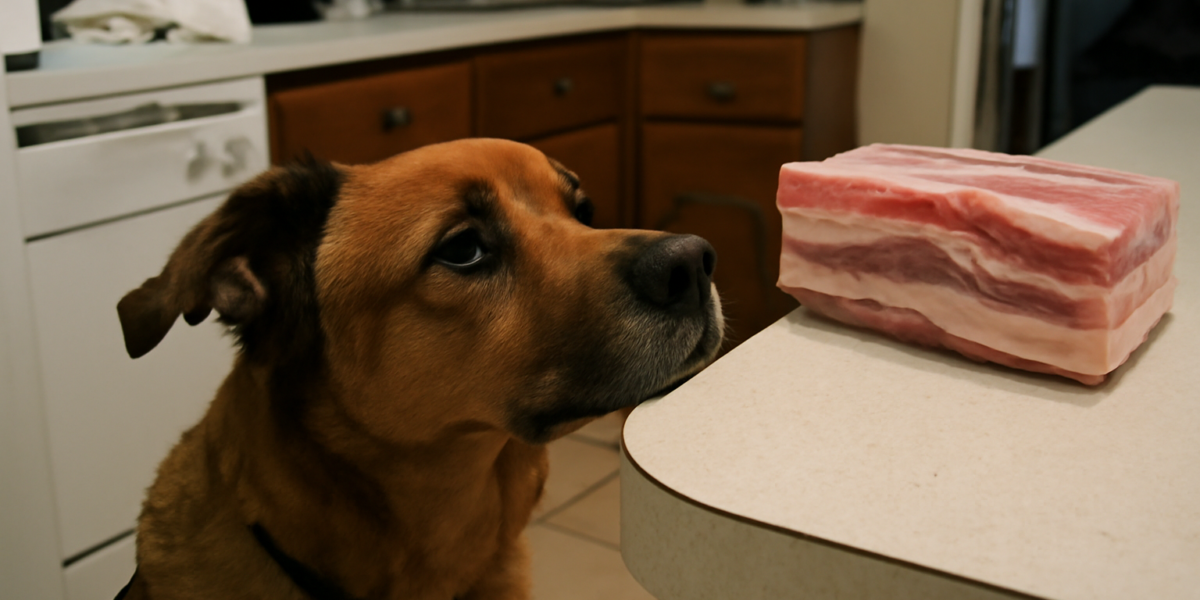
If your dog has stolen a small piece of plain unseasoned pork belly, do not panic. A nibble is unlikely to cause serious harm in a healthy adult dog. But pork belly is not a food to share intentionally, and it should not appear in any rotation of safe canine treats. Dogs with a history of pancreatitis, fat intolerance, or any of the high-risk breeds (miniature schnauzers, Yorkshire terriers, miniature poodles, English cocker spaniels) should not eat pork belly in any form, ever.
Nutritional Profile of Pork Belly
Pork belly is the cut from the underside of the pig, the same cut that becomes bacon when cured and pancetta when seasoned and air-dried. Its defining feature is the alternating bands of fat and muscle, which give cured versions their characteristic strips. Untrimmed and uncooked, pork belly is roughly thirty to fifty percent fat by weight. Even after rendering during slow cooking, the fat content remains high.
The protein content is moderate, around eight to ten grams per three-ounce serving (compared to twenty-plus grams in lean cuts), simply because so much of the cut is fat rather than muscle. Pork belly does provide some B vitamins, particularly B1 (thiamine) and B12, along with selenium and zinc, but these nutrients are easier to access from leaner cuts without the fat penalty.
Compared to general pork safety, pork belly sits at the most challenging end of the pork spectrum for canine digestion. Compared to beef brisket, another fatty cut, pork belly is comparable in fat content but often comes with worse seasoning and curing profiles.
Benefits for Dogs
This is the shortest section of any article we will write, because the benefits of pork belly for dogs are essentially nonexistent compared to the risks. Yes, pork belly contains protein. Yes, it contains B vitamins and selenium. But every nutrient on offer is available in safer, leaner forms from foods like plain cooked chicken, turkey breast, or trimmed lean pork loin.
The only context in which pork belly might be considered is the rare scenario where a working or sporting dog needs to put on weight quickly and a vet has approved a high-fat protocol. Even in that case, controlled fat sources are usually preferred over pork belly because the fat-to-protein ratio is hard to manage and the seasoning risks are unpredictable.
Risks and Concerns
Pancreatitis is the headline risk. Acute pancreatitis is an inflammation of the pancreas that often follows a single high-fat meal in a vulnerable dog. Symptoms include severe abdominal pain, repeated vomiting, fever, dehydration, and refusal to eat or drink. Treatment usually requires hospitalization, IV fluids, pain management, and several days of recovery. In severe cases, pancreatitis is fatal. Our pancreatitis in dogs guide covers prevention, warning signs, and recovery in detail.
Sodium is the second concern. Most pork belly sold in markets is either pre-salted, cured, or destined for a salty preparation. Bacon, the most familiar pork belly product, is heavily cured with salt and nitrates. Three slices of bacon contain enough sodium to push a small dog past the daily limit. Extended sodium exposure stresses canine kidneys, particularly in dogs with chronic kidney disease.
Seasonings make matters worse. Asian-style braised pork belly typically includes soy sauce (sodium), garlic (toxic), star anise, and sometimes Shaoxing wine (alcohol). Mediterranean preparations may include rosemary, garlic, and lemon. Bacon cures often include sugar, smoke flavoring, and various preservatives. Garlic and onions are toxic to dogs and should be avoided in any amount.
Pancreatitis-prone breeds are at especially high risk. Miniature schnauzers have a documented genetic predisposition. Yorkshire terriers, miniature poodles, English cocker spaniels, and dachshunds round out the high-risk list. For these dogs, even a small piece of pork belly can be the trigger event.
The risk profile gets worse for dogs with co-existing health issues. Senior dogs with reduced organ reserve, dogs with hyperlipidemia (elevated blood fats), dogs on long-term steroid medications, and overweight dogs all face heightened pancreatitis risk after fatty meals. If your dog falls into any of these groups, treat pork belly as off-limits rather than as a rare splurge. Recovery from pancreatitis can take weeks and may require permanent dietary changes, which is a steep price for a single fatty bite.
Safe Serving Size for Dogs
The honest answer is that there is no recommended serving size for pork belly. Unlike most foods we cover where a small portion is reasonable, pork belly should not be a regular part of any dog’s diet. If your dog has accidentally eaten a small piece (say, a single bite of plain unseasoned pork belly), monitor for digestive upset over the next twenty-four hours and provide plenty of fresh water.
If you are determined to share pork in some form, choose lean trimmed pork loin or pork tenderloin instead. Trim every visible piece of fat, cook plain to an internal temperature of 160 degrees Fahrenheit, and follow the ten-percent rule for treat calories. A three-ounce portion of plain trimmed pork loin is far safer than half an ounce of pork belly.
Preparation: Cooked vs Raw
If you are going to share any pork belly at all (and we do not recommend it), it must be fully cooked. Pork carries Trichinella spiralis, a parasite that causes trichinosis. The risk is lower in modern commercial pork than in past decades but is not zero. Cook to an internal temperature of 160 degrees Fahrenheit, or freeze for at least twenty-one days at minus four degrees Fahrenheit to kill any parasites.
The bigger preparation issue is everything else humans add to pork belly. Salt rubs, smoke flavoring, soy-based braises, garlic confit, sugar glazes, and the curing salts that turn pork belly into bacon are all problematic. If you must share a tiny tasting portion, it must be plain unseasoned cooked pork belly with the fat layer removed, which essentially defeats the purpose of pork belly as a cut.
Raw pork belly is not appropriate for dogs in any standard household setting. The parasitic risk, the bacterial risk, and the difficulty of safe sourcing combine to make raw pork belly a poor choice even within structured BARF programs.
Symptoms of Trouble After Eating Pork Belly
The classic symptom timeline for a fatty-meal pancreatitis flare is two to twelve hours after the meal. Watch for vomiting (often repeated), severe abdominal pain (often visible as a hunched posture or a prayer position with chest down and rear up), restlessness, refusal to eat, lethargy, fever, and dehydration. Diarrhea may follow, sometimes with a greasy or fatty appearance.
If pork belly was cured (bacon, pancetta), salt-related symptoms can also appear: excessive thirst, frequent urination, vomiting, lethargy, tremors, and in severe cases, seizures. Sodium ion poisoning is a true emergency. If garlic or onion was present in the preparation, hemolytic anemia can develop over several days, with symptoms including pale gums, weakness, dark urine, and loss of appetite.
When to Call the Vet
Call your veterinarian if your dog ate a meaningful amount of pork belly (anything more than a small accidental bite), especially if your dog is in a pancreatitis-prone breed group. Do not wait for symptoms to develop; early intervention with fluids and pain management is far more effective than waiting until your dog is in crisis.
Call urgently if you see vomiting that does not stop, severe abdominal pain, refusal to drink, signs of sodium ion poisoning, or any signs of onion or garlic toxicity if the pork belly was seasoned. Bring details: the cut, how it was prepared, how much your dog ate, and when. Photos of seasoning packets or sauce labels help.
Better Alternatives
For lean pork options, plain cooked pork loin or tenderloin is the right choice. Trim every visible piece of fat, cook plain, and serve in moderation. For poultry, chicken breast and turkey breast are gold-standard lean proteins. For dogs in protein rotation, rabbit and kangaroo are lean novel proteins.
If you are looking for a rich-tasting treat that is dog-safe, a small piece of cooked, plain duck breast with the skin removed delivers richness without the pork-belly fat profile. Chicken livers in tiny portions cover the iron and B-vitamin angle. Adopters considering high-risk breeds for pancreatitis should review breed-specific care info on the adopt a dog hub.
Frequently Asked Questions
Can dogs eat bacon?
No. Bacon is cured pork belly with high sodium and sometimes nitrates. The combination of fat and salt is harder on dogs than plain pork belly alone. Skip bacon entirely.
What if my dog ate a small piece of plain pork belly?
Monitor for vomiting, diarrhea, abdominal pain, and lethargy over the next twenty-four hours. Provide fresh water. If your dog is in a pancreatitis-prone breed or has had pancreas trouble before, call your vet to discuss whether a preventive visit is warranted.
Is pork belly worse than pork shoulder for dogs?
Yes. Pork belly is significantly fattier than pork shoulder. Pork shoulder, while still rich, is closer to a manageable cut when trimmed. Pork loin and tenderloin are the safest pork options.
Can puppies eat pork belly?
No. Puppies have developing digestive systems that are particularly sensitive to high-fat foods. Stick to balanced puppy food and lean treats.
What about Asian-style braised pork belly?
Avoid completely. Soy-braised, char siu-style, and Korean bossam preparations all contain soy sauce (high sodium), garlic (toxic), and often sugar. The combination is a clear no.
How does pork belly compare to chicken skin in fat content?
Both are high in fat, but pork belly is generally fattier and richer than chicken skin. Neither is a good choice for dogs prone to pancreatitis. Chicken skin follows similar caution principles in moderation.
Is rendered pork belly fat (lard) safe for dogs?
Pure lard is essentially one hundred percent fat and should not be added to a dog’s diet intentionally. Some old-school home recipes use a tiny amount of fat to coat dry food for picky eaters, but olive oil or fish oil is a safer choice if your vet recommends added healthy fats.


