
Last updated: May 4, 2026
In this article
- Can Dogs Eat Chimichurri? The Short Answer
- Why Chimichurri’s Garlic Load Is the Real Problem
- The Other Ingredients in Chimichurri
- How Much Chimichurri Is Dangerous?
- Symptoms to Watch For
- What to Do If Your Dog Ate Chimichurri
- Dogs at Especially High Risk
- Chimichurri-Adjacent Sauces and Dishes
- Dog-Safe Alternatives for Asado Households
- Frequently Asked Questions
Can Dogs Eat Chimichurri? The Short Answer
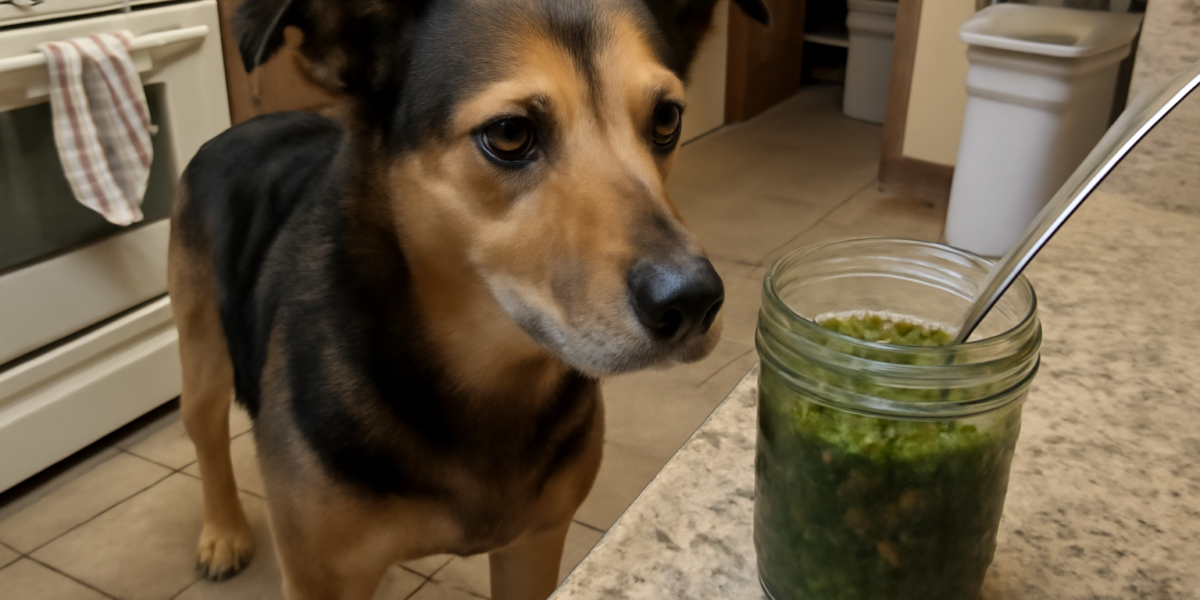
If you are asking whether dogs can eat chimichurri, the answer is a clear no. Chimichurri is the bright green Argentinian herb-and-garlic sauce that traditionally accompanies grilled meats — asado, churrasco, parrillada, and any “steak with green sauce” in a Latin American restaurant. While the parsley, oregano, olive oil, and red wine vinegar in chimichurri are not individually dangerous to dogs in small amounts, the heavy garlic content is genuinely toxic. A standard chimichurri recipe contains four to eight whole garlic cloves blended into a relatively small volume of sauce, making it one of the more concentrated allium exposures a dog can find on a dinner table.
If your dog ate chimichurri — directly off a plate, off a piece of steak, or by knocking over the dipping bowl — call Pet Poison Helpline at 855-764-7661 or ASPCA Animal Poison Control at 888-426-4435 for case-specific advice. The garlic-driven anemia risk is delayed, with symptoms often appearing one to three days after ingestion, and early intervention significantly improves outcomes. Below, we will go through the specific concerns and what to watch for.
Why Chimichurri’s Garlic Load Is the Real Problem
Garlic is the headline danger in chimichurri. Most authentic recipes call for an entire head of garlic — typically four to eight cloves — minced or blended into a cup or so of finished sauce. The garlic is not cooked; it sits raw in the oil and vinegar mixture, sometimes for hours or days, and infuses the sauce thoroughly. Concentrated raw garlic in an oil suspension is one of the more dangerous allium exposures for dogs because the toxic compounds remain potent and the dose per spoon is meaningful.
Garlic toxicity works through organosulfur compounds — most notably thiosulfates and N-propyl disulfide — that damage the membranes of dog red blood cells. The damaged cells form Heinz bodies, become recognized as abnormal by the immune system, and are removed from circulation. The result is hemolytic anemia: a falling red blood cell count, oxygen-carrying capacity loss, and the classic symptoms of pale gums, weakness, dark urine, and rapid breathing. Our deeper guide on garlic for dogs covers the chemistry and the dose-response in detail.
The toxicity threshold most veterinary toxicologists cite is around 0.5 percent of body weight for fresh onion. Garlic is roughly five times more potent per gram, which means a much smaller amount produces equivalent damage. A 25-pound dog who eats a tablespoon of chimichurri has consumed roughly half a clove of garlic — comfortably into the dose range that produces measurable red cell damage. Smaller dogs cross the threshold faster.
The Other Ingredients in Chimichurri
Beyond the garlic, chimichurri contains parsley, oregano, red pepper flakes, olive oil, red wine vinegar, salt, and sometimes additional herbs (cilantro, basil, mint) or shallot. Each of those is worth understanding briefly. Parsley in small amounts is generally safe for dogs — see our parsley for dogs guide — though Italian flat-leaf parsley used in chimichurri is high in volatile oils. Spring parsley, a different plant, is toxic, but standard culinary parsley is not.
Oregano in trace amounts is tolerated by most dogs (see our oregano for dogs guide), though larger doses can cause GI upset. The red pepper flakes are the same capsaicin concern covered in our chimichurri-adjacent mole sauce article — mouth irritation, drooling, vomiting, and diarrhea, but not the kind of organ-targeting toxicity that garlic causes. Olive oil in modest amounts is fine; large amounts add unnecessary fat. Red wine vinegar is acidic and can cause GI upset in volume but is not toxic.
Some chimichurri recipes also include shallot — another allium, with the same red blood cell damage mechanism as garlic but milder per gram. The combined allium load (garlic plus shallot) makes shallot-containing chimichurri more dangerous than garlic-only versions. Our leeks guide covers the broader allium family for context.
How Much Chimichurri Is Dangerous?
The honest answer is “any meaningful amount,” because the garlic content is what drives the risk and chimichurri is heavily garlicked. A dog who licks a small drop off the floor is unlikely to cross the toxicity threshold; a dog who eats a tablespoon or more, or a dog who eats a steak that has been smothered in chimichurri, very likely has. Smaller dogs cross the threshold faster than larger dogs because the dose is body-weight dependent.
For a 10-pound dog, a teaspoon of chimichurri represents a significant relative garlic dose. For a 50-pound dog, a tablespoon does. For a 100-pound dog, a quarter cup does. None of these are catastrophic single-dose lethal exposures in most cases, but they are all dose ranges where measurable red blood cell damage is expected.
Repeated smaller exposures matter too. A dog who gets “just a tiny bite” of chimichurri-marinated steak twice a week over months can develop chronic anemia even without ever crossing the acute toxicity threshold in a single meal. The cumulative dose adds up. There is no useful “small daily amount” for routine feeding.
Symptoms to Watch For
The frustrating part of garlic toxicity is the delayed onset. Most dogs do not show symptoms in the first six hours after eating chimichurri, which lulls owners into thinking everything is fine. Some dogs vomit within the first twelve hours from the irritant effect of the herbs, oil, and vinegar — that is the early-phase GI upset, not the dangerous part.
The serious symptoms develop one to three days after ingestion as the red blood cell damage manifests. Watch for pale or yellowish gums, weakness or reluctance to walk, increased heart rate and breathing rate, dark or coffee-colored urine, exercise intolerance, and decreased appetite. Some dogs become noticeably less playful and “off” without any single clear sign — that vague unwellness on day two or three after a chimichurri meal is exactly the picture you want to catch.
If you see any of these signs, head to the veterinarian for blood work. A complete blood count showing decreased red blood cells and visible Heinz bodies confirms allium-induced anemia. Treatment is supportive — IV fluids, sometimes blood transfusion in severe cases, and monitoring until red blood cell levels recover. Most dogs recover well with prompt treatment; dogs whose owners “wait and see” past the 72-hour mark can face significantly worse outcomes.
What to Do If Your Dog Ate Chimichurri
Step one: stop further access. Move the bowl, wipe down the floor, and check that other dogs in the household have not also gotten into the sauce. Step two: estimate the amount. A small lick versus a tablespoon versus an entire dipping bowl produces very different risk profiles. Step three: weigh your dog if you do not already know the current weight, since toxicology calculations are body-weight based.
Step four: call. Pet Poison Helpline at 855-764-7661 or ASPCA Animal Poison Control at 888-426-4435 are the right starting calls. Both run twenty-four hours a day, both charge per-case consult fees, and both can give you a specific risk assessment based on your dog’s weight, the amount eaten, and the recipe. They will also generate a case number that your vet can reference if you need to head in for treatment.
Do not induce vomiting at home unless explicitly directed. Chimichurri contains oil and vinegar, and home induction of vomiting can cause aspiration of acidic oily liquid, which is a serious complication. Veterinary teams have safer medications and the equipment to manage complications if they arise. If decontamination is appropriate (within the first two hours of ingestion), it is much safer to do at the clinic.
Dogs at Especially High Risk
Some dogs have less margin for allium exposure. Japanese breeds — Akita, Shiba Inu, and to some extent Jindo and Korean Jindo — carry a genetic variant of red blood cell potassium channels that makes them more sensitive to oxidative damage. These breeds can develop hemolytic anemia from doses that healthier breeds tolerate.
Dogs with pre-existing anemia, dogs on certain medications (particularly those that affect bone marrow or cause oxidative stress), and puppies under twelve weeks have less reserve to withstand red blood cell loss. Pregnant dogs in late gestation and senior dogs over twelve years also recover less well from acute hemolytic events. For any of these dogs, even small chimichurri exposure warrants a veterinary call rather than home monitoring.
Chimichurri-Adjacent Sauces and Dishes
Chimichurri shows up in many forms beyond the classic Argentinian dipping sauce. Chimichurri-marinated steaks, chimichurri-rubbed roasts, chimichurri compound butters, chimichurri-stuffed sandwiches, and chimichurri vinaigrettes all carry the same garlic load. Asado restaurants typically serve a small dipping bowl of chimichurri with every steak — a perfect way for a curious dog under the table to get a meaningful exposure.
Latin American “salsa verde” varieties — the Mexican version, the Italian version, the Spanish “mojo verde” — all share the heavy garlic profile. So do pesto (see our forthcoming pesto guide for B110), gremolata, persillade, and most other green herb-garlic sauces. The general rule is: any green sauce that lists garlic as a primary ingredient is dog-toxic at meaningful doses.
Our parallel guides on mole sauce, stuffing, and char siu cover other allium-heavy preparations across different cuisines. The pattern is consistent: traditional sauces and seasoning blends concentrate alliums in a way that makes them dangerous for dogs even when the underlying protein would be fine.
Dog-Safe Alternatives for Asado Households
If your household regularly cooks Argentinian or Latin American grilled meats and you want to share with the dog, plain protein set aside before saucing is the simplest approach. A piece of grilled steak, plain with no marinade or chimichurri, is a fine occasional treat in moderation. Avoid the fat cap and skin, since the fat content can trigger pancreatitis in fat-sensitive dogs.
For a “green sauce” alternative, you can blend plain parsley, a small amount of olive oil, and water (no garlic, no shallot, no vinegar) into a mild herb purée that captures some of the chimichurri flavor profile without any toxic ingredients. Most dogs find this dull on its own but appreciate it as a meal topper. Our parsley, basil, and oregano guides cover the dog-safe culinary herbs in more detail.
Skip every traditional chimichurri-adjacent sauce. Skip the marinade pan drippings — those concentrate garlic and salt. Stick to plain protein for the dog and let the human portions get all the seasoning. The dog notices the difference far less than the household imagines.
Frequently Asked Questions
My dog licked a tiny drop of chimichurri off the floor — is that an emergency?
For a healthy medium or large dog, a small lick is unlikely to cross the acute toxicity threshold but warrants 72-hour observation for delayed signs. For small dogs, puppies, or Japanese breeds, even small amounts can be problematic — call Pet Poison Helpline at 855-764-7661 for case-specific advice.
Can I make a dog-safe chimichurri without garlic?
You can make an herb-oil sauce without garlic, shallot, or onion that captures part of the flavor profile, but it will not really be chimichurri — the garlic is the defining ingredient. Use plain parsley and oregano in olive oil if you want a similar visual presentation for the dog’s plate.
How long do I need to monitor my dog after chimichurri exposure?
Watch for at least 72 hours. Garlic-induced anemia is famously delayed — symptoms typically peak two to three days after ingestion. If your veterinarian ran blood work at presentation, a recheck at 48 to 72 hours is often recommended.
What if the chimichurri was on a steak my dog stole — how do I count the dose?
Estimate the amount of sauce that was on the steak. A typical sauced steak might have one to two tablespoons of chimichurri. Note that information when you call Pet Poison Helpline, along with your dog’s weight and the time of ingestion. Bring the recipe or sauce label if available.
Are commercial bottled chimichurri sauces safer or worse than homemade?
Commercial versions vary widely. Some are heavily garlicked; some use garlic powder, which is more concentrated per gram than fresh garlic. Bottled sauces often add additional preservatives and salt. Read the label, but assume any product labeled “chimichurri” carries the headline garlic risk.


